
How to Store Buttercream Frosting in the Fridge Without Ruining the Texture
Leftover buttercream frosting can absolutely go in the refrigerator. The key is to seal it well, keep air out, and plan to bring it back to a smooth, usable texture before frosting or piping again.
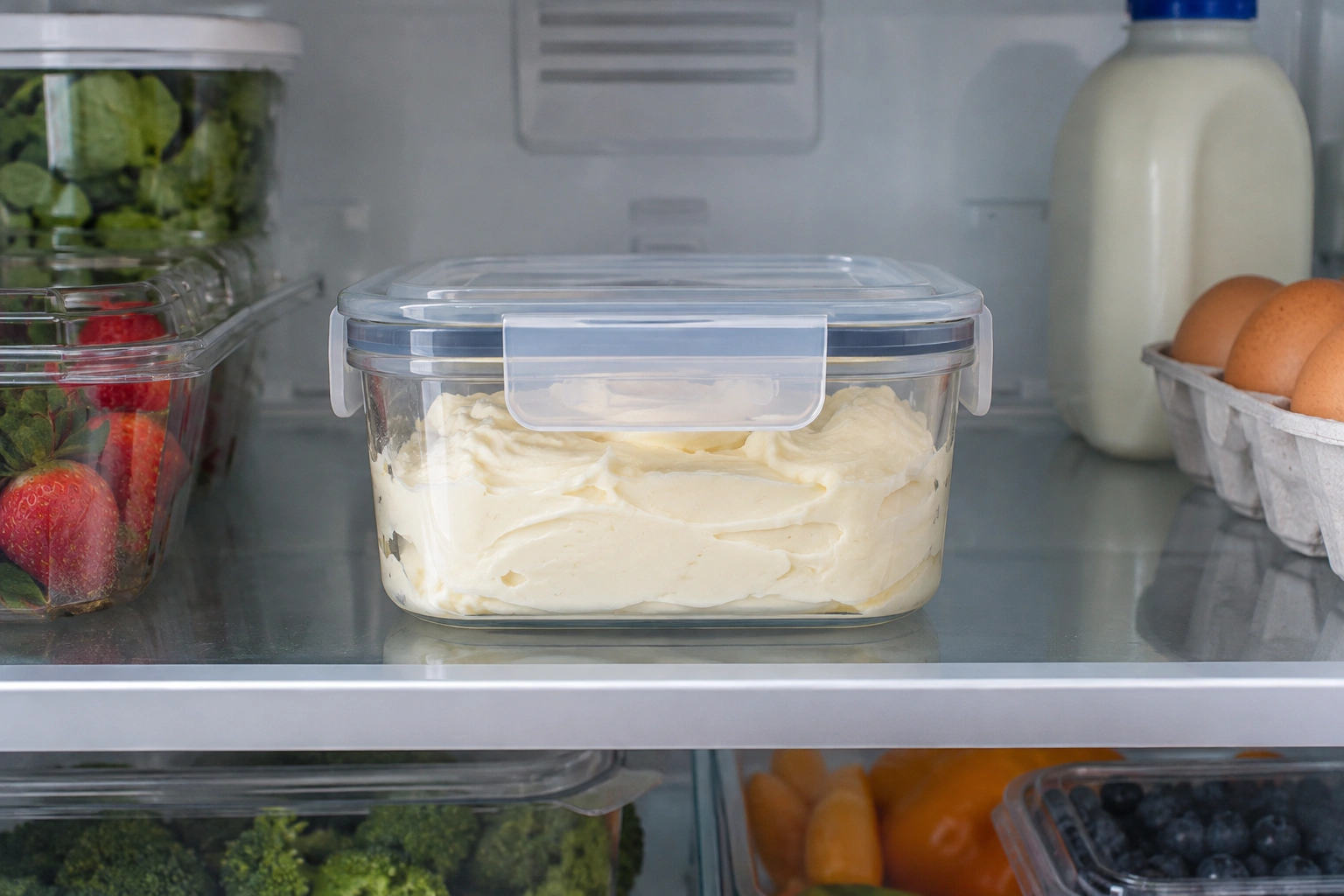
If you only need it for a few days, the fridge is usually the simplest storage option. For longer storage, freezing may be the better choice, but refrigeration is ideal when you want frosting ready soon for cupcakes, cake layers, or decorating touch-ups.
The Best Way to Store Buttercream in the Fridge
The goal is to protect buttercream from air and contamination. Exposure to air can dry the surface or create a crust.
Here is the most reliable method:
-
Use a clean, airtight container.
A shallow container is fine, but avoid oversized containers with lots of extra air space. -
Press plastic wrap directly onto the surface if needed.
This helps reduce crusting, especially if the container is not filled close to the top. -
Seal the lid tightly.
A loose lid defeats the purpose. If the lid does not close securely, use a different container. -
Label the date.
This makes it easier to track freshness instead of guessing later. -
Keep it away from strongly flavored foods.
Buttercream can pick up nearby aromas in the refrigerator.
For small amounts, portioning the frosting into a few smaller containers can be helpful. That way, you only warm and re-whip what you need instead of repeatedly exposing the entire batch to air.
How Long Buttercream Lasts in the Refrigerator
How long buttercream lasts depends on what is in it.
Standard butter-based buttercream
For many homemade buttercream frostings made with butter and sugar, refrigeration can keep it usable for up to one week when stored properly in a sealed container.
Buttercream with perishable ingredients
If the buttercream includes ingredients such as eggs, cream cheese, or other perishable dairy components, it should be treated more cautiously. Refrigeration is important, and the usable window is often shorter than plain buttercream. Check the recipe or source for the specific storage guidance that applies to that version.
Special cases
Buttercream that has already been left out for a long time, handled with dirty utensils, or stored uncovered may not keep as well, even if it was later refrigerated. Clean handling matters.
A practical rule:
- Use it within a few days if you want the best texture.
- Expect up to about one week for standard refrigerated buttercream stored in a sealed container.
- Follow the recipe’s guidance more closely for versions that contain perishable ingredients.
- Discard it sooner if it smells off or shows visible spoilage.
Butter-Based vs. Shortening-Based Buttercream
Not all buttercream behaves the same in the fridge. The fat base changes both texture and storage feel.
Butter-based buttercream
Butter-based frosting tends to become firmer in the refrigerator. That is normal. It may look stiff, dense, or slightly grainy when cold, but those are usually texture changes rather than spoilage.
This type often needs a short rest at room temperature before re-whipping.
Shortening-based buttercream
Shortening-based buttercream generally stays a little more stable at room temperature and may not firm up as much as butter-based frosting when chilled. It can also soften more predictably once it warms, which may make it easier for decorating work after refrigeration.
What this means in practice
If you know you will use the frosting soon for piping borders, cupcakes, or a small cake, either type can work in the fridge. If the frosting is very butter-heavy and your kitchen is warm, expect a longer softening period before it becomes spreadable again.
Airtight Container or Piping Bag?
Both storage methods can work, but they solve different problems.
| Storage method | Best for | Main advantage | Main drawback |
|---|---|---|---|
| Airtight container | General leftover frosting, best protection | Limits air exposure | Requires transferring frosting before use |
| Piping bag | Short-term decorating convenience | Easy to use later for piping | Harder to seal perfectly; can dry out faster |
When a container is better
Choose a container if you want the frosting to stay as protected as possible. This is the better option for plain leftover buttercream that you may spread, pipe, or re-whip later.
When a piping bag makes sense
A piping bag is convenient if you already know you will use the frosting for decorating soon. For example, a cake decorator might refrigerate a bag of buttercream for borders or rosettes later in the week.
The trade-off is sealing. A piping bag can be closed well enough for short storage, but it usually does not protect frosting as well as a rigid airtight container. If you use a piping bag, remove as much air as possible and seal the open end tightly.
How to Bring Chilled Buttercream Back to a Smooth Texture
Cold buttercream usually needs a little reconditioning before it is ready to use. The frosting may feel stiff, separate slightly, or look grainy straight from the fridge.
A simple recovery process works well:
-
Let it sit at room temperature until it softens slightly.
Do not rush this with high heat. Buttercream that warms too fast can turn greasy or loose. -
Stir or beat it again.
Use a mixer or sturdy spatula to restore the smooth texture. -
Check the consistency before using.
If it is still too stiff, give it a little more time at room temperature and mix again. -
Stop as soon as it looks smooth.
Overmixing softened buttercream can make it too airy or unstable for detailed decorating.
A beginner-friendly example: if you pull a container from the fridge and it feels like cold clay, let it warm just enough that a spoon can press into it, then re-whip until it is spreadable again.
If the frosting looks split, greasy, or slightly curdled after re-whipping, let it cool briefly and beat it again in short bursts until it comes back together.
If the frosting looks slightly grainy after chilling, that does not automatically mean it is bad. It often just needs warming and mixing to come back together.
How to Tell if Refrigerated Buttercream Is Still Good
Texture changes are common. Spoilage is different.
Normal after refrigeration
- Firm, stiff texture
- Slight graininess
- Dull appearance
- A need for re-whipping
Warning signs to discard it
- Sour, rancid, or otherwise unpleasant smell
- Visible mold
- Strange discoloration
- Watery separation that does not improve with mixing
- Signs that it was contaminated by dirty utensils or uncovered storage
If you are unsure, trust your senses. Buttercream that smells wrong or shows visible spoilage should not be used, even if it was refrigerated.
Buttercream on a Cake vs. Leftover Frosting
Plain leftover buttercream is easier to store than a fully decorated cake. Once frosting is already on a cake, the filling and toppings matter too.
Leftover frosting
This is the simplest case. Seal it in a container or piping bag, refrigerate it, and recondition it before use.
Frosted cake
A finished cake may need refrigeration for reasons beyond the buttercream itself. If the cake has perishable fillings, whipped toppings, fresh fruit, pastry cream, or cream cheese components, the whole dessert may need refrigeration.
That means you should think about the cake as a complete dessert, not just the frosting layer. A buttercream-coated cake with a fruit filling behaves differently from a plain buttercream cake.
Should You Refrigerate Buttercream or Freeze It?
If you plan to use the frosting soon, the fridge is usually enough. If you will not need it for a while, freezing is often the better long-term option.
Refrigerate when:
- You will use the frosting within about a week
- You want a simple short-term solution
- You do not mind re-whipping before use
Freeze when:
- You need storage for longer than a week
- You are saving a large batch for a future project
- You can plan ahead for thawing time
Refrigeration is more convenient. Freezing is better for longevity. If you are undecided, use the fridge for near-term decorating and the freezer for leftover batches you know will sit untouched.
Common Mistakes to Avoid
A few small errors can ruin otherwise good buttercream.
Leaving it uncovered
This is the fastest way to dry out the surface.
Using a dirty container or utensil
Even a small amount of contamination can shorten storage life.
Storing too much air around it
A large container with a half-full batch leaves more room for air exposure. Smaller containers are often better.
Trying to use it straight from the fridge
Cold buttercream usually needs time to soften and be mixed again.
Heating it too aggressively
Microwaving or warming too much can melt the fat and make the frosting greasy or runny.
Assuming all buttercreams behave the same
Butter-heavy, shortening-heavy, egg-based, and cream cheese versions do not all store the same way.
A Practical Storage Plan for Leftover Buttercream
If you want the simplest reliable routine, use this:
- Scoop leftover buttercream into a clean container.
- Press plastic wrap onto the surface if there is extra headspace.
- Seal and refrigerate promptly.
- Use within about a week for standard buttercream.
- Let it soften before re-whipping when you are ready to use it.
That routine works well for most home bakers who want to save frosting without wasting time or ingredients.
FAQs
Can buttercream frosting be stored in the fridge?
Yes. Homemade buttercream can be stored in the refrigerator as long as it is sealed well in a container and later brought back to a usable texture.
How long does buttercream last in the refrigerator?
A common guideline is up to one week for standard homemade buttercream stored properly in the fridge. Buttercream with eggs or cream cheese may need closer attention and often has a shorter safe window.
Can I refrigerate buttercream in a piping bag?
Yes, but it is usually less protective than a container. A piping bag works best for short-term storage when convenience matters more than maximum protection.
Can I use buttercream straight from the fridge?
Usually not if you want a smooth result. Chilled buttercream is often too stiff and should be softened slightly, then re-whipped or stirred before use.
How do I keep buttercream from drying out?
Use a sealed container and, if needed, press plastic wrap directly onto the surface to reduce exposure to air.
How do I know if buttercream has gone bad?
Look for sour smell, mold, strange discoloration, or other obvious spoilage. Texture changes alone are not always a sign that it should be discarded.
Is freezing better than refrigerating?
Freezing is better for longer storage. Refrigeration is better when you plan to use the frosting soon and want less thawing time later.
For buttercream storage, the real skill is not just keeping it cold. It is keeping it protected, then restoring it gently so it behaves like frosting again instead of a stiff block of butter.