
How to Store Dry Goods So They Stay Fresh, Safe, and Easy to Use

Dry goods are some of the easiest foods to waste if they’re stored poorly. Flour clumps, rice picks up moisture, pasta goes stale, sugar hardens, and pantry pests can turn a bargain bulk buy into trash. The good news: a few simple storage habits make a noticeable difference in freshness, safety, and how smoothly meal prep runs.
The basic rule is straightforward: protect dry foods from moisture, heat, light, and pests. That means choosing the right container, storing it in the right place, and using a rotation system that keeps older food moving first.
What Counts as a Dry Good and Why Storage Matters
“Dry goods” usually means shelf-stable foods with very low moisture content: flour, rice, pasta, oats, beans, lentils, sugar, cereal, baking mixes, dried herbs, and similar pantry staples. These foods are not all equally fragile, but they share the same enemies.
Moisture is the biggest one. Even a small amount can cause clumping, mold risk, or a texture change that makes the food unpleasant to use. Heat speeds up staling and can shorten quality life. Light can fade flavor and quality in some foods. Air brings in humidity and can also make food go stale faster. And pests only need a small opening to get into a bag or box.
A practical way to think about storage is this: if you use the item often, make access easy; if you use it slowly, make protection stronger. That one decision rule helps you avoid overcomplicating the pantry.
The Best Containers for Dry Goods
For everyday home storage, the best container is the one that seals well, fits the food you actually buy, and is easy to clean.
Airtight containers
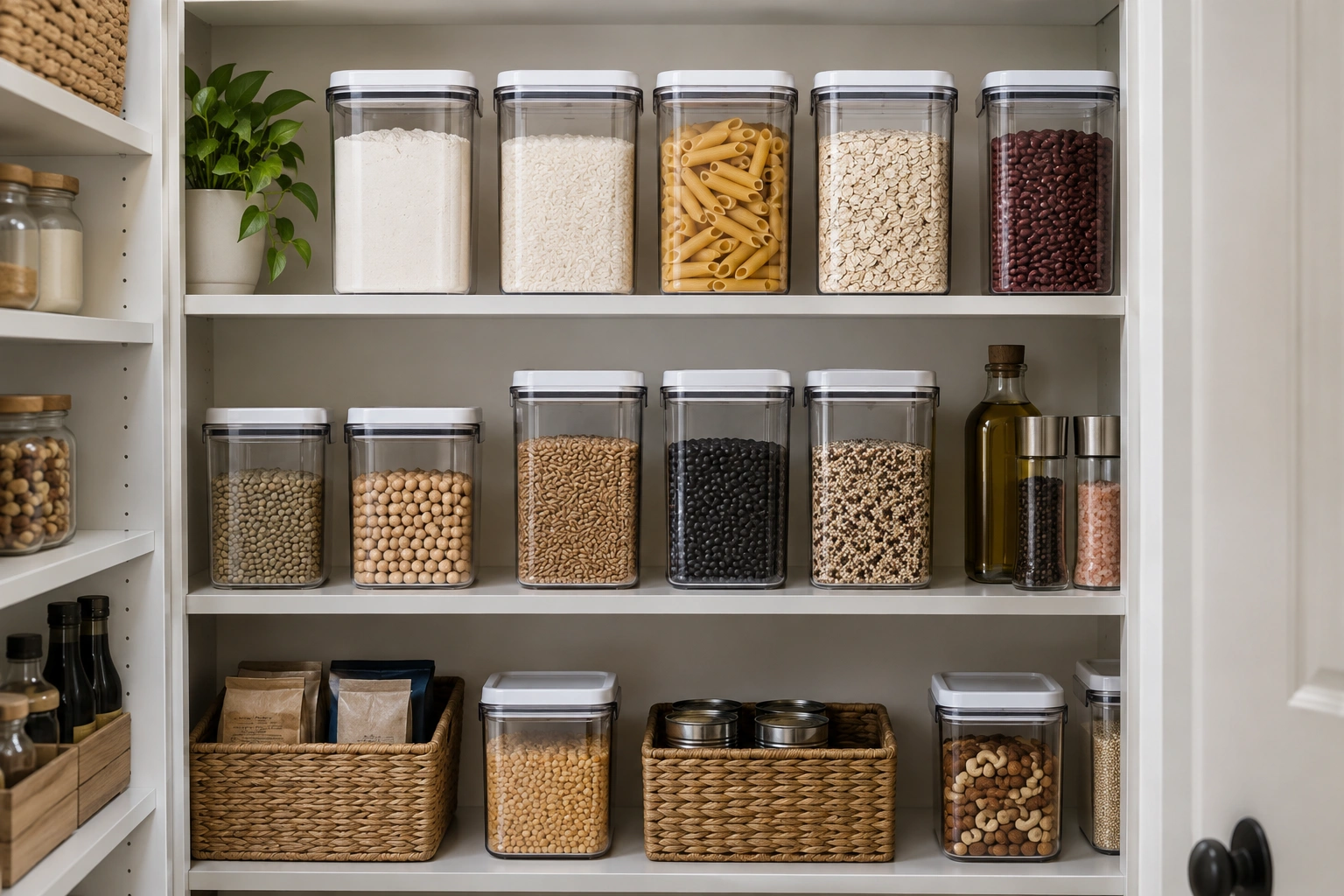
Airtight containers are the most practical all-purpose choice for most dry goods. They help keep out moisture and pests, and they make pantry shelves look and function more cleanly. They also make it easier to scoop what you need without wrestling with a crumpled bag.
The trade-off is cost and bulk. Good containers take space, and if you buy a size that is too large, the food may sit open too long before you finish it. That’s why container size matters as much as container type.
Mason jars
Mason jars work well for smaller amounts of flour, seeds, nuts, baking soda, dried herbs, or snack-sized pantry items. They are easy to inspect because you can see the contents, and glass does not absorb odors.
The drawback is breakability and weight. For a low cabinet or a crowded pantry, jars are excellent. For a shelf that gets bumped often, they may not be the most forgiving option.
Food-grade plastic containers
These are often the most convenient choice for busy kitchens. They’re lighter than glass, easy to stack, and usually come in sizes that fit common pantry staples.
The main caution is quality. Use containers made for food storage, with lids that close tightly. Lower-quality plastic can stain, scratch, or hold odors over time.
Pantry bins and larger storage tubs
Pantry bins are useful for grouping similar items, such as breakfast grains or baking supplies. For bulk items, food-grade bins can make storage simpler, especially when you buy in larger quantities.
If you use bins, keep them sealed and labeled. Open bins are convenient for organization, but they do little to protect food if the liner or inner package is not sealed properly.
For dried foods, the National Center for Home Food Preservation recommends clean, dry home canning jars, plastic freezer containers with tight-fitting lids, plastic freezer bags, or vacuum packaging, and it advises packing foods in amounts you can use all at once because each reopening exposes food to air and moisture. NCHFP guidance on storing dried foods
Original Packaging vs Airtight Containers
Original packaging is fine for some short-term storage, especially if the food will be used quickly. But once a bag or box is open, the package usually becomes the weak point.
Here’s a simple decision rule:
- Keep it in original packaging if you’ll use it fast, the package reseals well, and the food is not especially moisture-sensitive.
- Transfer it to an airtight container if the package is flimsy, the food is used slowly, or you want better pest protection and easier organization.
For example, a box of pasta that gets used within a week or two may be fine in its original box if the box stays dry and closed. A half-used bag of flour is a better candidate for a sealed container because flour is more likely to pick up odors, moisture, and pests.
The trade-off is convenience versus protection. Original packaging is easy and space-efficient. Airtight storage is better for quality control and pantry order.
Where to Store Dry Goods in the Kitchen
The ideal storage spot is cool, dark, and dry. That usually means a pantry, cabinet, or shelf away from the stove, dishwasher, sink, and direct sunlight.
Temperature swings matter more than many people realize. A cabinet above the stove may look convenient, but it’s often a poor choice because heat and steam travel upward. A shelf beside a dishwasher can also be risky because of humidity and condensation.
A practical placement rule: keep dry goods off the floor and away from exterior walls. Food Safety Magazine notes that dry foods should be stored at least 6 inches off the floor and at least 18 inches away from outer walls to help reduce condensation risk and support cleaning and pest control. Dry goods storage spacing guidance
If your kitchen is small, prioritize the driest cabinet you have for flour, sugar, and baking ingredients. Less moisture-sensitive items like unopened pasta or canned pantry staples can tolerate less ideal spots better than flour or oats.
How to Store Common Dry Goods by Type
Different dry goods need different levels of protection. A one-size-fits-all pantry system usually fails because some foods are naturally more fragile than others.
| Dry good | Best everyday container | Best storage location | Typical quality window |
|---|---|---|---|
| Flour | Airtight container or jar | Cool, dark pantry; fridge or freezer for longer keeping | Varies by type; use faster for whole-grain flours |
| Rice | Airtight container | Pantry; freezer for pest control or long holding | Often long-lasting when kept dry |
| Pasta | Airtight container or original box if used quickly | Cool, dry pantry | Quality stays best when kept sealed |
| Dried beans | Airtight container | Cool, dry, dark pantry | Long-lasting if kept dry |
| Sugar | Airtight container | Dry pantry cabinet | Very long quality life if moisture stays out |
| Oats | Airtight container | Pantry; freezer if you want extra pest protection | Best used while fresh and sealed |
| Baking soda/powder | Original container if tightly closed; otherwise airtight | Dry pantry away from steam | Replace when no longer active |
| Dried herbs/spices | Tightly closed jar | Dark cabinet away from heat | Flavor fades faster than safety concerns |
Flour
Flour benefits from airtight storage because it absorbs odors and moisture easily. If you buy flour in bulk, divide it into smaller containers so you aren’t opening one large package repeatedly.
For shelf life, all-purpose and white flour usually keep their best quality for months in a cool, dry pantry, while whole-wheat and other whole-grain flours go stale faster because their natural oils can turn rancid sooner. If you won’t use whole-grain flour quickly, refrigerating or freezing it can help preserve quality. For more detailed flour-specific guidance, see our guide on how to store flour.
Rice
Rice stores well when kept dry and sealed. It is one of the easiest staples to manage, but it still benefits from a tight container and a cool cabinet. White rice is generally more stable in the pantry than brown rice, which keeps better in the fridge or freezer if you want to slow rancidity from its natural oils.
If you want a deeper breakdown of pantry, fridge, and freezer options, our rice storage guide covers that in more detail: how to safely store rice.
Pasta
Pasta is fairly forgiving, but it can still go stale or pick up moisture if left in an open box. If you don’t use it quickly, move it to a container with a tight lid. This is especially useful in humid kitchens.
Beans and lentils
Dried beans should be checked before storage for dampness, insects, webbing, unusual discoloration, or damaged packaging. For regular use, a clean airtight container in a cool, dry, dark place works well. For multi-year storage, thoroughly dry beans can be stored in Mylar bags with oxygen absorbers, heat-sealed and protected inside food-grade buckets. That approach is more involved, so it makes sense only if you truly rotate through stored beans slowly.
Sugar
Sugar is less about spoilage and more about moisture control. If humidity gets into the container, sugar clumps and becomes annoying to measure. Use a dry, sealed container and keep it away from steam. If sugar hardens, that usually points to moisture exposure rather than true spoilage.
Oats
Oats are vulnerable to stale flavor and pantry pests. A sealed container helps, especially if the package is open for more than a short time. If you buy large bags, portion them into smaller containers so the main supply stays sealed. For best quality, whole-grain or steel-cut oats are better kept in a cool pantry or, if you live somewhere warm or humid, in the fridge or freezer.
How Long Dry Goods Last and How to Tell When They’ve Gone Bad
Quality life varies widely, and it’s safer to think in terms of “best quality” rather than assuming all dry goods last forever. The National Center for Home Food Preservation notes that recommended storage times for dried foods range from 4 months to 1 year. That range is a quality guideline, not a promise of indefinite safety. NCHFP dried food storage times
A compact shelf-life guide for common staples can help with buy-and-use decisions:
- Flour: white flour usually keeps best for months in a cool pantry; whole-wheat flour generally has a shorter best-quality window and is a better candidate for the fridge or freezer if you won’t use it quickly.
- Rice: white rice is one of the longer-lasting pantry staples when kept dry; brown rice has a shorter best-quality window because of its oils and is often better refrigerated or frozen for longer storage.
- Pasta: dry pasta usually holds quality well in a sealed pantry container for a long time, though it can still absorb moisture or stale if left open.
- Beans and lentils: dried beans and lentils are long-lasting when stored dry, but older beans may take longer to cook and may not soften as evenly.
- Sugar: granulated sugar has a very long quality life if moisture stays out; clumping is usually a storage issue, not spoilage.
- Oats: oats are best used while they smell fresh and clean; whole-grain oats and similar higher-oil grains can lose quality faster than refined grains.
Use your senses and common sense together. Discard dry goods with visible mold, moisture damage, insects, webbing, or a bad smell. If something looks damp, smells musty, or has obvious contamination, don’t taste it to “check.”
Watch for these warning signs:
- clumping that wasn’t there before
- insects or larvae
- webbing in flour, grains, or cereal
- sour, musty, or stale odors
- discoloration
- damaged packaging
- a texture change that makes the food unusable
For some foods, “bad” means unsafe. For others, it means the quality is poor enough that cooking with it will be frustrating. That distinction matters when you’re trying to reduce waste without taking risks.
How to Prevent Moisture, Clumping, and Pantry Pests
Prevention is easier than rescue. Once moisture or pests get into a pantry staple, the options narrow fast.
Inspect new purchases before storing them. This is especially important for beans, grains, flour, and cereal products. If you see signs of infestation or damage in the package, don’t combine that item with clean stock.
Store food in containers that close tightly. Open bags and loose clips are not enough if you want reliable protection. Keep containers away from sinks, dishwashers, and stoves, where steam and heat are constant.
If your kitchen is humid, smaller containers are often better than one very large one. That way, you open only a small amount at a time and leave the rest sealed.
For long-term storage, some dry foods can be packaged in Mylar bags with oxygen absorbers and then protected in food-grade buckets. That setup is more appropriate for rarely used bulk food than for everyday pantry access. It takes more effort up front, but it reduces exposure during storage.
How to Label, Date, and Rotate Pantry Staples
Labeling sounds tedious until you’ve had to guess which bag is older. At minimum, mark the purchase date or the date you opened the package. If you repack food into a container, label the container itself, not just the outer bag you threw away.
FIFO means first in, first out. Put newer items behind older ones so the older food gets used first. This works especially well for pasta, rice, oats, and baking ingredients.
A simple household system:
- write the open date on the lid or label
- keep older stock in front
- move newly bought items to the back
- check the oldest items first when planning meals
This is one of the easiest ways to reduce waste without buying less food. It just makes the food you already own easier to use in time.
How to Organize a Pantry for Easy Everyday Use
A pantry should save time, not create a scavenger hunt. Group items by how you cook, not just by category.
For example:
- breakfast bin: oats, cereal, pancake mix, dried fruit
- baking bin: flour, sugar, baking soda, baking powder, vanilla
- dinner bin: rice, pasta, beans, broth powder
- snack bin: crackers, nuts, seeds, trail mix
This setup helps busy households because it matches real meal patterns. When you see what belongs together, meal prep gets faster and shopping becomes more accurate.
If you have a small pantry, use clear bins or labeled baskets to keep categories from spreading across shelves. The goal is not perfect aesthetics. The goal is fast access and easy rotation.
When Freezer or Refrigerator Storage Makes Sense
Cold storage is worth considering for foods that are especially vulnerable to pests or quality loss. Flour is the most common example, especially if you buy it in larger amounts or live in a warm climate. A freezer can also be useful for some grains and nuts, though you’ll want to let the food return to room temperature while still sealed to reduce condensation.
Refrigeration is less common for general pantry staples because it adds condensation risk if the container is opened too soon. If you use cold storage, the container needs to seal well and the food should warm up before opening.
As a rule of thumb, cold storage makes the most sense for:
– Whole-grain flours and whole-grain products: better candidates for the fridge or freezer because their natural oils can go rancid faster.
– Nuts and seeds: often better refrigerated or frozen if you want to slow rancidity and keep them tasting fresh.
– Brown rice and other higher-oil grains: more likely to benefit from cold storage than white rice.
– Flour bought in bulk or kept for a long time: freezing can help with pest control and quality retention.
Foods that are usually better left in the pantry include:
– White rice
– Dry pasta
– White flour used regularly
– Sugar
– Most beans and lentils
– Baking staples you use frequently
Use the fridge or freezer when the benefit is clear: longer freshness, pest control, or slower quality loss. Skip it when the food is used quickly enough that a cool pantry already does the job.
Common Dry-Goods Storage Mistakes to Avoid
A few mistakes cause most pantry problems:
- storing food near heat or steam
- leaving opened bags unsealed
- mixing old and new stock without labeling
- using containers that are not food-safe
- buying more than the household can realistically use before quality drops
- ignoring signs of moisture or pests
- storing food directly on the floor or against a wall
- assuming all dry goods last the same amount of time
The most expensive mistake is usually overbuying. Bulk buying only saves money if the food stays usable long enough for your household to finish it.
Simple Storage Checklist for a Better Pantry
Use this quick audit to improve your pantry today:
- Move dry goods to a cool, dark, dry location.
- Transfer open items into airtight, food-safe containers when needed.
- Label containers with the purchase or open date.
- Keep older items in front and newer items behind them.
- Inspect new dry goods for dampness, pests, or damaged packaging.
- Store food at least 6 inches off the floor and away from exterior walls when possible.
- Use smaller containers for foods you open often.
- Reserve cold storage for items that truly benefit from it.
- Check the pantry monthly for clumps, odors, insects, or damaged packages.
A pantry that is dry, labeled, and rotated well is easier to cook from and cheaper to maintain. That’s the real payoff: less waste, fewer surprises, and a kitchen that works with your routine instead of against it.
FAQ
Can I keep dry goods in the original package?
Yes, if the package is still intact and the food will be used quickly. Once opened, many dry goods do better in a sealed container.
What is the best container for flour or rice?
For everyday use, a food-safe airtight container is usually the most practical choice. Mason jars work well for smaller amounts, while larger containers suit bulk storage.
How do I keep dry goods from getting bugs?
Inspect packages before storing them, keep food sealed, and store it in a cool, dry place. Don’t let damaged or suspect packages mix with clean stock.
Should I refrigerate or freeze dry goods?
Sometimes. Cold storage can help with certain items, especially if you want extra pest protection or longer quality. Just avoid opening cold containers too soon, or condensation may form.
How do I know if a dry good is still usable?
Check for moisture damage, insects, webbing, off smells, discoloration, or clumping. If the food looks or smells wrong, discard it instead of testing it by taste.
How much dry food should I buy at once?
Buy based on how fast your household uses it. A bigger package is only helpful if you can store it well and use it before quality drops.