
How to Store Muffins Without Getting Soggy: A Practical Guide for Fresh Texture
Muffins are at their best when the crumb stays tender and the top still has a little structure. The problem is that muffins are also good at trapping moisture. If you pack them away too soon, seal in steam, or choose the wrong storage method, they can turn damp on the outside, gummy in the middle, or soft on top.
The good news: keeping muffins fresh is mostly about controlling moisture, not fighting it. Once you understand where sogginess comes from, the storage choice becomes much easier.
Why Muffins Get Soggy in Storage
The main cause of soggy muffins is condensation. When warm muffins go into a closed container, the heat turns into trapped steam. That moisture has nowhere to go, so it settles on the muffin surface and inside the container.
That is why a muffin can feel fine when you pack it away and then seem wet an hour later. The problem usually is not the muffin itself. It is the environment around it.
A second issue is balance. Muffins are meant to be moist, but moist and wet are not the same thing. A blueberry muffin, for example, may need different handling than a plain muffin because the fruit releases extra moisture as it sits. A zucchini muffin can be even more sensitive because the batter starts with more water to begin with.
The goal is to keep the crumb soft without creating a sealed little steam room.
Cool Muffins Completely Before Storing Them
This is the step that prevents most soggy results. Muffins should be fully cool before they go into any container, bag, or wrap.
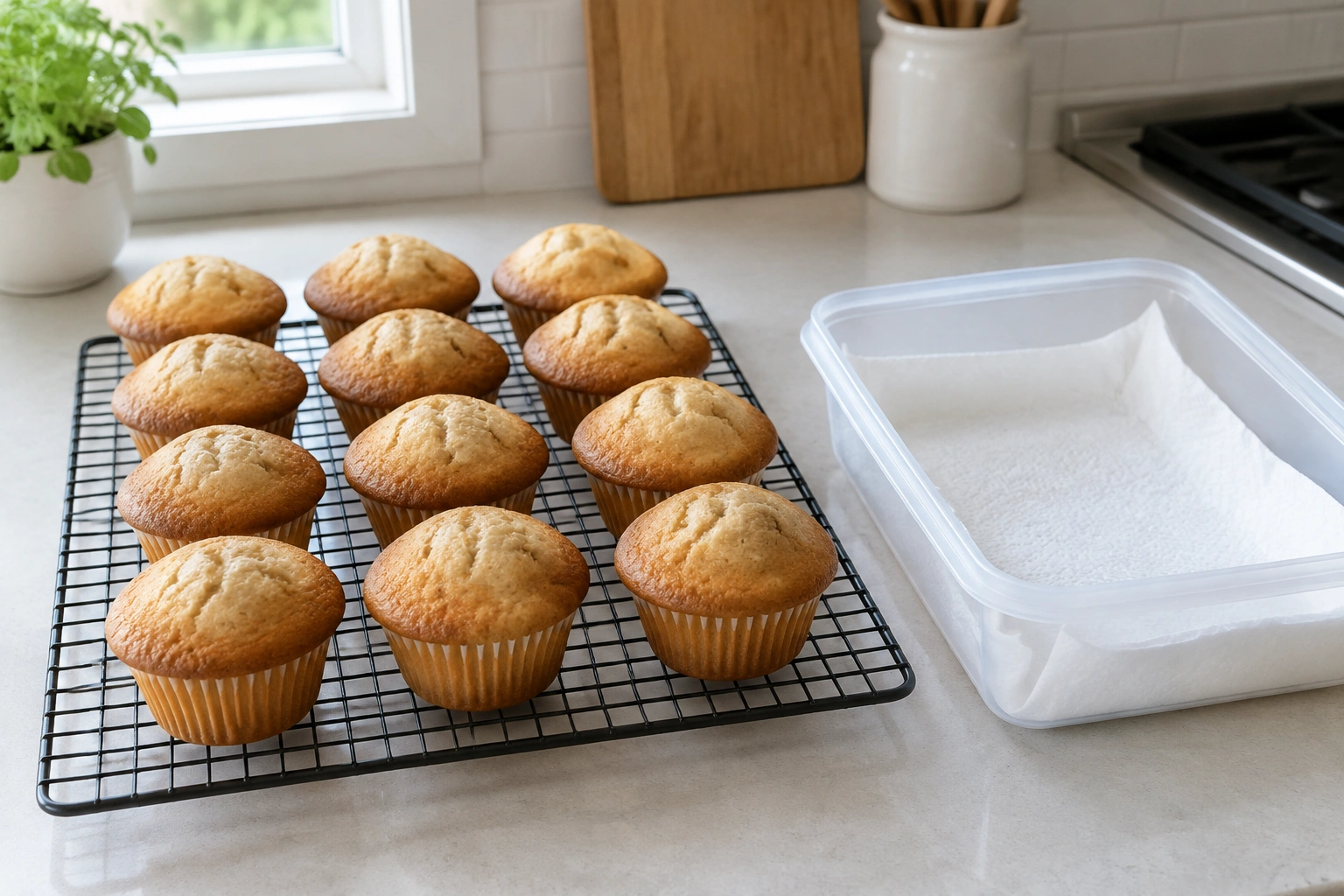
Place them on a cooling rack so air can move around the sides and bottom. If they sit in a pile on a plate or in a pan, the bottoms stay warm longer and collect moisture.
A simple rule works well: if the muffins still feel warm anywhere, wait. The center should no longer give off heat when you hold your hand near it.
If you need to pack them away in stages, let them cool uncovered first. Then move them into storage once they are no longer releasing steam.
Best Short-Term Storage Method at Room Temperature
For most muffins, room temperature storage is the best choice for a few days. It preserves texture better than the refrigerator and is usually enough if the muffins will be eaten soon.
Use an airtight container once the muffins are fully cool. This helps keep the crumb from drying out. If the container is too large, the muffins can slide around and rub against each other, which can soften the tops and damage the surface. A container that fits the batch more closely is usually better.
If you are storing a small number of muffins, line the container with a paper towel and place another paper towel on top. The towel can help absorb light surface moisture without making the muffins feel stale too quickly. This is especially useful for very moist muffins, such as zucchini or berry muffins.
For plain muffins, a simple airtight container is often enough. For wetter muffins, the paper towel lining gives you a little more protection.
Airtight Container, Paper Towel, or Paper Bag: Which Storage Method to Use
Each storage method has a different job.
Airtight container
Best for most muffins that will be eaten soon. It protects against drying, but it can soften the tops if there is still moisture in the muffins or if the container is packed too tightly.
Paper towel-lined container
Best for muffins that tend to sweat a little, such as fruit-filled or vegetable-based muffins. The towel helps manage excess moisture, especially on the first day. It is not meant to replace cooling or proper wrapping.
Paper bag
Useful when you want a less sealed environment, but it is not the best choice if you want muffins to stay soft for long. Muffins can dry out faster in a bag, so this option works better for same-day or next-day eating than for longer storage.
Individual wrapping
Best when you want to protect a single muffin for later use. This is especially helpful if you plan to freeze them or if you want to keep different flavors separate.
If you are deciding between methods, use this rule: the wetter the muffin, the more helpful a paper towel becomes; the longer the storage time, the more useful airtight wrapping becomes.
How to Keep Muffin Tops from Softening
Muffin tops soften when moisture collects above or around them. That is common in closed containers, especially if the muffins are still slightly warm or if they are stacked tightly.
A few practical habits help:
- Store muffins in a single layer when possible.
- If you need to stack them, place a paper towel between layers.
- Keep the container shallow enough that the tops do not press against the lid.
- Let the muffins cool fully before sealing the container.
For muffins with streusel or crunchy toppings, airtight storage is always a trade-off. It protects the crumb, but it will soften the topping. If texture on top matters a lot, store them loosely for a short time and accept that the top may lose some crispness.
When Refrigeration Helps and When It Hurts
The refrigerator is not the default answer for muffins. In many cases, it does more harm than good by drying out the crumb and making the texture feel firmer or stale sooner.
As a general rule, refrigerate muffins only when they truly need it for safety or recipe reasons. That usually means muffins with perishable fillings or toppings, such as cream cheese, custard-like fillings, or other ingredients that the recipe tells you to chill.
By contrast, muffins that only seem like they might need refrigeration often do better on the counter. Muffins with fruit, zucchini, bananas, or other high-moisture mix-ins are more likely to need moisture management than cold storage. If the recipe does not call for refrigeration, room temperature is usually the better choice for texture.
If you do refrigerate muffins, keep them in a well-sealed container so they do not absorb odors or dry out. Then bring them back to room temperature or warm them briefly before serving.
Storage Times for Different Methods
Exact freshness depends on the recipe, humidity, and how moist the muffins are, so think in terms of practical windows rather than fixed promises. Very moist muffins or fruit-filled muffins may move through these windows faster.
Room temperature
Most muffins stay fresh for about 2 to 3 days at room temperature when stored properly. Some drier muffins may hold up a little longer, while very moist muffins may be best within 1 to 2 days.
Refrigerator
If refrigeration is truly needed, plan on about 3 to 5 days in a well-sealed container. The texture may suffer sooner than the safety window, so use this method only when the recipe or filling calls for it.
Freezer
Most muffins keep well for about 2 to 3 months in the freezer when wrapped and sealed properly. They may remain safe longer, but quality is usually best within that range.
A useful decision rule: if the muffins will be eaten in the near term, keep them at room temperature. If they will not be finished soon, freeze them rather than letting them sit in the fridge too long.
How to Freeze Muffins Without Ruining the Texture
Freezing works well because it pauses staling. The key is to protect the muffins from freezer burn and from picking up extra moisture during thawing.
Here is the simplest method:
- Cool the muffins completely.
- Wrap each muffin individually or separate layers with parchment if you are freezing a batch.
- Place the wrapped muffins in a zip-top freezer bag.
- Press out as much air as practical before sealing.
- Label the bag so you know what is inside.
Individual wrapping gives the best protection if you only want one muffin at a time. Batch freezing is faster, but the muffins are more likely to stick together or rub against each other if they are not separated well.
If you want to learn more about freezing with good texture, see our guide on how to freeze muffins for meal prep without losing texture.
How to Thaw and Reheat Muffins Without Adding Moisture
The safest thawing method is the simplest one: let the muffins thaw at room temperature while still wrapped for the first part of the thaw. That helps them reabsorb moisture gradually instead of collecting condensation on the surface.
Once the muffins are mostly thawed, unwrap them so the outside can dry slightly before serving or reheating. If you leave them wrapped all the way through, condensation can linger on the surface and make them feel damp.
If you want to warm them, do it gently after they are thawed. Brief reheating helps refresh the crumb, but too much heat can create a wet or rubbery result. You are aiming to refresh the muffin, not steam it.
If the muffins were frozen individually, thaw overnight and then unwrap before serving or warming. A short rest unwrapped can help the surface feel less moist.
Special Cases: Very Moist Muffins and High-Moisture Mix-Ins
Not all muffins behave the same way in storage. Muffins with berries, zucchini, bananas, or other high-moisture ingredients often release more liquid as they sit.
For those muffins:
- Cool them fully on a rack.
- Use a paper towel-lined container if storing at room temperature.
- Avoid stacking too tightly.
- Freeze sooner if you know they will not be eaten quickly.
Blueberry muffins, for example, may look dry on the outside but still create moisture inside a sealed container because the fruit continues to release juice. Zucchini muffins can do the same, especially if they were made with a very tender batter. In both cases, a little extra moisture control matters more than it would for a plain muffin.
If a muffin has a very delicate topping, like streusel, accept that storage will soften it somewhat. The crumb can still stay pleasant even if the top loses its crunch.
A Simple Muffin Storage Plan That Works
If you want the shortest path to good results, use this approach:
- Cool muffins completely on a rack.
- Store plain muffins in an airtight container at room temperature.
- Add a paper towel if the muffins are especially moist.
- Refrigerate only when the filling or recipe calls for it.
- Freeze muffins you will not eat soon.
That sequence keeps the crumb tender, reduces condensation, and gives you the best chance of avoiding soggy tops.
FAQ
Should muffins be stored in an airtight container or left uncovered?
For short-term storage, an airtight container is usually better because it prevents drying. Leave muffins uncovered only long enough to cool completely.
Do muffins need to cool completely before storage?
Yes. Warm muffins release steam, and that steam is a major cause of sogginess.
Is it better to store muffins at room temperature or in the fridge?
Room temperature is usually better for texture if the muffins will be eaten soon. Use the fridge only when the recipe or filling calls for colder storage.
Should I line the container with paper towels?
It can help, especially with very moist muffins or muffins with fruit or vegetables. Use it as a moisture buffer, not as a substitute for cooling.
Can I freeze muffins without ruining the texture?
Yes, if you cool them fully, wrap them well, and protect them from freezer burn. Thaw them slowly for the best result.
How do I keep muffin tops from getting soft?
Cool the muffins completely, avoid overpacking the container, and use a shallow container or a paper towel between layers if needed.
How long do muffins stay fresh on the counter?
Most muffins stay fresh for about 2 to 3 days at room temperature. Very moist or fruit-filled muffins may be best within 1 to 2 days.
How do I reheat stored muffins?
Warm them briefly after thawing or after room-temperature storage. Keep the reheating gentle so you do not add extra moisture or dry them out.
How should I store muffins with berries or zucchini?
Treat them as higher-moisture muffins. Cool them fully, use a lined container if storing short term, and freeze sooner if you are not eating them quickly.
Quick Storage Timeline
- Same day to 3 days: Keep most muffins at room temperature in an airtight container.
- 3 to 5 days, only if needed: Refrigerate muffins with perishable fillings or toppings.
- 2 to 3 months: Freeze muffins for the best longer-term storage.
- Thawing: Thaw wrapped at room temperature first, then unwrap once mostly thawed to reduce condensation.

