
How to Store Rice Safely at Home for Freshness, Food Safety, and Less Waste

Rice is one of the easiest staples to keep on hand, but only if you store it the right way. The basic rule is simple: uncooked rice belongs in a cool, dry, sealed pantry container, while cooked rice belongs in the refrigerator or freezer as soon as it has cooled safely. The biggest food-safety warning is also the most important one: do not leave cooked rice sitting out at room temperature for too long. Cooked rice is risky when it stays warm for hours because bacteria can grow in it and some toxins may not be removed by reheating, so leftovers need prompt handling.
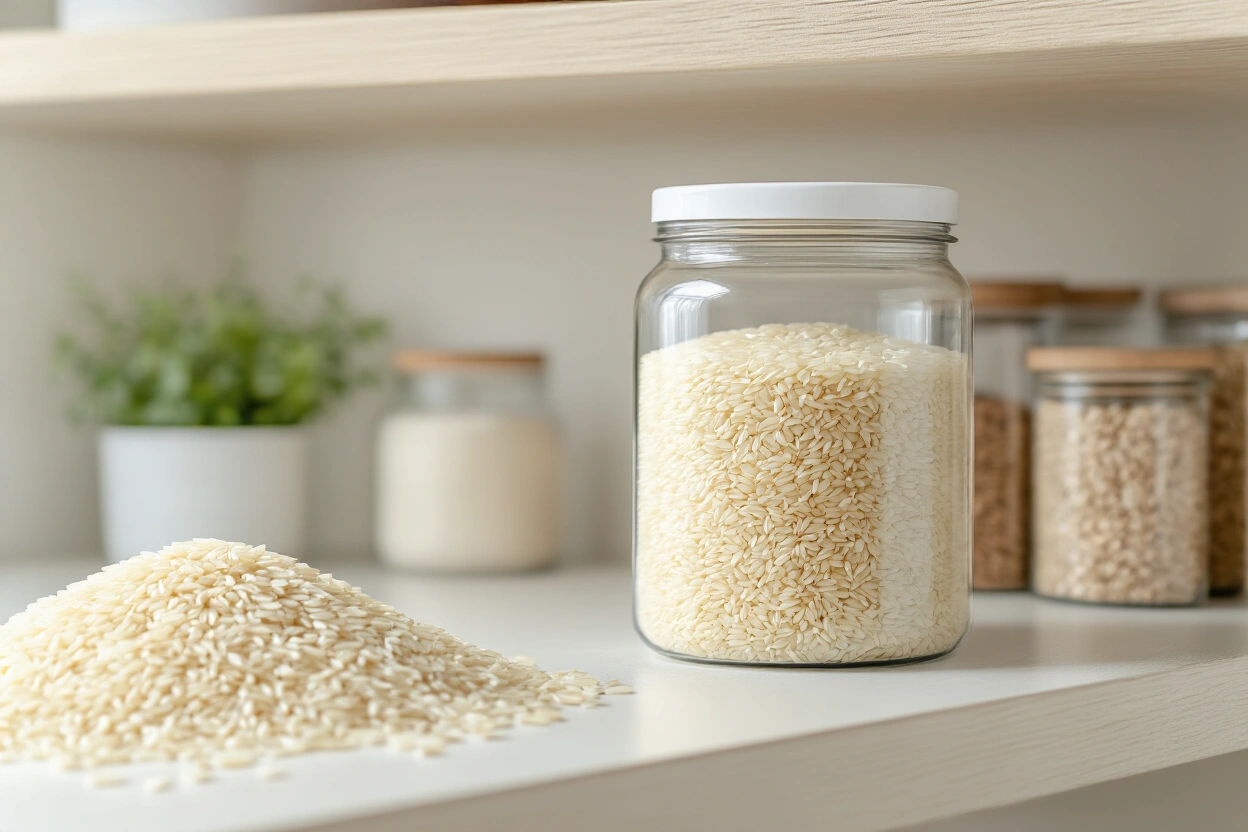
If you want the short version, here it is: dry rice is a pantry food; cooked rice is a perishable food. That distinction drives almost every storage decision.
Quick Comparison: Best Storage Method by Rice Type
| Rice type | Best storage place | Main container | Quality notes | When to use it |
|---|---|---|---|---|
| Uncooked white rice | Pantry | Airtight, food-safe container | Keeps well when dry and protected from heat, light, and pests | Everyday storage and long-term pantry use |
| Uncooked brown rice | Pantry or cool cupboard | Airtight, food-safe container | Shorter shelf life than white rice because of natural oils | Use sooner; buy smaller quantities if you cook it less often |
| Cooked rice, short term | Refrigerator | Shallow sealed container | Can dry out a bit, but that is a quality issue, not always spoilage | Leftovers for meals in the next few days |
| Cooked rice, longer term | Freezer | Freezer-safe bag or container | Texture may soften slightly after thawing | Batch cooking and meal prep |
The table gives the big picture. The rest of this guide explains how to make each method work in a real kitchen.
How to Store Uncooked Rice in the Pantry
Uncooked rice stores best in a cool, dry, sealed place. A pantry, cupboard, or cabinet away from the stove and dishwasher is usually better than a shelf exposed to heat or steam. Rice absorbs moisture and odors easily, so the storage area matters as much as the container.
For everyday home storage, keep dry rice in an airtight, food-safe container with a tight lid. That helps block humidity, prevents stale odors from other foods, and makes it harder for pantry pests to get in. If you leave rice in an open bag or a loosely folded package, it is more vulnerable to moisture and contamination.
A practical setup looks like this: transfer a newly opened bag of white rice into a sealed container, label it with the purchase date, and keep it in the same cool cabinet each time. That simple habit makes it easier to rotate stock before quality declines.
Original packaging can work for short-term use if the bag is intact and tightly closed, but it is not as protective as a sealed container. If you buy rice in larger quantities or live in a humid climate, transferring it is usually worth the extra step.
How Long Uncooked Rice Lasts in the Pantry
Shelf life depends on the type of rice and how well it is stored. In a cool, dry pantry, uncooked white rice can last for years, while uncooked brown rice is best used much sooner, usually within about 6 months to 1 year for best quality because its natural oils can turn rancid over time.
That does not mean brown rice becomes unsafe on a specific day, but it does mean the flavor and aroma decline faster than white rice. If you do not cook brown rice often, buy smaller bags so you can use it before quality drops.
White Rice vs. Brown Rice: What Changes in Storage Life
White rice and brown rice do not age the same way. White rice has had the bran and germ removed, so it contains less natural oil and tends to hold quality longer in storage. Brown rice keeps more of the grain intact, which gives it a nuttier flavor and a shorter shelf life.
That difference matters for budgeting and planning. If you cook brown rice only occasionally, buying a smaller bag is usually smarter than stocking up in bulk. White rice is more forgiving for long pantry storage, especially if you use it regularly and keep it sealed.
Parboiled rice generally sits somewhere between white and brown rice in practical storage behavior, but the same rule still applies: dry, sealed, cool storage is the goal. When in doubt, follow the package guidance and pay attention to smell and appearance over time.
Best Containers for Rice Storage
The best container for rice is one that is:
- Airtight
- Food-safe
- Moisture-resistant
- Easy to seal and reopen
Glass jars, rigid plastic canisters, and food-grade bins all work if they close tightly. For smaller households, a clear container can be useful because you can see how much rice remains. For larger quantities, a sturdy bin may be more practical.
Vacuum sealing, mylar bags, and oxygen absorbers can be useful for long-term dry storage, but they are not necessary for most home cooks. They make the most sense when you are storing a larger quantity of uncooked rice for extended periods and want extra protection from air and pests. The trade-off is convenience: those methods are more involved than a simple pantry container.
For cooked rice, use a different kind of container. A shallow, sealed container or freezer-safe bag is more useful than a deep bowl with plastic wrap. Shallow packaging cools more evenly and portions better for later use.
How to Keep Rice Safe from Moisture, Odors, and Pantry Pests
Rice is dry, but it is not invincible. Moisture can lead to clumping, stale flavor, or spoilage. Odors from onions, spices, or strong pantry items can transfer into rice. Pantry pests can also find their way into loosely stored grains.
These habits help:
- Keep rice away from sinks, dishwashers, and steam.
- Close the container fully after every use.
- Store rice off the floor and away from warm appliances.
- Use clean, dry scoops instead of damp cups or spoons.
- Check the container occasionally for insects, webbing, or clumps.
If rice has been exposed to visible moisture, pests, or a musty smell, discard it. Rice that looks normal on the outside can still be compromised if the storage environment was wrong.
A small but useful habit is to label the container with the date you opened it. That makes rotation easier, especially if you keep more than one type of rice in the pantry.
How to Store Cooked Rice Safely
Cooked rice needs much stricter handling than dry rice because it is now a moist, perishable food. The main concern is bacterial growth, including Bacillus cereus, which can multiply if rice sits out too long after cooking.
The safest approach is to cool cooked rice promptly, portion it into shallow containers, and refrigerate it as soon as it is no longer steaming heavily. If you made a large pot, spread it out so it cools faster instead of leaving it in one deep mass.
Here is a practical workflow:
- Fluff the rice so steam escapes.
- Divide it into smaller portions.
- Place portions in shallow containers.
- Refrigerate once the rice has cooled enough to move safely.
For safety, cooked rice should not sit at room temperature for more than 2 hours before it goes into the refrigerator or freezer. If the room is very warm, use an even shorter window. Shallow portions cool faster and reduce the time the rice spends warm, which is why they are safer than leaving a big pot in the middle of the counter.
Do not seal a large pot of hot rice and send it straight to the fridge. That traps heat, slows cooling, and can create uneven temperatures in the center.
If you plan to use the rice within a short window, the refrigerator is fine. If you know you will not use it soon, freeze it before quality drops.
How Long Cooked Rice Lasts in the Fridge and Freezer
Cooked rice does not keep like dry rice. In the refrigerator, it is a short-term leftover. In the freezer, it becomes a meal-prep ingredient.
For food safety and best quality, refrigerated cooked rice should be used within 3 to 4 days. Frozen cooked rice is best used within about 1 month for quality, though it can remain safe longer if it has been kept continuously frozen at 0°F (-18°C) or below.
Refrigerated rice is best treated as a near-term food: use it while it still smells fresh and has a normal texture. Frozen rice lasts longer and is helpful when you cook in batches, but the texture may be a little softer after thawing.
A good rule is this: if you are unsure whether you will eat cooked rice soon, freeze it instead of hoping it will stay fine in the fridge. That reduces waste and lowers the chance that leftovers get forgotten.
When thawing frozen rice, move it to the fridge if you have time, or reheat it directly from frozen if your method allows even heating. The key is to avoid leaving thawed rice sitting around at room temperature.
How to Cool Rice Before Refrigerating or Freezing It
Cooling is the step people skip most often, and it is also where safety problems begin. Rice should not stay warm on the counter for long stretches. The goal is to move it from hot to cold efficiently, not to let it linger in the middle.
A few practical cooling habits make a big difference:
- Spread rice in a shallow layer.
- Portion it into smaller containers right away.
- Keep the containers uncovered only as long as needed for steam to escape.
- Refrigerate or freeze once the rice is no longer piping hot.
This is especially important for meal preppers. A big batch may seem convenient, but a deep container can hold heat in the center for too long. Shallow containers cool more evenly and are easier to portion later.
If rice was left out for an extended period and you are unsure whether it cooled safely, the conservative choice is to discard it. With rice, guessing wrong is not worth the risk.
Can You Freeze Rice? Best Practices for Long-Term Storage
Yes, rice freezes well enough for many home kitchens, especially cooked rice. Freezing is useful when you want to save leftovers, prep lunches in advance, or avoid throwing out half-used batches.
For best results:
- Freeze rice in meal-sized portions
- Use freezer-safe bags or containers
- Press flat bags to remove excess air
- Label each package with the date
- Freeze rice as soon as it has cooled safely
Flat freezer bags are especially practical because they stack well and thaw faster than a bulky container. That makes them a smart choice for budget-conscious cooks who want to keep freezer space organized.
Expect some texture change after thawing. Frozen rice may be a little softer or drier depending on how it was packaged and reheated. That is a quality trade-off, not necessarily a safety problem.
How to Tell If Rice Has Gone Bad
Not every texture change means rice is spoiled. Cooked rice can dry out in the refrigerator and still be safe if it was stored properly. Spoilage is a different issue.
Throw rice away if you notice:
- A sour, off, or otherwise unusual smell
- Visible mold
- Slimy or sticky texture that seems wrong for the rice type
- Discoloration that was not there before
- Evidence of pests, webbing, or contamination
For uncooked rice, signs of trouble often show up as moisture damage, bugs, clumping, or a stale, rancid smell in the case of brown rice. Brown rice is more likely than white rice to develop off flavors over time because of its natural oils.
If rice has been stored in doubtful conditions, trust your senses. When the smell, look, or texture seems wrong, do not try to salvage it.
How to Reheat Leftover Rice Safely
Reheat rice only once, and make sure it is heated evenly. Uneven warming leaves cool spots that are not ideal from a food-safety standpoint.
A practical reheating rule is to warm rice until it reaches 165°F (74°C) throughout. Stir it partway through heating so the center and edges heat more evenly. If the rice seems dry, add a small splash of water before reheating to help steam distribute.
Good reheating methods include:
- Microwave in a covered container with a little moisture
- Reheat on the stovetop with a splash of water and a lid
- Add thawed frozen rice to a hot dish and heat it fully
Avoid repeated cycles of cooling and reheating. Each round creates more opportunity for quality loss and handling mistakes.
A Simple Decision Rule for Home Kitchens
If the rice is dry and uncooked, keep it in a sealed pantry container away from heat and moisture. If the rice is cooked, cool it quickly, refrigerate what you will use soon, and freeze the rest in portions.
That one rule covers most storage decisions and keeps waste down. It also helps you buy the right amount for your household instead of overbuying and hoping rice will stay fresh forever.
FAQ: How to Store Rice
Should rice be stored in the pantry or refrigerator?
Uncooked rice usually belongs in the pantry if it is kept dry and sealed. Cooked rice belongs in the refrigerator or freezer.
Is it better to leave rice in the original bag?
Original packaging can work for short-term storage, but an airtight container usually protects rice better from moisture, odors, and pests.
Can brown rice be stored the same way as white rice?
Yes, but brown rice generally should be used sooner because it does not keep quality as long as white rice.
What is the safest way to store leftover rice?
Cool it promptly, portion it into shallow containers, and refrigerate or freeze it as soon as it is no longer very hot.
How do I know if cooked rice is unsafe?
Discard it if it smells off, looks moldy, feels slimy, or was left out too long before refrigeration.
Can I freeze rice for meal prep?
Yes. Freezing cooked rice in portions is one of the most practical ways to reduce waste and save time later.
For more storage basics that apply to other kitchen staples, you may also find how to store buttercream frosting in the fridge without ruining the texture and how to store chocolate ganache for cake decorating useful as examples of how temperature and packaging change food quality.