
How to Tell When Bread Is Done: A Baker’s Practical Guide to Perfectly Baked Loaves

The easiest way to judge bread doneness is to use more than one signal: a fully baked loaf usually has the right color, feels set and light, and reaches the proper internal temperature. If you want the most dependable answer, use an instant-read thermometer near the end of baking. For crusty loaves, the tap test can back you up; for soft sandwich breads and enriched doughs, temperature matters more than sound.
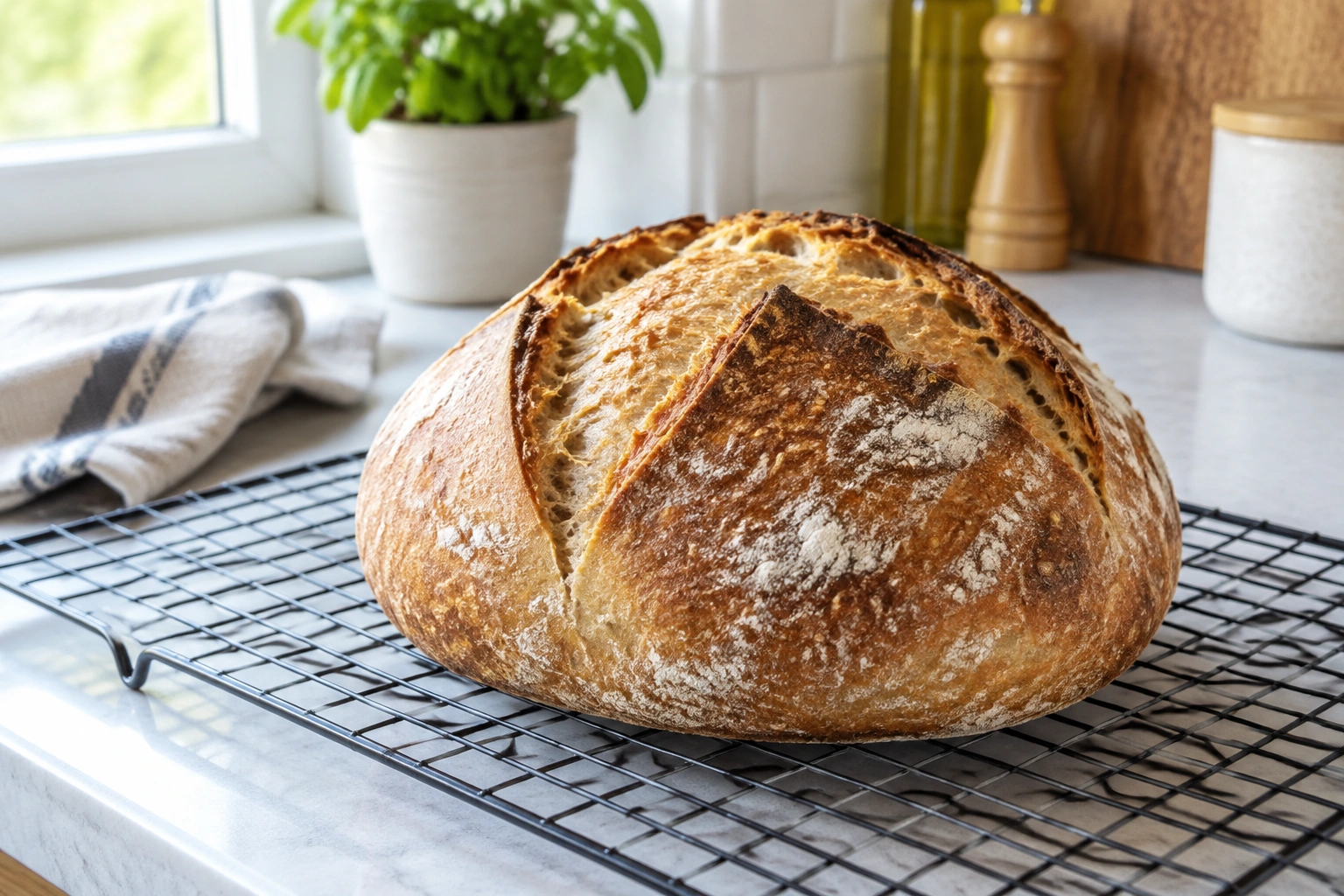
That’s the short version. The longer version is worth learning, because bread can look finished before the center is actually baked through. A dark crust, a strong rise, and a nice oven spring all help, but they do not guarantee a fully set crumb. If you’ve ever sliced into a loaf that looked beautiful outside and gummy inside, you already know why this matters.
Quick Decision Guide: Which Test to Trust First
Use this order if you want the fastest answer:
- Lean crusty loaves: visual cues first, then the tap test, then thermometer if needed.
- Sandwich loaves: thermometer first, then visual cues; use the tap test only as a backup.
- Enriched loaves: thermometer first, then color and feel; do not rely on the tap test alone.
If you only remember one rule, make it this: the more tender or enriched the bread, the less reliable the tap test becomes.
What You Need to Check Bread Doneness
You do not need a lot of gear, but a few tools make the job much easier.
The essentials
- Instant-read thermometer: the most reliable way to confirm internal doneness on many loaves.
- Oven mitts or a heatproof glove: so you can safely remove the loaf for checking.
- A wire rack: useful for cooling and for letting steam escape from the crust.
- Your senses: color, feel, and sound still matter.
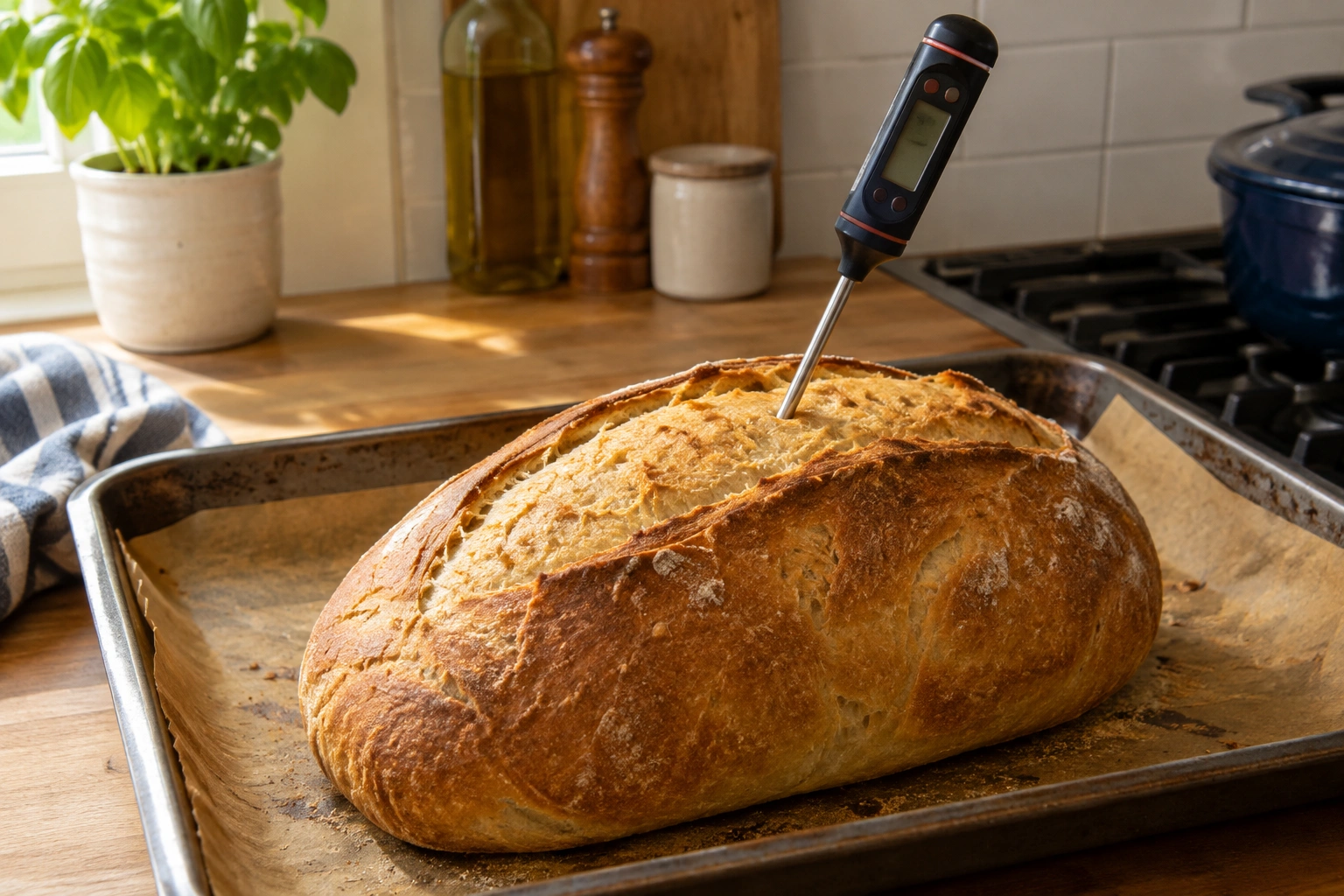
If you bake often, the thermometer is the tool that removes the most guesswork. The tap test can be useful, but it is less consistent across bread styles. A crusty boule and a soft pan loaf do not behave the same way.
What affects which test works best
- Loaf shape: round rustic loaves often give clearer sound cues than pan loaves.
- Pan material and size: metal pans brown faster than glass or dark nonstick pans in many ovens.
- Recipe type: enriched doughs brown quickly and may need temperature confirmation.
- Crust thickness: thicker crusts usually give a clearer hollow sound.
If your recipe is a soft sandwich loaf, brioche, or milk bread, rely less on the hollow sound and more on temperature and overall structure. If you are baking a lean artisan loaf, the tap test becomes more useful as a final confirmation.
Quick Answer: The Most Reliable Signs Bread Is Done
Here is the decision rule I use in practice:
- The crust is evenly browned for the bread style.
- The loaf feels set, not fragile or collapsing.
- The internal temperature is in the right range for that bread.
- For crusty loaves, the bottom sounds hollow when tapped.
If all four line up, the loaf is done.
If the crust looks right but the center is still soft, trust the thermometer over appearance. If the loaf sounds hollow but the crust is pale and the sides still feel weak, give it more time. And if you are working with an enriched bread, a hollow sound alone is not enough.
Step-by-Step: How to Tell When Bread Is Done
1) Check the crust first
Look for even browning, not just a dark top. A finished loaf usually has a crust color that matches the bread style:
- lean crusty bread: deeper golden to rich brown
- sandwich bread: rich golden brown
- enriched loaves: golden brown, but not dry or scorched
A loaf can brown unevenly if it is too close to a heating element or if your oven has hot spots. In that case, the top may look done while the center still needs time.
2) Look at the shape and feel
A baked loaf should look set. The sides should not wobble when you lift it, and the loaf should feel lighter than it did when it went into the oven. If it still seems heavy, soft, or slightly sunken, that is a warning sign.
This is especially useful with pan loaves. A sandwich loaf that has risen well but still feels dense in the middle often needs more time even if the top is already nicely browned.
3) Use the tap test where it makes sense
Remove the loaf from the pan if it was baked in one, then tap the bottom with your knuckles. A done loaf often sounds hollow.
That said, the tap test is best treated as a clue, not a verdict. It works well on crusty artisan bread, but it is less dependable on dense rye, soft pan breads, and enriched loaves. Some breads will not sound dramatically hollow even when they are fully baked.
4) Confirm with internal temperature
Insert an instant-read thermometer into the center of the loaf, usually from the side or bottom if possible, to avoid misleading readings from a hot pan or crust.
Use the target range for the bread style you are baking. If the loaf is close but not quite there, keep baking and check again after a few minutes.
5) Let the loaf cool before you judge the crumb
A bread may be fully baked and still seem soft or slightly gummy right out of the oven. Cooling allows the crumb to set. If you slice too soon, steam escapes and the interior can look underdone even when it is not.
For a fair final judgment, wait until the loaf is cool enough to slice cleanly without compressing the crumb. For most loaves, that means at least warm, not hot; for larger or richer loaves, a longer cool-down is often better.
What Internal Temperature Bread Should Reach
Temperature is the clearest objective check, but the right target depends on the bread style. Use these practical ranges as a home-baking guide:
| Bread type | Typical internal temperature | Best doneness check |
|---|---|---|
| Lean crusty loaves, baguettes, sourdough boules, most rye bread | 205–210°F (96–99°C) | Thermometer plus crust color and tap test |
| Sandwich loaves, soft pan breads, milk bread | 190–200°F (88–93°C) | Thermometer first, then shape and feel |
| Brioche, challah, other enriched loaves | 185–195°F (85–90°C) | Thermometer first, color and feel second |
These are useful starting points, but recipe formulas can shift the ideal range slightly. A wetter dough, a very enriched formula, or a loaf baked in a pan may finish a little differently from a standard recipe.
For many home bakers, this is the most useful takeaway: enriched breads usually finish at a lower temperature range than lean breads.
That difference matters because enriched doughs contain more fat, sugar, or dairy, which changes how they bake and brown. They can look finished earlier than they are. Lean breads usually need a hotter, longer bake to fully dry out the crumb and develop the crust.
If the thermometer says “almost there” but the crust is still pale and the loaf feels soft, keep baking a little longer.
For more on temperature targets and how to read them accurately, see our guide to internal temperature of bread.
How to Use the Tap Test Without Ruining the Loaf
The tap test is simple: remove the loaf from the pan, flip it if needed, and tap the bottom. A hollow sound suggests the loaf is done.
That test is useful because it is fast and does not require cutting into the bread. It is also a good habit for building intuition.
Still, the tap test has clear limits:
- Dense rye may not sound clearly hollow even when baked through.
- Soft enriched loaves often sound less dramatic than crusty artisan bread.
- Pan loaves can be harder to judge because the pan affects the sound.
So use the tap test as a companion check, not the only one. If the loaf sounds hollow and the thermometer is in range, you have a much stronger read on doneness. If the loaf is soft, enriched, or still pale, do not trust the sound by itself.
How to Check Different Types of Bread
Lean crusty loaves
Think baguettes, country loaves, sourdough boules, and similar breads. These usually give the clearest visual and audio cues.
What to look for:
– deep, even browning
– firm crust
– hollow sound when tapped
– internal temperature in the lean-bread range
These loaves are the easiest to judge with the tap test because the crust is dry and the structure is firm. If the crust is dark enough and the loaf sounds hollow, it is usually close to done.
Sandwich loaves
These can be trickier. The top may brown nicely while the sides and center remain underbaked.
What to look for:
– rich golden brown top
– sides that feel set, not squishy
– thermometer confirmation
– less reliance on the tap test
For sandwich loaves, check the thermometer before you trust the crust color. A pan loaf can fool your eye because the pan hides part of the crust. If the top looks done but the loaf still feels soft along the sides, keep baking and check again.
Brioche, challah, milk bread, and other enriched loaves
These breads brown faster because of sugar, fat, and dairy. That makes them especially prone to overbrowning before the center is finished.
What to look for:
– golden brown color, not deep dark brown too early
– a set, springy feel
– internal temperature in the enriched-bread range
– foil tenting if the crust is browning too quickly
For these breads, temperature is usually the most trustworthy check. The hollow tap can help, but it should not be your only signal.
Dense rye and similar loaves
Dense breads can be the most ambiguous. The sound may not be very hollow, and the crumb can stay moist for a long time.
What to look for:
– fully baked crust color
– firm structure
– thermometer confirmation
– patience during cooling
The thermometer is especially helpful here because the sound cue can be inconsistent.
What to Do If the Crust Browns Too Quickly
If the crust is getting dark before the center is done, do not assume the loaf is finished. This is common with enriched doughs and with loaves baked too close to the top heating element.
Here is the practical fix:
- Lower the oven rack if possible.
- Tent the loaf loosely with foil.
- Continue baking until the center reaches the right temperature.
Foil helps slow further browning while the inside finishes baking. It is a simple trade-off: you protect the crust from burning, but you may need a few extra minutes in the oven.
If this happens often, the issue may be oven position or pan choice rather than the recipe itself.
Common Mistakes That Make Bread Seem Done Too Early
Relying on bake time alone
Recipes give a range, not a guarantee. Two loaves can need different finishing times because of dough temperature, pan size, oven behavior, and loaf shape.
Trusting a dark crust too much
A browned crust is helpful, but it is not proof that the center is set. This is one of the most common reasons for gummy bread.
Slicing too soon
Bread that is still hot can seem underbaked even when it is finished. The crumb needs time to set.
Using the tap test on the wrong bread
A hollow sound is useful for crusty loaves, but less trustworthy for soft or dense breads.
Ignoring the loaf’s feel
If the bread feels fragile, heavy, or slightly collapsed, that is meaningful. A finished loaf should feel stable.
How Cooling Affects the Final Doneness Check
Cooling is not just waiting around; it is part of the baking process.
Right after baking, steam is still moving through the crumb. That steam helps finish setting the interior structure. If you cut too early, the bread may appear gummy and the crumb may compress under the knife.
A good rule is to let the loaf cool on a wire rack before slicing. For a reliable crumb check, wait until the loaf is cool enough that slicing will not squash the interior. In practice, that usually means the loaf should be at least mostly cool to the touch; larger loaves and enriched breads often need more time than small lean loaves.
This matters most with softer breads. A milk bread loaf, for example, can feel very tender when hot and much more stable after cooling.
Troubleshooting: Underbaked, Overbaked, or Just Not Cooled Yet
If the crumb is gummy after cooling
That usually points to underbaking, not just impatience. The loaf likely needed more time in the oven.
If the crust is very dark but the center is soft
The loaf browned too fast. Tent it with foil next time and consider a slightly lower rack position.
If the bread feels dry and crumbly
That is often a sign of overbaking. The loaf stayed in too long or baked too hot.
If the loaf seems soft only because it is still warm
Give it more cooling time before deciding anything went wrong.
If you are unsure
Use the thermometer first, then the visual and sound cues. That order gives you the clearest answer with the least risk.
Practical Examples: When Bread Looks Done vs. When It Really Is
A crusty boule comes out with a deep brown crust, feels light when lifted, and sounds hollow on the bottom. That is a strong sign it is done.
A sandwich loaf has a golden top but the sides still feel slightly soft in the pan. That loaf needs thermometer confirmation before you trust the crust color.
A brioche loaf browns quickly and looks finished early. If the center temperature is still below the enriched-bread range, it needs more baking, usually with foil tenting.
A milk bread loaf may seem soft right out of the oven. If it has the right internal temperature and firms up as it cools, the softness is normal.
These are the patterns to remember: crust color tells you a lot, but loaf type tells you how much to trust it.
FAQ
Does the tap-the-bottom test work for all breads?
No. It works best for lean, crusty loaves. It is much less reliable for sandwich loaves, enriched breads, and dense rye.
What is the safest way to know bread is done?
Use an instant-read thermometer near the end of baking, then confirm with color and feel. For crusty loaves, the tap test can be a helpful extra check.
Can bread be done before it cools completely?
Yes, but you should not judge the crumb immediately. Let the loaf cool enough to slice cleanly, or the interior can look gummy even when it is baked through.
Why does my loaf look done but still seem underbaked inside?
It may have browned too quickly, especially if it is enriched or baked in a pan. In that case, rely on internal temperature rather than crust color alone.
When to Consult a Master Baker
If you are still getting gummy centers after trying the thermometer, tap test, and cooling time, the problem may be deeper than doneness alone. Oven calibration, pan size, dough formulation, or shaping can all affect how a loaf bakes. A master baker can help you diagnose whether the issue is heat, structure, or formula.
For a fuller foundation, pair this guide with our article on how to tell when bread dough is ready. Dough readiness and bread doneness are different stages, but they work together.
The more loaves you bake, the more these signals start to line up in your hands and eyes. That is the real goal: not guessing, but recognizing.