
Is an Air Fryer Good for Low-Calorie Meals? A Practical Guide for Healthier Everyday Cooking
If you want a simple answer: yes, an air fryer can be a good tool for low-calorie meals — but mainly because it helps you use less oil, not because it magically makes food low calorie.
That distinction matters.
An air fryer can make chicken, vegetables, potatoes, and other everyday foods lighter than deep-fried versions. It can also make it easier to cook at home instead of ordering takeout or relying on heavily fried convenience foods. But if the ingredients are already calorie-dense — think breaded frozen snacks, creamy sauces, or oversized portions — the air fryer won’t erase those calories.
In other words, the appliance helps most when you already choose reasonably light ingredients and want a crisp texture with less added fat.
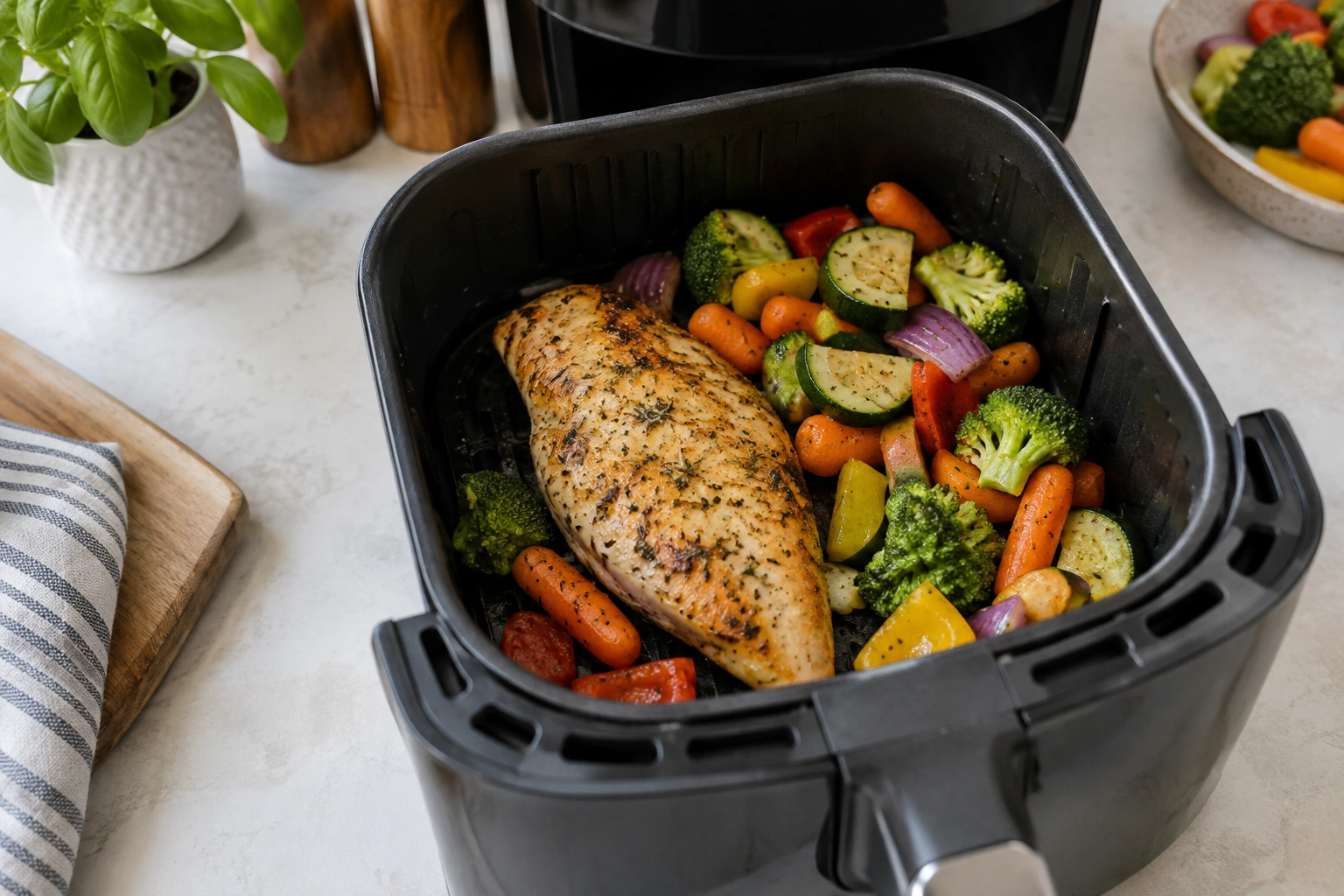
How an air fryer works and why it uses less oil
An air fryer cooks food by moving hot air quickly around it. That circulation helps the surface dry out and crisp up, which is why air fryer food can feel closer to fried food than standard oven food.
An air fryer is basically a small convection oven, so the cooking process is similar to baking or roasting — just in a more compact space with faster air circulation.
The key difference is oil.
Traditional deep frying submerges food in oil, so the food absorbs a lot more fat. Air frying usually needs only a small amount of oil — sometimes just a light spray or a teaspoon or two, depending on the recipe. That means fewer calories from added fat, especially compared with deep frying.
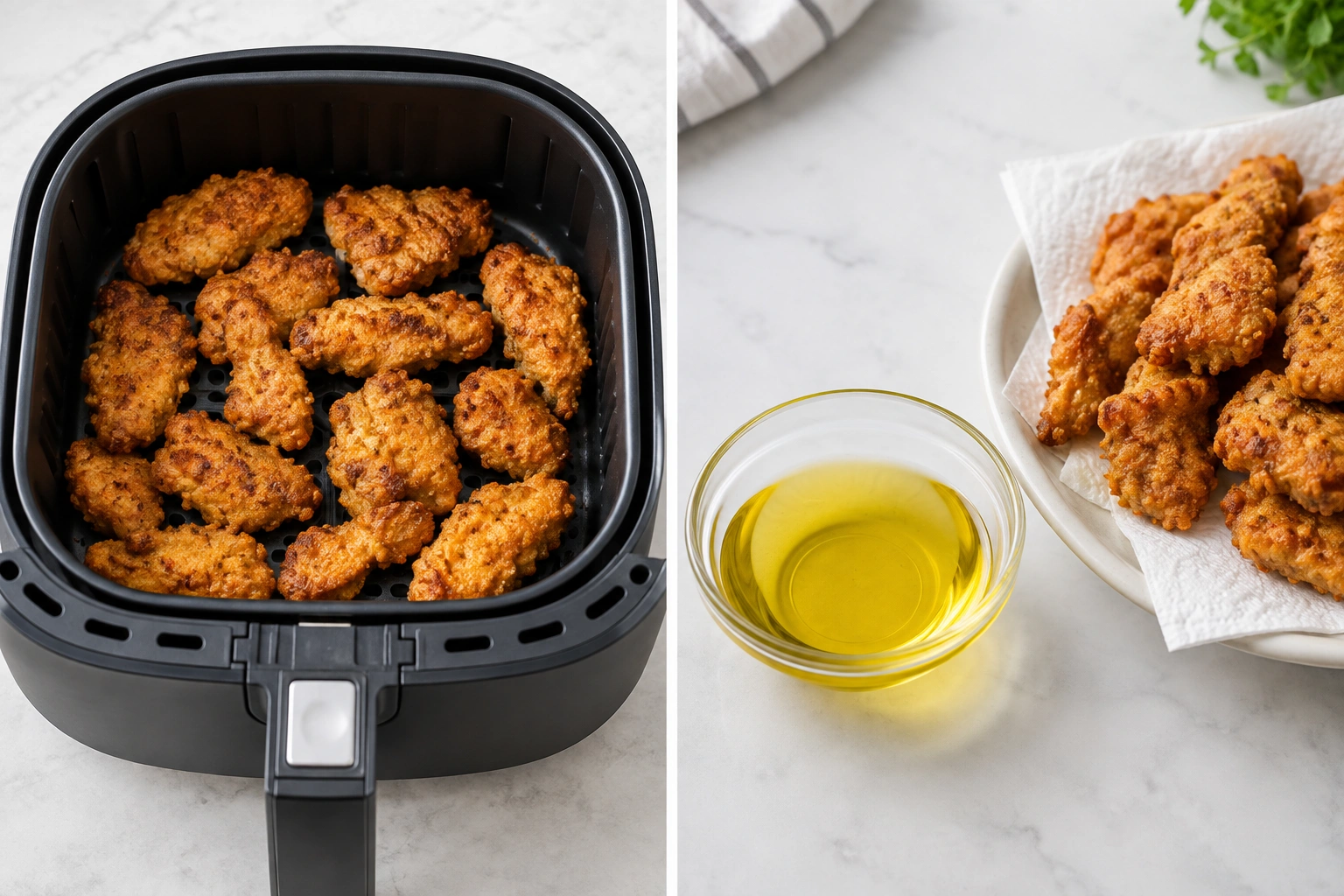
A useful way to think about it: the air fryer is not “removing calories” from food. It is usually reducing the amount of oil added during cooking.
That makes it especially helpful for foods that benefit from a crisp outside, such as:
- chicken cutlets
- potato wedges
- zucchini or broccoli
- salmon
- tofu
- breaded vegetables
For a broader look at how the appliance performs with convenience foods, see this practical guide to air fryer frozen meals.
Does air frying reduce calories or just fat?
Usually, it reduces fat first, and calories as a result.
That sounds subtle, but it matters. Fat is calorie-dense, so when you use less oil, the calorie count often drops. Still, the final calories depend on the whole recipe.
Here’s the difference:
- Lower fat does not always mean low calorie
- A food can be air fried with very little oil and still be high in calories if the breading, sauce, or portion is large
- A lean protein or vegetable dish can stay genuinely light because the base ingredients are already modest in calories
A simple example:
- Air-fried zucchini with a light seasoning: usually a lighter side dish
- Air-fried mozzarella sticks: still calorie-dense, because cheese and breading add up fast
So the air fryer helps most when you use it to cook foods that are already sensible choices for a lighter meal.
Air fryer vs. oven baking, roasting, and pan-frying
If your goal is lower-calorie cooking, the air fryer often has an advantage over deep frying. The comparison is not always as dramatic versus baking or roasting.
Here’s a quick scan-friendly breakdown:
| Cooking method | Oil needed | Calorie impact | Texture | Best use case |
|---|---|---|---|---|
| Air fryer | Low | Usually lower than deep frying | Crisp and browned | Lighter versions of fried-style foods |
| Deep frying | High | Usually highest | Very crispy | Treat foods, not everyday low-calorie meals |
| Baking | Low to moderate | Often similar to air frying for some foods | Less crisp unless adjusted | Sheet-pan meals, casseroles, baked proteins |
| Roasting | Low to moderate | Often similar to baking | Good browning, less crunch | Vegetables, chicken, fish |
| Pan-frying | Moderate to high | Often higher than air frying | Good browning, depends on oil | Quick sautéed foods, cutlets, eggs |
Air fryer vs deep fryer
This is where the air fryer usually wins for calorie reduction.
Deep frying adds a lot of oil, and food absorbs some of it. Air frying can give you a similar style of crispness with far less added fat. WebMD notes that air frying is healthier than frying in oil by most measures and may reduce calories substantially compared with deep frying, but that figure is a broad comparison rather than a universal result for every recipe. See the source at WebMD’s air fryer overview.
Air fryer vs oven baking or roasting
This comparison is closer.
For many foods, baking and roasting can be just as calorie-friendly as air frying because both can use very little oil. The air fryer’s main advantage is often texture and convenience, not a huge nutritional difference.
For example:
- roasted broccoli with a teaspoon of oil is already a light side
- air-fried broccoli with a light spray of oil can be a little crispier and faster
- roasted salmon with asparagus can be nutritionally very similar to air-fried salmon with asparagus if both use only a small amount of oil
If you already enjoy oven cooking, an air fryer may not change calories much. It may simply make lighter meals easier to stick with.
Air fryer vs pan-frying
Pan-frying usually needs more oil than air frying, especially if you want a crisp coating or even browning. That can make the calorie gap meaningful.
A chicken cutlet cooked in a lightly oiled pan is still a reasonable meal. But if you are trying to keep everyday meals lean, the air fryer often gives you more control over how much oil actually ends up in the dish.
Best low-calorie foods to cook in an air fryer
The best air fryer foods for lower-calorie cooking are the ones that already start with a good calorie-to-volume ratio.
Lean proteins
These work well because they are filling without needing much added fat.
Good examples:
- chicken breast
- turkey cutlets
- salmon
- shrimp
- tofu
- white fish
A simple meal of air-fried salmon with asparagus or green beans is a strong example of a lighter dinner that still feels complete.
Vegetables
Vegetables are where the air fryer can really shine.
Try:
- broccoli
- Brussels sprouts
- zucchini
- cauliflower
- green beans
- bell peppers
- mushrooms
These vegetables brown nicely with a little oil, salt, pepper, garlic, or paprika. That gives them more flavor without turning them into a heavy side dish.
Potatoes in reasonable portions
Potatoes are not automatically “bad” for low-calorie eating. The issue is usually preparation and portion size.
Air-fried potato wedges with a small amount of oil can be a lighter option than deep-fried fries. Just keep the serving modest and pair them with protein and vegetables instead of turning them into the main event.
Foods that are less ideal
Some foods can still fit into a balanced diet, but they are not the best choice if your main goal is cutting calories:
- heavily breaded frozen snacks
- cheese-filled items
- battered foods
- large portions of processed appetizers
The air fryer may improve texture, but it will not make those foods low calorie.
How much oil, breading, and seasoning should you use?
This is where many people accidentally add calories back in.
Oil
You usually need less oil than you think. Many foods only need a light coating to help seasoning stick and encourage browning. A spray bottle or a measured teaspoon is often enough for vegetables and lean proteins.
A good rule is this: use oil for texture and browning, not as a default step for every recipe.
Breading
Breading can be the biggest calorie trap in air fryer cooking.
A light coating of seasoned crumbs can work well. Thick breading, heavy batter, or repeated dipping in flour and egg can turn a modest meal into something much richer. If you want a crispy coating, keep it thin and use it on foods that are worth the trade-off, such as chicken strips or fish fillets.
Seasoning
Seasoning is your friend if you want lighter meals that still taste good.
Use:
- garlic powder
- onion powder
- paprika
- black pepper
- chili flakes
- dried herbs
- lemon zest
These add a lot of flavor without meaningful calories.
A simple example: chicken breast rubbed with paprika, garlic, salt, and pepper usually gives you much better results than trying to compensate with extra oil or a sugary glaze.
How sauces, dips, and portion size can cancel out the savings
This is the part people often overlook.
An air fryer can help lower the calories in the cooked food, but sauces and portion size can quickly erase that advantage.
Hidden calorie sources to watch
- creamy dips
- ranch-style dressings
- mayonnaise-based sauces
- sugary glazes
- large amounts of cheese
- butter-heavy finishing sauces
A few tablespoons of a rich dip can add more calories than the air fryer saved.
Portion control still matters
Even a lighter air fryer meal can become calorie-heavy if the portion is oversized. A large basket of potato wedges is still a large serving of potatoes. A “healthy” air-fried chicken dinner can still be too much food if the plate is built around a huge portion of starch and a heavy sauce.
For example, air-fried chicken breast with vegetables can stay fairly light, but the same meal becomes much more calorie-dense if you add a thick creamy sauce and a large pile of breaded fries. Another common trap is a meal that looks healthy on the plate but turns heavy because of sauce, breading, or both.
A practical plate setup:
- half vegetables
- one quarter lean protein
- one quarter starch or potato
- sauce on the side
That format keeps the meal satisfying without depending on the appliance to do all the work.
Common mistakes that make air fryer meals less healthy
A few habits can turn a promising low-calorie setup into something less helpful.
1. Assuming all air fryer food is light
The appliance doesn’t change the calorie density of the ingredients. Frozen breaded foods, cheese-heavy snacks, and battered items can still be high in calories.
2. Using too much oil because it seems harmless
A little oil is useful. Too much oil defeats the purpose. If you pour instead of measure, calories climb quickly.
3. Overcrowding the basket
Overcrowding can lead to uneven cooking, which often tempts people to add more oil, shake in extra breading, or cook longer than needed. Give food enough space so it crisps properly.
4. Relying on calorie-heavy sauces
A “healthy” air fryer meal with a creamy dip can end up less balanced than a simple baked meal with a lighter seasoning.
5. Treating it like a weight-loss shortcut
An air fryer can support better habits, but it does not replace portion control or an overall balanced diet.
Can an air fryer help with weight loss?
It can help, but only as part of a broader pattern.
For weight management, the best value of an air fryer is practical:
- it makes lighter cooking easier
- it encourages home meals instead of takeout
- it gives you crisp texture with less oil
- it works well with lean proteins and vegetables
That said, no appliance causes weight loss by itself. Weight management still depends on what you eat across the day and how much you eat overall.
So if you are asking whether an air fryer is “good for weight loss,” the honest answer is: it can be a useful tool, especially if it helps you cook more low-calorie meals at home.
If you want a comparison with another common kitchen use, my guide on whether an air fryer is good for baking explains where the appliance helps and where a regular oven still makes more sense.
Simple rules for using an air fryer for low-calorie meals
If you want the short version, use these rules:
- Choose lean proteins and vegetables most often
- Measure oil instead of pouring it freely
- Keep breading light and purposeful
- Use dry seasonings for flavor first
- Watch sauces, dips, and dressings
- Build a balanced plate, not just a crisp food item
- Treat the air fryer as one tool, not the whole plan
That approach gives you the real advantage of the appliance: lighter meals that still feel satisfying.
FAQs
Is an air fryer good for low-calorie meals?
Yes, especially when you use it for lean proteins, vegetables, and simple potato dishes. It helps most by reducing the amount of oil needed during cooking.
Does air frying make food healthier than frying?
Usually, yes, compared with deep frying. It generally uses less oil, which can lower fat and calories. But the final result still depends on the ingredients and portion size.
Do you need oil in an air fryer?
Not always, but a small amount often improves browning and flavor. A light spray or a measured teaspoon is usually enough for many foods.
What foods are best for low-calorie air fryer cooking?
Chicken breast, fish, shrimp, tofu, broccoli, Brussels sprouts, zucchini, and cauliflower are all strong choices because they cook well with minimal added fat.
Can sauces ruin an air fryer meal?
They can add a lot of hidden calories. Creamy dips, sugary glazes, and cheese-heavy toppings are the quickest way to turn a light meal into a heavier one.
Is air frying better than baking for calories?
Not always. For many foods, baking and roasting are just as low-calorie as air frying. The air fryer’s bigger advantage is often texture and convenience.
Final verdict
An air fryer is a good fit for low-calorie meals if you use it to cook the right foods. It is especially useful for reducing added oil, making vegetables more appealing, and giving lean proteins a crisp texture without deep frying.
If your meals are built around reasonable portions, simple seasoning, and lighter sauces, the air fryer can be a practical everyday tool for healthier cooking.

