
Is Glass Safe in an Air Fryer? What Home Cooks Should Know Before You Try It
If you’ve ever wondered whether a glass dish can go into an air fryer, the short answer is: sometimes, yes — but only if the specific dish is designed to handle high heat and the air fryer setup gives it enough space.
That caveat matters. Glass is not all the same, and air fryers are not all the same either. A small basket-style air fryer creates tighter clearance and more concentrated heat around the dish than a roomy air fryer oven. So the real question is not just “is glass safe in an air fryer?” but “is this glass dish safe in this air fryer?”
Treat glass as a check first material, not a default choice. If the manufacturer says the dish is oven-safe and suitable for high heat, and it fits your air fryer without touching the heating element or blocking airflow, it may be usable. If not, choose a different material.
Can You Put Glass in an Air Fryer?
Yes, some glass bakeware can be used in an air fryer, but only under the right conditions.
The key is that the dish must be made for high-heat cooking. Some specific Pyrex products are approved for oven or air-fryer use, but that does not mean all Pyrex or all glass bakeware is automatically safe. Product-by-product guidance is what matters.
A good rule: if the glass is clearly labeled oven-safe by the manufacturer, and the air fryer has enough space around it, the dish may be suitable. If the label is vague, missing, or you’re dealing with an older or unknown piece of glassware, skip it.
Why Glass Can Be Risky in an Air Fryer
Glass usually breaks for one of three reasons in an air fryer:
1. Thermal shock
Glass can crack when it experiences a sudden temperature change. A cold dish going into a very hot air fryer is the classic example. The outside of the glass heats faster than the inside, and that uneven expansion can create stress.
2. Rapid, concentrated heat
Air fryers move hot air aggressively. That’s great for crisping food, but it also means the dish is getting hit with strong, fast-moving heat from all sides. Some glassware handles that well; some doesn’t. As a practical rule, the risk goes up when you push toward very high temperatures, especially with glass that lacks clear manufacturer approval.
3. Tight space and contact with hot surfaces
In a basket air fryer, the dish may sit close to the heating element or walls. If it touches those hot surfaces, the risk goes up. Even if the glass is technically oven-safe, cramped placement can still make it a poor fit.
A practical example: a small metal pan may fit comfortably in a basket air fryer, while a glass loaf pan of the same size might be too tall or too close to the top element. In an air fryer oven, a shallow glass casserole dish may fit well on a rack, but a tall dish that nearly touches the upper heating element is a poor choice.
Which Types of Glass Are More Likely to Be Safe
Not all glassware has the same heat tolerance. Here’s how the common types compare.
| Glass type | General air fryer suitability | Main risk | Best use case |
|---|---|---|---|
| Borosilicate glass | Often better suited for heat changes | Still needs manufacturer approval | Oven-style air fryer dishes, casseroles, baked sides |
| Tempered glass | Can be suitable if labeled for oven use | Damage or thermal shock if misused | Reheating or baking in a roomy air fryer |
| Branded oven-safe glassware | Usually the safest category if approved for high heat | Must still fit the appliance | Product-specific dishes used according to the manufacturer guidance |
| Generic glass | Least predictable | Unknown heat tolerance | Usually avoid unless the manufacturer clearly approves it |
Borosilicate glass vs. tempered glass

Borosilicate glass is often associated with better resistance to thermal stress. Tempered glass is strengthened, but that does not automatically make it air fryer-proof. The label and manufacturer instructions matter more than the material name alone.
Pyrex vs. generic glass bakeware
Pyrex is a useful example because the brand provides product-specific guidance. That’s exactly what you want when deciding whether a dish belongs in an air fryer. Generic glassware from an unknown source may be “oven-safe,” but without a clear temperature rating or use guidance, it’s harder to trust.
What about older glass dishes?
Older, chipped, scratched, or visibly worn glass deserves extra caution. Age alone is not the problem; the real concerns are damage, unknown composition, and missing manufacturer guidance. If a dish already has a crack or chip, I would not use it in an air fryer.
Oven-Safe vs. Air-Fryer-Safe: What the Label Actually Means
This is where a lot of confusion starts.
Oven-safe means the dish is intended for oven temperatures under the conditions the manufacturer specifies. That does not automatically mean it is safe for every air fryer. Air fryers can be more compact, and the heating element may be closer to the food than in a conventional oven.
Air-fryer-safe is even more specific. If the manufacturer uses that wording, it’s the clearest sign the product was intended for that appliance. Pyrex’s product-specific air fryer guidance is a good example of the kind of direction to look for.
When you check a product, look for:
– exact wording such as “air fryer safe,” “air fryer approved,” “oven-safe,” or “safe up to [specific temperature]”
– a temperature limit on the packaging or product page
– symbols or icons showing oven or air fryer compatibility
– notes about whether the dish can go under a broiler, in convection settings, or in compact appliances
– manufacturer instructions that mention clearance from heating elements or do not use in air fryers
Use this decision rule:
- Best case: the dish is explicitly approved for air fryer use.
- Next best: the dish is clearly oven-safe, fits with clearance, and the manufacturer does not warn against compact convection appliances.
- Do not guess: if the label is unclear, or the dish is not designed for high heat, choose another material.
If you want a more general safety check for liners and accessories, it can also help to compare with guidance on when parchment paper is safe in an air fryer and how silicone accessories behave in air fryers. The same basic principle applies: product label plus appliance fit matters more than assumptions.
Basket Air Fryer vs. Air Fryer Oven: Does the Type Matter?
Yes — a lot.
Basket-style air fryer
Basket air fryers are usually the stricter test for glass. Space is tighter, the heating element is closer, and the airflow is more concentrated. A glass dish that fits physically may still be too close to the top or sides.
That means:
– smaller dishes are usually safer than large ones,
– low-profile dishes are better than tall ones,
– and anything that blocks airflow is a problem.
Air fryer oven
Air fryer ovens usually give you more room, which makes glass easier to use. A small casserole dish or ramekin may fit well here, especially if it sits on a rack with clear space around it.
Still, “more room” is not the same as “safe automatically.” The dish still needs manufacturer approval and enough clearance from heating elements.
A simple comparison:
– Basket air fryer: better for metal, silicone, or very small approved glass dishes.
– Air fryer oven: more forgiving for approved glass bakeware, especially for baked pasta, casseroles, or small desserts.
How to Use Glass Bakeware in an Air Fryer Safely
If your dish is approved and fits properly, these habits reduce risk.
Preheat carefully
If your recipe requires preheating, let the air fryer come up to temperature first, then place the dish in carefully if the recipe and manufacturer guidance allow it. What you want to avoid is a big sudden temperature swing, especially with a cold dish straight from the fridge. If the product instructions say to preheat with the dish inside, follow that instead.
Avoid cold-to-hot shock
Don’t move a very cold glass dish directly into a very hot air fryer unless the manufacturer specifically says it can handle that kind of use. If the dish has been refrigerated, let it sit briefly at room temperature first when appropriate.
Leave room around the dish
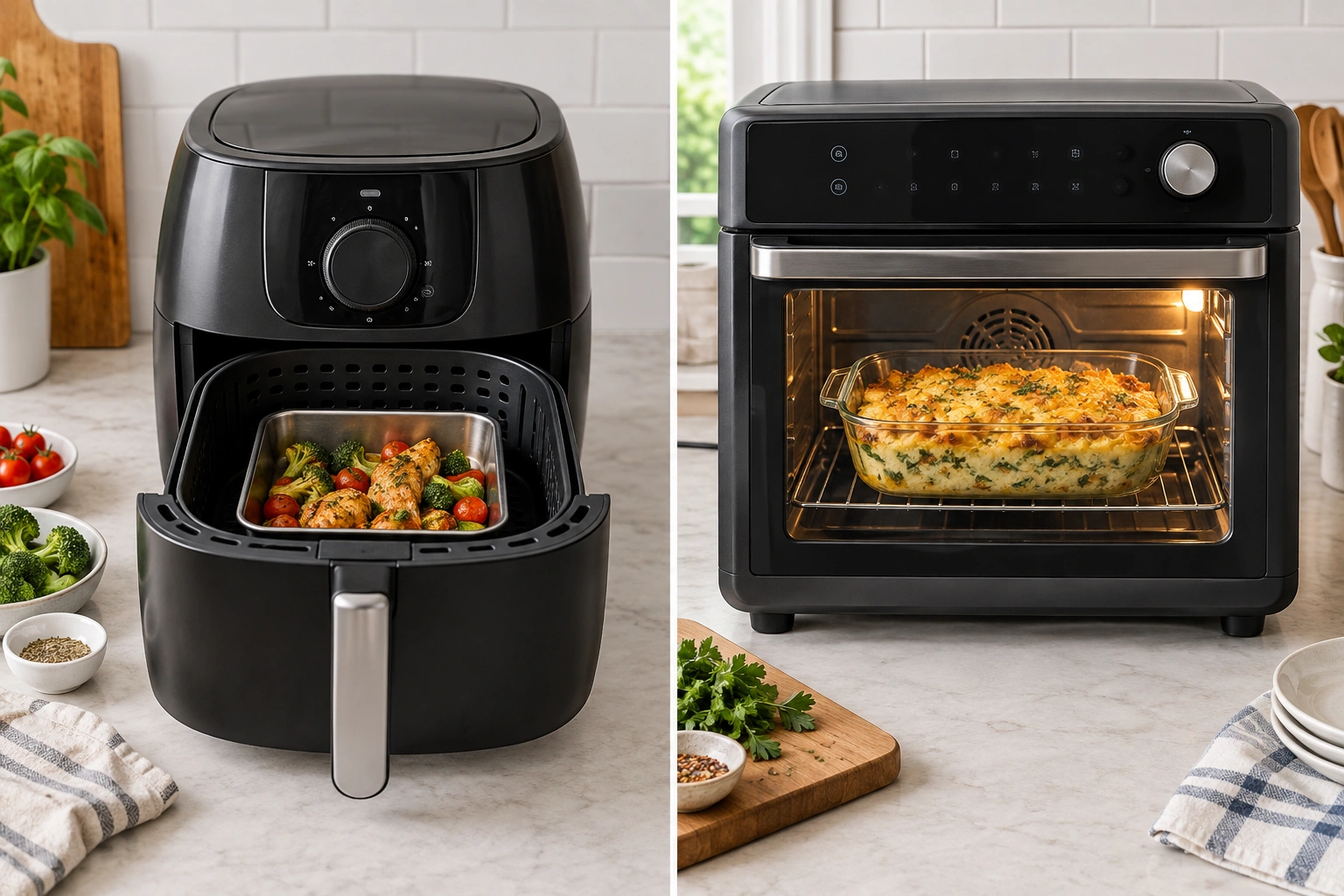
Glass should not touch the heating element, the top of the cavity, or the side walls. Air needs space to circulate. If the dish takes up too much of the basket or oven, it’s the wrong size.
Keep temperatures moderate when possible
I’m careful with high temperatures and glass. If a recipe can be done at a slightly lower setting without losing the result, that’s often the safer route. For example, a small baked egg dish or a leftover casserole usually doesn’t need the hottest setting your air fryer can reach.
Use a stable base
Set the dish flat and level. A wobbly fit increases the chance of a spill, and spilling hot food into the bottom of the air fryer can make cleanup harder and handling riskier.
When Not to Use Glass in an Air Fryer
There are some clear stop signs.
Do not use glass if:
– the dish is chipped, cracked, scratched, or visibly damaged,
– the manufacturer does not approve it for oven or high-heat use,
– the dish is too large for the basket or cavity,
– it would sit too close to the heating element,
– the recipe calls for extreme temperature changes,
– or the glass is an unknown type with no reliable label.
One common mistake is assuming that because a glass dish works in the oven, it will work anywhere a heat source exists. An air fryer’s compact design changes the equation. A dish that performs fine in a roomy oven may be too exposed in a basket-style appliance.
Another mistake is using a dish just because it “fits.” Fit alone is not enough. Clearance, heat rating, and condition all matter.
Safer Alternatives to Glass for Air Fryer Cooking
If you’re not confident about the glass dish, there are better options.
Metal pans
Metal is generally the easiest and most common choice for air fryer cooking. It handles heat well, heats quickly, and usually fits compact appliances better than glass. It’s a strong pick for muffins, small casseroles, and baked sides.
Trade-off: metal often browns food faster, which is useful for crisp edges but not always ideal for delicate custards or very moist dishes.
Ceramic bakeware
Ceramic can work well if it’s oven-safe and sized correctly. It’s a solid option for small casseroles or ramekins. The downside is that not every ceramic dish tolerates rapid temperature change equally well, so the label still matters.
Silicone
Silicone is flexible and convenient, especially for molds and liners. It’s less likely to crack from impact, but it won’t brown food the same way metal does. For muffins or egg bites, that trade-off is often acceptable.
If you want a deeper comparison, I also cover how silicone performs in an air fryer, which can help when glass is too risky or too bulky.
Quick Decision Checklist Before You Put Glass in the Air Fryer
Use this before every first-time use:
- Is the dish clearly labeled oven-safe or air-fryer-safe?
- Is it from a known manufacturer with product guidance?
- Is the glass free of chips, cracks, or damage?
- Does it fit with space around it?
- Will it stay away from the heating element?
- Is the air fryer basket or oven style suitable for the dish size?
- Are you avoiding a sudden hot-cold temperature change?
If you can answer “yes” to all of those, the dish may be a reasonable candidate. If even one answer is uncertain, use metal, ceramic, or silicone instead.
When to Consult a Professional
If a glass dish has been damaged, has already cracked once, or you’re unsure whether a specific product is heat-rated for your appliance, contact the cookware manufacturer before using it. For the air fryer itself, check the appliance manual or support page. That’s the most reliable way to avoid guessing with a material that can fail suddenly.
FAQ
Can I put Pyrex in an air fryer?
Often yes, but only if the specific Pyrex dish is approved for the type of heat and use you need. Check the product guidance and make sure the dish fits your air fryer with clearance.
Is regular glass safe in an air fryer?
Usually I would not assume so. Regular or unbranded glass may not be designed for rapid, concentrated heat. Unless the manufacturer says otherwise, choose a safer alternative.
Will glass crack from air fryer heat?
It can, especially if it experiences thermal shock or sits too close to a heating element. The risk depends on the glass type, condition, and the air fryer design.
Can I use glass in a basket air fryer?
Sometimes, but basket air fryers are less forgiving because they are compact. Small approved dishes may work; large or tall glassware is more likely to be a problem.
What is the safest alternative to glass?
Metal is generally the easiest and most reliable option for air fryers. Ceramic and silicone can also work well when they are properly rated and sized for the appliance.
Does oven-safe mean air-fryer-safe?
Not automatically. Oven-safe is a good sign, but air fryers can have tighter clearances and more concentrated heat. Always check the manufacturer’s instructions.
What should I look for on packaging or product pages?
Look for exact wording like “air fryer safe,” “oven-safe,” or a listed maximum temperature, plus compatibility symbols and any notes about compact appliances or clearance from heating elements.
What should I do if my glass dish is chipped?
Don’t use it in the air fryer. A chipped dish is more vulnerable to breakage under heat stress.
Can I put a cold glass dish into a hot air fryer?
That’s risky unless the manufacturer specifically allows it. Sudden temperature changes are one of the main reasons glass cracks.
Bottom line: is glass safe in an air fryer?
Sometimes, yes — but only when the dish is specifically rated for the job, fits the appliance properly, and is handled to avoid thermal shock. When in doubt, metal is the safer everyday choice.

