
Why You Should Let Bread Cool Before Cutting It

Fresh bread is one of the great pleasures of baking: the crackle of the crust, the smell of steam, the soft give of the crumb. But if you slice too soon, that beautiful loaf can turn disappointingly gummy, squashed, or even a little wet in the center.
As a baker, I think of cooling as part of the bake, not an optional pause after it. The oven builds structure, but the loaf finishes setting as it cools. That’s why the question isn’t just whether to let bread cool before cutting, but how long to wait for the type of bread you baked and what you want from it.
Why Bread Needs Time to Set After Baking
When bread comes out of the oven, the inside is still changing. The crumb is hot, fragile, and full of steam. That steam is not just trapped moisture; it’s part of the loaf’s internal structure at that moment.
Three things are happening during cooling:
1. Steam is moving out of the crumb

Freshly baked bread contains a lot of internal steam. As the loaf cools, that steam gradually escapes or redistributes. If you cut too early, the steam rushes out all at once, and the crumb can collapse or seem sticky.
2. Starch is finishing its set
During baking, starches gelatinize, meaning they absorb water and swell. Cooling helps that starch network firm up. If you slice before that network has stabilized, the crumb can look underbaked even when the loaf actually reached the right oven temperature.
3. Carryover cooking is still happening
The loaf keeps cooking for a short time after it leaves the oven. The heat trapped in the interior continues to move outward, helping the center finish setting. That’s one reason a loaf can feel done on the outside while still being too soft inside.
If you want clean slices and a loaf that holds its shape, cooling is not wasted time. It’s part of the final texture.
How Long to Wait for Different Types of Bread
There isn’t one perfect cooling time for every loaf. A small roll loses heat much faster than a thick artisan boule, and enriched breads tend to hold moisture differently than lean doughs.
Here’s a practical guide you can use at home:
| Bread type | Typical cooling window | What to expect | Best slicing approach |
|---|---|---|---|
| Small rolls or dinner rolls | About 20–40 minutes | Often warm enough to serve, but still soft | Tear or split gently if serving warm |
| Small pan loaf | About 30–60 minutes | Usually cools quickly and slices sooner than a full-size loaf | Slice once the center feels close to room temperature throughout |
| Standard sandwich loaf | About 1–2 hours | Usually cool enough for cleaner slices | Slice once the pan and crumb feel only slightly warm |
| Lean artisan loaf | Often 1–2 hours, sometimes longer for larger loaves | Crust sets first; center may stay warm longer | Wait until the loaf feels close to room temperature throughout |
| Enriched bread, such as brioche or milk bread | Often longer than lean bread | Softer crumb holds more moisture and can seem “not done” if cut early | Give it extra cooling time before slicing |
| Large artisan boule or very large loaf | Often 2 hours or more | Heat lingers in the center and can take a long time to dissipate | Let it cool on a rack until the middle is no longer steamy |
A useful rule: the larger and richer the loaf, the more patience it usually needs.
That’s why a sandwich loaf may be ready in around 1–2 hours, while a larger sourdough-style loaf may need more time to finish setting. Some bakers prefer to leave sourdough for several hours before slicing when they want the cleanest crumb and the best flavor development.
Best Way to Cool Bread Properly
Cooling bread is simple, but a few small choices make a big difference.
Step 1: Remove the loaf from the pan at the right time
If the bread was baked in a pan, let it sit briefly so it firms up enough to handle, then turn it out. Leaving it in the pan too long traps steam underneath and can soften the bottom crust.
Step 2: Set it on a cooling rack
A rack allows air to circulate around the loaf. That matters because the bottom crust can turn soggy if the bread sits on a solid surface.
Step 3: Keep the loaf uncovered
Wrapping warm bread traps moisture and softens the crust. If you want a crisp crust, let the loaf breathe while it cools.
Step 4: Resist the first slice
This is the hardest part, especially when the kitchen smells amazing. But if the loaf is still actively steaming, the crumb is still settling. A few extra minutes can make the difference between a tidy slice and a compressed one.
If you’re cooling multiple loaves, give each one its own space. Crowding them slows airflow and keeps the crust from drying properly.
How to Tell Bread Is Ready to Slice
You do not need a thermometer to make a good call, though one can help if you use it often. Most of the time, your hands and eyes are enough.
Look for these signs:
- The loaf feels firm instead of soft and springy on the surface.
- The bottom no longer feels hot when lifted carefully.
- Steam is no longer visibly escaping from cracks or the cut ends.
- The crust has lost its “just-baked” softness and feels set.
- The loaf feels close to room temperature throughout, not just cool on the outside.
- When you press lightly, the loaf gives a little but does not feel fragile.
A loaf can look finished on the outside while still being too warm inside. That’s especially common with thick artisan loaves and enriched breads. If you cut one and the knife comes out tacky, or the slices compress easily, the crumb probably needed more time.
What Happens If You Cut Bread Too Soon
Cutting early doesn’t ruin bread, but it does change the texture in ways most bakers notice immediately.
The crumb can seem gummy
This is the most common complaint. The interior may look dense, sticky, or almost underbaked even when the loaf is fully cooked. That’s often a cooling problem rather than an oven problem.
Slices compress instead of staying open
Fresh bread is delicate. If the structure has not fully set, the pressure of the knife can squeeze the crumb together. You end up with a tighter slice and less of that airy interior you worked for.
The loaf may tear instead of slice cleanly
Warm bread can pull apart in ragged strands, especially if you use a dull knife. That tearing is a sign the crumb is still soft and not fully stabilized.
The crust and crumb can separate awkwardly
Sometimes the crust seems ready, but the inside is still too moist. That can create a mismatch: a firm shell around a soft, fragile center.
If you’ve ever thought, “This bread tastes a little raw,” but the bake time was correct, cooling was probably the missing step.
Warm Bread vs Fully Cooled Bread
There’s a real trade-off here.
Warm bread is comforting, aromatic, and soft. It’s wonderful with butter at the table, especially for rolls or a rustic loaf meant to be eaten right away.
Fully cooled bread slices better, stores better, and gives you a more accurate read on the crumb. That matters if you’re making sandwiches, toast, or bread you plan to wrap and save.
So the question becomes: what matters more for this loaf, immediate comfort or clean structure?
For dinner rolls served with a meal, warm is often the goal. For a sandwich loaf or a sourdough boule, waiting usually gives you a better result.
When It’s Okay to Serve or Cut Bread Warm
There are times when I would absolutely serve bread before it is fully cool.
Small rolls
Small rolls can often be enjoyed warm after about 20–40 minutes. They’re usually meant for tearing rather than precision slicing, so a little softness is part of the charm.
Bread served at the table
If the loaf is meant to be eaten immediately with soup, stew, or butter, warm bread makes sense. Just expect a softer crumb and a less tidy cut.
When you only need a portion
If you want one warm slice right away, cut a small end piece and leave the rest to cool. That gives you the best of both worlds: immediate enjoyment and a loaf that still sets properly.
When the bread is not meant for neat slices
Some breads are better torn than sliced while warm. Think of rustic loaves or dinner rolls where texture and comfort matter more than perfect geometry.
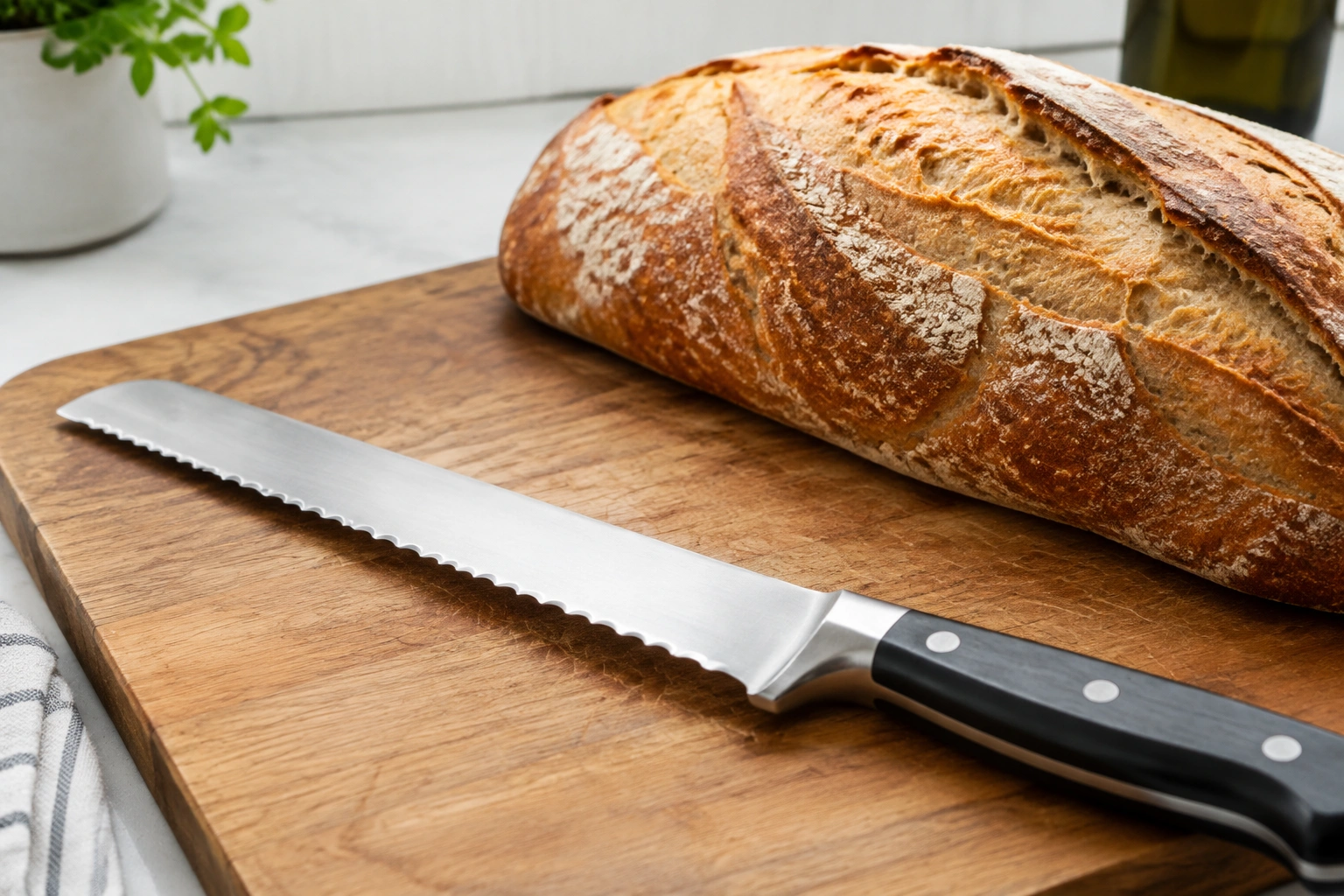
One caution: warm bread is more fragile, so if you do slice it, use a sharp serrated knife and a very light sawing motion. A dull blade will crush the loaf faster than any cooling mistake.
Common Mistakes That Lead to Gummy Slices
A few patterns show up again and again in home kitchens.
Using one cooling time for every loaf
A small pan loaf and a large country boule do not lose heat at the same rate. The bigger loaf almost always needs more patience.
Judging by crust alone
A crust can feel cool while the center is still steaming. The outside is not the best indicator.
Leaving bread in the pan too long
This is especially common with sandwich loaves. The pan traps heat and moisture underneath, which can soften the bottom crust.
Cutting with the wrong knife
A dull knife compresses the crumb. A sharp serrated knife works better for crusty bread because it saws through without pressing down too hard.
Confusing “warm” with “ready”
A loaf can be pleasantly warm and still not fully set. That’s fine if you want warm bread, but not if you want clean, even slices.
Troubleshooting: If Your Bread Sliced Poorly
If you already cut the loaf and it came out gummy or squashed, don’t assume the recipe failed.
Ask yourself three questions:
- Was the center still steaming when you sliced it?
- Was the loaf large enough to need more cooling time?
- Did the knife press down instead of sawing cleanly?
If the answer to any of those is yes, cooling or slicing technique was likely the issue.
What to do next:
- Let the remaining loaf cool longer before cutting the rest.
- Use a sharper serrated knife.
- Slice with gentler pressure.
- For future loaves, give the bread more time on a rack before handling it.
If the bread is already sliced, you can still use it. Toasting often improves the texture of a slightly gummy slice, especially for breakfast or open-faced sandwiches.
Practical Examples by Bread Type
Artisan sourdough loaf
A rustic sourdough boule often looks finished long before the center has fully settled. If you slice it too early, the crumb can seem damp and tight. Give it enough time on a rack that the loaf feels stable all the way through, not just on the crust.
Sandwich bread
A standard loaf in a pan usually cools faster than a big artisan round, but it still needs time to release steam. If you want neat slices for sandwiches, wait until the loaf is only slightly warm and no longer soft in the middle.
Enriched bread
Brioche, milk bread, and other enriched doughs carry more fat and often feel softer for longer. That softness is part of their appeal, but it also means they can seem underdone if cut too early. Extra cooling time helps the crumb set without smashing.
Dinner rolls
Rolls are the easiest exception. They’re small, they cool quickly, and they’re often served warm on purpose. If the goal is a soft, pull-apart texture, you can serve them sooner than a full loaf.
A Simple Decision Rule You Can Use Every Time
When you’re deciding whether to slice, ask yourself this:
- If I want clean slices for storage or sandwiches, wait until the loaf is fully cool.
- If I want warm bread at the table, a shorter cooling time is fine, especially for small rolls.
- If the loaf is large, enriched, or still steaming, give it more time.
That one decision rule will keep you from guessing.
The best bread is not just baked well; it’s allowed to finish becoming bread after it leaves the oven. That final cooling stage is where the crumb firms and the loaf becomes ready for the knife.
FAQ
How long should bread cool before slicing?
It depends on the loaf. Small rolls may be ready in 20–40 minutes, while standard sandwich loaves often need 1–2 hours. Large artisan boules and enriched breads usually need longer.
Can you cut bread while it’s still warm?
Yes, especially if you want to serve it warm at the table. Just know the crumb will be softer and the slices may not be as clean.
Why is my bread gummy after baking?
A gummy texture often means the bread was sliced too soon, even if it was fully baked. Cooling lets steam escape and gives the starches time to set.
Should bread cool on a rack or in the pan?
A cooling rack is best once the loaf is firm enough to remove from the pan. It lets air circulate and helps prevent a soggy bottom crust.
How do I know bread is cool enough to slice?
The loaf should feel close to room temperature throughout, not just cool on the outside. It should no longer be visibly steaming, and the crust should feel set.