
Should Kiwi Be Refrigerated? A Practical Guide to Storing Kiwi the Right Way

If you only need the quick answer: ripe kiwi should usually be refrigerated, while firm, unripe kiwi should stay at room temperature until it softens. That one rule prevents most of the waste people run into with this fruit.
Kiwi is one of those produce items that keeps changing after you bring it home. Leave it on the counter too long and it can go from pleasantly ripe to mushy. Chill it too early and it may slow ripening before it has developed the texture you want. The best storage choice depends on where the fruit is in that process.
For busy kitchens, the goal is simple: ripen first, then refrigerate. That approach gives you better control over texture and helps you stretch a grocery purchase over several days instead of losing fruit to overripening.
Quick Answer: Should Kiwi Be Refrigerated?
Yes—but usually only after it is ripe.
Use this decision rule:
- Hard kiwi: keep it on the counter
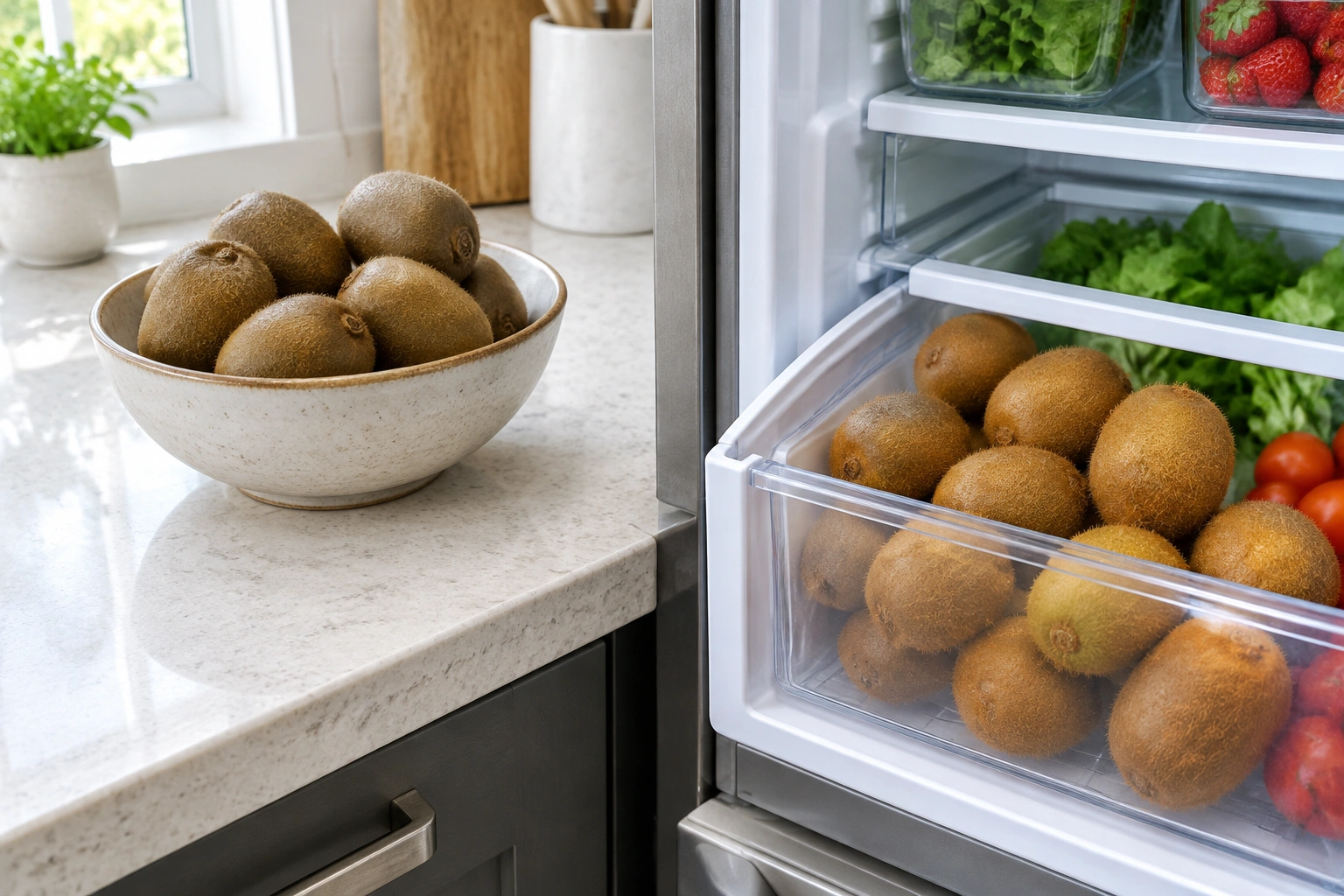
- Slightly soft kiwi: move it to the fridge
- Cut or peeled kiwi: refrigerate right away in a sealed container
That rule works because kiwi continues ripening after harvest. Room temperature helps that process move along. Cold storage slows it down, which is useful once the fruit is ready to eat.
If you are shopping for the week, this is the simplest way to think about it:
- Buy firm kiwi if you want it to last longer
- Leave it out until it gives a little when pressed
- Refrigerate it once it reaches the ripeness you want
What You Need Before Storing Kiwi
You do not need special equipment, but a few basics make storage easier:
- A countertop spot away from direct sun for ripening
- A paper bag if you want to speed ripening
- An airtight container for cut or peeled kiwi
- The produce drawer in your refrigerator for ripe whole kiwi
- Optional: a banana or apple to help ripen firm kiwi faster
The reason these tools matter is control. A paper bag can help trap ethylene from fruit like bananas or apples and may speed ripening, though the effect varies. A sealed container, on the other hand, protects cut kiwi from drying out and from picking up fridge odors.
If your kitchen is warm, kiwi will soften faster on the counter. If you are trying to hold ripe kiwi for later in the week, the refrigerator is the better tool.
How to Tell if Kiwi Is Ripe Enough for the Fridge
Before you refrigerate kiwi, check two things: feel and appearance.
1. Feel
Gently press the fruit with your thumb. Ripe kiwi usually gives slightly when pressed. If it feels rock hard, leave it out longer.
2. Appearance
The skin should look intact, not wrinkled or leaking. A little softening is normal. Deep wrinkles, wet spots, or visible mold are warning signs.
A useful rule: if the kiwi is still hard, it is probably better on the counter; if it is ripe but not oversoft, it is ready for the fridge.
That matters because refrigeration can slow further ripening, but it does not improve an unripe kiwi. If you chill fruit too early, you may end up with a kiwi that softens less evenly or never reaches the flavor you expected.
Step-by-Step: Store Unripe Kiwi at Room Temperature
If your kiwi is firm, give it time on the counter first.
1. Place it in a single layer
Set the fruit in a bowl or basket where air can move around it. Avoid stacking heavy produce on top of kiwi, since bruising can shorten its life.
2. Keep it away from direct heat and sun
A windowsill or warm appliance top can push the fruit toward overripening. A shaded countertop is better.
3. Check it daily
Kiwi can change from hard to ready to eat faster than many people expect, especially in a warm kitchen. A quick daily check keeps you from missing the ideal window.
4. Speed ripening if needed
If you need kiwi sooner, place it in a paper bag with a banana or apple. That can help the fruit soften faster.
5. Move it to the fridge when it is ripe
Once the kiwi gives slightly to pressure, refrigerate it if you are not eating it right away.
This method is especially useful for meal planning. For example, if you buy a bunch of firm kiwi on Sunday but want it for lunches later in the week, leave it out for a few days first, then chill it once it is ready.
Step-by-Step: Refrigerate Ripe Whole Kiwi
Once kiwi is ripe, cold storage helps it stay usable longer.
1. Make sure the fruit is ripe, not hard
Do not chill kiwi just because you bought it. Let it soften first unless it is already at the stage you want.
2. Place it in the produce drawer
The produce drawer is usually the most stable part of the fridge for fruit. It helps reduce drying and limits temperature swings from the door.
3. Choose loose, breathable, or sealed storage based on the situation
Whole kiwi can be stored loose in the produce drawer if you will use it soon and the drawer is not crowded. A breathable bag or vented container works well if you want to reduce bruising while still letting air circulate. An airtight container is best only if the kiwi is already cut or peeled, or if you need to keep a peeled fruit portion from drying out.
4. Separate it from fruit you want to slow down
If you are trying to hold kiwi at its current ripeness, keep it away from bananas, apples, and other high-ethylene fruit. Those can push it toward overripening faster.
5. Check it every day or two
Ripe kiwi in the fridge can still soften over time. If you wait too long, the texture may become less pleasant even if the fruit is still usable.
Refrigerating ripe kiwi is the best way to reduce waste when you cannot eat it immediately. It is also the better choice for families who buy fruit in larger quantities and need it to last through the week.
Step-by-Step: Store Cut or Peeled Kiwi Safely
Once kiwi is cut, the storage goal changes. You are no longer just managing ripening; you are also protecting the exposed fruit from drying out and spoilage.
1. Refrigerate cut kiwi promptly
Do not leave sliced or peeled kiwi out at room temperature for long. Put it in the fridge as soon as practical after cutting.
2. Use a sealed container
An airtight container helps keep the fruit from drying out and keeps fridge odors from affecting flavor.
3. Keep pieces as intact as possible
If you are meal prepping, larger pieces usually hold texture better than very small dice. Less exposed surface area means less moisture loss.
4. Add a cover only when needed
If you are packing kiwi for lunch, a tight lid or well-sealed container is more reliable than loose wrapping. The goal is to keep the fruit from getting limp or watery.
5. Use cut kiwi sooner rather than later
Even when chilled, cut fruit does not keep its best texture forever. Plan to use it soon after slicing.
For busy households, this is the version that saves the most time. You can wash, peel, and portion kiwi once, then grab it for lunch boxes or snacks later. Just remember that cut fruit belongs in the fridge, not on the counter.
How Long Kiwi Lasts: Counter vs. Fridge
Exact timing varies with ripeness when you buy it, room temperature, and how often the fruit is handled. But the general pattern is clear: the counter helps kiwi ripen; the fridge helps it last longer once ripe.
| Kiwi stage | Best storage place | Typical timeline | What to expect | Best container choice |
|---|---|---|---|---|
| Hard, unripe whole kiwi | Room temperature | Usually about 2 to 5 days to soften, sometimes longer | Continues ripening | Bowl, basket, or paper bag |
| Ripe whole kiwi | Refrigerator | Often about 5 to 7 days, sometimes a bit longer | Slower softening, longer usable window | Loose in produce drawer or lightly contained |
| Cut kiwi | Refrigerator | Best used within about 2 to 3 days | Needs cold storage for quality | Airtight container |
| Peeled kiwi | Refrigerator | Best used within about 1 to 2 days | Most exposed to drying out | Airtight container |
A practical way to use this table: if the kiwi is still hard, do not rush it into the fridge. If it is ripe and you are not eating it today, chill it. If it is cut, the fridge is nonnegotiable for quality and safety.
Does Refrigerating Kiwi Affect Texture or Flavor?
Yes, but usually in a manageable way.
Cold storage slows further ripening, which is good for shelf life. The trade-off is that kiwi can taste less fragrant or feel firmer when it has been chilled. That is not a problem for most people, especially if the fruit was already ripe before refrigeration.
Here is the practical trade-off:
- Counter storage: better for ripening and developing the texture you want
- Fridge storage: better for holding ripe fruit and reducing waste
If you like kiwi very soft and fragrant, eat it soon after it ripens. If you prefer to spread it across several days, refrigerate it once it reaches the right stage.
Common Mistakes to Avoid When Storing Kiwi
A few simple errors cause most kiwi waste.
Refrigerating hard kiwi too early
This slows ripening before the fruit is ready. If the kiwi feels firm and lacks aroma, leave it out.
Leaving ripe kiwi on the counter too long
Once kiwi is ripe, room temperature can push it past the sweet spot quickly. Move it to the fridge if you are not eating it right away.
Storing cut kiwi uncovered
Exposed fruit dries out, absorbs odors, and loses texture faster.
Packing kiwi under heavy produce
Bruising can make the fruit soften unevenly and spoil sooner.
Forgetting to check ripening fruit daily
Kiwi can change fast. A quick check helps you catch the ripe stage before it slips into overripeness.
How to Tell if Kiwi Is Spoiled or Just Overripe
Soft does not always mean bad.
Overripe kiwi may be very soft, with a sweeter, softer texture. It can still be usable if it smells normal and shows no signs of spoilage.
Spoiled kiwi is different. Discard it if you notice:
- Mold on the skin or flesh
- A fermented, sour, or off smell
- Wet leakage
- Slimy texture
- Strong discoloration inside the fruit
If the kiwi is extremely mushy and smells wrong, do not try to salvage it. That is a food-quality and food-safety issue, not just a texture issue.
Practical Storage Examples for Busy Households
Grocery haul for the week
You bring home several firm kiwi fruits on Monday. Leave them on the counter for a few days, checking daily. When they soften slightly, move the ripe ones into the fridge so they are ready for lunches later in the week.
Meal prep for school or work lunches
You peel and slice kiwi on Sunday night. Pack it in a sealed container and refrigerate it right away. That keeps the fruit from drying out before you need it.
Wanting kiwi for a fruit salad tomorrow
If the kiwi is still hard, place it in a paper bag with a banana overnight. Check it in the morning. If it has softened enough, refrigerate it until you are ready to serve.
Trying to avoid waste
A kiwi on the counter has gone from firm to slightly soft, but you do not want it today. Move it to the fridge instead of leaving it out. That small decision often saves the fruit from becoming overripe before you can use it.
FAQ
Can kiwi ripen in the fridge?
Kiwi can soften slowly in the fridge, but refrigeration is mainly for slowing ripening, not speeding it up. If it is hard, leave it at room temperature first.
Should kiwi be stored in a bag, container, or loose in the fridge?
Ripe whole kiwi can be stored loose in the produce drawer if you will use it soon. A breathable bag or vented container is useful if you want a little protection from bruising. Use an airtight container for cut or peeled kiwi.
How long does kiwi take to ripen on the counter?
Hard kiwi usually takes about 2 to 5 days to soften at room temperature, though warmer kitchens can speed that up.
How long does ripe kiwi last in the fridge?
Ripe whole kiwi often lasts about 5 to 7 days in the refrigerator, sometimes a bit longer if handled gently.
How long does cut kiwi last?
Cut kiwi is best used within about 2 to 3 days in the fridge. Peeled kiwi is usually best within about 1 to 2 days.
For broader kitchen storage guidance, it can also help to compare kiwi with other produce that ripens after harvest, like this practical guide to refrigerating plums.
The Bottom Line
Should kiwi be refrigerated? Yes—ripe kiwi usually should be refrigerated, while unripe kiwi should stay at room temperature until it softens. That simple split gives you better flavor, better texture, and less waste.
If you remember only one thing, make it this: ripen on the counter, hold in the fridge.