
Should You Put Oranges in the Refrigerator? A Practical Storage Guide

If you are asking whether you should put oranges in the refrigerator, the short answer is: yes, if you want them to last longer; no, if you plan to eat them soon and prefer them at room temperature.
Whole oranges are fairly forgiving. They can sit on the counter for short-term use, especially if your kitchen is cool and you’re going through them quickly. But if you bought a big bag, won’t finish them within a few days, or want to slow down softening and waste, the refrigerator is usually the better choice.
The main trade-off is simple: counter storage gives you better convenience and often a fuller flavor at serving time, while refrigeration gives you better freshness over time. For busy households, that usually means using both methods on purpose instead of defaulting to one or the other.
What You Need to Know Before Storing Oranges
Before you decide where oranges belong, look at three things:
- Are they whole, cut, or peeled?
- How soon will they be eaten?
- How warm is your kitchen?
Those three details matter more than the orange variety in most home kitchens. A whole orange on the counter is a very different storage situation from a peeled orange in a lunch container. If the fruit is already cut, refrigeration stops being optional and becomes the safer choice.
Also check the fruit itself. Firm oranges with smooth skin and a clean citrus smell usually have more storage flexibility than fruit that is already soft, bruised, or leaking juice.
Tools and Materials for Storing Oranges Properly
You do not need special equipment, but a few simple tools make orange storage easier:
- A bowl or basket for counter storage
- A breathable produce bag or the original bag with some airflow for refrigerator storage
- A produce drawer or a cool shelf in the fridge
- A sealed container for cut or peeled oranges
- A paper towel if the fruit is damp and you want to reduce excess moisture
One practical rule: keep whole oranges dry and unwashed until you are ready to eat them. Washing before storage can leave extra moisture on the peel, which is not helpful if the goal is to reduce spoilage.
How to Store Whole Oranges on the Counter
Counter storage works best when oranges will be used soon and you want them easy to grab.
Use this method when:
- You expect to eat the oranges within a few days
- The kitchen is cool, not hot and humid
- You want the fruit visible for snacks or lunch packing
Store them this way:
- Place whole oranges in a bowl, basket, or fruit tray.
- Keep them in a single layer if possible so the fruit is not crushed.
- Set them away from direct sunlight, the stove, and any heat source.
- Check them daily for soft spots or moisture.
A counter bowl is convenient, especially for families who snack from the fruit bowl all day. The downside is that warm rooms can speed up softening, so this method is better for short-term use than for buying in bulk. In many home kitchens, whole oranges on the counter are best used within about 3 to 7 days, though timing varies with room temperature and the fruit’s starting condition.
How to Store Whole Oranges in the Refrigerator
If you know the oranges will not be eaten right away, refrigeration is usually the more practical choice.
A simple refrigerator method:
- Leave the oranges whole and unwashed.
- Place them in the produce drawer or another cool refrigerator section.
- Use a breathable bag or leave them loosely grouped rather than tightly sealed.
- Keep them away from items that may crush them or trap moisture.
- Check occasionally for condensation, softness, or mold.
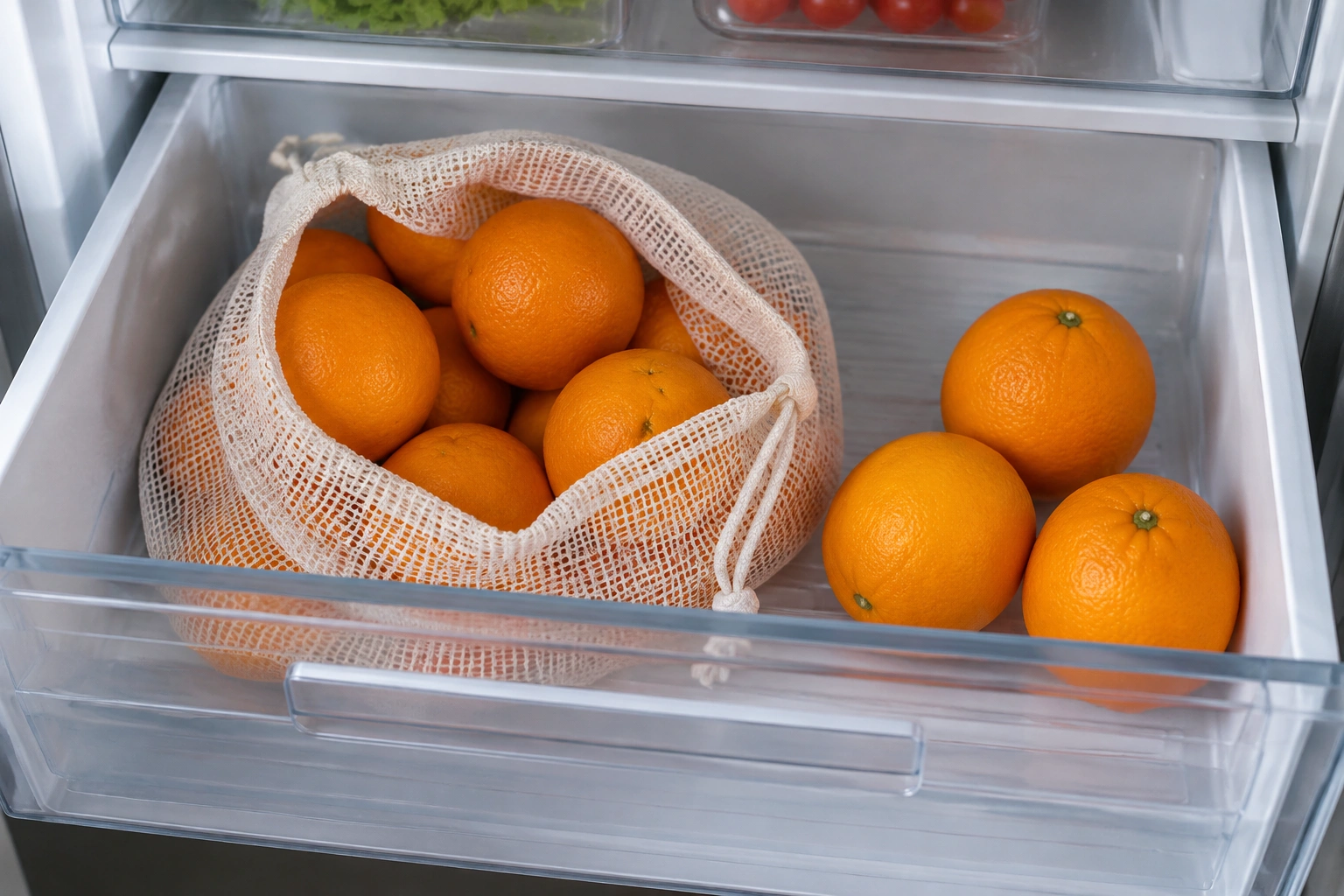
The produce drawer is useful because it helps buffer the fruit from temperature swings. A loosely packed bag can also help prevent the oranges from drying out too quickly while still allowing some airflow.
For most households, this is the best “buy once, eat later” method. It is especially useful when you bring home a large grocery haul and know the fruit will sit for more than a short snack window. Whole oranges in the refrigerator often keep for about 2 to 4 weeks, though exact timing depends on temperature, humidity, and how fresh the fruit was when you bought it.
How to Store Cut or Peeled Oranges
Once an orange is cut or peeled, the storage rules change.
Cut fruit should go into the refrigerator promptly in a clean, covered container. This slows spoilage and helps protect the fruit from drying out and picking up odors from other foods.
Best practice:
- Store cut orange pieces or peeled segments in a sealed container
- Refrigerate them as soon as practical after prep
- Use clean utensils when handling the fruit
- Discard any pieces that look slimy, smell fermented, or taste off
If you are packing lunch or meal prep containers, keep the orange pieces cold until serving. This is one of the simplest ways to reduce waste because cut fruit is much less forgiving than whole fruit.
How Long Oranges Last: Counter vs. Refrigerator
Exact shelf life depends on the fruit’s condition, your kitchen temperature, and how well you store it, so it is better to think in ranges rather than promises.
| Storage method | Best for | Typical use case | Main advantage | Main drawback |
|---|---|---|---|---|
| Whole oranges on the counter | Short-term use | Fruit bowl, snacks, quick lunches | Easy access and ready-to-eat convenience | Softens faster in warm rooms |
| Whole oranges in the refrigerator | Longer storage | Bulk grocery buys, meal prep, extra fruit | Slows softening and reduces waste risk | Chilled texture may feel firmer at serving time |
| Cut or peeled oranges in the refrigerator | Immediate or next-day use | Lunch boxes, snack prep, recipe prep | Safer and better for preserving quality | Must be handled and stored carefully |
A good decision rule is this: if you know you will eat the oranges before they start to soften, the counter is fine; if you are unsure, refrigerate them.
Does Refrigerating Oranges Affect Flavor or Texture?
Yes, chilling can change the eating experience, but not always in a bad way.
A cold orange can feel firmer and less aromatic than one left at room temperature. Some people also notice that chilled fruit tastes a little less sweet at first because cold can mute flavor perception. That does not mean the fruit has gone bad; it just means the temperature changes how the flavor registers.
If you want the best of both worlds, refrigerate the oranges for storage and then let them sit on the counter for a short time before eating. That small step can make the fruit feel more fragrant and juicy without sacrificing the storage benefit.
Common Mistakes That Make Oranges Spoil Faster
A few small habits can shorten orange life more than people expect.
Watch out for these mistakes:
- Leaving cut oranges out too long
- Packing whole oranges into a sealed bag with no airflow
- Storing fruit in a hot kitchen near the stove
- Ignoring condensation in the container
- Stacking fruit so tightly that bruising starts underneath
- Assuming a good-looking orange is always good inside
The biggest practical mistake is often not the refrigerator itself, but moisture and crowding. Oranges do not need to be wrapped like delicate pastries, but they also should not sit in a wet, sealed environment for days.
How to Tell If an Orange Has Gone Bad
Use your senses, not just the peel.
Check for:
- Mold, especially around the stem end or any damaged spot
- A fermented, sour, or off smell
- Sliminess
- Very soft or collapsing spots
- Leakage or a wet, sticky surface
- Shriveling that goes beyond normal drying
A slightly shriveled orange is not automatically bad. If it is still firm enough to handle, smells normal, and the inside looks and tastes fine, it may still be usable for eating or juicing. By contrast, discard the orange if you see mold, smell fermentation or other off odors, or notice slimy, leaking, or collapsing areas.
If an orange tastes unusually bitter, fizzy, or off, do not keep eating it just because the outside looks acceptable.
Troubleshooting Orange Storage Problems
If the oranges are getting soft too fast
Move the remaining fruit to the refrigerator. That is the simplest way to slow further softening.
If they are drying out
Keep whole oranges in a cooler part of the fridge and avoid overexposure to moving air from a fan or vent. A loosely closed produce bag can help.
If you see condensation in the container
Open the container, dry the fruit if needed, and switch to a less sealed setup. Moisture buildup is a warning sign that the storage container is too tight for the current conditions.
If the oranges sat out longer than planned
Check each one individually. If they are whole, firm, and smell normal, they may still be usable. If they are cut or peeled, be more cautious and rely on smell, texture, and appearance before eating them.
Practical Storage Examples for Real-Life Situations
A bulk grocery bag
If you bought a large bag of oranges for the week, keep some on the counter for immediate snacking and refrigerate the rest. That way the fruit bowl stays useful without forcing you to rush through all of it at once.
Meal prep for school or work lunches
Peel or segment the oranges ahead of time, then refrigerate the pieces in sealed containers. This keeps them ready to pack and reduces the chance they get forgotten on the counter.
A fruit bowl for a busy family
Leave a few whole oranges out where people can see them. Put the backup supply in the fridge. This setup works well because the visible fruit gets eaten first, while the extra fruit stays protected.
An orange that was left out by mistake
If it is whole and still firm, inspect it and decide based on smell and texture. If it is cut, refrigerate promptly only if it was out briefly and still looks fresh; otherwise, discard it if there is any sign of spoilage.
When to Ask a Food Safety Expert
If you are dealing with fruit that has visible mold, unusual odors, or repeated spoilage in a warm kitchen, it can help to ask a food safety educator or local extension office for guidance. That is especially useful if you are storing fruit for children, older adults, or anyone with a higher risk from foodborne illness.
For general home storage, though, the decision is usually straightforward: whole oranges can go on the counter for short-term use, but the refrigerator is the better choice when you want to stretch freshness and reduce waste. Cut or peeled oranges should go in the fridge without delay.
For a broader look at how refrigeration changes fruit storage decisions, you may also find this practical guide helpful: Should Plums Be Refrigerated? A Practical Storage Guide for Home Kitchens.
FAQ
How long do whole oranges last on the counter?
In many home kitchens, whole oranges last about 3 to 7 days on the counter. Exact timing depends on room temperature and the fruit’s starting condition.
How long do whole oranges last in the refrigerator?
Whole oranges often keep for about 2 to 4 weeks in the refrigerator, though temperature, humidity, and fruit quality can change that.
Can you eat an orange that is slightly shriveled?
Often, yes. If the orange is only slightly shriveled but still smells normal and has no mold or slime, it may still be usable, especially for eating or juicing.
When should you throw an orange away?
Discard it if you see mold, notice a fermented or off smell, or find slimy, leaking, or collapsing areas.
Should oranges be washed before storing them?
It is usually better to keep whole oranges dry and unwashed until you are ready to eat them. Extra moisture on the peel can encourage spoilage.
Do cut oranges need to be refrigerated?
Yes. Cut or peeled oranges should go into the refrigerator promptly in a covered container.