
How to Get a Soft Bread Crust Without Sacrificing a Good Loaf

A soft bread crust is one of those details that can make homemade bread feel bakery-style in the best way: tender, easy to bite, and ideal for sandwiches, rolls, and everyday loaves. The trick is knowing which part of the process creates the crust texture—the formula, the bake, or the way you cool and store the bread afterward.
As an artisan baker, I think of crust softness as a three-part decision:
- Build softness into the dough
- Bake in a way that doesn’t dry the exterior too much
- Handle the loaf after baking so the crust stays tender
That matters because a bread can have a soft crumb and still end up with a tough shell if the crust loses too much moisture during baking or cooling. On the other hand, if you want a soft sandwich loaf or dinner roll, you usually do not want the same dry, crackly finish you’d aim for in a rustic country loaf.
What Makes Bread Crust Soft or Hard?
Bread crust texture comes down to how much moisture leaves the surface and how quickly that surface sets.
When bread bakes, the outside dries first. If the oven is hot, the bake is long, or the loaf sits unprotected after baking, more moisture escapes and the crust firms up. If the dough contains more fat, sugar, milk, or eggs, the crust usually bakes up more tender because those ingredients change how water behaves in the dough and how quickly the exterior dries. That’s why enriched breads often feel softer than lean loaves.
There’s also a timing issue. If the loaf is baked too long, the crust has extra time to dry out. If it’s cooled in open air for a long stretch, the crust continues to lose moisture. And if the bread is underproofed, it can bake into a thicker, tighter crust because the loaf hasn’t expanded as fully before it hits the heat.
Here’s the simple rule I use:
- Want a softer crust? Reduce drying at every stage.
- Want a firmer crust? Give the surface more time and heat to dry.
That’s why the same recipe can produce very different results depending on whether you bake it in a pan, brush it with butter, or store it in a bag.
Best Ingredients for a Softer Bread Crust
If you want the bread itself to bake with a tender exterior, ingredient choices matter more than most home bakers realize.
Milk vs. water
Water gives you a cleaner, leaner loaf. Milk usually produces a softer, more tender crust. That’s one reason milk bread, sandwich bread, and dinner rolls often feel gentler on the bite than a simple water-based country loaf.
Milk also brings extra browning potential, so the loaf may color more quickly. That can be helpful, but it also means you need to watch the bake so the crust doesn’t over-darken before the interior is done.
Butter vs. oil
Both soften crust, but they behave a little differently.
- Butter adds flavor and tenderness, and it gives bread a richer finish.
- Oil often keeps bread softer for longer because it stays liquid at room temperature.
If your goal is a loaf that stays soft overnight, oil can be especially useful. If your goal is a richer flavor and a softer bite, butter is a strong choice. In practice, many sandwich loaves use one or the other—or a combination—depending on the texture they want.
Sugar and eggs
Sugar helps bread crust stay softer by holding moisture and slowing drying. Eggs also contribute richness and tenderness. That’s why enriched doughs—think brioche-style loaves, sandwich bread, and soft rolls—tend to have a more delicate crust than lean artisan bread.
The trade-off is real: more sugar and fat usually mean a softer crust, but also a sweeter flavor, a different crumb structure, and sometimes faster browning.
Quick comparison: what helps most?
| Ingredient choice | What it does to crust | Best use case |
|---|---|---|
| Water | Leaner, firmer crust | Rustic loaves, crustier bread |
| Milk | Softer, more tender crust | Sandwich bread, soft loaves |
| Butter | Tender crust, richer flavor | Dinner rolls, enriched loaves |
| Oil | Helps bread stay softer longer | Sandwich loaves, pan bread |
| Sugar | Softens crust and slows drying | Sweet or enriched doughs |
| Eggs | Tender, richer exterior | Soft rolls, brioche-style bread |
If you want a bread that feels soft from the first slice, the most reliable path is usually milk + fat + a pan bake rather than trying to force a rustic formula into a soft result.
Tools and Materials You’ll Need
You don’t need specialty equipment to make a softer crust, but a few common tools help a lot:
- Loaf pan for a softer side crust and more protected exterior
- Cooling rack for controlled cooling
- Clean kitchen towel for covering bread while it cools
- Butter brush or pastry brush for post-bake brushing
- Aluminum foil for loosely covering bread if needed
- Plastic wrap or bread bag for storage after the loaf has cooled
- Kitchen scale or measuring cups for consistent dough formulas
- Oven thermometer if your oven runs hot or unevenly
A loaf pan is especially useful if you’re baking for sandwiches. It shields more of the dough from direct oven heat than a free-form loaf, which naturally softens the crust.

How to Make Bread Crust Soft While Baking
If you want the loaf to bake soft rather than trying to fix it later, these are the most useful adjustments.
1) Bake in a loaf pan when softness matters most
A pan loaf usually gives you a softer crust than a free-form loaf because the dough is partly protected by the pan walls. That means less exposed surface area and less drying.
This is the best choice for:
– sandwich bread
– pull-apart loaves
– soft tea breads
– dinner rolls baked close together
If you’re making a family loaf for toast and sandwiches, a pan is often the easiest decision you can make.
2) Use moderate oven heat instead of a very hot bake
Very hot baking can dry the crust quickly. A slightly lower temperature, paired with a little more baking time, often gives the loaf enough time to finish baking without turning the exterior tough. One baking reference notes that if a crust is becoming soft too quickly and not staying crisp, baking a little longer at a slightly lower temperature helps the crust dry more evenly; for a soft crust, the same principle works in reverse when you’re trying to avoid excessive drying in the first place.
That doesn’t mean “bake underdone.” It means avoid aggressive heat that sets and dries the crust too fast.
3) Use little to no steam for a soft-crust loaf
Steam is useful when you want a shiny, crackly artisan crust, but it is usually not necessary for a soft sandwich-style loaf. For a softer crust, use minimal steam or no steam at all. If your oven setup needs some moisture for oven spring, keep it to a brief initial burst only, then let the loaf bake dry.
That practical rule is easier to follow than trying to manage heavy steam throughout the bake. Too much steam can make the crust stay soft in the oven, but the loaf still needs to finish baking without lingering so long that the exterior dries out afterward.
For more detail on how steam affects bread color and crust development, see our guide to steam oven bread.
4) Avoid overbaking
This is the simplest fix and the one most often missed. Even a perfectly enriched dough can end up with a hard crust if it stays in the oven too long. The crust keeps drying as the loaf bakes, so an extra few minutes can matter.
A practical check: if the loaf is fully baked and nicely colored, pull it rather than waiting for a darker crust just because the recipe says so. Every oven behaves a little differently.
5) Choose a recipe designed for softness
If you know you want a soft crust, it’s easier to begin with a formula that supports it. Milk, butter, oil, sugar, and eggs all move you in that direction. A lean dough can be softened somewhat with technique, but it won’t behave like an enriched sandwich loaf.
How to Keep Bread Crust Soft After Baking
This is where many home bakers lose the battle. The loaf comes out tender, then hardens as it cools.
1) Brush the crust with butter right after baking
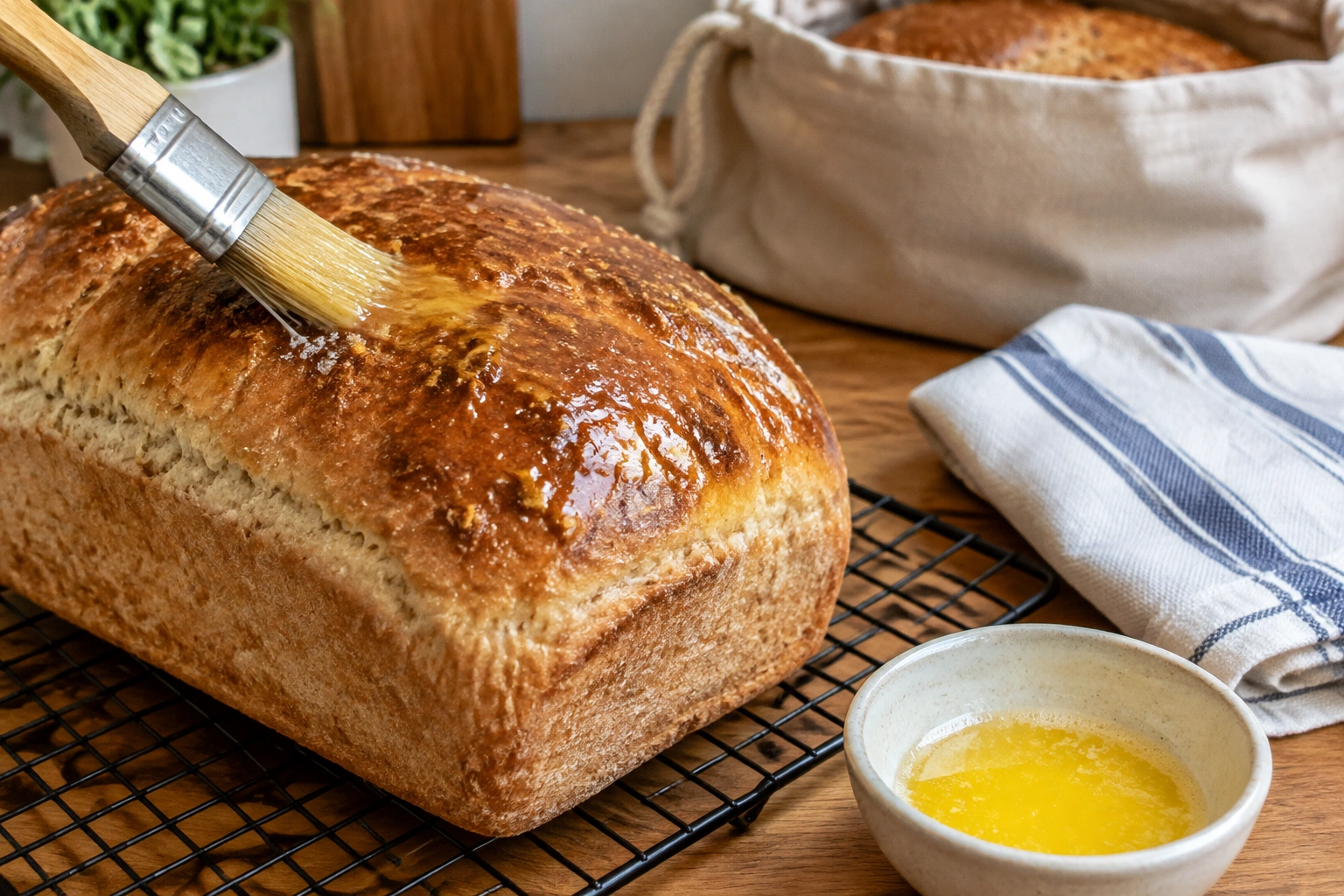
A light brush of melted butter is one of the easiest ways to soften the crust and keep it supple. It adds a thin fat layer that slows drying and gives the bread a softer finish.
This works especially well for:
– dinner rolls
– sandwich loaves
– soft buns
– enriched loaves
If you want a glossy top and a tender bite, this is one of the best post-bake moves.
2) Use a towel only for the right kind of loaf cooling
A clean kitchen towel can help soften the crust when you want a very tender loaf and you plan to eat it soon, especially with sandwich bread or rolls. The towel traps some escaping moisture as the bread cools, which can keep the crust from drying out too fast.
It is not a good choice if you want a crisp crust, and it can make the surface gummy if the towel is too damp or if the loaf is wrapped too tightly while still very hot. If you use this method, the towel should be dry or only very lightly damp, and the loaf should still be able to release some heat.
3) Let it cool fully before bagging or wrapping tightly
A practical rule is to let the loaf cool until it is no longer steaming before you bag it—usually at least 1 to 2 hours, depending on loaf size. If you seal bread while it is still very hot, condensation can collect and make the crust gummy.
For soft crust, the goal is cool first, then trap the remaining softness. That keeps the loaf tender without turning the surface wet.
4) Store it in a bread bag or airtight wrap after cooling
Once the bread is fully cool, wrap it in plastic wrap, place it in a bread bag, or store it in a sealed container. That helps keep moisture in the crust instead of letting it evaporate into the air.
This is the best overnight method for:
– sandwich loaves
– burger buns
– dinner rolls
– any bread you want soft the next day
The trade-off is that a soft crust will never stay crisp in this setup. That’s the point.
Practical Rescue for Bread That Already Baked Hard
If the loaf is already baked and the crust turned hard, you still have a few options.
If it just came out of the oven
- Brush the crust lightly with melted butter or oil while the bread is still warm.
- Wrap the loaf loosely in a clean towel or foil for a short rest.
- Let it cool before sealing it in a bag.
This can help soften the crust a little by trapping some remaining heat and moisture.
If the loaf is fully cool and already firm
- Rewarm slices briefly and cover them loosely with foil to keep moisture from escaping too fast.
- For the whole loaf, warm it only enough to soften the crust slightly, then wrap it while it is still just warm.
Avoid soaking the crust, sealing the bread while it is hot enough to sweat heavily, or reheating it so long that it dries out again. Those approaches usually make the problem worse.
Practical Examples for Different Bread Types
Sandwich loaf
For a sandwich loaf, softness is usually the priority. A pan loaf made with milk, butter or oil, and a little sugar is a strong starting point. After baking, brush with butter and cool fully before bagging.
Dinner rolls
Dinner rolls benefit from a soft crust because people usually want them pillowy, not crunchy. Brush the tops with butter as soon as they come out of the oven. If you’re serving them later, cover them lightly once they’ve cooled enough that condensation won’t build up.
Standard homemade loaf bread
If your usual homemade loaf is a leaner dough, you can still soften the crust without rewriting the whole recipe. The easiest changes are:
– bake in a loaf pan
– avoid overbaking
– brush with butter after baking
– store in a bread bag once fully cool
That gives you a softer result without turning the bread into a rich sweet loaf.
Common Mistakes That Make Bread Crust Tough
A hard crust is often the result of a few small choices stacking up.
Baking too hot
High heat can dry the crust quickly before the loaf has finished baking evenly.
Overbaking
Even a few extra minutes can make the crust noticeably tougher, especially on lean doughs.
Using a lean formula when you want a soft loaf
If your dough is mostly flour, water, salt, and yeast, it will naturally lean toward a firmer crust unless you change the method.
Letting the loaf sit uncovered too long
Open-air cooling is great for crusty bread, but it works against softness.
Confusing underproofing with underbaking
An underproofed loaf can bake with a thicker, tighter crust and a denser interior. If the crumb seems tight and the crust feels stubbornly hard, proofing may be part of the problem.
Troubleshooting a Crust That Still Turns Hard
If your loaf starts soft but firms up too much, use this decision guide.
If the crust is hard right out of the oven
- The bake may have gone too long
- The oven may run hot
- The recipe may be too lean for the texture you want
- If the loaf is still warm, brush it lightly with butter and wrap it loosely for a short rest
If the crust is soft at first but hardens overnight
- Store the loaf in a bag or wrap once fully cool
- Add a little more fat or sugar to the formula next time
- Brush with butter after baking
If the crumb is soft but the crust is too thick
- Use a loaf pan
- Lower the oven temperature slightly and watch the bake
- Avoid heavy steam if you’re not aiming for artisan-style crust development
If the loaf feels tough and dense
- Check proofing first
- Then check bake time
- Finally, review the formula for enough fat and moisture
Soft Crust vs. Crusty Bread: How to Choose the Right Method
This is the key decision point.
If you want soft crust, choose methods that retain moisture:
– enriched dough
– loaf pan
– moderate baking temperature
– little to no steam
– butter brushing
– covered cooling
– wrapped storage after cooling
If you want crusty bread, choose the opposite:
– lean dough
– free-form baking
– more drying time in the oven
– open cooling on a rack
– no post-bake covering
That trade-off matters. A soft crust is ideal for sandwiches, rolls, and family loaves. A crusty loaf is better when you want chew, contrast, and a rustic finish. Neither is “better” in the abstract; they serve different breads.
A Simple Method That Works for Most Home Bakers
If you want one dependable approach for a soft loaf, use this sequence:
- Choose a dough with milk, fat, or both.
- Bake it in a loaf pan.
- Use little to no steam.
- Avoid overbaking.
- Brush the crust with butter as soon as it comes out.
- Let it cool fully.
- Store it wrapped or bagged once it’s no longer hot.
That combination gives you the best odds of a tender crust without complicated technique.
When to Consult a Master Baker
If you’ve tried ingredient changes, adjusted the bake, and the crust still turns out tougher than you want, a master baker can help you evaluate the dough formula, proofing, and oven behavior together. That’s especially useful if you’re working toward consistent sandwich loaves, dinner rolls, or soft enriched breads for a class, bakery, or catering menu.
For most home bakers, though, the answer is usually not mysterious. A softer crust comes from controlling moisture, heat, and storage with intention.
FAQ
Can I brush bread with milk, butter, or oil after baking?
Butter or oil is more useful after baking because it adds a light moisture barrier and softens the crust. Milk is better used in the dough itself rather than brushed on the finished loaf.
Should I use steam if I want a soft crust?
Usually only a little, or none at all. For most soft-crust loaves, a brief initial burst is enough if your oven setup needs it.
How do I keep the crust soft without making it soggy?
Let the loaf cool until it is no longer steaming, then bag or wrap it. If you use a towel while cooling, keep it dry or only slightly damp and use it only for breads you want soft, not crisp.
What can I do if the bread already baked with a hard crust?
Brush it with butter while warm, or rewarm it briefly and wrap it while slightly warm. That can soften the crust a bit, but it works best soon after baking.