
Tafura Freezer Containers B09HQ4VB5W Review: A Practical Buyer’s Guide for Meal Prep and Food Storage

If you are trying to figure out whether B09HQ4VB5W is worth buying, the short answer is that it maps to a Tafura freezer storage container set with twist-top lids, sold as a 10-pack of 32 oz containers. That makes it squarely aimed at people who batch-cook, freeze leftovers, or want a neater way to store soups, sauces, broths, and other liquids.
The bigger question is not just what it is, but whether it fits your kitchen. For busy home cooks, the right container is the one that seals well, stacks cleanly, and survives repeated use without turning into a sticky, stained mess. That is where this product needs to be judged.
What B09HQ4VB5W Is and Who It’s For
Based on the available listing information, B09HQ4VB5W refers to Tafura Freezer Containers for Food with Twist Top Lids. The product is shown as a 32 oz, 10-pack container set, with the listing describing it as airtight and leak resistant with a twist lock closure.
That combination points to a very specific buyer: someone who wants portion-sized storage rather than large, bulk bins. A 32 oz container is useful for:
- one or two servings of soup
- a lunch portion of chili, stew, or pasta sauce
- frozen leftovers you want to reheat later
- pantry organization for dry goods if the container shape fits your shelves
This is not the best choice if you need wide, shallow containers for casseroles or meal trays. It is more practical for liquids and scoopable foods where a secure lid matters more than presentation.
Key Specs, Size, and What’s Included
The verified listing details are enough to confirm the basics, but not every dimension. Here is the clearest way to think about the product:
| Feature | What the listing indicates | Why it matters |
|---|---|---|
| Product type | Freezer storage containers with twist-top lids | Twist lids are often chosen for spill control and repeated use |
| Pack count | 10-pack | Enough for batch cooking without buying a huge set |
| Capacity | 32 oz each | A practical size for single-meal portions or leftover storage |
| Closure | Twist lock | Helps reduce accidental opening in the fridge, freezer, or lunch bag |
| Special features | Airtight, leak resistant | Important if you store soups, sauces, or broths |
| Listed material claims | BPA free, reusable, freezer safe, microwave safe | Useful, but still best to confirm on the exact product page or packaging before heavy use |
The capacity is the most important number here. 32 oz is a middle-ground size: large enough for a hearty serving, but not so large that every container takes over your freezer. For a family that cooks in batches, that balance usually matters more than a fancy shape.
If you are trying to portion a week of lunches, this size can work well. If you are storing family-size casseroles, it will probably feel too small.
Materials and Build Quality
The product page and reseller listing describe the containers as reusable and BPA free. That is encouraging, but it is still worth being careful with any plastic storage product: the day-to-day value depends less on the label and more on how the lid fits, how the plastic holds up to washing, and whether it keeps its shape after freezing and reheating.
The sources reviewed did not clearly verify a specific plastic type or exact wall thickness, so the safest source-based summary is that these are BPA-free reusable plastic containers with a twist-lock lid design.
For a container like this, build quality usually comes down to three things:
-
Lid integrity
A twist-lock lid can be convenient if it closes consistently. -
Plastic thickness
Thicker walls tend to feel sturdier and resist flexing. Thin plastic may be lighter, but it can feel less durable over time. -
Odor and stain resistance
Sauces, tomato-based foods, curry, and broth-heavy meals are the real test. Even a decent container can eventually hold onto smells or discoloration if the plastic is too soft.
Because the listing does not provide lab testing or long-term durability data, the most honest assessment is this: the product sounds well-suited for practical freezer use, but it should be judged by real-world handling rather than marketing claims alone.
Performance in Real Use: Leak Resistance, Microwave, Freezer, and Dishwasher Safety
This is the section that matters most for meal preppers.
Leak resistance
The listing describes the containers as leak resistant and airtight. That is promising, especially for soups and sauces. Still, “leak resistant” is not the same as “guaranteed spillproof under every condition.” A twist-lock lid is usually a better sign than a loose snap lid, but the seal can still be affected by:
- overfilling
- food caught in the rim
- a lid that is not fully twisted into place
- temperature changes that create pressure inside the container
If you plan to carry liquid meals in a bag, I would treat this as a good candidate for cautious transport, not a substitute for a hard-sided lunch carrier.
Microwave safety
The listing states the containers are microwave safe. That is useful, but the safe way to use any plastic container in the microwave is to avoid sealed, pressurized heating. In practice, that means:
- vent the lid or loosen it before reheating
- do not microwave a tightly sealed container
- stop and stir if the food heats unevenly
For general microwave guidance, the FDA notes that only containers labeled microwave-safe should be used and that lids should be vented to avoid pressure buildup: FDA guidance on microwave safety.
Freezer safety
The product is listed as freezer safe, which is the core use case here. For freezer storage, the main advantage is convenience: batch-cooked food can go straight into a container, then into the freezer, with less fuss and fewer transfers.
A practical point many shoppers miss: freezer-safe does not mean you should fill the container to the top. Leave room for expansion, especially with soups and sauces. That reduces the chance of lid stress or cracking.
Dishwasher safety
I could not verify detailed dishwasher temperature limits from the sources provided, and I could not confirm whether the lids or containers are top-rack safe. If you want these to last, the safest approach is to wash them according to the manufacturer’s care instructions on the package or product page, especially for the lids. High heat can shorten the life of some plastics even when the container is technically washable.
Cleaning and Storage Convenience
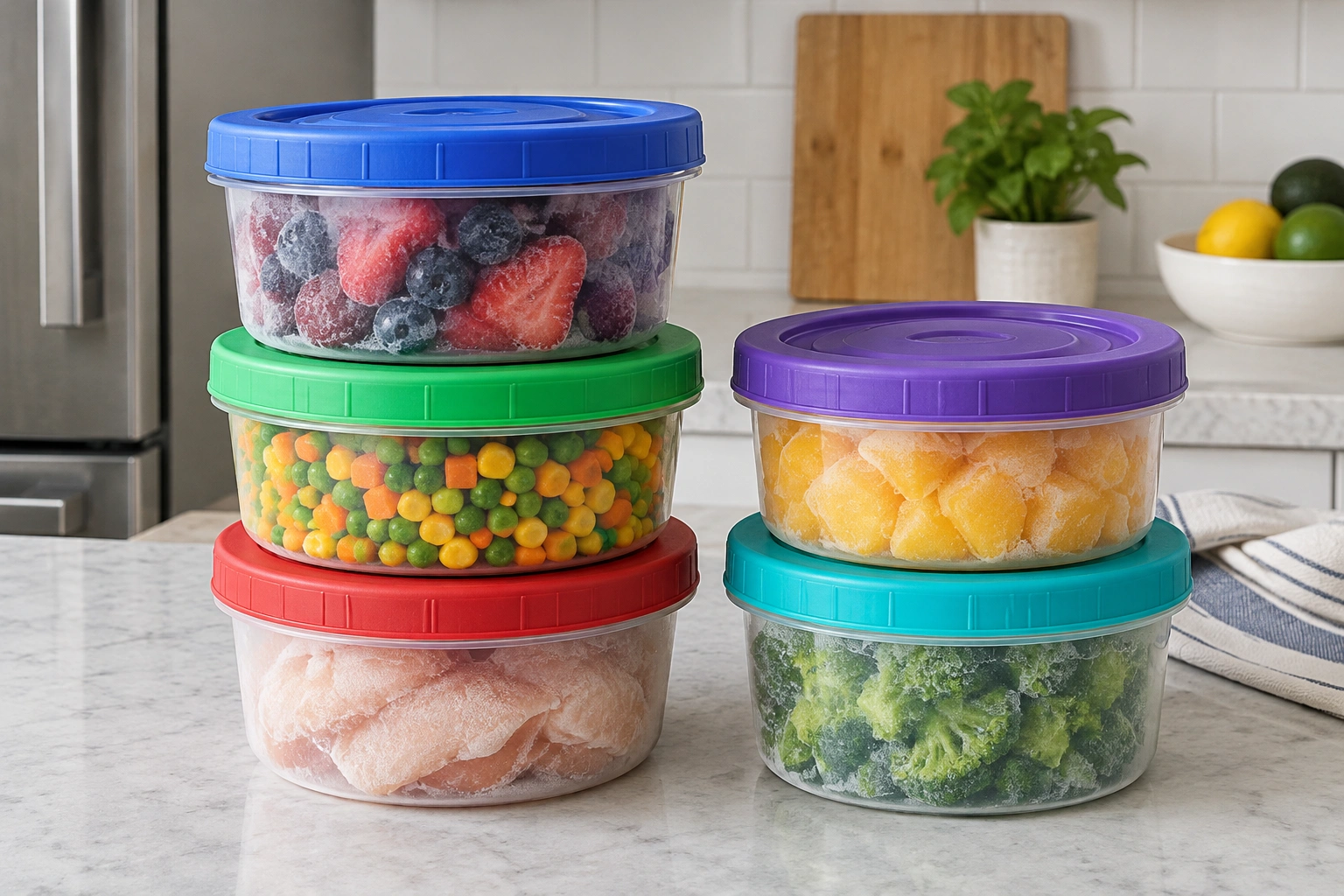
This product makes sense only if it is easy to live with. A storage container that seals beautifully but is annoying to wash usually ends up abandoned in the cabinet.
The twist-top design may help with sealing, but it also means there may be more lid surface to clean than with a simple snap lid.
For busy households, the best-case workflow looks like this:
- cook a batch of soup or sauce
- portion it into 32 oz containers
- cool it before freezing
- stack the containers in the freezer
- reheat one portion at a time
That workflow reduces waste because you are not thawing a giant block of food just to use one serving.
Stackability is another practical issue. The listing and reseller page suggest the containers are meant for freezer organization, but exact nesting performance was not verified. If your freezer is already crowded, the real question is whether the lid shape stacks securely enough to keep the pile from shifting.
Strengths and Weaknesses
Strengths
- Useful 32 oz size for individual or small-family portions
- 10-pack quantity is practical for batch cooking
- Twist-lock lid suggests a more secure closure than a loose lid
- Airtight and leak-resistant listing is a strong sign for soups and sauces
- Reusable and freezer-safe positioning fits meal prep routines well
Weaknesses
- Exact dimensions were not verified, so fit in narrow drawers or lunch bags is not guaranteed
- Dishwasher and heat limits were not clearly documented in the sources reviewed
- Plastic containers can still stain or hold odors over time
- Twist lids may be slower to open and clean than simpler designs
- Not ideal for large casseroles or flat freezer storage
If your main frustration is freezer spills, these containers look like a reasonable upgrade. If your main goal is maximum durability and stain resistance, glass may still be the better long-term choice.
Best Use Cases and Who Should Buy It
This product is a strong fit if you:
- batch-cook soups, stews, chili, or sauces
- freeze lunch portions for the week
- want a reusable container set instead of disposable tubs
- need something more secure than a basic snap-top container
It is less compelling if you:
- store mostly dry pantry items in large quantities
- want oven-safe containers
- prefer glass for stain resistance and long-term clarity
- need wide containers for layered leftovers
A simple decision rule helps here: buy this if your food is mostly liquid, scoopable, or portioned; skip it if your meals are large, layered, or best stored flat.
How It Compares with Similar Alternatives
Here is the practical comparison most buyers need.
| Option | Best for | Main advantage | Main drawback |
|---|---|---|---|
| Tafura 32 oz twist-lid containers | Soups, sauces, leftovers, freezer portions | Secure lid and portion-friendly size | Less ideal for large or flat meals |
| Basic snap-lid plastic containers | Everyday fridge storage | Usually cheaper and easier to open | Often weaker seal for liquids |
| Glass containers | Reheating, odor resistance, long-term use | Better stain resistance and often more durable over time | Heavier, breakable, usually more expensive |
| Multi-compartment meal prep boxes | Lunches with separate foods | Great for portion control | Poor fit for soups and wet foods |
If you are deciding between plastic and glass, the trade-off is straightforward. Plastic wins on weight, freezer convenience, and lower breakage risk. Glass wins on stain resistance and a more premium feel. For soup-heavy meal prep, this Tafura set makes more sense than most glass lunch containers because it is easier to stack and less risky to transport.
Is B09HQ4VB5W Worth Buying?
For the right buyer, yes — B09HQ4VB5W looks like a sensible freezer and meal-prep container set. The verified listing details point to a product built around the needs of people who store soups, sauces, broths, and other leftovers in portion-sized containers. The 10-pack format and 32 oz size are practical, not excessive.
I would consider it a good buy if your main priorities are:
- secure lids
- freezer-friendly portion storage
- less mess with liquid foods
- reusable containers for regular meal prep
I would pass if you need exact dimensions before buying, want glass, or need a container that is more versatile for dry storage and large casseroles.
In plain terms: this is a useful, focused container set for people who want freezer organization and leak-conscious storage more than premium materials.
When to Ask a Food Safety Expert
If you are planning to use any container for long-term frozen storage, reheating practices, or sensitive foods, it is worth checking current food safety guidance from a trusted source. For general storage and reheating rules, the USDA and FDA are better references than product marketing copy. If you have questions about specific foods, cooling methods, or microwave safety, consult an extension educator or food safety specialist before relying on any container for repeated use.
FAQ
Is B09HQ4VB5W the same as Tafura freezer containers?
Based on the available listing information, B09HQ4VB5W maps to a Tafura freezer container set with twist-top lids.
Are these containers good for soup and sauce?
Yes. The 32 oz size and leak-resistant listing make them a practical fit for soups, sauces, and other liquid foods.
Can I put them in the microwave?
The listing says they are microwave safe, but you should still vent the lid and avoid sealed heating.
Are they dishwasher safe?
I could not verify exact dishwasher limits or top-rack guidance from the sources reviewed, so it is best to follow the manufacturer’s care instructions.
Who are these containers best for?
They are best for meal preppers, batch cooks, and anyone who wants freezer-friendly portion storage for liquids or scoopable foods.