
What Are the Best Foods to Cook in an Air Fryer?
Quick Answer
The best foods to cook in an air fryer are foods that benefit from fast-moving dry heat: potatoes, chicken wings and thighs, salmon, pork chops, roasted vegetables, frozen snacks, pizza, and small baked goods. An air fryer works like a compact convection oven, using rapidly circulating hot air to brown surfaces while cooking food quickly.
Best foods to try first
- Potatoes: Fries, wedges, baby potatoes, and hash browns develop crisp edges easily.
- Chicken: Wings, thighs, tenders, and breaded cutlets work especially well.
- Vegetables: Brussels sprouts, broccoli, cauliflower, asparagus, and green beans roast quickly.
- Frozen foods: Fries, nuggets, mozzarella sticks, and similar snacks crisp without deep-frying.
- Fish: Salmon and firm fish fillets cook quickly without heating a full oven.
- Small baked goods: Cookies, rolls, biscuits, and personal pizzas suit the compact cooking chamber.
For better results
- Leave room around the food, use only a light coating of oil when needed, and check doneness earlier than you would in a conventional oven.
If you’re wondering what the best foods to cook in an air fryer are, the answer goes far beyond French fries. I use the appliance most confidently when I want crisp edges, quick roasting, or a small batch without heating a full-size oven.
The trick is matching the food to the way an air fryer cooks. Once you understand that, choosing recipes becomes much easier.
In This Guide
What Foods Work Best in an Air Fryer?
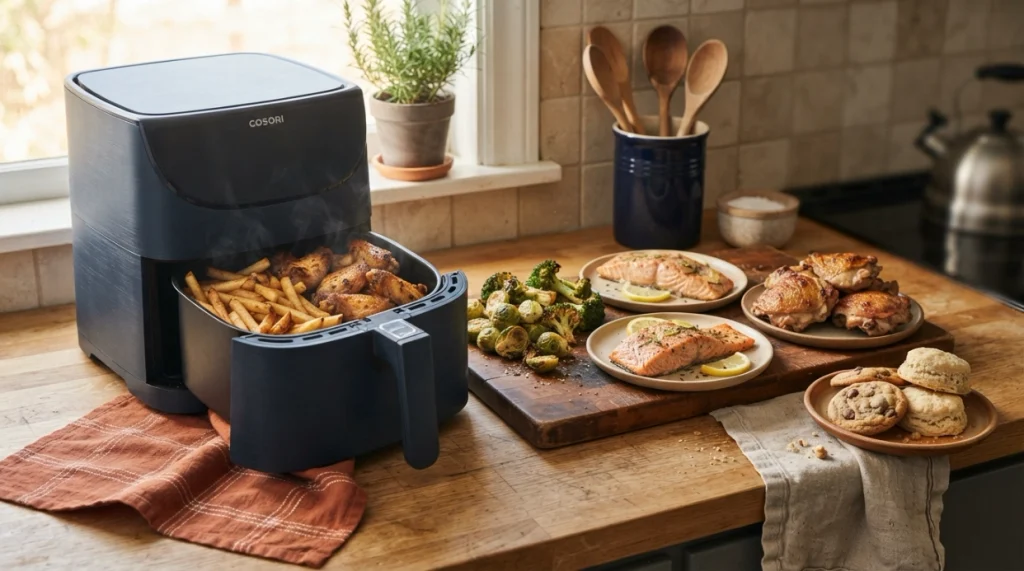
Foods with surfaces that can brown, crisp, roast, or caramelize usually perform best in an air fryer. Smaller portions also tend to cook more evenly because hot air can circulate around them.
An air fryer is a compact convection-cooking appliance. A heating element produces heat while a powerful fan circulates that hot air around food in a basket or tray.
That airflow is why a crisper tray or perforated air fryer basket matters. Blocking too much of the surface can reduce browning.
I think about air-fryer foods in four simple categories:
- Crispy foods: French fries, chicken wings, breaded chicken, potato wedges, and frozen snacks.
- Roasted foods: Brussels sprouts, cauliflower, broccoli, asparagus, mushrooms, and potatoes.
- Quick proteins: Salmon, chicken thighs, pork chops, meatballs, and sausages.
- Small baked foods: Cookies, biscuits, rolls, personal pizzas, and some small cakes.
Basket space matters more than many beginners expect. Food packed tightly together traps steam instead of exposing surfaces to hot moving air.
Consumer Reports also recommends avoiding an overfilled basket and checking food during cooking because times can vary between appliances. Their air fryer cooking guidance also recommends flipping or shaking food when appropriate.
Useful starting temperatures and times
The following are practical starting points rather than fixed rules. Basket design, food thickness, starting temperature, and air fryer wattage can all change cooking time.
| Food | Starting Temperature | Typical Starting Time | Best Technique |
|---|---|---|---|
| Frozen fries | 380-400°F / 193-204°C | 12-20 minutes | Shake several times |
| Chicken wings | 380-400°F / 193-204°C | 18-25 minutes | Leave space around wings |
| Brussels sprouts | 375-390°F / 191-199°C | 10-16 minutes | Use a light oil coating |
| Salmon fillet | 375-400°F / 191-204°C | 7-12 minutes | Check the thickest section |
| Broccoli florets | 375°F / 191°C | 8-12 minutes | Shake halfway through |
| Cookies | About 325-350°F / 163-177°C | 5-10 minutes | Bake a small batch |
Check early the first time you cook a food in a new machine. A shallow basket with strong airflow may cook differently from a larger oven-style air fryer.
Section Takeaway: Foods that benefit from browning, crisping, or quick roasting are the strongest air-fryer candidates. Give the hot air enough space to circulate.
Which Proteins Are Best in an Air Fryer?
Chicken, salmon, pork chops, meatballs, and similar portion-sized proteins are excellent air-fryer choices. They cook quickly while the circulating heat encourages surface browning.
Chicken wings
Wings may be the classic example of what an air fryer does well. Their skin contains enough fat to brown and crisp without being submerged in oil.
Pat the wings dry before seasoning. Moisture left on the skin slows crisping.
- Arrange wings in a loose layer rather than packing them together.
- Flip or shake them during cooking for more even browning.
- Add sugary sauces late so they are less likely to scorch.
- Check doneness with a food thermometer instead of relying only on cooking time.
Chicken thighs and tenders
Chicken thighs tolerate the intense circulating heat particularly well. Their higher fat content makes them less prone to drying than very lean cuts.
Breaded chicken tenders are another strong choice. A light spray of oil over dry breadcrumbs can encourage more even browning.
Salmon and firm fish fillets
Air frying works well when you want salmon cooked quickly with a browned surface. A fillet can go from raw to cooked surprisingly fast, so start checking early.
Very thin fish fillets need more attention. Their edges can dry before the thickest part reaches the desired doneness.
Pork chops
Thick pork chops can develop attractive browning without the splatter of stovetop searing. Lightly oil the meat rather than pouring oil into the basket.
For pork chops, thickness matters more than a preset cooking time. Always check the center before serving.
Meatballs and sausages
Meatballs work because hot air reaches several sides at once. Small gaps between each meatball improve browning.
Sausages are equally convenient, but fatty varieties may release significant grease. Follow your manufacturer’s instructions for foods with higher fat content.
Pro tip: Use a food thermometer for raw meat, poultry, and fish. FoodSafety.gov’s safe minimum internal temperature chart lists 165°F (74°C) for poultry, 145°F (63°C) plus a three-minute rest for whole cuts of pork, and 145°F (63°C) for fish.
Section Takeaway: Portion-sized proteins are easier to air fry than large roasts. Use temperature, not color or cooking time alone, to confirm safe doneness.
Which Vegetables Cook Best in an Air Fryer?
Vegetables that normally taste good roasted are usually good air-fryer candidates. Brussels sprouts, cauliflower, broccoli, potatoes, asparagus, green beans, mushrooms, and carrots all benefit from concentrated dry heat.
Potatoes
Potatoes are among the most forgiving foods for learning your machine. Fries, wedges, cubes, baby potatoes, and hash browns can all develop crisp surfaces.
- For fries: Cut potatoes into similar sizes so they finish together.
- For wedges: Keep enough space between pieces for browning.
- For baby potatoes: Halve larger ones so the centers cook before the outside becomes too dark.
- For hash browns: Keep the layer relatively thin to avoid a soft center.
Brussels sprouts
Halved Brussels sprouts develop deeply browned outer leaves while the centers soften. A small amount of oil helps seasonings stick and promotes even color.
Don’t worry if a few loose leaves become much darker. Those crisp leaves are often the best part.
Broccoli and cauliflower
Broccoli and cauliflower brown faster than they do with many steaming methods. Larger florets tend to stay moister inside than tiny pieces.
Shake the basket during cooking so the same edges aren’t exposed to the heating element for the entire cook.
Asparagus and green beans
These vegetables are ideal when you need a fast side dish. Toss them lightly with oil, salt, and seasonings before cooking.
Very thin asparagus can cook in only a few minutes. Start checking sooner than you think necessary.
Mushrooms
Mushrooms lose water as they cook, which concentrates their flavor. Larger pieces are usually easier to manage than finely sliced mushrooms in a powerful air fryer.
Avoid drowning vegetables in oil. Air frying depends on hot-air circulation rather than an oil bath.
Section Takeaway: If you enjoy a vegetable roasted, it is usually worth trying in an air fryer. Use similar-size pieces, modest oil, and enough basket space for airflow.
Which Frozen Foods and Snacks Work Best?
Frozen foods designed to become crisp in an oven are among the easiest things to air fry. Frozen fries, nuggets, breaded fish, spring rolls, mozzarella sticks, and similar snacks usually need little preparation.
Frozen French fries
Most frozen fries already contain some oil, so I usually don’t add much more. The biggest improvement comes from shaking the basket several times.
Cook a smaller batch if crispness matters more than speed. Crowding can leave some fries browned while others remain soft.
Chicken nuggets and breaded chicken
Frozen nuggets and breaded tenders respond well to direct circulating heat. Arrange them with small gaps instead of stacking them.
If the manufacturer provides air-fryer directions, use those first. They are a better starting point than a universal timing chart.
Mozzarella sticks and filled snacks
Filled foods need closer watching because their centers can leak when the coating splits. Cooking them directly from frozen often helps the exterior set before the filling becomes excessively hot.
- Leave space between individual pieces.
- Check before the longest package time.
- Remove any leaking cheese after the machine cools.
Pizza and leftover pizza
Air fryers are particularly useful for reheating pizza because the crust can regain some crispness. A microwave heats pizza quickly but usually softens the base.
Small fresh pizzas can also work well. Keep toppings secure because lightweight ingredients may shift in strong airflow.
Leftover fried foods
Chicken tenders, fries, roasted potatoes, and similar leftovers often reheat better with dry circulating heat than with microwave steam. This makes an air fryer useful even when you’re not cooking from raw ingredients.
Avoid reheating leftovers repeatedly. Heat only the amount you plan to eat.
Section Takeaway: Frozen and previously crisp foods are some of the simplest air-fryer wins. Use a single loose layer whenever practical and check the food before it over-browns.
What Can You Bake in an Air Fryer?
You can bake cookies, rolls, biscuits, small cakes, cheesecake, pizza, and other small-batch foods in many air fryers. The appliance is especially useful when a full-size oven feels excessive for a small quantity.
Air-fryer baking does require adjustment. Strong airflow and the short distance from the heating element can brown the top faster than the center cooks.
Cookies
Cookies are one of my favorite ways to demonstrate why an air fryer is more than a frozen-food machine. Small batches fit the appliance naturally and bake quickly.
Leave room for spreading and check early. Thin cookies can move from pale to dark in a short window.
Dinner rolls and biscuits
Rolls and biscuits benefit from the quick blast of heat. The exterior can brown while the inside stays soft when the temperature and pan size are right.
For yeast-raised dough, preheating may help provide the initial heat needed for a good rise. Follow the recipe or appliance guidance rather than assuming every air fryer behaves identically.
Small cakes
Cakes are possible, but they’re less forgiving than cookies. The outside can set before the center if the pan is too large or the temperature is too high.
A small pan with enough room around it for airflow usually performs better. Don’t use a pan simply because it can be forced into the basket.
Pizza
Personal pizzas are a natural match for the compact chamber. Thick crusts may benefit from partially cooking the base before adding toppings.
That prevents the cheese from browning long before the bottom crust cooks through.
How should oven recipes be adjusted?
King Arthur Baking’s air-fryer baking guidance suggests a useful starting rule: lower a conventional recipe’s temperature by about 25°F and reduce baking time by roughly 20% to 25%. Treat that as a starting point, not an automatic guarantee.
Your appliance may run hotter or gentler. Check baked goods early and record what works in your particular model.
- Use smaller pans: Air must still circulate around the pan.
- Watch top browning: The upper surface is close to the heating element.
- Start checking early: Compact convection can shorten baking time.
- Secure parchment: Never let loose paper blow toward a heating element.
- Follow the manual: Approved pan materials and accessories vary by model.
Section Takeaway: Air fryers are surprisingly capable baking tools for small batches. Cookies, rolls, biscuits, and personal pizzas are easier starting points than large cakes.
Which Foods Do Not Work Well in an Air Fryer?
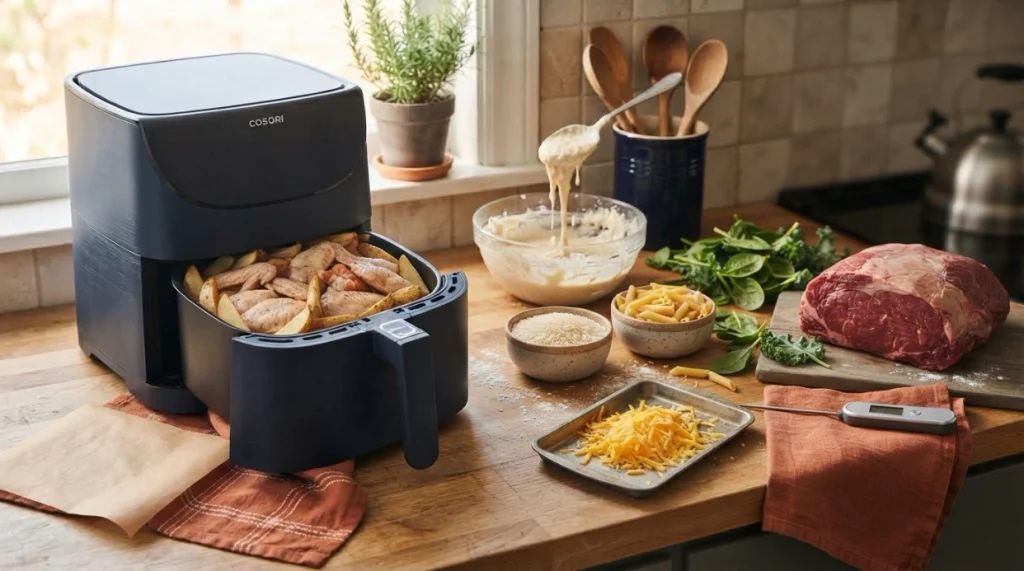
Foods that depend on lots of liquid, loose wet batter, or large cooking vessels are usually poor matches for a basket-style air fryer. Lightweight ingredients can also be troublesome when powerful airflow moves them around.
Loose wet batter
Traditional deep-fry batter can drip through a basket before it sets. Without hot oil surrounding it, the coating may not form the crust you expect.
Use breaded foods or an air-fryer-specific batter technique instead.
Rice and pasta that need boiling
Dry rice and pasta require absorbed or boiling water to cook normally. An air fryer isn’t a substitute for a saucepan or rice cooker.
Cooked pasta can still be used in air-fryer recipes. The problem is trying to boil dry pasta inside the basket.
Large quantities of lightweight leafy greens
Loose spinach, kale, herbs, or thin toppings can lift in strong airflow. Pieces may dry unevenly or move toward the heating element.
Kale chips can work when prepared for the appliance. Secure, lightly oiled pieces are different from tossing a pile of loose greens into the basket.
Cheese by itself
Uncontained cheese melts before it develops structure. It can run through the basket and create unnecessary cleanup.
Cheese works better inside breading, on pizza, or in a heat-safe pan.
Oversized foods
A large roast that barely fits defeats one of the appliance’s main advantages: airflow. The exterior may brown before heat reaches the center evenly.
Choose smaller portions or use a conventional oven when the food fills most of the cooking chamber.
Common mistakes that make good foods turn out badly
- Overcrowding: Too little space encourages steaming instead of browning.
- Using too much oil: Excess oil can collect below the basket and create smoke or mess.
- Ignoring food thickness: Two pieces of the same food may need different times when their thickness differs.
- Trusting presets blindly: Presets are convenient starting points, not perfect doneness detectors.
- Skipping the thermometer: Time alone cannot verify safe internal temperature for raw meat.
- Using loose parchment: Lightweight liners can move when food is not weighing them down.
Section Takeaway: Avoid foods that require boiling, loose liquid batter, or unrestricted space. Most air-fryer failures come from poor airflow, unsuitable cooking methods, or relying too heavily on preset times.
Frequently Asked Questions
What is the easiest food to cook in an air fryer for beginners?
Frozen French fries, chicken nuggets, potato wedges, and roasted vegetables are easy starting foods. They tolerate timing adjustments well and let you learn how quickly your particular air fryer browns food.
What foods taste best in an air fryer?
Foods that benefit from crisp edges and a tender center tend to shine. Chicken wings, potatoes, Brussels sprouts, breaded chicken, salmon, pizza, cookies, and many frozen snacks are strong examples.
Can I cook raw meat in an air fryer?
Yes. Chicken, pork, beef, fish, meatballs, and other raw proteins can be cooked in an air fryer when the appliance is used correctly.
Use a food thermometer and follow verified safe internal-temperature guidance instead of judging doneness only by cooking time or appearance.
Do I need to put oil on food before air frying?
Not always. Naturally fatty foods and many commercially frozen foods may need little or no added oil, while fresh vegetables and breaded foods often brown better with a thin coating.
Can I put aluminum foil or parchment paper in an air fryer?
Many models allow certain types of liners, but you should follow the manufacturer’s manual. Never let loose parchment or foil block required airflow or move into contact with the heating element.
Should I preheat an air fryer?
It depends on the recipe and appliance. Preheating can help with baked goods and foods that benefit from an immediate burst of heat, while many everyday air-fryer foods can cook successfully without a long preheat.
What can I cook in an air fryer besides fries?
You can cook chicken wings, thighs, salmon, pork chops, meatballs, vegetables, frozen snacks, personal pizzas, biscuits, cookies, rolls, and many reheated leftovers. The appliance is much closer to a compact convection oven than a dedicated French-fry machine.
The bottom line: The best air-fryer foods are foods that benefit from fast, dry, circulating heat. Start with potatoes, chicken, vegetables, salmon, frozen snacks, or a small batch of cookies, then adjust temperature and timing as you learn your machine.
Once you’ve mastered basket space and doneness checks, the air fryer becomes much more useful than its name suggests. Pick one familiar food tonight, keep the first batch small, and use the result to dial in your next cook.

