
What Happens When You Add Baking Soda to Boiling Eggs?
If you have ever wondered whether baking soda actually helps when boiling eggs, the short answer is this: it can make the cooking water more alkaline, which may help eggs peel a little more easily. But it is not a magic fix, and the effect is usually modest.
In practice, baking soda is best thought of as a small helper, not the main solution. Egg freshness, cooling, and peeling technique usually matter more than the additive itself. If your goal is clean shell removal, baking soda may help a bit—but it will not rescue every stubborn egg.
Quick Answer: What Baking Soda Does in the Pot
When baking soda is added to boiling water, it raises the pH of the water, making it more alkaline. That change can slightly affect the bond at the membrane-and-shell interface, which may help the cooked egg white release a little more cleanly.
That said, the improvement is often subtle. If you are boiling very fresh eggs, you may still have trouble peeling them cleanly. If the eggs are already a few days old, you may notice a small benefit. If the eggs are overcooked or cooled poorly, baking soda will not make up for those mistakes.
A useful way to think about it: baking soda may give you a small edge, but it is not the main reason eggs peel well.
Why Baking Soda Can Affect Egg Peeling
Egg shells are porous, and the white inside the egg sits against a thin membrane. As eggs age, air enters the shell gradually, and that membrane tends to separate more easily from the cooked white. That is one reason older eggs often peel better.
Baking soda changes the chemistry of the water enough to make the environment more alkaline. In alkaline conditions, the bond between the egg white and the membrane may loosen a bit. That is why some cooks use baking soda as a peeling aid.
This is also why the effect is not dramatic. The shell itself is not dissolving in the pot. The water is simply nudging the surface chemistry in a direction that may make peeling slightly smoother.
If you want a simple mental picture, think of baking soda as reducing friction at the shell interface rather than changing the egg completely.
How Much Baking Soda to Add
There is no exact standard amount, so it is best to start very small. For a typical pot of water, begin with a pinch or about 1/8 teaspoon per quart (roughly 1/4 teaspoon per liter), then adjust only if needed.
If you decide to try it, keep the amount modest and test it on a small batch first. That way, if you notice a slight off taste or a change in texture, you have not affected a full dozen eggs.
For everyday cooking, I would treat baking soda as optional. Keep the amount very small, since too much can make the whites taste a bit alkaline. That is the trade-off: a possible peeling boost versus flavor risk.
What It Does to Taste and Texture
At low levels, baking soda may go unnoticed. At higher levels, it can leave the egg whites tasting a little alkaline or dull. Some people describe the flavor as slightly chalky or soapy, especially if the eggs sit in the water too long or if too much baking soda is used.
Texture can also shift slightly. Egg whites may feel a little softer or less clean in flavor. That does not usually make the eggs unsafe, but it can make them less pleasant if you are eating them plain with salt and pepper.
This matters most when the eggs are the main event. If you are making egg salad or deviled eggs and plan to season them heavily, a faint change may be less noticeable. If you want a simple breakfast egg with a clean flavor, I would keep the baking soda amount very restrained or skip it.
Does It Work Better for Fresh Eggs or Older Eggs?
This is where many people get disappointed. Fresh eggs are usually the hardest to peel, even with baking soda. The membrane tends to cling tightly to the white, and the shell comes off in pieces.
Older eggs usually peel more easily because the membrane has had more time to pull away from the shell. In other words, egg age often matters more than the additive.
So if you are deciding whether baking soda is worth trying, ask this first: how fresh are the eggs?
- Very fresh eggs: baking soda may help a little, but not enough to make peeling easy.
- A few days to a week old: you may see a more noticeable improvement.
- Older eggs with good cooling: often peel well even without baking soda.
If you can choose, using eggs that are not straight from the carton is often a better peeling strategy than relying on additives.
Baking Soda vs Vinegar vs Salt
People often group these together, but they do not work the same way.
| Method | Likely effect on peeling | Taste impact | Best use case |
|---|---|---|---|
| Baking soda | May help a little by raising pH | Can leave a slight alkaline taste if overused | When you want a small peeling boost |
| Vinegar | More often used for helping if shells crack; not a peeling fix | May affect flavor if used heavily | When you are concerned about cracked eggs |
| Salt | Usually not a meaningful peeling aid | Can season the water slightly | When you want a neutral, low-drama pot |
| No additive | Often works well with good technique | No flavor risk | Best everyday choice for most home cooks |
This comparison is important because vinegar and baking soda are not interchangeable here. Baking soda raises alkalinity; vinegar lowers it. They do opposite things chemically, so they should not be treated as the same “egg-boiling trick.”
Salt is also commonly mentioned, but it is not a reliable peeling solution. It may have other minor effects in the pot, but if your main goal is easier shell removal, salt is usually not the first tool I would reach for.
Better Ways to Make Boiled Eggs Easier to Peel
If peeling is your real goal, these methods usually matter more than the water additive.
Use eggs that are not brand new
Eggs that have had a little time in the refrigerator often peel more cleanly than very fresh eggs. If you can plan ahead, buy eggs a few days before you want to boil them.
Cool the eggs after cooking
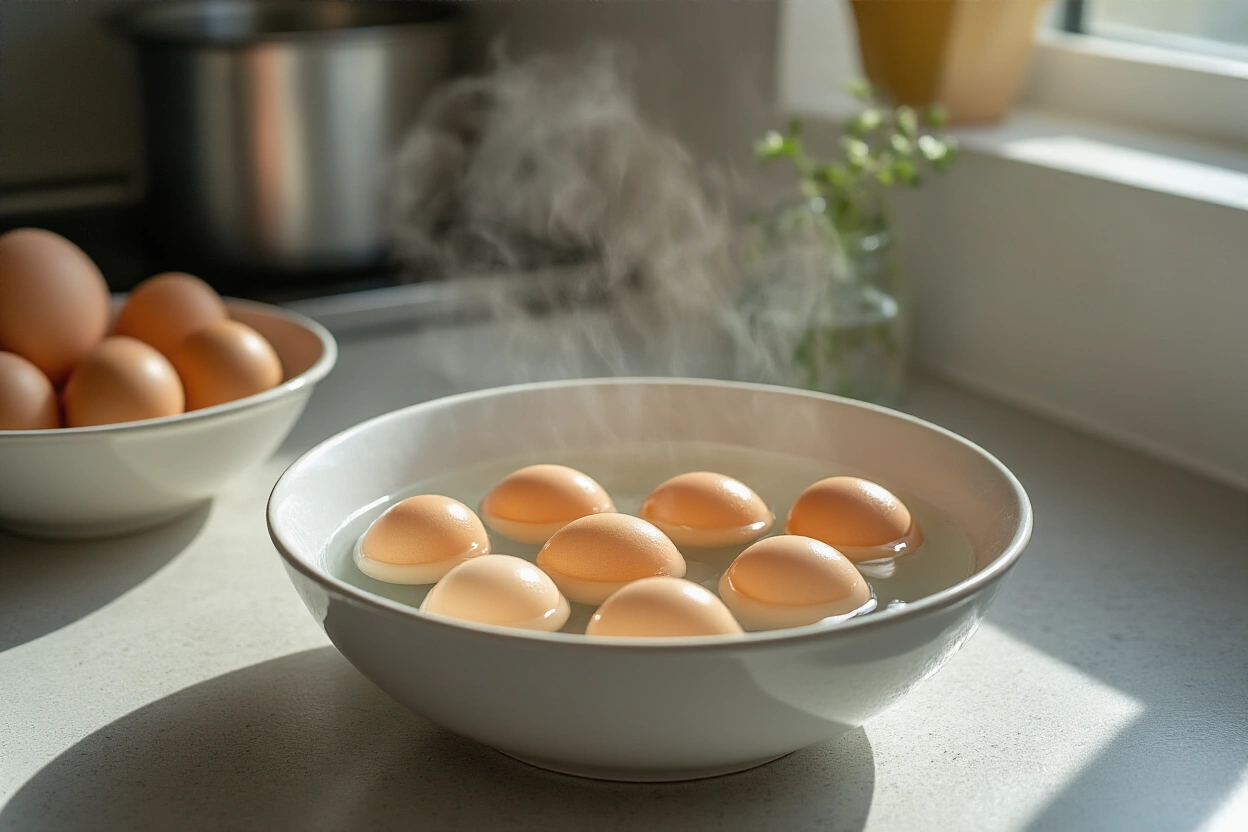
An ice bath or very cold water helps stop the cooking process and can make the shells easier to handle. It also gives the egg white a chance to contract slightly away from the shell.
Peel when the eggs are cool enough to handle
If the eggs are too hot, the shell can tear the white more easily. If they are cooled properly, peeling often becomes cleaner and less frustrating.
Tap and peel under running water
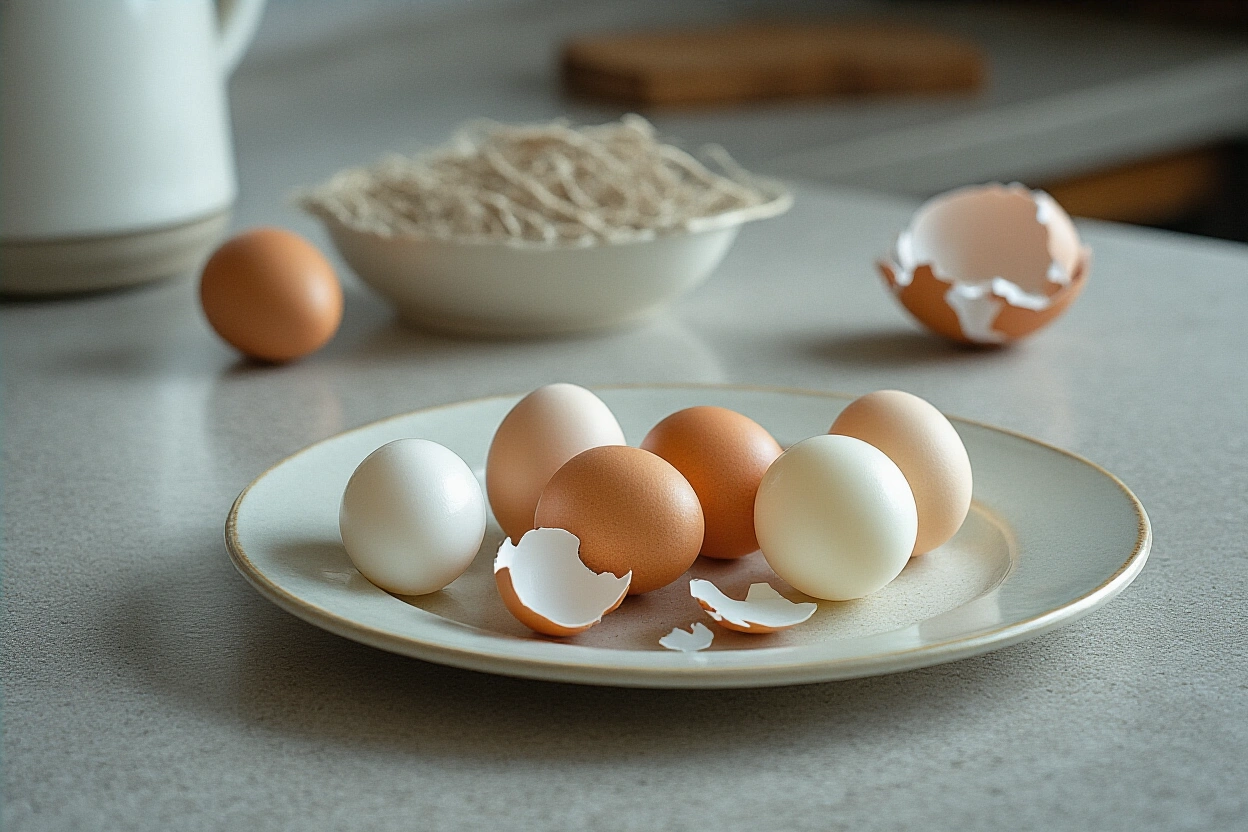
Crack the shell all over, then peel under a thin stream of water. The water can help get under the membrane and lift larger pieces of shell away.
Avoid overcooking
Overcooked eggs can develop a tougher white and a green-gray ring around the yolk. They also tend to peel less cleanly because the texture becomes less delicate.
If I had to choose one dependable improvement for most home cooks, I would pick cooling over additives. That step usually delivers more consistent results than baking soda alone.
Common Mistakes That Make Peeling Worse
The biggest peeling problems usually come from technique, not from failing to add the right ingredient.
Overcooking the eggs
Long cooking can make the whites rubbery and the yolks dry. It can also make the membrane cling in a way that feels harder to peel.
Skipping the cooling step
If you move straight from hot water to the counter, the eggs continue cooking. That extra heat can work against clean peeling.
Expecting baking soda to fix very fresh eggs
This is the most common disappointment. Baking soda may help a little, but it will not fully overcome the natural cling of a very fresh egg.
Using too much baking soda
More is not better here. Too much can affect taste and create a strange texture on the white.
Peeling rough and fast
Pulling at the shell in large chunks can tear the white. Slow peeling, especially under water, usually gives cleaner results.
When Baking Soda Is Worth Trying—and When to Skip It
Use baking soda if you want a small, low-effort peeling boost and you are willing to accept a slight risk of flavor change. It can be a reasonable experiment when you are boiling a batch of eggs for meal prep and a few imperfect peels will not ruin the dish.
Skip it if you care most about clean, neutral flavor. That is especially true for plain boiled eggs where the white is front and center.
Here is the simplest decision rule:
- Try baking soda if your eggs are a little older and you want a modest peeling improvement.
- Skip baking soda if your eggs are very fresh or if flavor matters more than convenience.
- Focus on cooling and peeling technique if you want the most reliable result.
That approach will save you more frustration than chasing a single “perfect” trick.
A Practical Home Cook’s Takeaway
So, what happens when you put baking soda in boiling eggs? The water becomes more alkaline, and that can make peeling a little easier. The effect is real enough to be useful, but it is usually small.
If you want the cleanest shells, think in this order:
- Use eggs that are not ultra-fresh.
- Cook them gently and avoid overcooking.
- Cool them well in an ice bath.
- Peel carefully, preferably under water.
- Add baking soda only if you want an extra nudge.
That is the practical version of the science. Baking soda can help, but good technique does most of the work.
For more on how egg temperature affects kitchen results, you may also find why room temperature eggs matter for baking useful, especially if you want to understand how egg handling changes texture and performance in the kitchen.
And if you are curious about how common kitchen ingredients react, our guide to what happens when vinegar and baking soda are mixed explains the chemistry in plain language.
FAQ
Does baking soda make boiled eggs easier to peel?
Sometimes, but only a little. It may help by making the water more alkaline, which can loosen the bond between the egg white and the shell membrane.
Will baking soda change the flavor of boiled eggs?
It can if you use too much. A small amount may go unnoticed, but heavier use can leave the whites tasting slightly alkaline.
Is baking soda better than vinegar for boiling eggs?
Not really, because they do different things. Baking soda is the one more often used for peeling help. Vinegar is more commonly used when eggs crack and leak in the water.
Does salt help eggs peel better?
Salt is not a dependable peeling aid. It may have other uses in the pot, but it is not the best choice if easier shell removal is your main goal.
What is the best way to boil eggs for easy peeling?
Use eggs that are not extremely fresh, cook them without overdoing the time, cool them in an ice bath, and peel them carefully under water. Those steps usually matter more than any additive.
Is baking soda safe to use when boiling eggs?
In small amounts, it is commonly used in home cooking. The main concern is not safety so much as taste and texture if too much is added.
Does baking soda work on very fresh eggs?
It may help a little, but fresh eggs are still usually the hardest to peel. If the eggs are very fresh, technique and cooling will matter more than the additive.
Can I use baking soda every time I boil eggs?
You can, but I would not treat it as necessary. For many batches, a no-additive method with good cooling gives the cleanest everyday result.

