
What Is a Preferment in Bread Baking? A Practical Guide for Better Loaves

If you’ve ever wondered why some breads taste deeper, smell richer, and feel more open and lively inside, the answer is often a preferment.
A preferment is simply a portion of dough made ahead of the final mix and left to ferment for several hours or longer. In plain terms: you mix some of the flour, water, and leavening in advance, let it develop flavor and fermentation strength, then add it to the rest of the dough later. According to King Arthur Baking, preferments can be stiff, loose, or even just a piece of already mixed dough, and they may use commercial yeast, wild yeast, or a sourdough culture. King Arthur Baking’s preferment reference is a helpful starting point if you want the formal definition in one place.
For home bakers and culinary students, the big idea is this: a preferment gives the dough a head start. That head start can improve flavor, handling, and the final crumb, but it also asks for planning. If you’ve ever wanted bread with more character without jumping straight into advanced sourdough, preferments are one of the most useful tools in the baker’s kit.
What a Preferment Actually Is
Think of a preferment as “the dough before the dough.”
Instead of mixing every ingredient at once, you ferment a portion of the formula ahead of time. That portion usually contains flour, water, and a leavening agent such as commercial yeast or sourdough starter. Some preferments include salt, while others do not. Some are fluid and pourable; others are stiff enough to feel like a firm dough.
For practical home baking, it helps to think in ratios and timing:
- Poolish: usually 100% hydration — equal parts flour and water by weight. A common fermentation window is about 8 to 16 hours at room temperature, depending on yeast amount and room temperature.
- Biga: usually stiff, around 50% to 60% hydration — less water than flour. It often ferments about 12 to 18 hours, sometimes longer in cooler conditions.
- Pâte fermentée: an old dough preferment that is already salted and often sits in the 60% to 65% hydration range, though it depends on the original dough. It is commonly held overnight or up to about a day before use.
- Levain: hydration varies widely, but many home formulas fall somewhere in the 60% to 100% range depending on the style. Fermentation timing can range from a few hours to overnight, depending on starter strength and temperature.
This matters because fermentation changes the dough before the final mix even begins. As the preferment matures, it develops aromatic compounds and organic acids that later show up in the finished loaf. That’s a big reason preferments are so valued in artisan bread.
A useful way to remember it:
- Straight dough: everything is mixed at once
- Preferment: part of the dough ferments first
- Sourdough starter: a living culture that may be used in a preferment, but is not the same thing as the final preferment itself
Why that head start matters
Preferment fermentation gives yeast and enzymes more time to work on the flour. That can mean more flavor, better extensibility, and a dough that feels more cooperative during shaping. It’s not magic; it’s simply giving the dough more time to develop before the final mix.
Why Bakers Use Preferments
Bakers use preferments for practical reasons, not just tradition.
1. Flavor becomes more complex
A straight dough can taste clean and mild. A preferment often tastes deeper and more layered. You may notice nutty, wheaty, or slightly tangy notes depending on the type and fermentation length. That’s especially useful in breads with simple formulas, like baguettes or country loaves, where the flour itself needs to shine.
2. Dough handling often improves
A preferment can change how the final dough feels. Some formulas become more extensible, meaning they stretch more easily during shaping. Others gain a little more structure. This is one of the reasons bakers match the type of preferment to the type of bread.
3. Texture can become more appealing
Preferments often help create a crumb that feels lighter, more open, or more tender, depending on the formula. The effect is not identical in every bread, but the general trend is improved dough performance and a more interesting texture.
4. Keeping quality can improve
Bread made with preferment often stays pleasant a bit longer than a very simple straight dough. That doesn’t mean it will stay fresh forever, but the loaf may hold onto its eating quality better, depending on the formula and storage.
5. You can build fermentation in stages
This is one of the most practical advantages for busy bakers. A preferment lets you do part of the work the night before, then mix and bake the next day with less guesswork.
Trade-off: preferments reward planning, but they also add a step. If you need bread fast, a straight dough is usually the better choice.
The Main Types of Preferments
There are several common preferments, and each behaves a little differently.
| Preferment | Hydration / Feel | Leavening | Typical Character | Common Use |
|---|---|---|---|---|
| Poolish | Very wet, loose, pourable | Usually commercial yeast | Mild, extensible, aromatic | Baguettes, lean breads |
| Biga | Stiffer, more dough-like | Usually commercial yeast | Structured, slightly less slack than poolish | Italian-style breads, country loaves |
| Pâte fermentée | Old dough, already salted | Usually commercial yeast | Convenient, familiar, balanced | Sandwich bread, baguettes, reuse of dough scraps |
| Levain | Naturally leavened preferment | Sourdough culture | Tangier, more complex, naturally leavened | Sourdough breads, artisan loaves |
Poolish
Poolish is a loose preferment, often made with equal parts flour and water by weight. That wet texture encourages fermentation and creates a dough that can be very extensible. Bakers often like poolish for baguettes and other lean breads where a light, open structure is welcome.
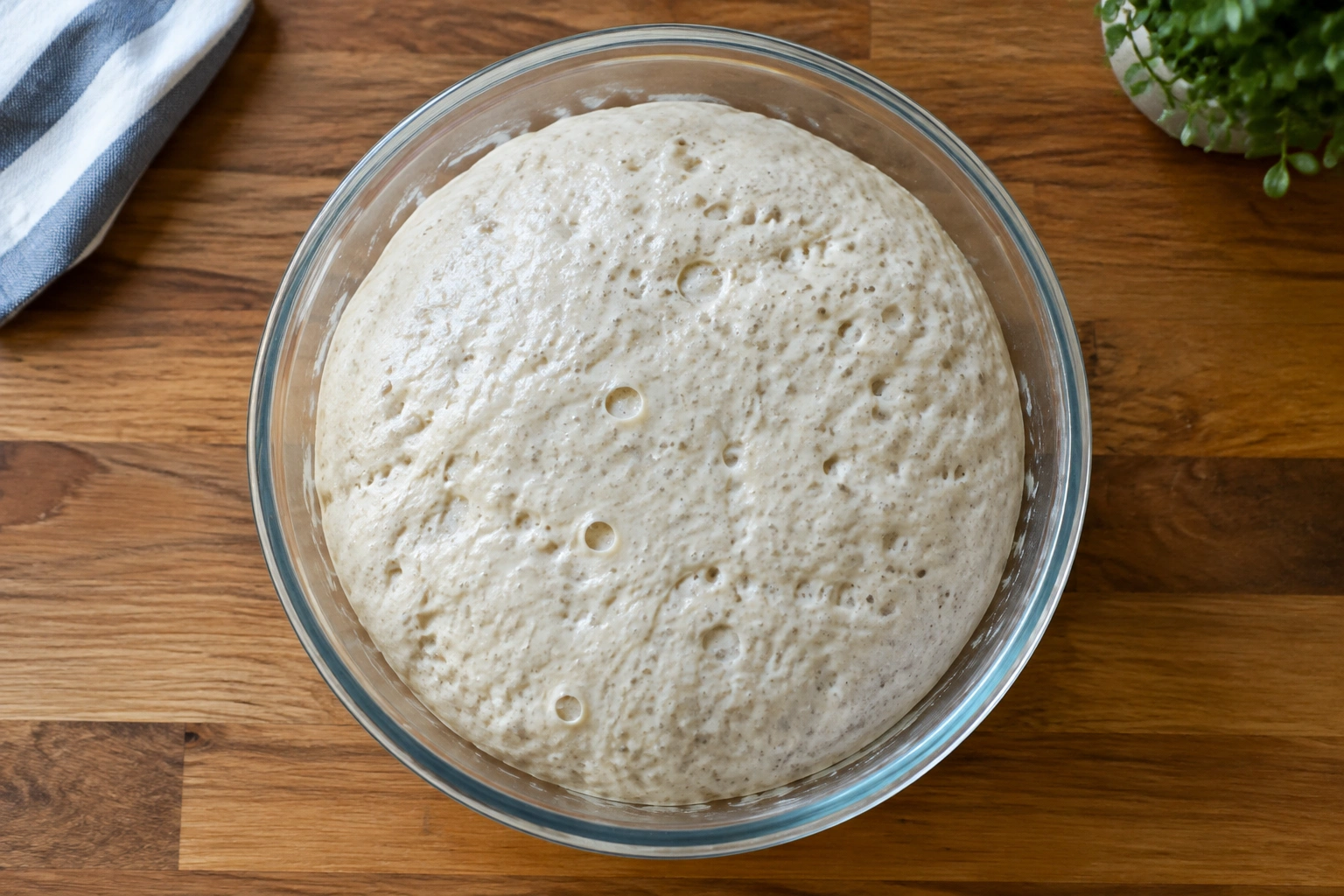
A ripe poolish usually looks bubbly across the surface and may be slightly domed at its peak. It should smell pleasantly wheaty, sweet, or mildly fermented. If it has a strong alcoholic smell, has collapsed in the center, or looks flat and exhausted, it may be past peak.
Biga
Biga is much stiffer. Because it contains less water, it ferments more slowly and feels more structured. If poolish is slack and fluid, biga is firm and compact. That makes it useful when you want flavor development without quite as much looseness in the dough.
A ripe biga usually looks expanded but still holds its shape. It may show some cracking on the surface and smell pleasantly yeasty, nutty, or lightly fermented. It should not smell sharply sour or overly alcoholic. If it feels very slack, collapses, or smells harsh, it may be overripe.
Pâte fermentée
This means “fermented dough,” and it’s often described as old dough. It is simply a piece of dough from a previous batch, saved and used in the next mix. Unlike many other preferments, it usually includes salt. That makes it especially convenient because it feels closer to the dough process most bakers already know.
A ripe pâte fermentée usually looks like a piece of dough that has relaxed and expanded somewhat, not a bubbly batter. It should smell pleasantly bready, yeasty, and mildly fermented, not sour in a sharp way. Because it is already salted, it often ages a bit more slowly than a wet preferment, but it still should not smell stale, spoiled, or strongly alcoholic.
Levain
Levain is a naturally leavened preferment made with sourdough culture rather than commercial yeast. It is a preferment, but it also functions as part of the sourdough system. If you already maintain a starter, levain is the bridge between that culture and the final bread formula.
Preferment vs. Sourdough Starter vs. Straight Dough
This is where many bakers get tangled, so let’s separate the terms cleanly.
Preferment and sourdough starter are not the same thing
A sourdough starter is a living culture you keep feeding over time. A preferment is a batch of dough or dough ingredients fermented ahead of the final mix. A starter can be used to build a preferment, but the starter itself is not automatically the preferment.
That distinction is especially useful when reading recipes. If a formula says “build a levain,” it is asking you to make a preferment using sourdough culture. If it says “use starter,” it may be referring directly to the culture or to an elaboration built from it.
Straight dough is the simplest method
A straight or direct dough method means all fermentation happens after the final mix is made. No part of the formula is held back for an earlier fermentation stage.
Straight dough advantages:
– Faster
– Simpler
– Easier to schedule
– Fewer variables
Preferment advantages:
– More flavor development
– Often better dough behavior
– More flexibility for artisan-style breads
A straight dough is often the right answer for weeknight sandwich bread. A preferment makes more sense when flavor and dough character matter more than speed.
Tools, Ingredients, and Setup You Need
You do not need a bakery to make a preferment well. You do need a little precision.
Basic tools
- Digital scale
- Mixing bowl or container
- Spoon or dough whisk
- Lid, plastic wrap, or cover
- Marker or rubber band to track expansion
- Thermometer if you want more control over fermentation temperature
Basic ingredients
- Flour
- Water
- Yeast or sourdough starter
- Salt, only if the preferment style calls for it
A clean container matters
Preferments sit for hours, sometimes overnight. Use a clean container and cover to reduce contamination and drying out. If you’re fermenting at room temperature, make sure the container gives the preferment room to expand.
Flour choice affects the result
Bread flour gives stronger gluten potential. All-purpose flour can work too, but the strength and absorption may differ. If you are following a formula, keep the flour type consistent so the preferment behaves the way the recipe expects.
How to Build a Preferment Step by Step
The exact formula changes by style, but the basic process is similar.
1. Choose the preferment style
Decide whether you want poolish, biga, pâte fermentée, or levain. The style should match the bread you’re making.
2. Measure by weight
Use a scale. Preferments are much easier to control when flour and water are weighed rather than scooped.
3. Mix the preferment ingredients
Combine the flour, water, and leavening until no dry flour remains. Don’t overwork it unless the style calls for a more developed dough, as with pâte fermentée.
4. Cover and ferment
Let it ferment at the temperature the recipe expects. Room temperature is common; cooler conditions slow the process, and warmer conditions speed it up.
5. Watch for readiness
Do not rely only on time. A preferment is ready when it looks active, smells pleasant, and shows the right amount of expansion for its type.
6. Add it to the final dough
Once ripe, use it as part of the final mix, remembering that the preferment already contains some of the recipe’s flour, water, and possibly salt.
Practical note: if you’re adapting a recipe, the preferment is not extra dough on top of the formula. It replaces part of the final ingredients.
A simple scaling example
If a recipe calls for:
- 500 g total flour
- 325 g total water
and you want to build a poolish using:
- 100 g flour
- 100 g water
then those 100 g flour and 100 g water come out of the final dough formula.
So the remaining final mix would use:
- 400 g flour
- 225 g water
You would then add the remaining ingredients, including salt and any yeast not already in the preferment, according to the recipe.
How to Tell When a Preferment Is Ready
Time helps, but visual cues tell you more.
Signs of a ripe preferment
- Bubbles on the surface and sides
- A domed top, especially in a liquid preferment
- A pleasant, wheaty, mildly fermented aroma
- Noticeable expansion
- A lively, aerated texture
Style-specific readiness cues
Poolish: usually near peak when it is very bubbly, domed, and just starting to flatten in the center. It should smell sweet, wheaty, or lightly alcoholic, not sharply sour.
Biga: usually ready when it has expanded, looks aerated, and may show small surface cracks. It should smell pleasantly yeasty and nutty, with a clean fermented aroma.
Pâte fermentée: usually ready when it has relaxed, expanded somewhat, and smells like well-fermented dough. It should not smell spoiled or aggressively sour.
Signs it may be overripe
- The top has collapsed
- The smell is very sharp, alcoholic, or overly acidic
- The surface looks flat and exhausted
- The mixture has lost its strength and structure
An overripe preferment is not always unsafe, but it can weaken dough performance. If it smells spoiled or shows mold or unusual discoloration, discard it.
Temperature changes the timeline
A preferment fermented in a warm kitchen may ripen much faster than one kept in a cool room. That’s why bakers learn to read the dough, not just the clock.
How to Use a Preferment in the Final Dough
When the preferment is ripe, it gets folded into the main dough mix.
Step 1: Add the preferment with the other ingredients
Usually the preferment is torn into pieces or poured in, depending on its texture.
Step 2: Account for the flour and water already inside it
This is the most common beginner mistake. If your preferment contains 200 grams of flour and 200 grams of water, those amounts are already part of the total formula. Do not add them again in the final mix.
Step 3: Mix until the dough comes together
Because the preferment has already fermented, the final dough may feel more active sooner than a straight dough. Give it enough mixing to combine, then use your usual bulk fermentation and shaping process.
Step 4: Adjust your expectations, not just your recipe
A preferment can change how fast dough rises and how the gluten feels. If the dough seems more extensible or more active than usual, that is normal.
Should you use it cold or at room temperature?
In most cases, use the preferment at or near room temperature if that is how the final dough is being mixed. That makes it easier to incorporate and helps the dough temperature stay predictable.
If the preferment has been refrigerated, let it warm slightly if the recipe or dough schedule calls for it, especially for stiff preferments like biga or pâte fermentée. That said, some formulas are intentionally mixed with a cold preferment to control dough temperature and slow fermentation. The best choice depends on the recipe, the room temperature, and how fast you want the final dough to move.
A useful decision rule
If the final dough feels too slack, check whether the preferment was too wet, too ripe, or both. If it feels tight and resistant, the preferment may have been too stiff or underfermented.
Common Mistakes and Troubleshooting
Mistake 1: Using the preferment too early
An underfermented preferment may not have developed enough gas, acidity, or flavor. The final dough can feel flat and underdeveloped.
Fix: wait for more visible activity and aroma before using it.
Mistake 2: Letting it overferment
If the preferment collapses and smells harsh, it may have passed peak ripeness. The dough can become weaker and less predictable.
Fix: next time, shorten the fermentation or lower the room temperature. If it is only slightly overripe, you may still use it, but expect less strength.
Mistake 3: Misreading hydration
A wet preferment behaves very differently from a stiff one. Poolish and biga are not interchangeable without adjustment.
Fix: match the hydration to the formula, or make formula changes deliberately rather than by guesswork.
Mistake 4: Forgetting formula balance
If you add preferment without subtracting its flour and water from the final dough, the recipe will be off.
Fix: treat the preferment as part of the total dough formula, not an add-on.
Mistake 5: Expecting every bread to benefit equally
Some breads gain a lot from preferment. Others are fine without it.
Fix: use preferments when flavor and dough character matter enough to justify the extra planning.
Practical Examples: Which Breads Benefit Most?
Baguettes
A poolish is a classic choice for baguettes because it can support flavor development and a more extensible dough. That extensibility can help with shaping long, slender loaves.
Country loaves
A biga or levain can work well in rustic loaves where you want more depth and a more artisanal profile. The choice depends on whether you want commercial-yeast convenience or natural leavening.

Sandwich bread
Pâte fermentée is a smart fit here because it adds flavor without forcing a dramatic change in the overall process. It’s one of the easiest ways to introduce preferment baking into everyday bread.
Enriched doughs
Preferments can still help in enriched breads, but the effect may be subtler because sugar, fat, and milk already change fermentation behavior. In these formulas, preferments are often used for flavor and balance rather than dramatic crumb changes.
How to Choose the Right Preferment for Your Recipe
Use the bread style, your schedule, and your flavor goal to decide.
Choose poolish if:
- You want a wetter preferment
- You want extensibility
- You’re making lean breads like baguettes
Choose biga if:
- You want a stiffer preferment
- You want a little more structure
- You prefer a dough that feels less slack
Choose pâte fermentée if:
- You want a simple, practical way to reuse old dough
- You want flavor without a big process change
- You’re making everyday bread with artisan leanings
Choose levain if:
- You already work with sourdough culture
- You want natural leavening
- You’re comfortable managing a living starter system
Choose straight dough if:
- You need speed
- You want a same-day bake
- You’re learning the base formula first
A good rule for beginners: if you are still learning how a recipe behaves, make the straight dough version first. Then convert it to a preferment once you understand the dough’s normal rhythm.
How much preferment should you build?
A practical starting point is to build enough preferment to replace only a portion of the total flour, not the whole formula. Many home formulas use a preferment for roughly 20% to 50% of the total flour, depending on the style and timing. For example, a poolish might cover a smaller share of the flour in a baguette formula, while a levain build may account for more of the prefermented flour in a sourdough loaf. If you are following a recipe, use the amount it specifies rather than guessing.
Quick Takeaways
A preferment is part of a bread dough fermented ahead of the final mix. That extra fermentation can improve flavor, dough handling, texture, and keeping quality, but it also adds planning and a little more formula management.
The most useful distinctions are simple:
- Poolish: wet and extensible
- Biga: stiff and structured
- Pâte fermentée: old dough, often salted
- Levain: naturally leavened preferment
- Straight dough: everything mixed at once
If you remember only one thing, make it this: judge preferment readiness by sight, smell, and behavior, not just the clock. That habit will save you from underfermented dough on one end and tired, collapsed preferment on the other.
For a baker, that’s the real value of a preferment: not just better bread, but better control.
FAQs
Is a preferment the same as a sourdough starter?
No. A sourdough starter is a living culture you maintain over time. A preferment is a portion of dough or dough ingredients fermented ahead of the final mix. A starter can be used to build a preferment, but they are not identical.
Do all preferments use yeast?
No. Some use commercial yeast, and others use wild yeast from a sourdough culture. Both approaches are common.
Can I use a preferment in any bread recipe?
Not automatically. Many breads benefit from one, but the formula should be adjusted so the flour and water in the preferment are counted in the total dough.
How long should a preferment ferment?
It depends on the type, temperature, and formula. Rather than relying on a fixed clock, look for bubbles, expansion, aroma, and the right texture for the style you’re making.
What happens if I use an overripe preferment?
The final dough may be weaker or less predictable. If it smells spoiled or shows mold or unusual discoloration, discard it.
Which preferment is best for beginners?
Pâte fermentée is often the easiest to understand because it behaves more like familiar dough. Poolish is also approachable if you want to see clear fermentation activity in a wet preferment.
Is preferment baking the same as autolyse?
No. Autolyse is a resting period for flour and water, usually before adding salt and leavening. A preferment is actively fermented with yeast or starter.
Can I refrigerate a preferment?
Sometimes, yes, depending on the formula and schedule. Refrigeration slows fermentation, which can be helpful, but it changes timing and ripeness cues.
Should a preferment be cold or room temperature when I mix it in?
Usually room temperature is easiest, but some formulas use a cold preferment on purpose to control dough temperature. Follow the recipe when possible.