
What Is Tangzhong? A Baker’s Guide to Softer, Fresher Bread

If you’ve ever bitten into a sandwich loaf or milk bread that stayed tender for days, there’s a good chance tangzhong played a role. In simple terms, tangzhong is a cooked flour-and-liquid paste that gets mixed into bread dough to improve softness, moisture retention, and shelf life.
As an artisan baker, I like tangzhong because it gives home bakers a practical way to make bread feel richer and more pillowy without turning every formula into a heavy enriched dough. It’s a small step, but it changes the way the dough holds water and the way the crumb feels after baking.
What Tangzhong Is
Tangzhong is often described as a roux, a paste, or a gel. All three descriptions are useful, depending on the context.
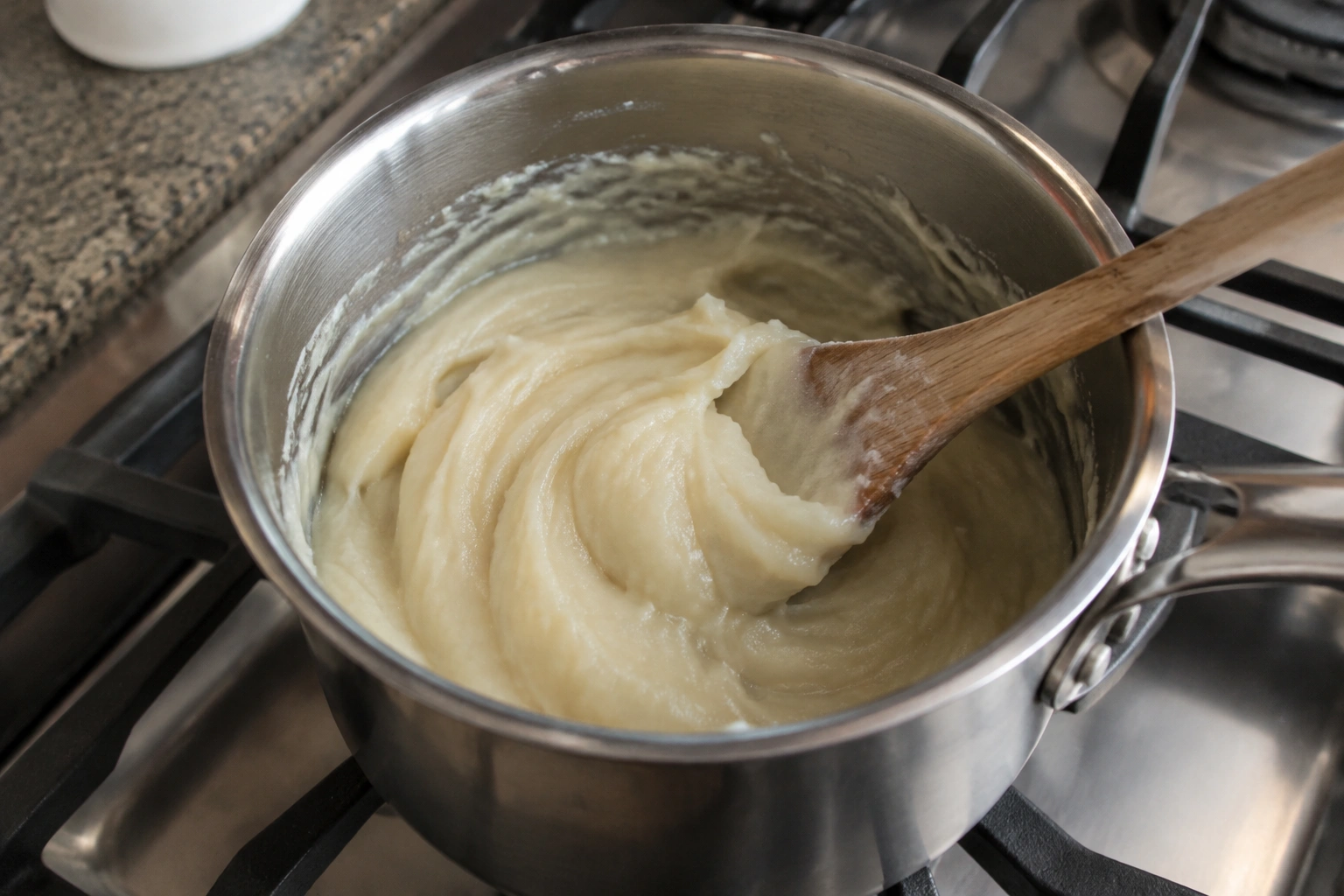
- Roux emphasizes that you cook flour with liquid.
- Paste describes the texture you make in the saucepan.
- Gel points to what happens to the starches once heat and liquid do their work.
In bread making, tangzhong usually means you take a small portion of the flour and liquid from your recipe, cook them together until thickened, then cool that mixture and add it back into the dough. The liquid is usually water, milk, or a combination of both.
A practical rule of thumb is to reserve about 5–10% of the total flour for tangzhong, along with enough liquid to keep the overall formula balanced. The exact amount depends on the bread style and hydration, so treat that range as a starting point rather than a fixed rule.
That’s the whole idea: part of the flour gets pre-cooked so it can hold more water in the final dough.
How Tangzhong Works in Bread Dough
The main science term behind tangzhong is starch gelatinization. In plain English, when flour is heated with liquid, the starch granules absorb water, swell, and thicken the mixture.
Why does that matter?
Because gelatinized starch can hold onto water differently than raw flour can. In bread dough, that means the crumb tends to stay softer and more tender, and the bread often stales more slowly than a standard loaf.
That last point is especially useful for home bakers. Staling is not just “drying out”; it also involves starch changes as bread cools and ages. Tangzhong helps the dough retain more water, which can slow the firming-up process that makes bread feel stale.
This is why tangzhong is so popular in soft sandwich breads, rolls, and milk breads. It supports a plush crumb without requiring a huge amount of butter, sugar, or eggs.
When to Use Tangzhong and When to Skip It
Use tangzhong when your goal is softness first. It shines in breads where you want a tender crumb and a longer window of freshness.
Good candidates include:
- sandwich loaves
- dinner rolls
- milk bread
- hamburger buns
- cinnamon rolls
- soft pull-apart breads
Skip it, or at least think carefully before using it, when you want a bread that is supposed to be chewy, open, and crust-forward. A rustic country loaf, baguette-style bread, or a very crusty artisan loaf usually does not need the extra tenderness tangzhong brings.
Here’s the practical decision rule I use:
- Want a soft, fluffy loaf that stays fresh longer? Tangzhong is worth trying.
- Want a chewy crust and more open, artisan-style crumb? Tangzhong is usually unnecessary.
- Want a bread that sits between those two styles? Use tangzhong sparingly and keep the rest of the formula lean.
That trade-off matters. Tangzhong is a tool for a specific texture goal.
Tools, Ingredients, and Prerequisites
You do not need special equipment, but a few basics help a lot:
- small saucepan
- whisk or silicone spatula
- kitchen scale, if possible
- thermometer if you like precision, though it is not required
- bowl for cooling the tangzhong
For ingredients, you only need:
- flour from the recipe
- water, milk, or both
A scale makes tangzhong much easier to repeat. Measuring by volume can work, but bread formulas are far more consistent when you weigh the flour and liquid.
If you are new to bread making, tangzhong is still approachable. The main skill is simply cooking the mixture gently and stopping at the right thickness.
Basic Tangzhong Ratio and Formula
A common tangzhong ratio is 1 part flour to 5 parts liquid by weight.
For example:
- 20 g flour
- 100 g liquid
That gives you a smooth, spoonable paste once cooked.
Some bakers use slightly different ratios, but 1:5 is a very practical starting point because it produces a texture that is easy to whisk, cook, cool, and mix into dough.
How to reserve ingredients from your recipe
Tangzhong should not be treated as extra flour and extra liquid added on top of the formula. Instead, you take a small portion from the recipe’s total flour and liquid and use that to make the tangzhong.
That keeps the dough balance intact.
For instance, if your bread formula uses 300 g flour and 180 g liquid, you might reserve 20 g flour and 100 g liquid for tangzhong, then use the remaining flour and liquid in the final dough.
That is the key adjustment: tangzhong changes how the ingredients are prepared, not the total formula in a random way.
How to Make Tangzhong Step by Step
Here’s the basic method I recommend for a beginner-friendly batch.
1) Mix the flour and liquid in a small saucepan
Whisk the flour and liquid together before heating. This helps prevent lumps from forming early.
2) Cook over low to medium-low heat
Keep the heat gentle. Stir constantly with a whisk or spatula.
You are not looking for browning. You are looking for thickening.
3) Watch for the texture change
The mixture will move from thin and milky to thicker and glossy. It should resemble a soft pudding or thick paste.
A useful visual cue: when you drag the whisk through the pan, the line should hold for a moment before slowly closing.
If you do not use a thermometer, another good doneness cue is this: the paste should thicken enough to leave clear trails, but it should not boil hard or bubble aggressively.
If you want a more exact target, tangzhong is often cooked to about 65°C to 65.5°C (149°F to 150°F).
4) Remove it from the heat before it becomes stiff
If you keep cooking too long, the tangzhong can become overly thick and rubbery. That makes it harder to blend into the dough later. It can also happen if the heat is too high and the mixture loses too much moisture while cooking.
If your tangzhong seems too thin while cooking, keep stirring over gentle heat for a little longer. If it still will not thicken, the heat may be too low, the ratio may be off, or the mixture may need a bit more time for the starches to gelatinize.
5) Cool it before using
Transfer it to a bowl and let it cool to room temperature before adding it to the dough.
That cooling step matters because hot tangzhong can raise the dough temperature too much and make fermentation less predictable.
How to Cool and Add Tangzhong to Dough

Once cooled, tangzhong goes into the dough along with the rest of your ingredients. If you are adapting an existing recipe, add it during the initial mixing stage, before or alongside the main dough ingredients, rather than waiting until after the dough has fully developed.
If your recipe uses an autolyse, keep the tangzhong out of the autolyse step and add it afterward with the remaining ingredients. Autolyse is usually just flour and water, so the cooked paste is better incorporated in the main mix.
You can also mix it in with the wet ingredients first, or add it straight into the bowl with the flour, depending on the recipe and your mixing style.
The main goal is even distribution.
If you see streaks of paste in the dough, it was not fully incorporated. That usually means the tangzhong was too stiff, the dough was too dry at first, or the mixture needed a little more mixing time.
A practical tip: if you are using a stand mixer, add tangzhong with the liquids before the flour. If you are mixing by hand, mash it into the wet ingredients first so it disperses more easily.
How Tangzhong Changes Bread Texture and Shelf Life
Tangzhong tends to make bread feel softer, fluffier, and more tender.
It also helps bread stay pleasant for longer before it starts to feel dry or firm. That does not mean it will stay fresh forever, but it often gives you a more forgiving loaf for a few days of storage.
There is a trade-off, though. If you love a bread with a firm bite or a chewy crust, tangzhong may soften the result more than you want. That is why it is best matched to breads where tenderness is the target.
In a sandwich loaf, that softness is a feature. In a hearth loaf, it may be a distraction.
Best Bread Types for Tangzhong
Tangzhong works especially well in breads that benefit from a fine, even crumb.
Good fits include:
- soft sandwich bread
- milk bread
- dinner rolls
- burger buns
- sweet rolls
- cinnamon rolls
- brioche-style loaves where you want extra tenderness
It can also work in some whole wheat breads, but whole grain flour absorbs more water and can make the dough feel heavier. In those formulas, tangzhong can help soften the crumb, yet it will not completely erase the denser character of whole wheat.
For enriched doughs, tangzhong often makes the texture even more plush. That can be excellent for rolls and loaf breads, but if the dough is already rich with butter, eggs, and sugar, you may need to test the hydration carefully so the dough does not become too soft to shape.
Milk-Based Tangzhong vs. Water-Based Tangzhong
Both work. The main difference is flavor and richness.
| Option | Flavor | Best For | Trade-Off |
|---|---|---|---|
| Water-based tangzhong | Neutral | Sandwich bread, buns, recipes where you want the bread flavor to stay clean | Less richness |
| Milk-based tangzhong | Slightly richer, softer impression | Milk bread, sweet rolls, enriched loaves | Can make the bread feel more tender and slightly richer, which is not ideal for every formula |
| Water + milk blend | Middle ground | Many soft loaves | Requires a little more judgment in formula balance |
If you are adapting a recipe for the first time, water is the simplest place to start because it changes texture without adding extra flavor variables. If you want a softer, richer profile, milk is a natural choice.
Tangzhong vs. Yudane
Tangzhong and yudane are closely related, but they are not identical.
| Method | How It’s Made | Hydration Style | Typical Workflow | Best Use |
|---|---|---|---|---|
| Tangzhong | Flour and liquid are cooked together on the stove | Usually made with about 1 part flour to 5 parts liquid by weight | Cook, cool, then mix into dough | Soft sandwich breads, rolls, milk bread |
| Yudane | Flour is mixed with boiling water, usually at about 1:1 by weight | Much stiffer because the flour absorbs a smaller amount of water | Pour boiling water over flour, then rest before using | Similar soft breads, especially when you want a firmer, less cooked paste workflow |
In practical terms, tangzhong gives you more control because you can watch the paste thicken on the stove. Yudane is simpler in one sense because it does not require stovetop cooking, but it is a firmer mixture and can feel a little different when incorporated.
If you want the most beginner-friendly route, tangzhong is often easier to judge visually. If your recipe already leans toward yudane, that can work beautifully too.
Common Mistakes and Troubleshooting
The tangzhong turned lumpy
This usually happens when the flour and liquid were not whisked well before heating, or the heat was too high too fast.
Fix: whisk more thoroughly before cooking, and keep the heat gentle. If lumps are small, you can often smooth them out while the mixture is still warm.
The paste got too thick
You probably cooked it too long or over too high heat.
Fix: remove it from the heat earlier next time. The mixture should be thick but still spreadable, not stiff like modeling clay.
The tangzhong scorched
That means the heat was too aggressive or the pan was too hot.
Fix: use lower heat and stir constantly. A heavy-bottomed saucepan helps.
The dough feels too loose after adding tangzhong
This can happen if you did not reduce the recipe’s liquid elsewhere.
Fix: remember that tangzhong is part of the formula, not an add-on. Reserve flour and liquid from the original recipe instead of adding them on top.
The finished loaf is softer than you wanted
That is not a failure; it means tangzhong did its job a little too well for that style.
Fix: use a smaller tangzhong percentage next time, or reserve it for breads where softness is the goal.
Practical Example: Adapting an Existing Bread Recipe
Let’s say you have a standard white bread formula and want to make it softer.
A simple way to adapt it is to reserve a small portion of flour and liquid for tangzhong. Suppose your recipe uses:
- 500 g flour
- 300 g liquid total
You might set aside:
- 25 g flour
- 125 g liquid
Cook those together into tangzhong, cool it, then mix it back into the dough with the remaining ingredients.
What changes?
- The dough may feel a little more elastic and hydrated.
- The crumb will likely be finer and softer.
- The loaf may stay pleasant longer after baking.
What does not change?
- The total flour and liquid in the recipe should still balance.
- You still need proper kneading, fermentation, shaping, and proofing.
That is why tangzhong is so useful. It improves the bread without replacing the fundamentals.
Quick Recap: How to Use Tangzhong Successfully
If you remember only a few things, make them these:
- Tangzhong is a cooked flour-and-liquid paste used to make bread softer and fresher longer.
- A common starting ratio is 1:5 flour to liquid by weight.
- A practical rule of thumb is to reserve about 5–10% of the total flour for tangzhong, adjusting the liquid to fit the formula.
- Cook it gently until thickened, but do not brown it or overcook it.
- If you do not use a thermometer, look for a thickened paste that leaves trails in the pan without boiling hard; if you want precision, aim for about 65°C to 65.5°C (149°F to 150°F).
- Cool it before adding it to the dough.
- If you are using autolyse, add tangzhong after the autolyse stage with the rest of the dough ingredients.
- Reserve tangzhong ingredients from the recipe rather than adding extra flour and liquid on top.
- Use it when softness matters most: sandwich bread, rolls, milk bread, and similar loaves.
Tangzhong is not magic, but it is a very reliable technique when you want bread with a tender crumb and better keeping quality. Once you understand the method, you can adapt it to many soft bread formulas with confidence.