
What Is the Main Use of an Air Fryer?
Quick Answer
The main use of an air fryer is to cook food quickly with rapidly circulating hot air, creating a browned or crisp exterior while using little or no added oil. It works especially well for foods such as fries, vegetables, chicken, frozen snacks, and leftovers. Although the name suggests frying, an air fryer works more like a compact convection oven.
What an air fryer is mainly used for
- Crisping food: Fast-moving hot air helps brown and dry the outside of foods.
- Cooking frozen food: Fries, nuggets, vegetables, and similar foods cook without deep-frying.
- Roasting: Small portions of vegetables, meat, and other foods can roast quickly.
- Reheating leftovers: Pizza, fries, and other crisp foods usually reheat better than they do in a microwave.
- Small-batch baking: Cookies, rolls, cakes, and other baked goods can be made with the right settings and pans.
Simple rule to remember
- Use an air fryer when you want fast cooking, strong browning, or a crisp surface without heating a large oven.
If you are new to air frying, the name can make the appliance sound more complicated than it is. For me, the simplest way to understand it is as a small, powerful convection cooker built around fast-moving hot air.
Its strongest job is crisping and browning smaller portions quickly. In this guide, I’ll explain what air fryers are mainly used for, where they shine, where they struggle, and how baking fits into the picture in 2026.
In This Guide
What Is the Main Use of an Air Fryer?
The main purpose of an air fryer is fast, high-airflow cooking that browns and crisps food. It gives you some of the surface texture associated with frying without submerging food in a pot of hot oil.
An air fryer is a countertop cooking appliance that heats food while a powerful fan moves hot air around it. Most basket-style models use a perforated basket or crisper tray so air can reach several sides of the food.
Why crisping is its strongest use
Crisp food needs surface moisture to evaporate. Moving hot air speeds that process while heat drives browning on the exterior.
That combination makes an air fryer particularly useful for foods where texture matters. Common examples include:
- French fries and potato wedges
- Chicken wings and breaded chicken
- Frozen appetizers
- Roasted broccoli, cauliflower, and Brussels sprouts
- Fish fillets
- Tofu
- Pizza and other crisp leftovers
You may still use a small amount of oil for flavor or browning. The important difference is that the food does not need to sit submerged in oil as it does during deep frying.
The air fryer is more versatile than its name suggests
Air frying is only one way to use the appliance. Depending on the model, you may also roast, bake, reheat, toast, broil, or dehydrate food.
The same heating system does most of the work. Presets mainly adjust temperature, fan behavior, and cooking time.
I find the easiest mental shortcut is this: if a food benefits from a hot, dry environment and plenty of browning, an air fryer is worth considering. Foods that need gentle, moist cooking may suit another appliance better.
Section Takeaway: An air fryer’s primary strength is quickly cooking and crisping smaller portions with concentrated circulating heat.
How Does an Air Fryer Actually Cook Food?
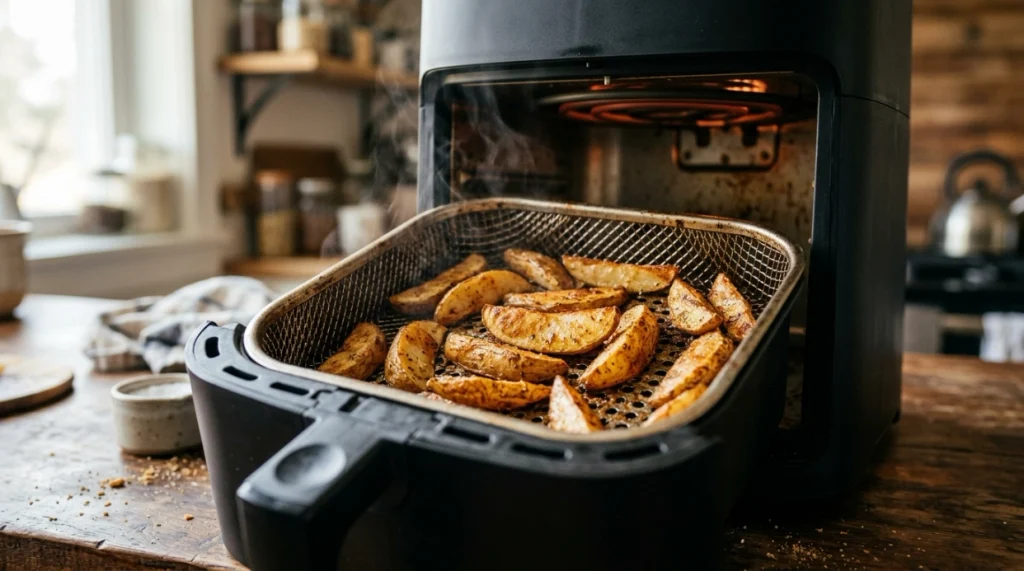
An air fryer cooks by combining an electric heating element with a high-powered fan. The fan continuously moves hot air through a compact cooking chamber and around the food.
This is a form of convection cooking. Convection simply means moving heated air instead of relying mainly on still hot air surrounding the food.
Why the small cooking chamber matters
A full-size convection oven also moves heated air, but an air fryer has a much smaller chamber. Food also sits close to the airflow and heating system.
That concentrated setup encourages quick surface drying and browning. Serious Eats explains the same basic air-fryer mechanism, including the role of the compact chamber and perforated basket.
This design is especially useful when you only need one or two trays’ worth of food. You are not heating a large oven cavity just to cook a handful of potatoes or reheat two pizza slices.
Does an air fryer actually fry food?
Not in the traditional sense. Deep frying transfers heat through hot cooking oil, while an air fryer transfers most of its heat through hot moving air.
That means the texture will not always be identical. A properly deep-fried battered food can develop a different crust because liquid oil surrounds it completely.
Air-fried food can still become crisp and deeply browned. Breaded foods, potatoes, vegetables, and foods that already contain some fat tend to respond particularly well.
- Heat source: Electric heating element
- Air movement: High-speed fan
- Cooking chamber: Small and concentrated
- Food support: Basket, tray, or rack
- Main texture goal: Brown or crisp exterior with a cooked interior
That is why calling an air fryer a compact convection cooker is more accurate than imagining it as an oil-free deep fryer.
What Foods Are Air Fryers Best Used For?
Air fryers work best with foods that benefit from browning, roasting, crisping, or reheating. Smaller portions generally make better use of the appliance’s concentrated airflow.
Frozen foods and quick snacks
Frozen fries, nuggets, breaded fish, mozzarella sticks, and similar foods are natural air-fryer candidates. Many of these foods already contain enough surface fat for effective browning.
Arrange pieces in a loose layer when possible. Packing food tightly can block airflow and create softer spots.
Vegetables and proteins
Dry heat also works well for vegetables. A light coating of oil can help seasonings stick while encouraging browning.
Chicken pieces, fish, pork, meatballs, and other proteins can also be cooked in an air fryer. Thickness matters more than the timer printed in a recipe.
Pro tip: When cooking raw meat or poultry, verify doneness with a food thermometer instead of relying only on cooking time. FoodSafety.gov lists safe minimum internal temperatures, including 165°F (74°C) for poultry.
Can you bake in an air fryer?
Yes. Baking is one of the appliance’s most useful secondary jobs, especially for small batches.
Cookies, cinnamon rolls, biscuits, small cakes, brownies, cheesecake, and bread rolls can all work when your pan fits safely inside the cooking chamber.
Strong convection changes how baked goods behave. Tops may brown before the center finishes, so traditional oven instructions often need adjustment.
King Arthur Baking recommends starting around 25°F lower than a conventional-oven recipe and reducing baking time by roughly 20% to 25% for many air-fryer bakes.
That is a starting point rather than a universal formula. Cake depth, pan material, fryer size, and fan strength can all change the result.
Reheating is an underrated use
A microwave heats leftovers quickly, but it does not usually restore a dry, crisp surface. An air fryer can.
Foods that often reheat particularly well include:
- Pizza
- French fries
- Roast potatoes
- Fried chicken
- Breaded appetizers
- Pastries that benefit from a crisp exterior
The main caution is dryness. Start with a short reheating period and check early rather than automatically running a full cooking cycle.
Section Takeaway: Think crisp foods, roasted foods, small-batch baking, and leftovers. Those jobs make the strongest use of an air fryer’s concentrated dry heat.
How Is an Air Fryer Different From an Oven or Deep Fryer?
An air fryer sits somewhere between a convection oven and a deep fryer in the results people expect, but mechanically it is much closer to the oven. Each method has a different strength.
| Feature | Air Fryer | Conventional Oven | Deep Fryer |
|---|---|---|---|
| Main heat medium | Rapid moving hot air | Hot oven air | Hot cooking oil |
| Best strength | Fast browning and crisping | Large batches and baking | Traditional fried texture |
| Added oil | Often little or none | Depends on recipe | Food is submerged in oil |
| Batch capacity | Usually limited | Usually much larger | Depends on fryer size |
| Cleanup | Basket or tray plus chamber | Pans and oven as needed | Oil handling and fryer cleaning |
When the regular oven is better
Use a full-size oven when capacity matters. Large cakes, several trays of cookies, big casseroles, and family-sized roasts can exceed an air fryer’s practical space.
An oven also gives you more freedom with pan dimensions. Air-fryer baking is limited by the width and height of the chamber.
When deep frying is better
Deep frying is still the appropriate technique when a recipe depends on complete contact with hot oil. Wet-battered foods are a classic example.
Thin batter can drip through an air-fryer basket before it sets. A coating designed for dry-heat cooking usually performs better.
When an air fryer makes the most sense
Choose the air fryer when you want a modest portion cooked quickly with good browning. It is especially practical for weeknight sides, frozen foods, leftovers, and small baking projects.
How Do You Get Better Results From an Air Fryer?
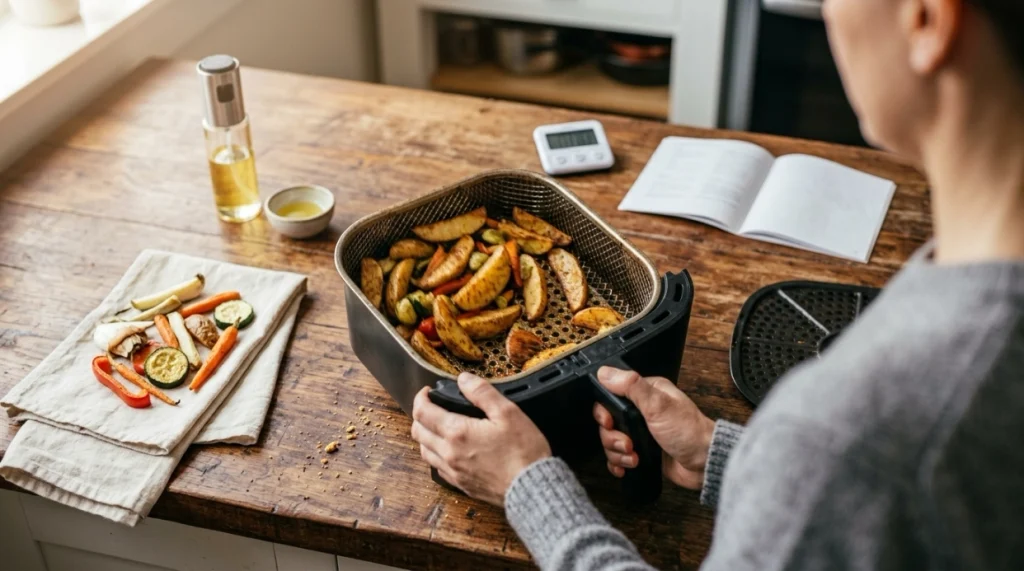
Good airflow matters more than almost anything else. The appliance cannot crisp efficiently if hot air cannot move around the food.
- Avoid overcrowding. Leave some space around individual pieces when crispness is the goal.
- Dry wet surfaces. Excess water creates steam and slows browning.
- Use oil strategically. A thin coating can improve browning, but pouring in large amounts defeats the purpose.
- Turn or shake food. Moving pieces during cooking can expose different surfaces to the strongest airflow.
- Check early. Compact convection cooking can progress faster than conventional-oven cooking.
- Follow your manual. Preheating instructions, basket limits, temperatures, and accessory rules vary by model.
Do you always need to preheat?
No single rule applies to every air fryer. Some manufacturers build a preheat stage into the program, while others allow food to go in immediately.
Preheating can be useful when a recipe depends on an immediate burst of heat. Baking and foods where rapid surface setting matters are good examples.
Why overcrowding causes problems
Air needs open pathways through the basket. A deep pile of food blocks those pathways and traps moisture.
If maximum crispness matters, two smaller batches can produce a better result than one packed basket. If you care more about speed than perfect browning, you may accept some overlap.
Keep the appliance clean
Grease and crumbs can collect around the basket, tray, and interior surfaces. Clean removable parts according to the manufacturer’s instructions after the appliance cools.
Keeping residue under control also reduces unwanted smoke and old-food odors during later cooking sessions.
Section Takeaway: Give hot air room to move, control surface moisture, and check food earlier than you would in a large oven.
Frequently Asked Questions
Is the main purpose of an air fryer to make food healthier?
The primary mechanical purpose is fast convection cooking and crisping, not automatically making every meal healthy. Using less frying oil can change how some foods are prepared, but nutrition still depends on the ingredients, portion size, and overall recipe.
Can an air fryer replace an oven?
It can replace an oven for many small meals, side dishes, leftovers, and small-batch bakes. A full-size oven remains more practical for large trays, big roasts, several dishes at once, and bakeware that does not fit inside an air fryer.
Can you put raw meat in an air fryer?
Yes. Raw chicken, beef, pork, fish, and other proteins can be cooked in an air fryer when the appliance and recipe are suitable. Use a food thermometer and follow verified safe minimum internal-temperature guidance rather than judging safety only by color or cooking time.
Does an air fryer need oil?
Not always. Many frozen or naturally fatty foods can cook without added oil. A small amount of oil may improve browning, flavor, and seasoning adhesion on vegetables, potatoes, or lean foods.
Can you bake cakes and cookies in an air fryer?
Yes. Air fryers can bake cakes, cookies, rolls, brownies, and other small-batch recipes. Because the fan and heating element can brown surfaces quickly, you may need a lower temperature, shorter cooking time, or smaller pan than a conventional-oven recipe uses.
What should you not cook in an air fryer?
Loose wet batter, foods too large for safe airflow, and recipes requiring lots of liquid are often poor matches for basket-style air fryers. Lightweight ingredients can also move in strong airflow, so always follow your model’s safety and accessory instructions.
Is air frying the same as convection baking?
They use the same general principle of circulating heated air. However, an air fryer’s smaller chamber, strong airflow, and close food-to-heat distance can make surface browning and cooking behavior different from a large convection oven.
Is an Air Fryer Mainly for Frying?
No. Despite its name, an air fryer is better understood as a compact, high-powered convection cooker.
Its main use is quickly cooking and crisping relatively small portions with moving hot air. Fries and breaded foods are obvious examples, but vegetables, proteins, leftovers, cookies, rolls, and other baked foods can also make good use of the appliance.
The biggest advantages appear when you want strong browning without using a large oven or a pot full of frying oil. Its main limitation is capacity.
For 2026 kitchens, I would think of an air fryer as a specialist in fast dry-heat cooking rather than a one-purpose frying gadget. Learn how airflow, temperature, food spacing, and batch size affect results, and the appliance becomes useful for far more than fries.

