
Why an Air Fryer Coating Comes Off: Causes, Safety, and What to Do Next
If you have noticed peeling, flaking, chipping, or bubbling on your air fryer basket or tray, you are looking at more than a cosmetic issue. In many cases, the coating damage points to normal wear, but it can also come from cleaning habits, overheating, or a manufacturing problem. The key question is not just why is my air fryer coating coming off — it is whether the part is still safe to use and what makes sense to do next.
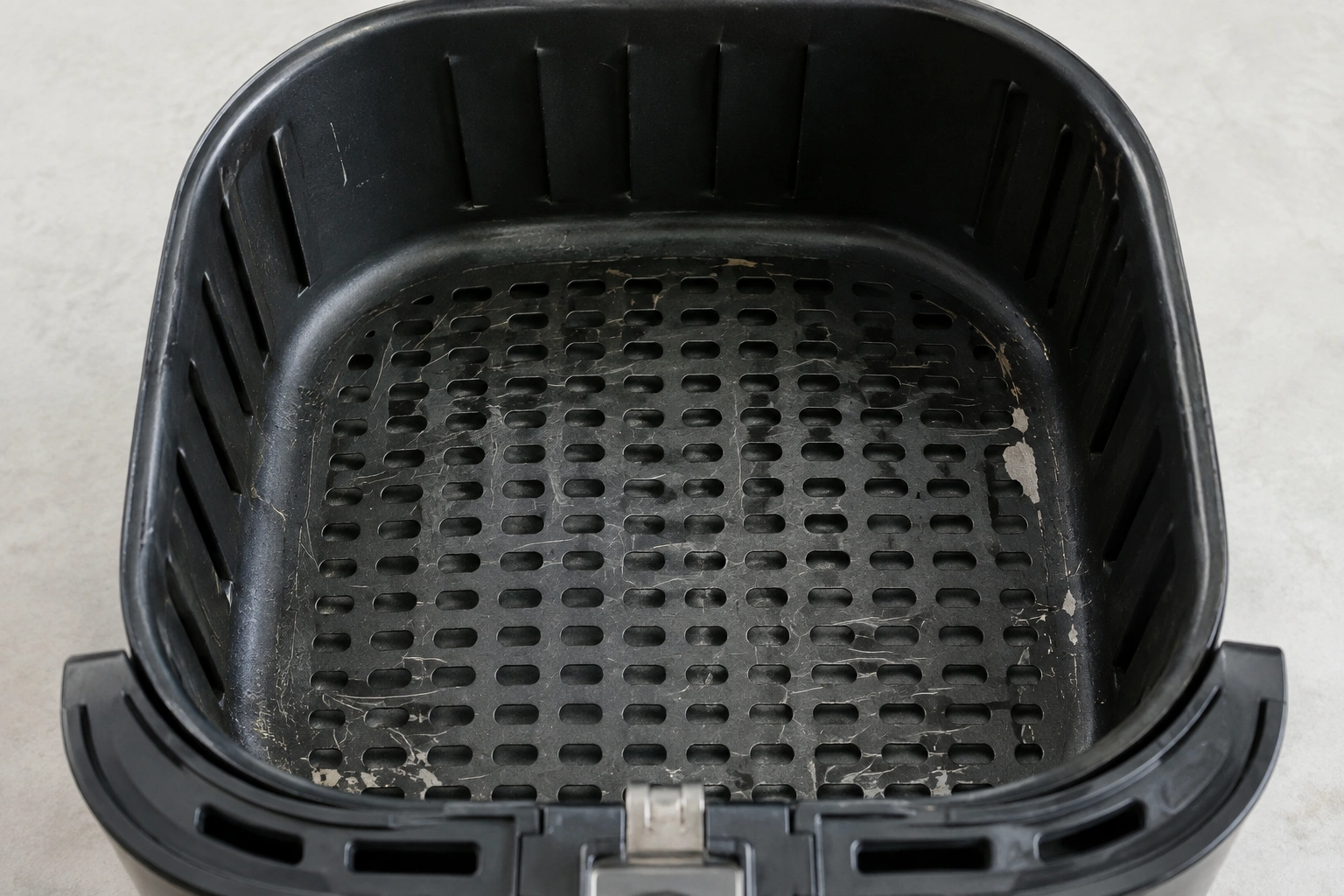
A coated basket or tray can look fine for months and then start showing rough patches, dark specks, or lifted edges where the nonstick layer is beginning to fail. Once that happens, the damage usually does not improve on its own.
Why Air Fryer Coating Comes Off
The most common reason is simple wear. Air fryer baskets get hot, cooled, washed, dried, and handled over and over. That repeated cycle slowly stresses the nonstick surface, especially on the bottom of the basket and any raised ridges where food makes contact.
Other common causes are more avoidable:
- Abrasive cleaning tools such as scouring pads, steel wool, or rough scrubbers
- Metal utensils used to pry off stuck food
- Harsh cleaners that are too aggressive for coated surfaces
- Dishwasher wear, especially if the manufacturer does not recommend it
- Thermal shock, like moving a very hot basket into cold water
- Overheating or repeated high-heat use, which can shorten coating life over time
- Manufacturing defects, especially if the coating begins failing very early
A practical example: if your basket has a few gray scratches after months of regular use, that is different from a tray that is bubbling and shedding flakes after a couple of dishwasher cycles. The first is usually wear. The second is a sign the coating is failing.
One thing worth noting: if a brand-new air fryer smells like burnt plastic the first time or two you use it, that can sometimes be from factory residue, packaging materials, or a protective coating on other internal parts rather than from the cooking basket itself. That smell should not be ignored if it persists, but it is not the same thing as a basket coating peeling.
How to Tell Cosmetic Wear From a Real Problem
Not every mark means the part is ruined. The difference comes down to whether the damage is only on the surface or whether the coating is actively breaking away.
Usually cosmetic:
- Fine scratches that do not catch your fingernail
- Dull spots where the finish no longer looks shiny
- Light discoloration from normal use
- Small scuffs on edges with no loose material
More serious:
- Peeling edges that lift when touched
- Flaking pieces that can come off in your hand
- Bubbling or blistering in the coating
- Chips that expose bare metal
- Rough patches where food starts sticking much more than before
A good rule: if the surface still looks worn but intact, it may be cosmetic. If the coating is coming loose, it is a problem. Loose fragments are the line you should not cross.
Simple decision rule
- Minor wear is acceptable if the coating is still smooth, intact, and not shedding material.
- Stop using the part right away if you see peeling, flaking, bubbling, chips, or any loose fragments.
- Replace the part next if the coating is failing in a way that exposes metal or continues to spread.
This is also where comparing parts helps. A removable basket with light scratches is one thing. A tray with visible bubbles and missing spots is another. Once the finish is failing in a way you can feel, the part is no longer just “seasoned” or “well used.”
Is It Safe to Keep Using the Basket or Tray?
This is the part most people want answered directly.
If the coating is actively flaking, peeling, or chipping, stop using that basket or tray. The concern is both that loose coating can end up in food and that exposed metal can make the surface harder to clean and more likely to stick. So the issue is partly food contact and partly the way coating failure tends to progress once it starts.
If the damage is only light surface wear, many people continue using the part without issue. But there is a difference between:
– light scratches that stay put, and
– loose coating that can detach during cooking or cleaning.
If you see any of the following, replace the part or stop using it until you do:
– flakes in the basket
– chips that keep growing
– bubbling that has started to lift
– exposed metal
– a rough edge that sheds when rubbed
For food safety basics, it is always smart to keep cooked foods out of the danger zone and follow official guidance on proper handling and temperatures. The USDA’s food safety resources are a useful reference if you are also worried about whether food was cooked safely in the fryer: USDA food safety basics.
Common Mistakes That Damage Nonstick Coating
Most coating damage I see comes from a few repeat habits.
1. Scrubbing too hard
Abrasive sponges and scouring pads can wear down nonstick layers quickly. That includes the kind of heavy scrubbing people use when baked-on grease will not budge. A rough pad may remove the stain, but it can also remove the finish.
2. Using metal tools
Forks, knives, metal tongs, and spatulas can all nick the coating. One small scrape often becomes a weak point that spreads with heat and washing.
3. Putting coated parts in the dishwasher too often
Some parts are labeled dishwasher safe, but that does not mean the dishwasher is always gentler. Heat, detergent, and repeated cycles can wear a coating down over time. If the manual says hand wash only, believe that.
4. Cleaning hot parts with cold water
That sudden temperature change can stress the coating and the metal underneath. Let the basket cool before washing it. That one habit alone prevents a lot of avoidable damage.
5. Using harsh cleaners
Strong degreasers or chemicals not meant for nonstick surfaces can weaken the finish. If a cleaner is strong enough to strip stubborn grease in one pass, it may be too aggressive for the coating.
6. Repeatedly forcing food loose
If cheese, batter, or sugar-heavy glaze gets stuck, it is tempting to scrape at it. That is usually when the finish gets nicked. Soaking is safer than scraping.
How to Inspect the Basket, Tray, and Interior
Before the next use, do a quick check in good light. I like to inspect the basket right after washing and again before cooking.
Use this checklist:
- Run your fingers lightly over the cooking surface
- Look for shiny bubbles, blisters, or raised edges
- Check corners and seams where coating often wears first
- Tilt the basket under light to spot chips or dull patches
- Look for loose black or gray fragments
- Inspect the tray insert if your model has one
- Check the inside walls and base of the fryer cavity, not just the removable parts
If you find a spot that feels rough, try to determine whether it is just stained or whether material is actually missing. Staining is not usually the issue. Missing coating is.
A useful comparison: a small scratch on the rim of a basket is not the same as a patch of bubbling on the cooking floor. The first is often cosmetic. The second suggests the coating is separating.

Can You Fix or Reseal a Peeling Coating?
In practice, no safe at-home fix exists for a peeling nonstick coating.
I would not:
– repaint it
– spray it with a coating product
– patch it with a household sealant
– sand it smooth and keep using it
Those shortcuts can create more problems than they solve. The part is designed with a factory-applied finish, and once that layer starts separating, home repairs are not a reliable substitute.
If the damage is minor and only on a removable part, replacement is usually the realistic option. If the coating failure is on a non-removable interior surface, the decision becomes tougher, because replacing the entire appliance may be the safer path.
Should You Replace the Basket, Tray, or Whole Air Fryer?
This depends on where the damage is and whether compatible replacement parts exist.
Replace just the basket or tray when:
- the damage is limited to a removable part
- the heating unit and controls still work normally
- the manufacturer sells a compatible replacement
- the cost of the part makes sense compared with a new fryer
Consider replacing the whole air fryer when:
- the coating damage affects a built-in interior surface
- replacement parts are unavailable or hard to verify
- the fryer has other issues, like uneven heating or a failing fan
- the model is old enough that a new basket would not be worth the trouble
Before ordering a basket or tray, verify compatibility carefully:
1. Find the exact model number on the rating label, manual, or product box.
2. Check the manufacturer’s parts diagram or exploded-view parts list for that exact model.
3. Match the official part number, not just a similar-looking basket shown in a marketplace listing.
4. Confirm the dimensions, latch style, handle shape, and tray fit if those details are listed.
5. Check whether the part is sold as basket only, tray only, or a combined assembly, since those are not always interchangeable.
6. Review the warranty or support page to see whether the manufacturer recommends a specific replacement part.
Compatibility matters more than people expect. A basket that looks close enough online may not actually fit your model, latch correctly, or sit at the right height. Before buying, match the model number exactly and check the part description carefully.
If you are comparing a replacement basket with a whole new air fryer, the basket is usually the cheaper fix. But if the fryer is already unreliable or the coating damage is widespread, buying only the basket can be false economy.
For readers thinking about a new fryer with better coating durability or different basket materials, it also helps to compare the construction and cleaning requirements of the model you already own. For example, some newer models use ceramic-coated parts instead of traditional nonstick finishes, but they still need gentle care.
Warranty Claims and When the Damage May Be a Defect
If the coating starts failing very early, especially with normal use, a defect becomes more plausible.
That is especially true when:
– peeling shows up within weeks or a few months
– the fryer has only been hand washed
– no metal utensils or abrasive pads were used
– the damage appears in multiple spots at once
Before contacting support, gather:
– the model number
– proof of purchase
– clear photos of the damage
– a short description of how the fryer has been cleaned and used
– the date you first noticed the problem
Photos help more than long explanations. Take one close-up shot and one wider shot that shows where the part came from. If flakes are loose, photograph those too.
When you contact the manufacturer, be specific. “The basket coating is peeling near the center after normal use” is more useful than “the basket looks bad.”
How to Prevent the Coating From Coming Off Again
Once you replace or repair the part, the goal is to slow future wear.
Safer cleaning habits
- Let the basket cool before washing it
- Use a soft sponge or cloth
- Soak stuck-on food in warm, soapy water instead of scrubbing hard
- Avoid metal scrubbers and sharp tools
- Follow the manual on dishwasher use instead of assuming it is fine
Safer cooking habits
- Use parchment or liners only if the manufacturer allows them and they do not block airflow
- Avoid scraping food out with forks or knives
- Lift food out gently with silicone or wood tools when possible
- Wipe out grease before it bakes on hard
A small habit that helps a lot
If you cook sticky foods often, clean the basket sooner rather than later. Dried sauce and caramelized oil are much harder to remove, and that is when people reach for abrasive tools.
When to Consult a Professional
If the coating damage is on a built-in interior surface, or if your air fryer shows signs of electrical trouble along with the peeling, contact the manufacturer or a qualified appliance repair professional. A damaged coating is one issue; heat, fan, or power problems are separate concerns.
Also get help if the fryer smells unusual every time you use it, not just during the first run of a new appliance.
Quick Comparison: Scratches, Peeling, and Replacement Choices
| Situation | What it usually means | Keep using it? | Best next step |
|---|---|---|---|
| Light surface scratches only | Normal wear | Often yes | Switch to gentler cleaning |
| Small dull spots, no loose flakes | Cosmetic aging | Usually yes | Monitor and avoid abrasives |
| Bubbling or lifted edges | Coating failure starting | No, not ideal | Stop using and inspect closely |
| Flaking or chipping | Loose coating may enter food | No | Replace the part |
| Exposed metal visible | Finish has failed | No | Replace the basket or tray |
| Damage on non-removable interior | Appliance-level issue | Usually no | Contact manufacturer |
FAQ
Why is my air fryer coating coming off?
The most common causes are abrasive cleaning, metal utensils, dishwasher wear, thermal shock, and normal aging from repeated high-heat use. If the damage appears very early, a defect is also possible.
Can I still use the air fryer if the coating is peeling?
If the coating is actively peeling or flaking, stop using that basket or tray. Light scratches are different from loose coating.
Is a scratched basket the same as a damaged basket?
No. Scratches can be cosmetic if the coating is still intact. Peeling, bubbling, and chips are more serious because they show the coating is separating.
Can I fix peeling nonstick coating at home?
Not safely. Repainting, sealing, or patching the surface is not a reliable fix. Replacement is the practical option.
Should I hand wash coated air fryer parts?
Yes, hand washing with a soft sponge is usually gentler than aggressive scrubbing or repeated dishwasher cycles, especially if the manual warns against the dishwasher.
What if my air fryer is still under warranty?
Document the damage with photos, keep your receipt, and contact the manufacturer. Early coating failure may be covered, but that depends on the warranty terms.
If you want, I can also turn this into a shorter troubleshooting checklist or a buyer’s guide for replacement baskets and trays.

