
Why Your Air Fryer Takes Longer Than Expected — and How to Fix It
If your air fryer keeps taking longer than the recipe says, the appliance is not always the problem. In most kitchens, slow cooking comes down to airflow, basket load, food thickness, moisture, preheating, or a recipe that was written for a different model.
Quick troubleshooting checklist:
1. Check preheat first — did the recipe assume a hot basket?
2. Check the load size — is the basket crowded or stacked?
3. Check the food — is it frozen, thick, or especially wet?
4. Check the temperature/time — does the recipe look like an oven conversion or a different model’s timing?
5. Check the appliance — if several foods run slow, clean it and compare performance with a simple test.
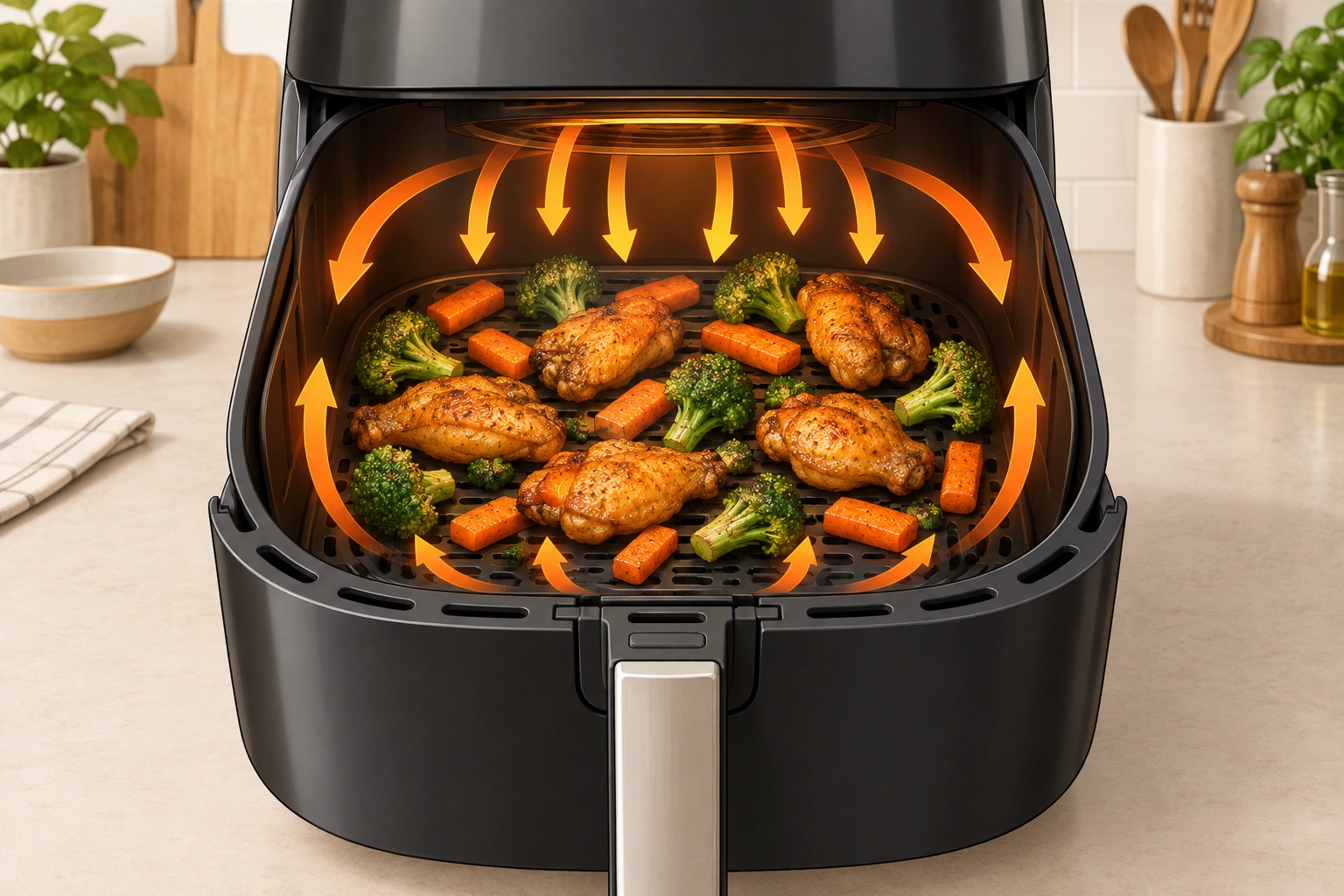
Air fryers are small convection ovens. They cook by moving hot air around the food, so anything that blocks that airflow can stretch cook time. That includes a basket packed too full, food stacked on top of itself, or accessories that cover too much of the surface.
[IMAGE_1]
The good news is that most timing issues are fixable without guessing. Once you know what is slowing things down, you can decide whether to cook a little longer, raise the temperature, split the batch, or clean the machine.
Why an air fryer can take longer than the recipe says
The most common reason is simple: the recipe timing was not written for your exact setup.
A package direction or online recipe may assume a different wattage, a different basket shape, a preheated unit, or a smaller load. A compact 1-quart model and a larger oven-style air fryer can both be called “air fryers,” but they may not cook at the same speed. The same goes for oven-to-air-fryer conversions: an oven recipe may need less time in a basket model, while an oven-style air fryer may behave more like a small countertop oven than a compact basket unit.
Other common reasons include:
- Airflow is blocked by overcrowding or stacked food
- Food starts cold or frozen, which adds time before it begins browning
- The basket is not preheated when the recipe assumes it is
- The air fryer runs cooler than expected because of wattage, calibration, or maintenance issues
- The food itself is slower to cook, especially thick cuts or wet ingredients
That is why a recipe that works in one kitchen can seem off in another. The timing may be reasonable for the original test, but not for your appliance and your batch size.
Check the biggest causes first: basket overload, food size, and moisture
If your food is taking too long, look at the basket before you touch the temperature dial.
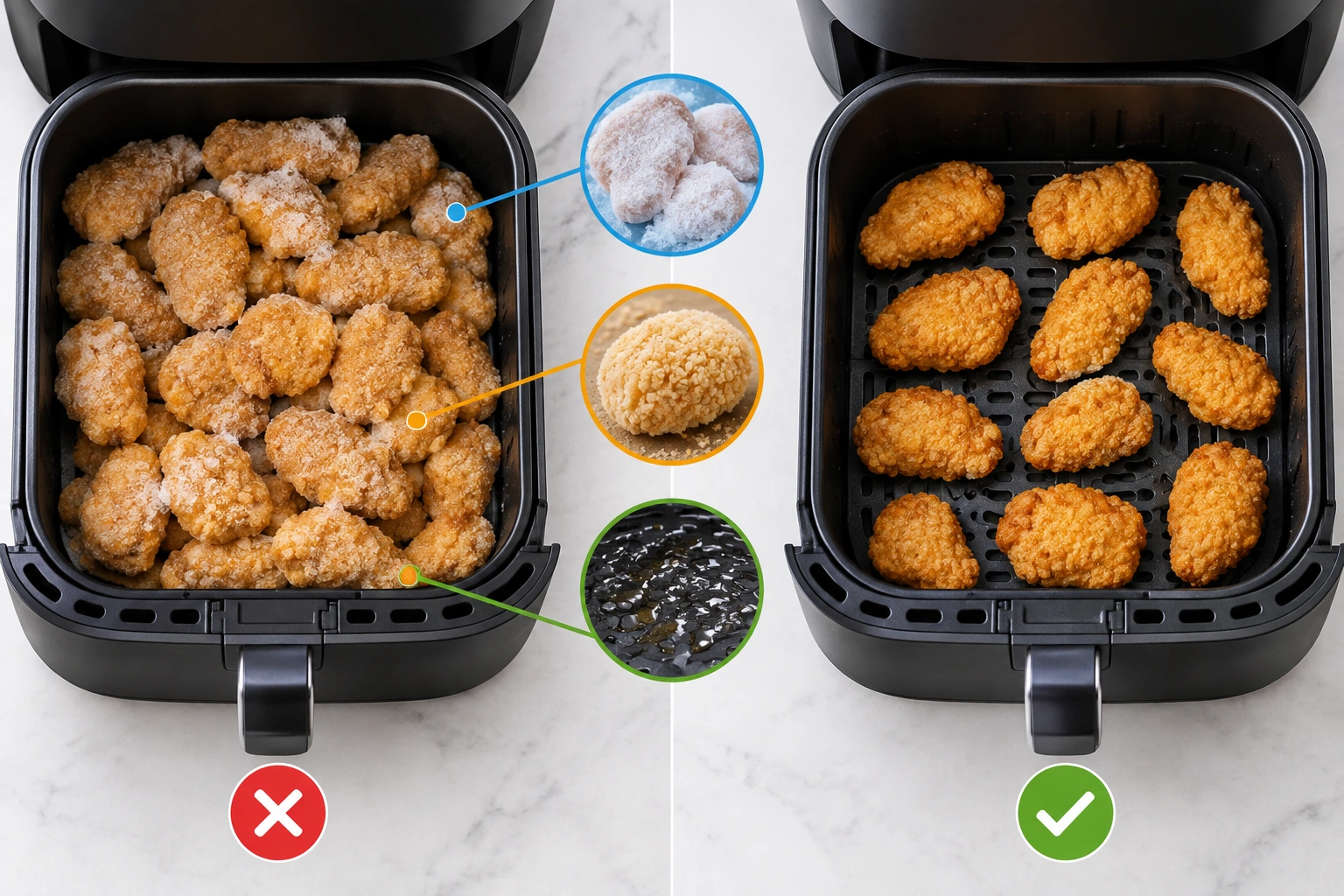
Air fryers need space for hot air to move around each piece of food. When the basket is crowded, the food tends to steam more than it crisps. That usually means longer cooking and softer results.
A few practical examples:
- Frozen fries: if they are packed in a thick pile, spread them out and add a few minutes rather than piling on more food.
- Chicken nuggets: if they are still pale after the listed time, shake the basket and give them a short extra cook rather than adding a big temperature jump.
- Chicken breasts: thick pieces usually need a lower-and-slower adjustment than breaded snacks, because the outside can brown before the center is done.
- Vegetables: watery vegetables like zucchini or mushrooms often need more space and a little more time so they can dry and brown instead of steam.
Moisture matters just as much as size. Wet coatings, marinated foods, and frozen items all need extra time because the air fryer has to drive off surface moisture before browning really starts.
A useful rule: if the food is thick, frozen, or crowded, expect the recipe time to be less reliable. In that case, smaller batches usually help more than simply adding a lot more time.
How preheating changes air fryer cook times
Preheating does not always make food cook faster in a dramatic way, but it can make timing more consistent.
If the recipe was written for a hot basket and you put food into a cold one, the first few minutes are spent warming the appliance instead of cooking the food. That can make the whole process feel slower than expected.
Preheating is most useful when:
- You want more predictable timing
- You are cooking breaded or frozen foods
- You are trying to get better browning from the start
- The recipe specifically says to preheat
Skipping preheat is not always wrong. For some foods, especially longer-cooking items, the difference may be small. But if your food keeps coming out underdone at the listed time, a cold start is one of the first things worth changing.
Why different air fryer models cook at different speeds
Not all air fryers move heat the same way.
Wattage, basket size, rack position, and overall design can all change real cooking speed. Lower-wattage units often need a little more time to reach and hold the same result, especially with frozen foods or full baskets. That does not automatically mean the lower-wattage model is bad; it just may be slower under the same conditions.
Basket size also matters. A larger basket does not guarantee faster cooking. If the food is spread out well, the extra space can help airflow. If the larger basket is packed too full, the extra room does not matter much.
Oven-style air fryers can behave differently from basket models too. Food placed on a rack may brown differently depending on how close it sits to the heating element and how well air can circulate around it. A basket model may crisp faster on small batches, while an oven-style unit may need more time for the same food, especially if the tray or rack is loaded heavily.
This is why one brand may finish chicken nuggets several minutes sooner than another even when both are set to the same temperature.
Should you raise the temperature or extend the time?
This is where many cooks get stuck. The answer is usually not “always do one or the other.”
If the food is cooking through but not browning enough, a slightly higher temperature may help. If the outside is browning too quickly while the center is still underdone, more time at the same temperature is usually safer.
Here is a simple way to think about it:
- Raise the temperature when the food is taking forever to brown but is otherwise cooking evenly
- Extend the time when the food needs more internal cooking and the outside already looks close
- Do both carefully when the appliance seems a little slow and the food is thick or frozen
A few food-specific rules of thumb can help:
- Frozen fries: if they are pale and limp, try a small temperature bump or a few extra minutes after shaking the basket.
- Chicken nuggets: if they are cooked through but not crisp, a short finish at a slightly higher temperature usually works better than a long extension.
- Chicken breasts: if the outside is browning too fast, keep the temperature moderate and extend the time in small steps until the center is done.
- Vegetables: if they are soft but not browned, spread them out and add a little heat only after airflow is improved.
The trade-off matters. More heat can speed things up, but it can also overbrown the outside before the inside is ready. More time can solve that problem, but it may dry out foods like chicken breast, fish, or breaded items.
For example, if frozen nuggets are pale after the listed time, the issue may be weak airflow or a cooler-running unit. If chicken thighs are cooked but not crisp, a little more heat may help more than a long extension.
How to tell whether your air fryer is heating properly
Some variation is normal. A slow batch does not automatically mean the appliance is failing.
The question is whether the problem shows up across different foods and different days. If one recipe is off but others are fine, the issue is probably setup or recipe mismatch. If everything is suddenly taking much longer than usual, the appliance may need attention.
A simple at-home performance check can help:
– Preheat test: time how long it takes to reach its usual preheat point, then compare that with what you remember from earlier use or the manual.
– Standard food test: cook one familiar item you make often, such as frozen fries or chicken nuggets, using the same amount, temperature, and timing you normally use. If it suddenly needs much longer across multiple tries, that is a clue the unit may be underperforming.
Signs worth watching for include:
- Food cooks unevenly even when the basket is not crowded
- The unit seems to take a long time to preheat
- Browning is weak across multiple recipes
- You notice unusual smells, repeated shutoffs, or weak heat output
- Vents or basket openings look greasy or blocked
A dirty appliance can lose efficiency. Grease buildup and blocked airflow around the vents can make the unit work harder and cook more slowly.
If the machine has a damaged cord, strange burning smell, or no real heat output, stop using it and have it checked or replaced.
Foods that commonly take longer in an air fryer
Some foods are simply slower in an air fryer than people expect.
These are the ones that often need extra attention:
- Thick chicken breasts: The outside may brown before the center is ready.
- Frozen foods: They need time to thaw on the surface before they crisp.
- Breaded items in a crowded basket: They can brown unevenly and need more time to finish.
- Vegetables with high moisture: Zucchini, mushrooms, and tomatoes can soften before they crisp.
- Large or dense pieces: Bigger cuts of meat and thick potato wedges usually need longer than thin, even pieces.
One useful example: cut potatoes into smaller, even pieces if you want them to finish closer to the same time. Uneven chunks force the smaller pieces to overcook while the larger ones catch up.
How to convert oven or package directions for an air fryer
Oven directions are a starting point, not a promise.
An oven recipe may assume a larger cooking chamber and slower air movement, while an air fryer concentrates heat around a smaller space. That means the same temperature and timing do not always translate directly.
A practical approach is:
- Use the oven temperature as a reference, not a rule.
- Watch the food earlier than the package suggests.
- Check for browning, texture, and internal doneness instead of relying on the clock alone.
- Adjust for basket load, food thickness, and whether the unit was preheated.
- Make one change at a time so you can tell what actually helped.
For packaged frozen foods, this matters a lot. A bag may list oven instructions that look close to air fryer timing, but the actual result can be different if the basket is crowded or the food is stacked.
When in doubt, treat the first run as a test batch. That is usually safer than trusting a one-size-fits-all conversion.
Simple maintenance steps that can restore speed
If your air fryer used to cook faster, cleaning may solve part of the problem.
Focus on the parts that affect airflow and heat transfer most often:
- Clean the basket and tray after greasy foods
- Wipe away buildup around vents and openings
- Remove crumbs that can block circulation
- Check for stuck-on residue on the basket bottom, tray, and any removable inserts
A greasy basket or clogged vent can make the machine feel sluggish even if the heating element is still working. You may not notice a huge difference with one meal, but over time the slowdown can become obvious.
If cleaning helps only a little and the unit still runs cool across several foods, the issue may be calibration or a weakening heating element. At that point, it is worth comparing performance against the manual or contacting the manufacturer.
[IMAGE_2]
When longer cook times are normal versus a sign of a problem
Longer cooking is normal when the food is thick, frozen, wet, or crowded. It is also normal when you skip preheating or use a different model than the recipe assumes.
It becomes more concerning when the same appliance starts underperforming on everything. If fries, chicken, and vegetables all take much longer than they used to, the air fryer may be running cooler than expected or airflow may be blocked.
A simple decision guide:
- Likely normal: one recipe is slow, the basket was crowded, or the food was especially thick
- Worth adjusting: multiple recipes are a little slow, but the unit still browns and cooks consistently
- Worth investigating: the appliance is suddenly slow across many foods, heats unevenly, or shows signs of poor airflow or weak heat
If you want a quick safety reminder for meat and poultry, official guidance from USDA Food Safety and Inspection Service is a good reference point for checking safe internal temperatures rather than relying on time alone.
FAQ
Why is my air fryer taking longer than the recipe says?
Usually because airflow is restricted, the basket is too full, the food is thick or frozen, or the recipe was written for a different model or a preheated basket.
Does preheating really matter?
It can. Preheating often improves timing consistency and can reduce the gap between the recipe and the actual cook time.
Can overfilling the basket make food cook slower?
Yes. Overcrowding blocks airflow, which often leads to slower cooking and less crisping.
Do different air fryer brands cook at different speeds?
They can. Wattage, basket design, rack placement, and overall airflow all affect real-world cook time.
Should I add more time or more heat?
If the food is browning too slowly but already cooking through, a little more heat may help. If the outside is getting too dark before the center is done, add time instead.
How do I know if my air fryer is heating properly?
Compare how it performs on a few different foods. If everything suddenly takes much longer, cooks unevenly, or seems weak even after cleaning, the unit may need servicing or replacement.
When to Consult a Professional
If your air fryer has a damaged cord, repeated shutoffs, a burning smell that does not go away after cleaning, or almost no heat output, stop using it and have it checked by the manufacturer or replace it. Those are not the kinds of issues to troubleshoot by trial and error.
For air fryer cooking problems that are mostly about timing, though, the fix is usually much simpler: improve airflow, preheat when needed, reduce the load, and adjust for your specific model instead of trusting generic directions.

