
Why an Air Fryer Smells Bad: Causes, Fixes, and When to Worry
If your air fryer smells bad, the cause is usually one of a few common things: leftover food residue, grease buildup, burnt crumbs, moisture, or a new-unit smell that hasn’t burned off yet. In most cases, the fix is basic cleaning and drying. In a few cases, though, the smell can point to overheating or damage, which means you should stop using the appliance and inspect it.
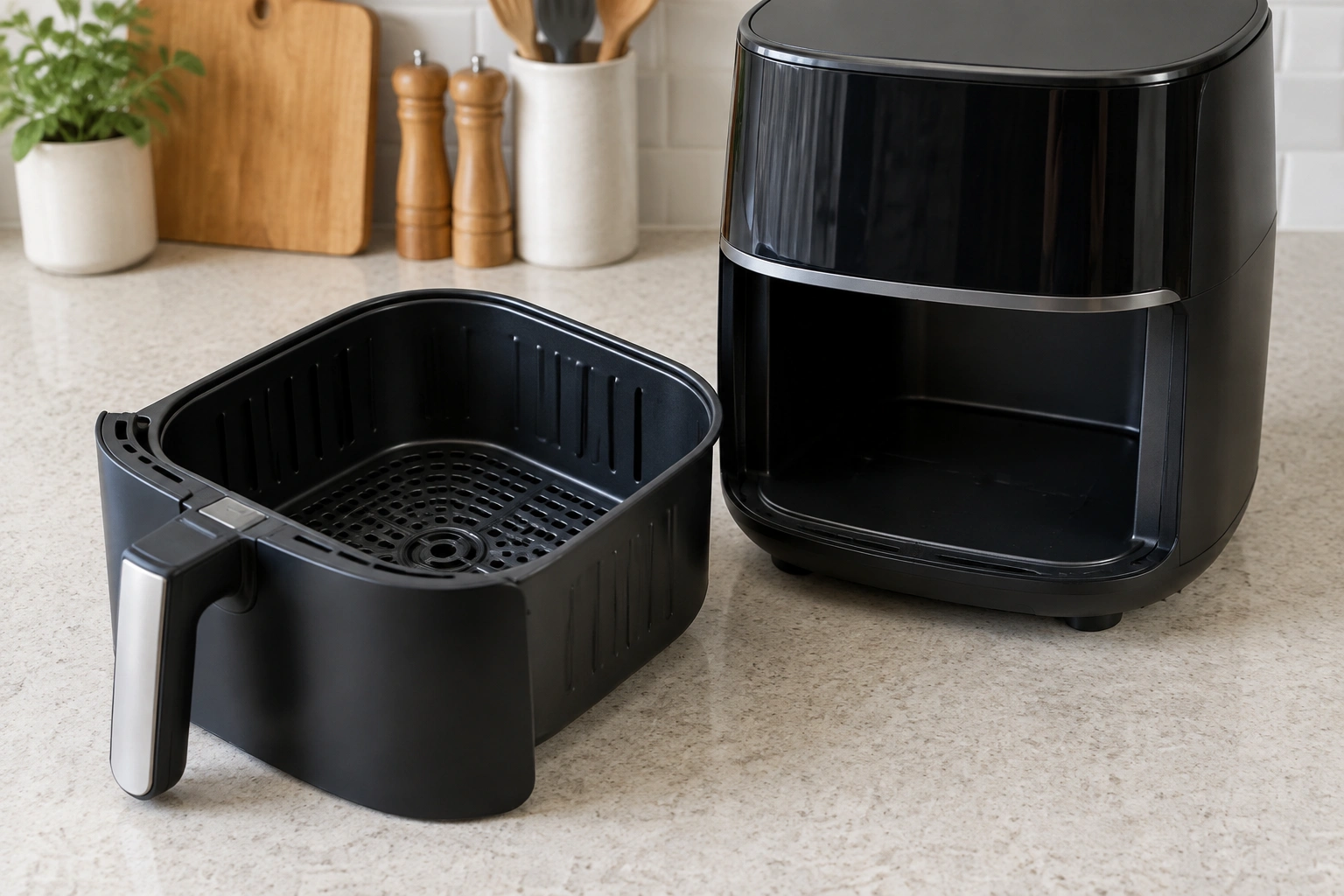
I’ve found that most air fryer odor problems fall into two buckets: smells from normal cooking buildup, and smells that suggest something is wrong. The trick is learning how to tell the difference before you keep cooking in a machine that needs attention.
The Fastest Way to Narrow Down the Smell
Here’s a simple way to think about it:
- New air fryer, faint plastic smell: often normal at first, especially during the first few uses.
- Burning smell or visible smoke: usually means residue, crumbs, or grease are getting too hot.
- Fishy, greasy, or stale odor: usually points to food residue trapped in the basket, drawer, tray, or around the heating element.
- Musty smell: often comes from moisture left behind after washing or storage.
- Strong chemical smell that keeps getting worse: treat it as a warning sign and stop using the unit until you inspect it.
A useful comparison is this: a mild smell that fades after a short burn-in cycle is very different from a sharp odor that gets stronger every time you use the air fryer.
Why an Air Fryer Smells Bad in the First Place
Most bad smells come from what the air fryer has been exposed to, not from the appliance “making” a smell on its own.
1. Food residue and grease buildup
This is the most common cause in a used air fryer. Tiny splatters of oil and food can collect in the air fryer basket, drawer, tray, and especially around edges where you don’t see them right away. When the machine heats up again, that residue warms, smokes, or gives off a stale greasy odor.
A good example is cooking breaded chicken or wings. Even if the basket looks clean, a thin film of oil can settle on the tray or inside walls. After a few uses, that film starts to smell.
2. Burnt crumbs or splatter near the heating element
Crumbs are easy to miss because they fall below the basket or cling to the inside of the unit. If they land near the heating element, they can burn the next time you cook. That often creates a toasted, smoky, or slightly acrid smell.
This is one reason a quick wipe of the basket is not always enough. If the odor keeps coming back, check above and around the cooking chamber, not just the removable parts.
3. Moisture left inside after washing
If you wash the basket and drawer but put the air fryer away while it’s still damp, the trapped moisture can create a stale or musty smell. This is especially common if the appliance is stored in a closed cabinet.
In practice, this often smells less like “dirty” and more like old damp towels or a closed cooler. That’s a clue that the problem is drying, not grease.
4. Strong-smelling foods
Foods like fish, garlic, onions, and heavily seasoned meats can leave a lingering odor behind. Even if the basket is washed, some smell can remain in the drawer, vents, or around the interior surfaces.
This is not unusual. Seafood is the classic example: you may wash the basket and still notice a fishy smell on the next use if the interior wasn’t cleaned thoroughly.
5. New-appliance off-gassing
Philips notes in its support materials that the housing and inner drawer of its Airfryer are plastic, and the pan and basket are PTFE coated. The company also says those parts may release some smell during the first uses as the air fryer reaches high temperatures, up to 200°C. You can read that guidance on Philips’ support page.
That kind of smell is usually strongest on the first run or first few uses. It should fade. If it doesn’t, or if the smell becomes sharper instead of weaker, don’t assume it’s normal.
What the Smell Type Usually Means
The smell itself gives you useful clues. Here’s how I’d sort them in a real kitchen.
| Smell type | Most likely cause | How urgent is it? | Best next step |
|---|---|---|---|
| Mild plastic smell | New appliance off-gassing | Low if it fades quickly | Run a short empty cycle in a ventilated area, then clean and dry |
| Sharp burning smell | Crumbs, grease, or residue overheating | Medium to high | Stop and inspect the basket, tray, and heating element |
| Greasy smell | Oil film or splatter buildup | Medium | Deep clean removable parts and interior surfaces |
| Fishy smell | Lingering food odor from seafood or seasoning | Low to medium | Wash removable parts and clean the interior and vents |
| Musty smell | Moisture left inside after washing or storage | Low | Dry completely before storing or using again |
| Chemical smell that gets stronger | Possible overheating or material problem | High | Stop using it and inspect for damage |
A key difference: plastic smell is often associated with a new appliance, while burning smell usually means something is getting too hot that shouldn’t be. That distinction matters.
How to Tell a Normal Smell from a Problem Smell
A normal new-air-fryer smell is usually:
- faint rather than strong
- present only during the first uses
- less noticeable after a burn-in cycle or two
- not paired with smoke, melting, sparking, or unusual heat
A problem smell is usually:
- persistent
- getting stronger over time
- accompanied by smoke or visible residue
- linked to a specific hot spot or damaged surface
- still present after a thorough cleaning
If the smell is only happening with the first few uses of a brand-new unit, that leans toward normal off-gassing. If the air fryer has been in use for months and suddenly starts smelling like hot plastic or electrical burning, that’s different and deserves attention.
How to Clean an Air Fryer That Smells Bad
For odor problems, I like to clean the air fryer in layers: removable parts first, then the hidden areas, then the interior.
Step 1: Let it cool completely
Unplug the unit and wait until it’s fully cool. That sounds obvious, but it matters because the heating element and metal parts can stay hot longer than the basket.
Step 2: Wash the removable parts
Clean the basket, drawer, and tray with warm water, dish soap, and a soft sponge. If you’re dealing with greasy odor, let the parts soak briefly before washing.
Avoid harsh scrubbers that can damage the nonstick coating. Once that coating gets scratched badly, food residue tends to cling more easily, which can make odor problems worse.
Step 3: Wipe the interior
Use a damp cloth or sponge to wipe the inside walls, bottom, and door area if your model has one. Pay attention to corners where oil mist collects.
This is where many people stop too early. If you only wash the basket, the smell often comes back because the interior still has a thin film of grease.
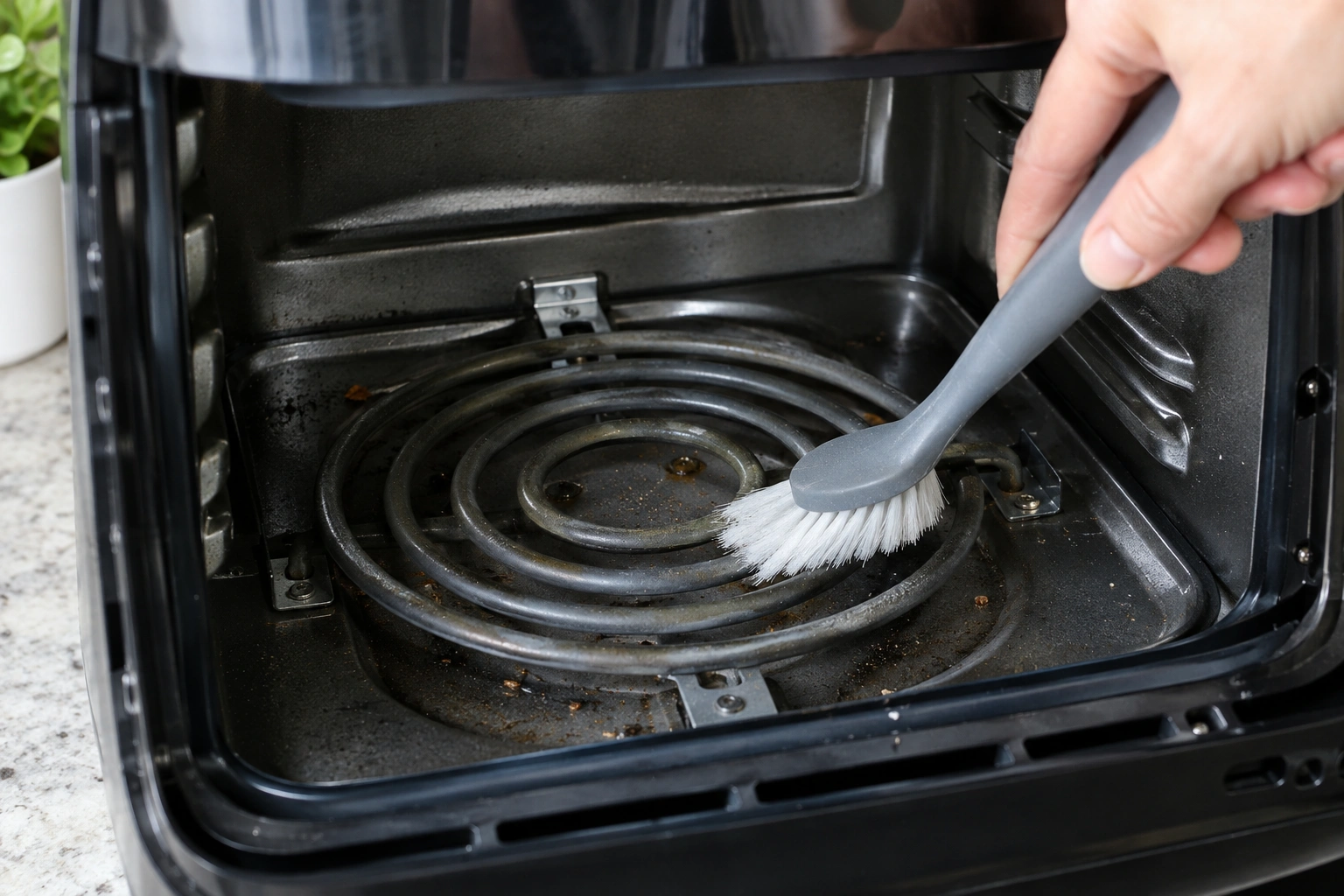
Step 4: Clean around the heating element
Look up into the cooking chamber and check the heating element for stuck crumbs, grease spots, or browned residue. Use a soft brush or a barely damp cloth to gently remove buildup.
Be careful not to force anything into the element or spray liquid directly into the unit. You’re cleaning residue, not soaking the appliance.
Step 5: Check vents and hidden edges
Odors can linger around vents, seams, and seals where splatter collects. Wipe those areas carefully. If your air fryer has a removable crumb tray or lower insert, clean that too.
This is especially important after cooking fish, bacon, wings, or anything heavily seasoned.
Step 6: Dry everything thoroughly
Dry all removable parts and the interior before reassembling. If possible, leave the drawer open for a while so trapped moisture can escape.
If you’re dealing with a musty smell, this step matters as much as washing.
How to Remove Stubborn Odors Safely
If regular washing doesn’t do enough, a deeper odor reset can help.
Baking soda
Baking soda is useful for lingering grease and stale odors. Sprinkle a thin layer into the dry basket or drawer, or place a small open container of baking soda inside the empty air fryer cavity after cleaning and drying. Leave it there for several hours or overnight, then remove it before using the appliance again.
If you use a paste for stubborn spots, apply it only to removable parts that the manufacturer allows you to clean that way. Avoid aggressive scrubbing on the nonstick coating.
White vinegar
White vinegar can help with greasy residue and strong food smells. Use it diluted on a cloth to wipe the basket, drawer, tray, and interior walls, then follow with a clean damp cloth and dry thoroughly.
Don’t pour vinegar into the machine. The goal is to wipe surfaces, not flood the appliance. Also avoid scrubbing hard on coated surfaces; use a soft sponge or cloth instead.
An empty burn-in cycle
For a new air fryer with a faint plastic smell, a short empty cycle in a well-ventilated area can help the odor fade. Follow the manufacturer’s guidance for temperature and time if it gives specific instructions.
Philips says the smell may appear during the first uses as the appliance reaches high temperatures, so a little patience can be part of the fix when the unit is brand new.
When deep cleaning is better than surface cleaning
If the smell returns after one meal, you probably need more than a quick wipe. Deep cleaning makes sense when:
- you cooked something greasy
- the smell is smoky or burnt
- the odor is strongest near the heating element
- the appliance sat damp after washing
- the smell affects every meal, not just one type of food
When a Bad Smell Means the Air Fryer May Be Unsafe
This is the point where I’d stop using the appliance immediately and contact support.
Look for these red flags:
- persistent burning smell
- persistent hot-plastic smell
- persistent electrical smell
- smoke that doesn’t clear quickly
- sparking
- unusual heat coming from the outside of the unit
- visible damage to the nonstick coating
- warped basket, tray, or drawer parts
- a burning smell that remains after deep cleaning
A persistent electrical, hot-plastic, or burning odor is not something to inspect later. If the smell remains after cleaning and the unit is smoking, sparking, or running hotter than normal, unplug it right away and contact the manufacturer or support before using it again.
How to Prevent Air Fryer Odors from Coming Back
Once the smell is gone, a few habits keep it from returning.
Clean after each use
You don’t need a full deep clean every time, but remove crumbs and wash the basket, drawer, and tray regularly. Even a small amount of leftover oil can turn into a stale smell after several uses.
Avoid overcrowding
When food is packed too tightly, grease and crumbs are more likely to get pushed around instead of cooking cleanly. That can leave more residue behind and create more smoke.
If you’re cooking a batch of wings or fries, give the food space to circulate. Better airflow usually means less splatter and less odor buildup.
Use oil carefully
Too much oil can create a greasy smell and more residue. A light coating is usually enough for most foods. Heavy oiling tends to do more harm than good in an air fryer.
Dry before storing
Never put the drawer or basket away while damp. If you store the appliance in a cabinet, let every part dry fully first.
Clean the hidden spots periodically
Even if the removable parts look fine, inspect the interior, vents, and heating element every so often. That’s where odors often start.
When to Clean, Replace, or Contact Support
Here’s the practical decision rule I use:
- Clean it if the smell matches grease, food residue, dampness, or a normal new-appliance odor.
- Inspect it carefully if the smell is burning, smoky, or chemical and doesn’t improve after cleaning.
- Contact support or consider replacement if the smell persists, the unit shows damage, or you notice melting, sparking, or unusual heat.
If the nonstick coating is peeling badly, or if the appliance keeps producing a hot plastic or electrical smell after thorough cleaning and drying, I would not keep using it casually. At that point, warranty support is the safer path.
When to Consult a Professional
If the smell suggests an electrical problem, or if the appliance is smoking, sparking, overheating, or melting, stop using it and contact the manufacturer or a qualified appliance professional. That’s especially true if the unit is still under warranty. A cleaning issue can be fixed at home; a wiring or heating fault should be handled as a safety issue.
FAQ: Air Fryer Odors
Why does my air fryer smell bad the first time I use it?
A new air fryer can give off a faint plastic or chemical smell during the first uses as parts heat up. That should fade. If it doesn’t, inspect the unit and follow the manufacturer’s guidance.
Why does my air fryer smell like burning?
That usually points to crumbs, grease, or food residue overheating somewhere in the appliance. Check the basket, tray, drawer, and heating element.
Why does my air fryer smell like fish?
Fish and other strong-smelling foods can leave lingering odors in the basket, drawer, vents, and interior surfaces. A regular wash may not be enough if residue collected in hidden areas.
Can vinegar or baking soda remove the smell?
They can help with lingering odors after cleaning, but they work best as support tools. You still need to wash the removable parts and wipe the interior first.
How often should I clean my air fryer?
At minimum, clean the removable parts after use when food leaves grease or crumbs behind. If you cook oily or strongly scented foods, a more thorough clean is worth doing more often.
Should I keep using the air fryer if it smells like plastic?
A faint smell during the first few uses can be normal. A strong, persistent plastic smell, especially with smoke or unusual heat, is a reason to stop and check the appliance.
Is it safe to use an air fryer that smells musty?
Usually the issue is moisture left inside. Dry it thoroughly and clean the unit before using it again. If the smell remains after that, inspect for residue or damage.
The bottom line is simple: most air fryer smells come from buildup, moisture, or a new-unit odor that fades with use. But if the smell is strong, persistent, or paired with smoke or heat, treat it as a warning sign rather than a nuisance. A few careful checks now can save you from bad-tasting food and a bigger problem later.