
Why Your Air Fryer Smokes With Bacon — and How to Fix It
If your air fryer smoked the first time you cooked bacon, you are not alone. Bacon is one of the most common foods to trigger smoke because it releases a lot of fat as it cooks. That fat can drip onto hot metal, pool in the basket or drip tray, and start smoking before the bacon is even fully crisp.
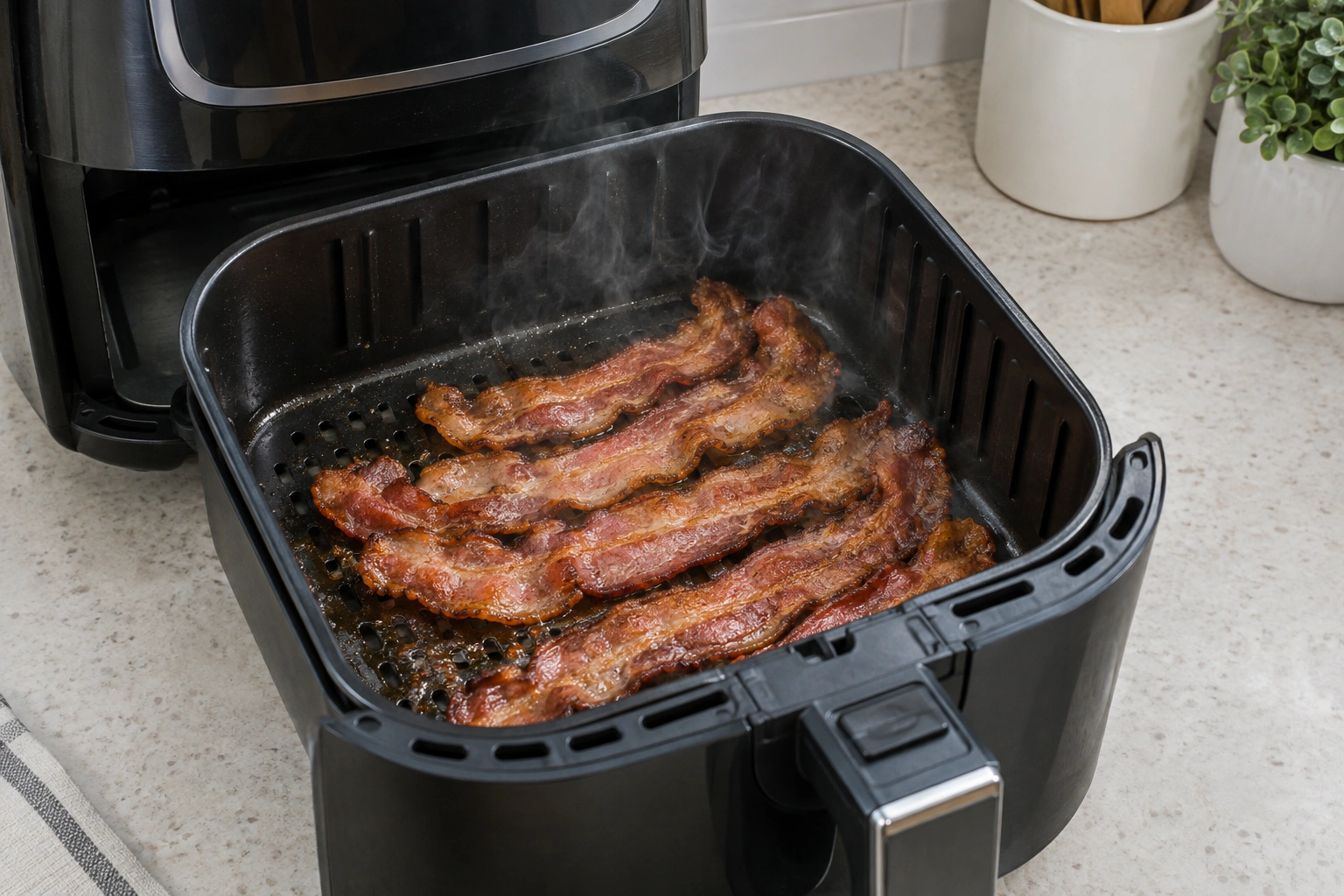
The good news is that smoke does not always mean something is wrong. In many cases, it means the bacon is rendering as expected and your air fryer just needs a better setup, a lower temperature, or a thorough cleaning. The key is knowing when the smoke is normal and when it is a warning sign.
Why bacon makes an air fryer smoke
Bacon is high in fat, and air fryers cook with intense heat and fast-moving air. As bacon cooks, the fat melts out of the slices. That rendered grease has to go somewhere.
In an air fryer, it usually drips into the basket, tray, or bottom drawer. If that grease lands on a very hot surface, it can smoke. If enough grease builds up, the smoke can get heavier over time.
That is why bacon is more likely to smoke than leaner foods like chicken breast or vegetables. It is also why the same bacon may behave differently in two air fryer models. Some units keep the heating element farther away from the grease path, while others let drippings hit hotter surfaces more directly.
Heavy smoke usually means one of three things:
- the temperature is too high
- there is too much grease in the basket or drawer
- old grease buildup is burning off inside the appliance
Is the smoke normal or a warning sign?
Light smoke that appears briefly during bacon cooking is often just rendered fat doing what rendered fat does. If the bacon is browning normally and the smoke fades after you lower the temperature or drain the grease, that is usually manageable.
Heavy, persistent, or acrid smoke is different. That can mean the grease is burning too fast, the appliance is dirty, or the heating area has buildup that needs attention. If the smell is sharp and unpleasant rather than like cooking bacon, stop and inspect the fryer.
A useful rule:
– Light smoke, short duration: usually normal with bacon
– Thick smoke, burning smell, or smoke that keeps getting worse: pause cooking and check the fryer
– Smoke from an empty appliance, electrical smell, or smoke that continues after cleaning: stop using it and inspect for a possible fault
If smoke keeps pouring out even after you lower the heat, unplug the unit and inspect the basket, tray, and heating area before using it again.
How bacon type and cut affect smoke
Not all bacon behaves the same way in an air fryer. The cut and style matter because they change how much fat renders and how quickly.
| Bacon type | Smoke risk | Texture result | Cleanup effort |
|---|---|---|---|
| Regular-cut raw bacon | Moderate | Crispy faster, usually easier to manage | Medium |
| Thick-cut raw bacon | Higher | Meatier, but more fat can render | Higher |
| Pre-cooked bacon | Lower | Less fatty, but usually less fresh-crisp | Lower |
| Very fatty bacon | Higher | Can crisp well, but drips more grease | Higher |
Regular-cut bacon is usually the easiest place to start. Thick-cut bacon can be great, but it often renders more fat and may smoke more, especially if you cook it hot.
Pre-cooked bacon is worth considering if your main goal is reducing smoke. It generally releases less grease, though the texture is usually different from raw bacon cooked from scratch.
If you want the least smoky result, choose bacon with less visible fat and avoid overcrowding the basket.
Best air fryer settings for bacon
For bacon, lower heat is usually more forgiving than high heat. A hotter setting may crisp the bacon faster, but it also increases the chance that grease will smoke before the slices are done.
A practical starting point is around 300°F to 350°F, depending on your air fryer and the bacon thickness. That range is commonly used because it gives the fat time to render gradually instead of hitting the smoke point all at once.
Here is the trade-off:
- Lower temperature: less smoke, more even rendering, slightly longer cook time
- Higher temperature: faster crisping, more smoke risk, greater chance of burnt edges
For many home cooks, the better approach is to start lower and check early. If the bacon is not crisp enough, add a little more time rather than jumping straight to high heat.
Preheating is another factor. Some air fryers benefit from preheating, but with bacon it can make the first drippings hit a hotter surface right away. If your fryer tends to smoke, try starting with a cold basket and see whether that improves the result.
How to stop bacon smoke in an air fryer
If bacon smoke is the problem, these fixes are worth trying in this order.
1. Lower the temperature first
This is the simplest and usually the most effective change. If you cooked bacon at a high setting and got smoke, move down toward 300°F and test again.
That small change often gives the grease more time to render without burning immediately.
2. Cook smaller batches
Crowding the basket traps grease and blocks airflow. Bacon slices need room for hot air to move around them. If the basket is packed, the bacon can steam in some spots and splatter grease in others.
A single layer is best. If you need more bacon, cook it in batches instead of stacking it.
3. Drain the grease during cooking if needed
If your air fryer design collects a lot of drippings in the drawer, stop partway through and empty it carefully if the bacon is cooking long enough to fill the tray. That can prevent grease from reaching the point where it starts smoking heavily.
Be careful here. Hot grease is easy to spill, and the drawer will be very hot.
4. Try a small amount of water in the drip tray, if your model allows it
Some cooks use a little water in the bottom drawer to help keep drippings from smoking as quickly. The idea is simple: grease falls into the water instead of sitting on a very hot dry surface.
This is optional, manufacturer-dependent, and not suitable for every air fryer. Some brands prohibit it, and some designs may make it unsafe or ineffective. Use only a small amount, never add water to a hot appliance, and check your manual before trying it. Water can reduce smoke in some models, but it can also make cleanup messier.
5. Choose a less fatty bacon
If thick-cut or very fatty bacon smokes every time, switching to regular-cut bacon may solve the problem faster than changing your cooking method over and over.
6. Stop and deep-clean if smoke keeps coming back
If the same amount of bacon smokes every time no matter what temperature you use, grease buildup is a likely cause.
Using parchment paper, foil, or a liner safely
Liners can make cleanup easier, but they can also create problems if they block airflow or collect too much grease.
Use them carefully:
- Perforated parchment liners: usually better than solid sheets because they let air move through
- Solid parchment or foil sheets: can block airflow, trap grease, and make smoke worse if they cover too much of the basket
- Liner inserts: useful if your model allows them and they fit properly
The main risk is not the liner itself. It is using too much coverage. Bacon needs air circulation. If foil or parchment covers too much of the basket, the bacon may cook unevenly and the grease may pool instead of draining away. Trapped grease can smoke more than bacon cooked on an open rack or basket.
If you use a liner, leave space for air to move around the food, keep it weighed down by the bacon, and follow the manufacturer’s guidance for your air fryer model.
How to clean the air fryer after cooking bacon
If you cook bacon often, cleanup matters as much as temperature. Grease left behind in the basket, tray, or around the heating area can smoke the next time you use the fryer, even if the next food is something dry and mild.
After the unit cools:
- Remove the basket and tray.
- Wash them with warm soapy water if the manual allows it.
- Wipe away grease from the drawer and interior surfaces.
- Check the area near the heating element for splatter or buildup.
- Dry all parts completely before using the fryer again.
If grease has splattered onto the top interior or near the heating element, wipe it carefully. That buildup is a common reason bacon smoke gets worse over time.
What to do if your air fryer still smokes after cleaning
If you have cleaned the fryer and bacon still smokes badly, use this escalation path:
- Lower the temperature further. Some models simply run hot.
- Reduce the batch size. Test with a single layer or just a few slices.
- Deep-clean hidden grease. Check corners, seams, the drip tray, and the area around the heating element for residue.
- Try a different bacon type. Regular-cut may behave better than thick-cut or very fatty bacon.
- Test again with a small batch. If the smoke is much lower, the issue was likely grease, heat, or bacon type.
- If smoke still persists, suspect an appliance problem. At that point, stop using the air fryer for bacon and check the manual or contact the manufacturer.
If the unit smokes even when empty, or the smoke seems to come from the heating area rather than from grease, discontinue use until it has been inspected. That is more than a normal bacon-smoke issue.
Air fryer bacon vs oven bacon: which is less smoky?
Oven bacon is often easier to manage if smoke is your main concern. In the oven, grease usually spreads across a larger pan surface and is less likely to hit a concentrated hot spot the way it can in an air fryer.
That said, batch size matters. A small air fryer batch can be very manageable if the basket is clean and the temperature is moderate. A larger bacon load in a crowded basket is much more likely to smoke than the same amount cooked on a sheet pan in the oven.
Here is the practical comparison:
- Air fryer bacon: faster, crispier edges, but more likely to smoke if grease management is poor or the basket is overcrowded
- Oven bacon: usually less smoky and better for larger batches, but slower and less compact
If you want bacon with the least chance of smoke and you are cooking a larger amount, the oven may be the calmer option. If you want a quick small batch, the air fryer still works well once you control the grease and temperature.
When to consult a professional
If your air fryer smokes heavily even when empty, or smoke comes from areas that do not seem related to grease, stop using it and check the manual. Persistent smoke from an empty appliance can point to a malfunction, damaged component, or buildup near the heating element that needs more than routine cleaning.
If the unit smells electrical rather than greasy, unplug it right away and do not use it again until it has been inspected.
FAQs about air fryer bacon smoke
Can I cook frozen bacon in an air fryer without smoke?
You can, but frozen bacon can be harder to manage because it may release moisture and fat unevenly as it thaws and cooks. That can lead to splattering and smoke. If you use frozen bacon, keep the temperature moderate and watch it closely.
Does adding water to the drawer really help?
It can help in some air fryer models by keeping drippings from sitting on a very hot dry surface. It is not a guaranteed fix, though, and some manufacturers may not recommend it. Use a small amount only if your manual allows it.
Is bacon smoke dangerous?
A small amount of smoke during bacon cooking is common. Heavy smoke, a burning smell, or smoke that keeps increasing is a sign to stop and check the appliance. If you are unsure, turn the fryer off and inspect it before continuing.
Why does my air fryer smoke even after I cleaned it?
The most common reasons are leftover grease in hidden areas, too much heat, or a bacon type that renders a lot of fat. Some air fryers also handle drippings differently, so one model may smoke more than another even with the same bacon.
Should I use parchment paper or foil for bacon?
Only if your air fryer manual allows it and only if it does not block airflow. A liner can help cleanup, but too much coverage can trap grease and make smoke worse.
What temperature should I use for bacon?
A moderate setting around 300°F to 350°F is a practical starting range. If smoke is your main issue, lean lower and extend the cook time a little rather than rushing with high heat.
Does thick-cut bacon smoke more than regular-cut bacon?
Usually yes. Thick-cut bacon often renders more fat, which increases the chance of smoke. Regular-cut bacon is often easier to manage in an air fryer.
Final take
If your air fryer smokes with bacon, the problem is usually grease management, temperature, or buildup — not a broken appliance. Bacon is naturally smoky because it renders fat, and an air fryer concentrates that heat in a small space.
The most reliable fixes are simple: use a moderate temperature, cook in a single layer, keep the fryer clean, and choose bacon that does not flood the basket with grease. Once those pieces are in place, bacon in the air fryer becomes much easier to control.


