
Why an Air Fryer Smokes: What’s Normal, What Isn’t, and How to Fix It Fast
If your air fryer is smoking, the first job is not to panic — it is to figure out whether you are seeing harmless steam, a little light smoke from fatty food, or a real problem that needs cleaning or shutdown. In most cases, the cause is something practical: grease, residue, too much oil, or food that is simply too fatty for the temperature you are using. Steam from frozen or moist foods can look like smoke at first, but it is usually harmless if it fades quickly and does not smell burnt.
The good news is that many smoking issues can be solved quickly with a basic check and a proper clean. The bad news is that heavy, persistent smoke should not be ignored, especially if it comes with a burning smell or visible damage.
Why an air fryer smokes: what’s normal and what isn’t
A little visible vapor does not always mean trouble. Moist foods, especially frozen items, often give off steam as they cook. That steam can look like smoke at a glance, particularly in a dim kitchen.
Real smoke usually behaves differently. It tends to smell burnt, linger in the air, and show up more often when fat, oil, or residue is getting too hot. Foods with lots of fat can release grease that splatters onto the heating element or hot surfaces, which is a common reason air fryers smoke. That is especially likely with bacon, wings, burgers, sausages, and heavily oiled foods.
Quick comparison: steam vs smoke
| What you see | What it usually means | What to do |
|---|---|---|
| Thin white vapor that disappears quickly | Steam from moisture in food | Usually normal if it fades and there is no burning smell |
| Light smoke during fatty cooking | Grease or oil hitting hot surfaces | Lower the temperature, check for drips, and watch closely |
| Heavy smoke that keeps building | Burnt residue, excess grease, or overheating | Stop cooking and inspect the unit |
| Smoke plus burning smell or visible damage | Possible safety issue | Unplug the air fryer and do not keep using it |
A simple rule helps here: if it looks like steam and stops quickly, it is often harmless; if it smells burnt or keeps getting worse, treat it as smoke, not steam.
First things to check right now
If the air fryer starts smoking, follow this order:
-
Check the smoke level and smell.
A brief puff from moist or fatty food may be normal. Thick smoke, a burnt smell, or anything that smells electrical or plastic-like is not. -
Decide whether to stop immediately.
If the smoke is heavy, persistent, or paired with a bad smell, stop cooking. If it is only a small amount of light smoke from fatty food and it clears quickly, you can monitor it briefly while you check the next steps. -
Unplug the unit if the smoke is heavy or smells wrong.
Do not keep cooking if the smoke is building, the odor seems electrical, or you see scorching, melting, or other damage. -
Let the air fryer cool enough to handle safely.
Then remove the basket and drawer. -
Inspect the basket, drawer, and drip tray.
Look for pooled grease, crumbs, sticky residue, or sauce drips. These are common smoke sources. -
Check the heating element area.
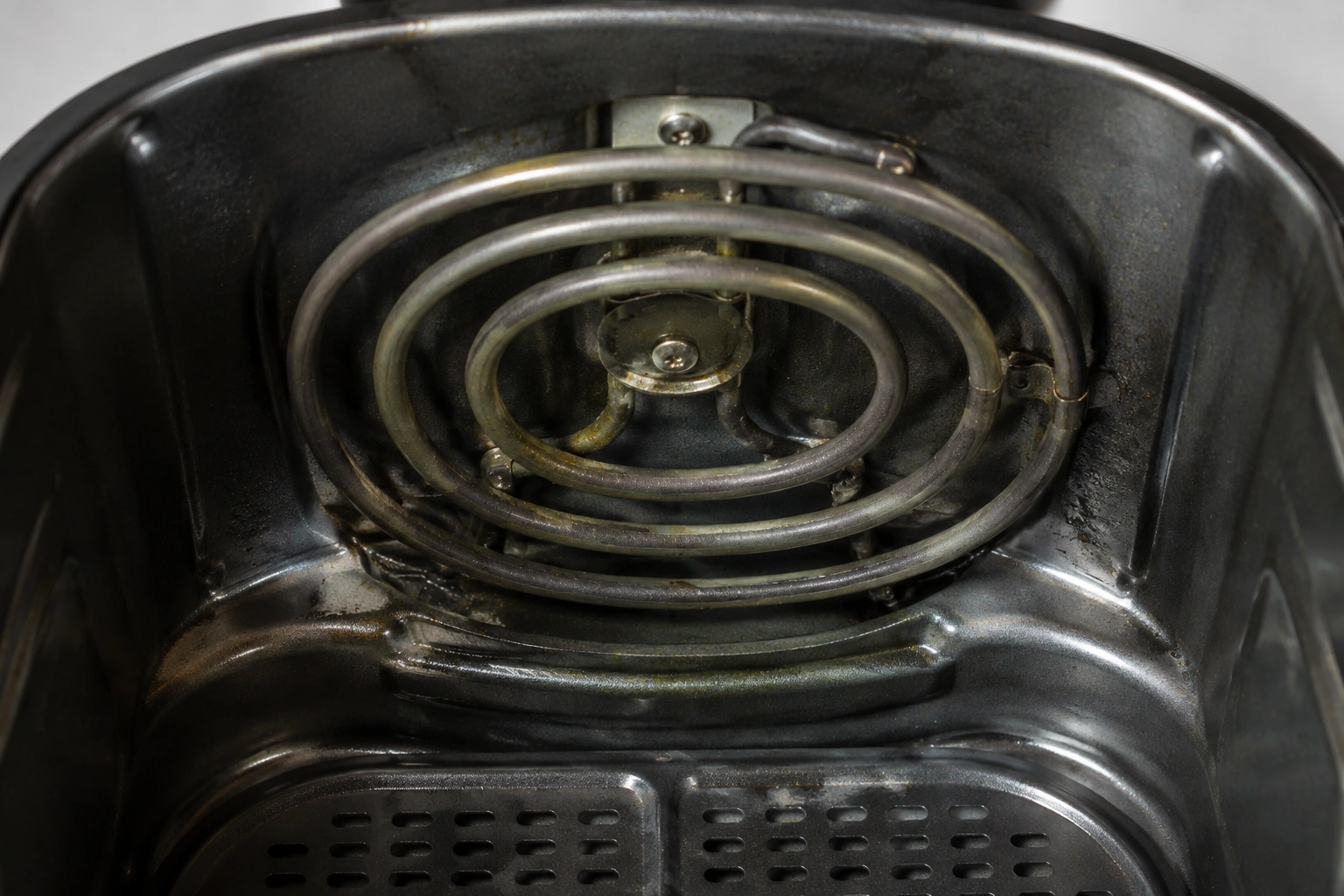
Grease splatter or stuck-on residue here can burn and keep causing smoke until it is cleaned. -
Review the food setup before restarting.
Too much oil, wet marinade, or overcrowding can all make smoke more likely.
If the smoke starts only after the air fryer has been used several times without a deep clean, residue is a very likely explanation. If it starts suddenly with no obvious food or grease issue, be more cautious and inspect for damage.
Common causes of smoke in an air fryer
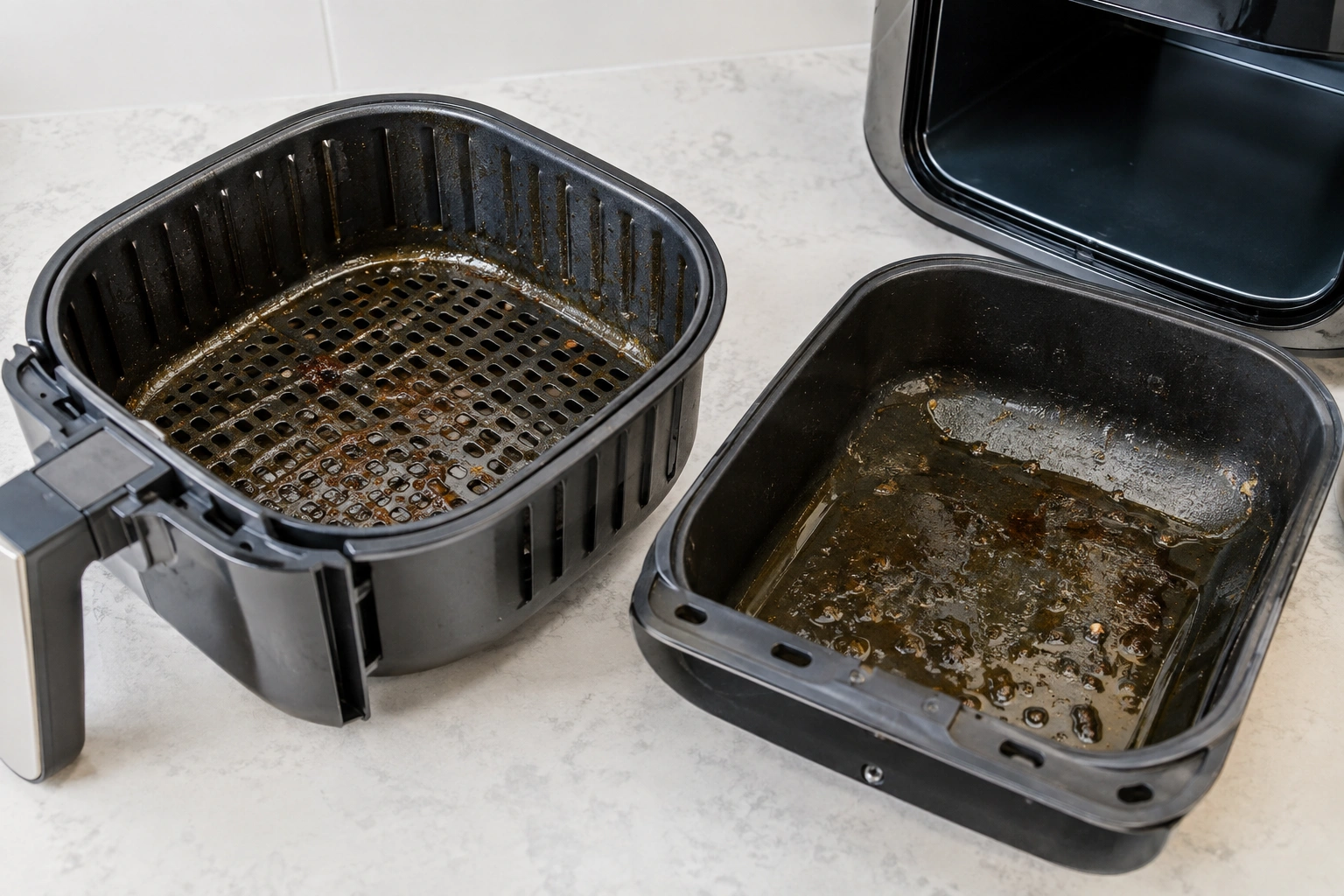
Most smoking problems fall into a few predictable categories. Knowing which one you are dealing with makes the fix much easier.
Grease buildup
This is one of the most common reasons an air fryer smokes. Fat drips from food, collects in the drawer or drip tray, and can eventually burn the next time the machine heats up. Even a thin film of grease can smoke if it has been sitting there through several cooking cycles.
A typical example: you cook wings one night, wipe the basket but skip the drawer and drip tray, then reheat fries the next day. The fries may be fine, but the old grease below them starts smoking.
Food residue and crumbs
Tiny crumbs, sauce drips, and bits of breading burn easily. They often end up in corners, under the basket, or on the drip tray where they are easy to miss. If the smoke appears late in the cooking cycle, residue is a strong suspect.
Excess oil
Air fryers usually need less oil than a skillet or oven. Too much oil can pool, drip, or reach its smoke point faster than the food itself. An oil sprayer gives better control than pouring oil directly from a bottle, especially on foods that already contain some fat.
Fatty foods
Bacon, chicken skin, sausages, burger patties, and wings all release rendered fat as they cook. That fat can hit the heating element or hot metal surfaces and smoke. This does not always mean something is wrong. It may simply mean the food is a high-smoke-risk choice for the temperature you are using.
Sauces and marinades
Sugary glazes, sticky barbecue sauce, and wet marinades can drip and burn. The smoke may not come from the food itself so much as from the coating that falls away and hits the hot parts of the appliance.
Overheating
Too much heat can push oil and drippings past their smoke point. A temperature that works well for frozen fries may be too aggressive for a marinated chicken piece or a fatty burger. Lowering the heat often reduces smoke without ruining the food.
How to clean the parts that usually cause smoking
If the smoke is recurring, cleaning usually needs to go beyond a quick wipe of the basket.
Clean the basket and drawer
Wash the basket and drawer with warm water and dish soap after they cool. If grease has hardened, soak them briefly before scrubbing with a soft sponge. Avoid harsh scouring pads if the nonstick coating is still in good shape, because scratching the surface can make future cleanup harder and may create more residue buildup.
Empty and wipe the drip tray
The drip tray is easy to forget, but it is often where the worst grease collects. Remove any liquid fat, crumbs, or dark residue. If the tray has baked-on spots, let it soak instead of scraping aggressively.
Clean around the heating element
This is the area many people miss. Unplug the air fryer and let it cool completely, then check the top interior for grease splatter or stuck-on residue. Use a damp cloth or soft brush if your manufacturer allows it. Do not spray cleaner directly into the unit unless the manual specifically says it is safe.
Look for hidden grease spots
Check the corners, the underside of the basket, and the inside lip of the drawer. These small areas can hold enough residue to smoke the next time you cook.
If the air fryer still smokes after a deep clean, that is a sign to look more closely at the cooking method or possible appliance damage.
How to reduce smoke while cooking
Once the appliance is clean, a few cooking adjustments can make a big difference.
Lower the temperature a little
If a recipe calls for a very high setting, try reducing it by 25°F to 50°F and cooking a bit longer. That trade-off often reduces smoke while still giving you decent browning. This is especially useful for fatty meats and foods with sugary sauces.
Use less oil
A light coating is usually enough. If food looks shiny or wet before it goes in, there may already be too much oil. An oil sprayer gives better control than pouring. For breaded foods, a small amount of oil applied evenly is usually better than a heavy drizzle.
Keep food from sitting in pooled fat
If the basket is overloaded, grease and moisture cannot drain properly. Leave space around the food so air can circulate and drippings can fall away. Crowding is one of the easiest ways to turn a normal cook into a smoky one.
Watch sticky marinades
For sauced foods, consider adding the sauce near the end of cooking instead of from the start. That reduces the amount that can burn on the hot surfaces.
Use liners carefully
Some liners can help catch drips, but they should not block airflow or sit in a way that interferes with the heating process. Follow the manufacturer’s instructions. A liner that covers too much of the basket can create uneven cooking and may even worsen smoke in some models.
Foods that are most likely to make an air fryer smoke
Some foods are simply more likely to smoke than others.
Higher-risk foods
- Bacon
- Chicken wings and chicken skin
- Burger patties
- Sausages
- Very oily frozen snacks
- Foods coated in thick marinades or sugary sauces
These foods release more fat or residue, which makes smoke more likely if the temperature is high or the basket is already dirty.
Lower-risk foods
- Plain vegetables
- Lean chicken breast
- Reheated leftovers with little added fat
- Breaded items with only a light oil coating
Lower-risk foods can still smoke if the air fryer is dirty or overheated, but they usually create fewer problems than fatty meats.
A practical example: bacon at 400°F is much more likely to smoke than a tray of broccoli at a moderate temperature. That does not mean bacon is off-limits — it just means it needs more attention.
When smoke means a safety problem or appliance issue
Not all smoke is a cleaning issue. Some signs mean you should stop using the appliance.
Unplug it if you notice any of these
- Heavy smoke that does not clear
- A strong burning smell that does not seem food-related
- Plastic or electrical odor
- Visible melted parts, scorching, or damage
- Smoke that appears even when the basket, drawer, and heating element are clean
If smoke keeps returning after you have cleaned the unit and adjusted the cooking temperature, the problem may be mechanical or electrical. At that point, check the manufacturer instructions and contact support if needed.
How to prevent the problem from coming back
The easiest way to stop repeat smoking is to stay ahead of grease and residue.
- Wipe the basket and drawer after each use
- Empty the drip tray regularly
- Clean the heating element area on a schedule, not only when smoke appears
- Use less oil than you would in a skillet
- Keep a close eye on fatty foods and sugary sauces
- Avoid pushing the temperature higher than needed for browning
- Let the unit cool before cleaning so residue comes off more easily
One habit matters more than most: do not assume a quick basket rinse is enough after cooking bacon, wings, or anything heavily seasoned. Those foods leave behind the kind of residue that can smoke the next time you turn the machine on.
When to Consult a Professional
If the air fryer still smokes after a thorough cleaning, sensible cooking adjustments, and a careful inspection for visible damage, it may be time to stop troubleshooting on your own. Contact the manufacturer or a qualified appliance repair professional if the unit has melted parts, repeated electrical odors, or smoke that seems unrelated to food, oil, or residue.
Signs that point to repair or replacement rather than simple cleaning include:
- Smoke that returns immediately after cleaning
- A persistent electrical, plastic, or burning odor
- Cracked, warped, or melted parts
- A heating element that looks damaged or does not heat normally
- Unusual noises, flickering controls, or power issues
- Smoke coming from places other than the cooking chamber
If you are unsure whether the appliance is safe, do not keep testing it repeatedly. Use the manufacturer’s support channel or service guide before running it again.
Frequently Asked Questions
Is a little smoke from an air fryer normal?
Sometimes, yes. A small amount of light smoke can happen with fatty foods or a little leftover residue. What matters is whether it clears quickly or keeps getting worse.
Why does my air fryer smoke when I cook bacon or wings?
Those foods release rendered fat, which can drip onto hot surfaces and smoke. That is one of the most common smoking causes in air fryers.
Should I keep cooking if my air fryer is smoking?
Only if it is a brief, light puff that clearly comes from the food and there is no burnt smell. If the smoke is heavy, persistent, or smells electrical, stop and unplug it.
What should I clean first?
Check the basket, drawer, drip tray, and the area around the heating element. Those are the spots where grease and crumbs usually build up.
Can too much oil cause smoking?
Yes. Excess oil can pool, drip, and burn faster than the food itself. A light coating is usually enough for most air fryer cooking.
Why does my air fryer smoke even when the food looks fine?
The problem may be residue from a previous cook, especially grease hidden in the drip tray or on the heating element. That leftover buildup can smoke before the current food is even done.
Does smoke mean my air fryer is broken?
Not always. Most smoking issues come from food, grease, or temperature. But if the smoke continues after cleaning or comes with damage or electrical odor, the appliance may need service or replacement.
What if my air fryer smokes every time I use it?
That usually means the issue has not been fully addressed. Recheck the cleaning, reduce the oil, lower the temperature, and inspect the heating element area. If it still happens, contact the manufacturer.

