
Why Your Kitchen Knife Gets Dull Quickly and How to Stop It

If your kitchen knife seems to lose its edge faster than it should, the problem is usually not one single thing. In most home kitchens, dulling comes from a mix of cutting surface, storage, sharpening habits, and blade quality. Once you know which part is doing the damage, it becomes much easier to fix without buying a whole new knife set.
Sharp knives matter because they cut predictably and save effort during prep. A dull blade tends to slip, crush food instead of slicing it cleanly, and slow down everything from chopping onions to breaking down a pile of vegetables for meal prep. That is why the goal is not just “make it sharp again,” but “keep it sharp longer with less work.”
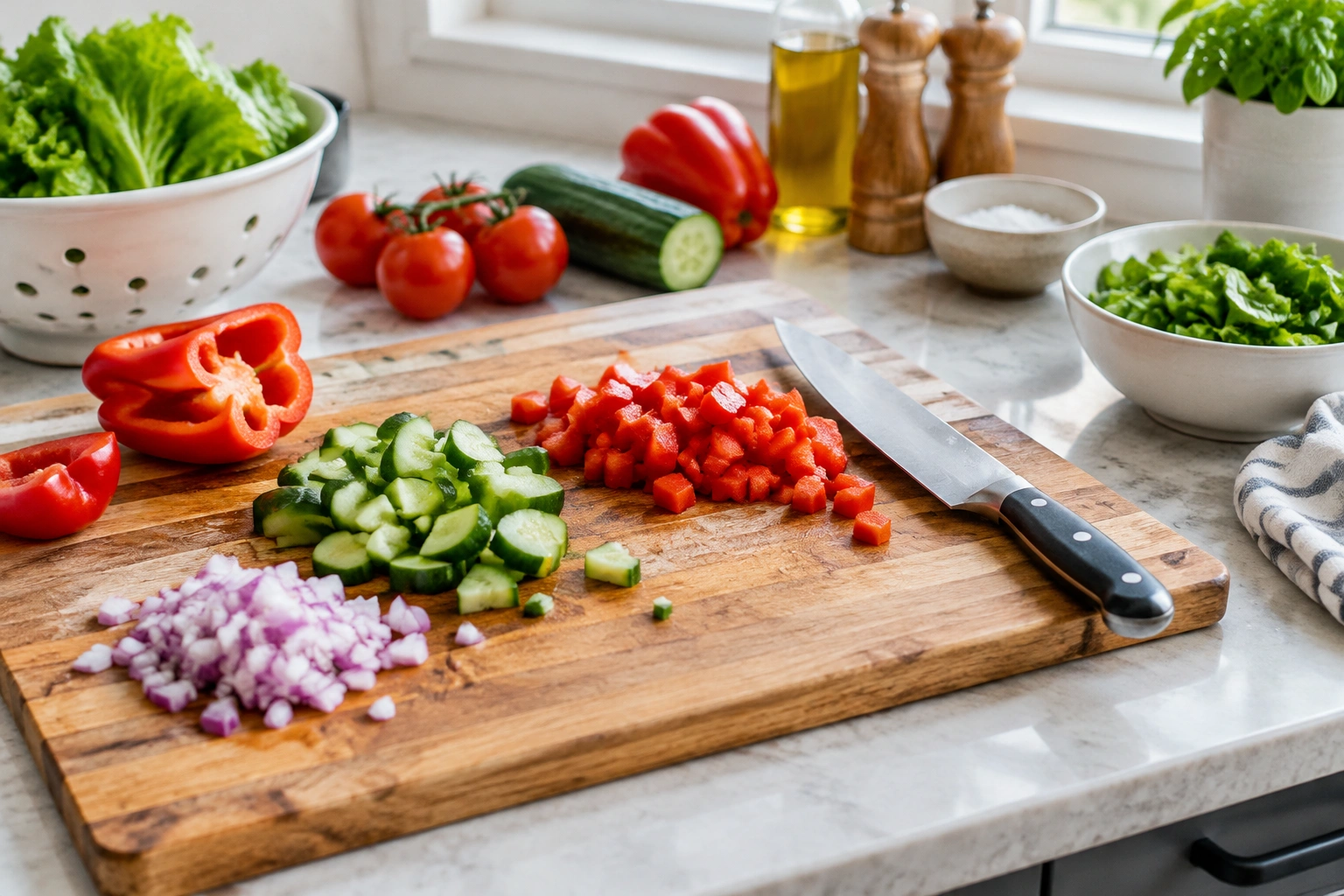
Why kitchen knives lose their edge so fast
Every knife edge is thin by design. That thin edge is what lets it slice cleanly, but it also means the edge is vulnerable to wear. As you cut, the blade meets resistance from food, board, storage, and even the way you move your hand. Over time, that contact can round the edge, roll it slightly to one side, or chip small pieces away.
There is also a difference between a knife that is truly worn down and one that only feels dull because the edge is bent or misaligned. A rolled edge may still be there, but it no longer meets the food cleanly. That is why a knife can seem dull “out of nowhere” even if you have not used it heavily.
A second reason knives feel dull quickly is that some maintenance methods create a false sense of sharpness. If a knife is not deburred properly after sharpening, a tiny burr can fold over or break off later. The knife may feel sharp for a short time, then suddenly seem to go flat again. That is not unusual, and it is one reason some knives disappoint even after being sharpened.
The main causes: cutting surface, technique, storage, and knife quality
If a knife dulls quickly, these are the first four things to check.
Cutting surface
Hard surfaces are one of the fastest ways to damage an edge. Countertops made of stone or other hard materials can dull a blade quickly, and the same concern applies to glass, ceramic, or similar hard cutting surfaces. By contrast, wooden and plastic cutting boards are much gentler on the edge.
That does not mean all boards are equal. A worn plastic board can develop deep grooves that trap food and create uneven contact. A wood board can be kinder to the knife, but it needs proper cleaning and drying care. If your board is scarred, warped, or slippery, it may be time to replace it.
Technique
The way you cut matters almost as much as what you cut on. Twisting the blade while it is buried in dense food, scraping food off the board with the edge, or hacking through hard ingredients with force can all shorten edge life. Busy home cooks often do these things without noticing because they save a few seconds during prep.
Meal preppers are especially likely to damage an edge by working fast. If you chop a full tray of vegetables, then drag the knife sideways to gather them, you are asking the edge to do a job it was not designed for. Use the spine or a bench scraper to move food instead.
Storage
Loose drawer storage is rough on knives. When blades knock against spoons, forks, and other tools, the edge can pick up tiny nicks or bends. That kind of damage adds up, especially for knives used daily.
A storage block or magnetic strip protects the edge better because the blade is not rattling against metal. The key is consistency: if you use one safe storage method most days, the knife usually stays in better shape than one tossed into a crowded drawer.
Knife quality
Not every knife is built to hold an edge for the same length of time. Softer steels tend to be easier to sharpen, but they may need attention more often. Harder steels can hold a sharp edge longer, but they may also be more brittle if abused.
That does not mean a budget knife is useless. It just means you may need a realistic maintenance routine and gentler habits. If a knife feels like it needs constant sharpening even when you treat it carefully, the steel or heat treatment may simply be limiting how long it can stay sharp.
How your cutting board affects edge retention
The cutting board is one of the easiest places to improve knife life without spending much.
| Board type | Effect on knife edge | Pros | Trade-offs |
|---|---|---|---|
| Wood | Gentle on edges | Good edge retention, stable cutting feel | Needs care, drying, and occasional maintenance |
| Plastic | Usually knife-friendly | Affordable, common, easy to replace | Grooves can build up over time |
| Glass | Hard on blades | Easy to wipe clean | Dulls edges quickly |
| Stone or similar hard surfaces | Hard on blades | Durable appearance | Very rough on knife edges |
For most home kitchens, wood or plastic is the practical choice. If you want the simplest upgrade for a knife that keeps going dull, replacing a hard board is often more helpful than buying a more expensive sharpener.
If you meal prep often, consider using one board for produce and another for raw proteins so you are not constantly scrubbing one heavily scarred surface. That is less about knife sharpness than keeping your prep space organized and easier to clean.
Habits that damage a knife edge during meal prep
Some habits are small, but they wear knives down faster than people expect.
Twisting through dense food
When a knife is stuck in squash, potatoes, or other firm foods, twisting the blade puts stress on the edge. That can roll the edge or create small chips. A cleaner move is to cut straight through with controlled pressure and use the correct knife for the job.
Scraping with the cutting edge
Many cooks use the blade to push chopped food into a pile or into a pan. If the edge is the part touching the board, it takes unnecessary abuse. Turn the knife over and use the spine, or use a bench scraper.
Chopping on hard or damaged surfaces
A hard board is one problem. A damaged board with deep grooves is another. Grooves can make the blade hit uneven surfaces repeatedly, which is not ideal for edge retention. If your board looks scarred enough to catch food, it is probably also rough on knives.
Rough handling after washing
A knife can get nicked even after the cooking is done. If it gets tossed into a sink, banged against other utensils, or stored while still moving around loosely, the edge can suffer. Dry it carefully and put it away where the blade will not hit anything hard.
Honing vs. sharpening: what each one does
These two terms get mixed up constantly, but they solve different problems.
Honing realigns the edge. If the blade has bent slightly out of line, honing can help it cut better again without removing much metal. That is why a knife can feel noticeably improved after honing even though it was not actually sharpened.
Sharpening removes metal to create a new edge. If the edge is worn down, rounded, or damaged, honing alone will not fix it. You need sharpening to rebuild the edge.
Think of it this way: honing is maintenance, sharpening is repair.
Which one should you use?
If the knife still cuts reasonably well but feels a little off, try honing first. If it struggles to slice tomatoes, slips on onion skins, or crushes herbs even after honing, it likely needs sharpening. If the edge has visible chips or severe damage, sharpening may still help, but the knife may be nearing the end of its useful life.
How to tell whether your knife needs honing, sharpening, or replacement
Here is a simple decision rule:
- Try honing if the knife feels slightly less precise but still has a usable edge.
- Sharpen it if honing does not restore clean cutting.
- Replace it if the blade is badly chipped, the steel is so soft that it never holds an edge, or repeated sharpening no longer improves performance.
A practical home test is to slice a tomato or onion. If the knife slips, crushes, or skates instead of biting in, the edge needs attention. If the knife improves after honing, you probably caught the problem early. If it still performs poorly, sharpening is the next step.
What the edge problem usually looks like
A plain-language way to tell the difference:
- Rolled edge: the blade is still there, but the thin tip has bent to one side. In the kitchen, this often feels like the knife is dragging or refusing to start a clean cut. Honing may fix it.
- Dull edge: the edge has worn rounded from normal use. It may still cut soft food, but it will crush tomatoes or slide on onion skin. Honing might help a little, but sharpening is usually needed.
- Chipped edge: small pieces are missing from the edge. You may feel tiny catches while cutting, or see little shiny notches when you look closely. Sharpening can sometimes remove minor chips, but larger damage may make replacement more practical for a low-cost knife.
If you are unsure, start with honing. If that does not bring back clean cuts, move to sharpening.
Which sharpening method makes sense for home cooks
There is no single best sharpener for every household. The best choice depends on how much control you want, how much time you have, and how comfortable you are learning a technique.
| Method | Control | Ease of use | Metal removal | Best for |
|---|---|---|---|---|
| Whetstone | High | Lower at first | Can be controlled carefully | People willing to practice and want precision |
| Manual sharpener | Moderate | Easy | Can remove more metal than expected | Busy cooks who want convenience |
| Electric sharpener | Lower to moderate | Very easy | Often aggressive if overused | Fast results with less skill required |
A whetstone gives the most control, which makes it the best option if you want precision and are willing to learn. It is also the least likely of the three to remove too much metal when used carefully. For a budget home cook, that matters because it gives you a chance to maintain a cheap knife without wearing it down quickly.
Manual sharpeners are the easiest practical choice for many home cooks. They are a good middle ground for inexpensive knives that need a quick fix, but they can remove more metal than a careful whetstone user might expect. If you want convenience and do not want to learn angle control, this is often the simplest option.
Electric sharpeners are the most likely to remove too much metal if used often or too aggressively. They can be useful when you want speed, but they are not the safest long-term choice for a cheap knife you are trying to stretch.
For a budget-conscious home kitchen, the safest rule is to use the least aggressive method that still restores the edge. If you rarely sharpen and want more control, a whetstone can be a good long-term tool. If you need something simple and quick, a manual sharpener may be enough.
Knife steel, hardness, and why some knives stay sharp longer
Knife steel affects edge retention, but not in a simple “better or worse” way. Softer steel tends to be easier to sharpen and easier to touch up, yet it may lose its edge sooner. Harder steel can hold a sharper edge longer, but it may be less forgiving if it hits a hard surface or gets twisted in dense food.
That trade-off matters for home cooks. If your kitchen habits are rough, a very hard blade may chip more easily. If you want low-maintenance convenience, a moderate blade that sharpens easily may be the better fit.
A simple example: a softer budget knife may feel fine after a quick hone or touch-up, but it may need that attention more often during the week. A harder knife may stay sharp longer on normal prep, but if you hit a hard board or twist it in squash, the edge may be more likely to chip instead of just rolling. Neither is automatically better; the right choice depends on how you cook.
This is also why two knives that look similar can behave very differently. One may stay sharp through regular meal prep, while another seems dull after only a few sessions. Steel quality and heat treatment both play a role, so a knife that dulls unusually fast may not be a user problem alone.
How to store knives without damaging the edge
Storage is one of the easiest places to prevent accidental dulling.
Drawer storage
Loose drawer storage is the least edge-friendly option. The blade can bump into other utensils, which can create nicks and wear. If a drawer is your only option, use a blade guard or a dedicated insert so the edge is not moving around freely.
Storage block
A block keeps the knife protected and easy to reach. The main drawback is that the slots can collect crumbs or moisture if they are not kept clean and dry. Still, for many households, a block is a practical balance of protection and convenience.
Magnetic strip
A magnetic strip keeps the blade separated from other tools and frees up counter space. The key is to place the knife on and remove it from the strip carefully so the edge does not scrape along the surface.
If you want the simplest improvement with the least cost, moving knives out of a crowded drawer is a strong first step.
A simple low-cost maintenance routine for busy homes
You do not need a complicated routine to keep knives in good shape. A practical system looks like this:
- Use a wood or plastic cutting board.
- Avoid scraping with the edge.
- Wash, dry, and put the knife away promptly.
- Hone when slicing starts to feel slightly resistant.
- Sharpen when honing no longer restores clean cuts.
That routine works because it addresses the most common sources of edge damage before they build up. It also keeps you from over-sharpening, which can wear a knife down faster than necessary.
For meal preppers, the biggest win is usually consistency. A few small habits repeated every week will do more for edge retention than a fancy sharpener used at random. If you cook several times a week, honing every week or two is often enough to keep a serviceable knife feeling normal, while sharpening is usually a less frequent task based on use rather than the calendar.
When it’s worth replacing the knife or cutting board
Replacement makes sense when maintenance is no longer cost-effective.
A cutting board should be replaced if it is deeply scarred, warped, or so hard on knives that your edge keeps degrading despite better habits. A knife should be replaced if it is too soft to hold an edge, badly damaged, or no longer worth the time you spend sharpening it.
For a low-cost knife, replacement is often the practical choice when sharpening costs, time, or frustration start to exceed the knife’s value. If the blade needs frequent sharpening, keeps chipping, or still cuts poorly after a reasonable sharpening attempt, it may be cheaper and simpler to replace it than to keep putting effort into a tool that will not stay sharp long enough for normal use.
A cheap knife can still be useful if it sharpens well and the edge holds long enough for your needs. But if you are constantly fighting the blade, the real problem may be the tool, not your technique. In that case, replacing one poor performer can save time and frustration.
When to ask a food safety expert
If a knife or board has damage that makes cleaning difficult, or if loose storage is creating accidental cuts in a busy household, it may be worth getting advice from a food safety or home economics professional. For general safe handling and cleaning guidance, the USDA’s food safety resources and the FDA’s food safety page are good places to start.
FAQ
Why does my kitchen knife get dull quickly even when I barely use it?
That usually points to the board, storage, or the knife itself rather than heavy use. A hard cutting surface, loose drawer storage, or soft steel can make a blade feel dull much sooner than expected.
Is my cutting board making my knife dull?
It might be. Glass, stone, and other hard surfaces are rough on edges. Wood and plastic are usually much kinder to a kitchen knife.
How often should I hone or sharpen my knife?
There is no universal schedule. Hone when the edge starts to feel slightly out of line, and sharpen when honing no longer brings back clean cutting. Use the knife’s performance as the guide.
Can a cheap knife stay sharp?
Yes, sometimes. A budget knife can still work well if the steel and heat treatment are decent and the edge is maintained properly. If it keeps dulling too fast despite good care, upgrading may be more practical than constantly sharpening it.
What is the biggest mistake that shortens knife edge life?
Using the knife on hard surfaces and storing it loosely with other utensils are two of the most common avoidable causes. Rough cutting habits, like twisting the blade or scraping with the edge, also wear it down faster.
Should I use a whetstone, manual sharpener, or electric sharpener?
Choose the one that matches your skill and routine. Whetstones offer the most control, manual sharpeners are convenient, and electric sharpeners are fastest but can be more aggressive. If you are not sure, start with the least aggressive option that still gives you consistent results.
Why does my knife feel dull right after sharpening?
A likely cause is a remaining burr or an edge that was not properly finished. The knife may seem sharp at first, then lose that feeling quickly if the edge folds over or breaks off.
Do harder knives always stay sharp longer?
Not always in practice. Harder steel can hold an edge longer, but it may also be less forgiving if it hits a hard board or gets used roughly. Better edge retention often comes with more care requirements.
What storage method is best for keeping a knife sharp?
A magnetic strip or a storage block usually protects the edge better than a loose drawer. The main goal is to keep the blade from knocking against other metal or hard surfaces.
When should I replace a knife instead of sharpening it?
Replace it when sharpening no longer improves performance, the blade has serious damage, or the steel is too soft to hold an edge for your needs. If the knife is cheap but still maintainable, sharpening may still be worth it.
Is it worth sharpening a cheap knife?
Sometimes, yes. If the knife responds well to honing and sharpening, it can still be practical for everyday use. If it needs frequent sharpening, has repeated chips, or still performs poorly after a reasonable touch-up, replacing it is usually the more practical choice.