Why Steam Helps Bread Rise in the Oven: The Science Behind Better Oven Spring and Crust
Steam looks simple, but in bread baking it plays a very specific role. If you want better oven spring, a thinner crackly crust, and a loaf that opens up instead of setting too early, steam is one of the tools worth understanding.
In plain terms, steam buys your dough a little extra time in the oven. That short window matters. Bread is still expanding rapidly in the first part of the bake, and if the crust hardens too soon, the loaf loses some of that final lift. Steam helps delay that crust set so the bread can rise more fully before the outside firms up.
That is the core reason steam helps bread rise in the oven. It does not create rise on its own. The real lift still comes from yeast activity, trapped gas, gluten structure, and oven heat. Steam simply improves the conditions for those forces to do their work.
What Steam Does in Bread Baking
When dough enters a hot oven, several things happen at once. Yeast activity can continue briefly as the dough heats up, gases in the dough expand, and moisture inside the loaf turns to steam. That internal expansion is a major part of oven spring.
External steam changes the surface of the dough. Instead of drying out quickly, the outer layer stays flexible longer. That matters because a flexible skin can stretch as the loaf expands. A dry, tight surface resists expansion and can limit the final rise.
Steam also affects crust formation. In a humid oven, the surface of the dough takes longer to dry and set. That delay gives the loaf more time to open up along scores, seams, or natural weak points. Once the loaf has finished expanding, the steam is no longer helping much. At that stage, the crust needs to dry out so it can brown and crisp.
A simple way to think about it: steam helps the loaf “stretch first, set later.”
Why Steam Helps Bread Rise in the Oven
The science is straightforward, even if the terms sound technical.
It delays crust setting
A crust forms when the outside of the dough loses moisture and firms up. If that happens too early, the loaf is locked into a smaller shape. Steam keeps the oven environment moist enough that the surface stays soft for longer. That delay gives the dough more room to expand before the crust becomes rigid.
It keeps the surface flexible
Bread needs a surface that can stretch. Steam helps maintain that flexibility during the first stage of baking. This is especially useful for lean doughs with strong gluten structure, like baguettes, boules, and bâtards, because those loaves are meant to expand dramatically in the oven.
It supports a better crust finish
Moist heat can help the outer layer of the dough stay supple a little longer, which is one reason steamed bread often develops a shinier, more attractive crust. After the steam is removed and the surface dries, the crust can brown more evenly and develop a cleaner crackle.
It works with heat, not instead of heat
Steam is not a substitute for a hot oven. In fact, too little heat can make steam less effective because the dough warms more slowly and the crust may stay pale. For strong oven spring, you need both: enough heat to drive expansion and enough moisture to delay crust formation for a short period.
Which Breads Benefit Most from Steam
Steam is most useful when you want a bold rise and a crusty exterior.
Best candidates for steam
- Lean artisan loaves such as country sourdough-style breads, boules, and bâtards
- Baguettes and other hearth breads where open expansion and a crisp crust matter
- Free-form loaves baked on a stone or steel where the oven cavity is not naturally enclosed
These breads usually have little or no fat, sugar, or dairy, so they rely more on oven spring and crust development for their final character.
Less dependent on steam
- Sandwich breads
- Enriched doughs with butter, milk, eggs, or sugar
- Pan breads where a softer crust is often preferred
Enriched doughs already brown and soften differently because their ingredients change how the crust behaves. They may still benefit from some moisture early on, but they usually do not need the same aggressive steaming approach as a lean artisan loaf.
A practical rule: if the goal is a thin, crisp crust and maximum oven spring, steam is usually worth using. If the goal is a soft crust, steam matters less and may even work against the finish you want.
How Long Steam Should Stay in the Oven
Steam matters most during the early expansion stage, then the oven needs to dry out so the crust can color and crisp.
A practical home-baking benchmark: covered Dutch oven bakes usually need steam only for about the first 20 to 30 minutes, while open-oven loaves often benefit from steam for roughly the first 5 to 15 minutes before the oven is vented or the steam source is removed. Exact timing depends on loaf size and oven behavior, but the goal is the same: keep the surface flexible long enough for oven spring, then let the crust dry.
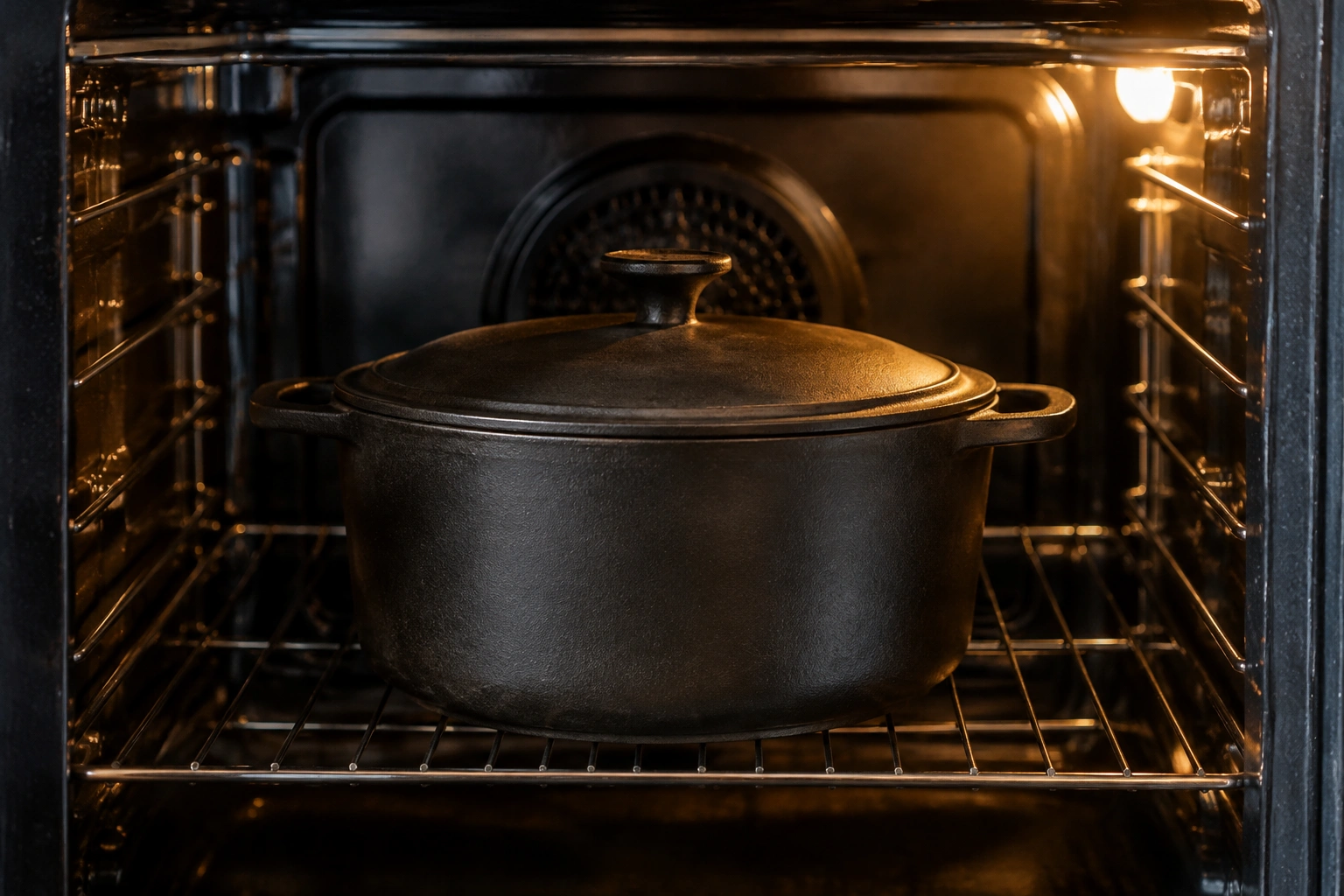
For a covered bake, such as a Dutch oven, the lid usually does the steam work for you during the first part of the bake. After that, the lid comes off so the crust can brown.
For an open-oven bake, the humid environment should only last through the initial oven spring stage. If you keep the oven too steamy for too long, the loaf may stay pale and soft instead of developing a proper crust.
A useful decision rule: steam early, vent later. If the bread is still in its expansion phase, moisture helps. If the loaf has already finished its main rise, excess steam becomes a drawback.
Safe and Effective Ways to Create Steam at Home
Home ovens are not built like commercial deck ovens, so the method matters. Some methods are much more practical than others.
| Method | Best for | Strengths | Trade-offs |
|---|---|---|---|
| Dutch oven | Boules, bâtards, small artisan loaves | Reliable steam from trapped moisture, strong oven spring, simple setup | Limited batch size, hot cover can be awkward to handle |
| Steam tray | Hearth loaves, baguettes, multiple loaves | Works in open ovens, can support larger bakes | Less consistent, needs careful setup and timing |
| Lava rocks in a tray | Open-oven baking | Helps hold and release water gradually | Adds complexity and still requires caution |
| Spritzing the dough | Very light moisture | Easy and fast | Usually the least effective for real oven spring |
Dutch oven baking
A preheated Dutch oven traps moisture released by the dough itself. That makes it one of the most dependable home methods for lean loaves. For many home bakers, it is the easiest way to get a strong rise without fussing over trays of water.
The trade-off is flexibility. You are usually limited to one loaf at a time, and the vessel must be handled carefully because both the pot and the lid are extremely hot.
Steam tray or lava rocks
These methods are more useful for open-oven baking. Water added to a preheated tray or lava rocks can create a humid environment in the oven cavity. This can work well for baguettes or multiple loaves, but it is less consistent than a covered bake.
Use caution. Steam can cause serious burns, and pouring water into a hot oven should only be done with a setup designed for it. Avoid any method that risks cracking glass or splashing hot water onto exposed skin.
Spritzing the dough
A spray bottle is convenient, but it usually does not create enough humidity in the oven to match the effect of a covered bake or steam tray. Spraying the dough surface can help slightly, but it is not the same as creating steam in the oven cavity.
If your goal is better oven spring, spritzing alone is often too mild to make a noticeable difference.
Steam vs No Steam: What Changes in Rise and Crust
The difference is usually easy to see.
With steam
- Better oven spring
- More open expansion at the score or seam
- Shinier crust
- Thinner, crisper crust on many artisan loaves
- More even browning after the steam is vented
Without steam
- Crust sets sooner
- Loaf may rise less in the oven
- Surface can look duller
- Crust often becomes thicker or harder earlier in the bake
- Score openings may stay tighter
That does not mean every bread needs steam. A sandwich loaf often benefits from a softer, less crackly crust, so a drier bake can be perfectly appropriate. But if you are chasing the tall, open look of a hearth loaf, steam usually gives you a better chance of getting there.
Common Steam Mistakes That Reduce Oven Spring
Steam problems often show up as weak rise, dull crust, or pale bread.
Using too little steam
If the oven is only lightly humid for a moment, the crust may set before the loaf has finished expanding. This is one of the most common reasons a loaf looks underdeveloped even when the dough was shaped well.
Venting too early
Removing the lid or releasing steam before the loaf has had time to expand can shut down oven spring. The loaf may still bake through, but it will not reach its full volume.
Keeping steam in too long
Too much moisture for too long slows browning. The loaf may stay soft and pale instead of developing the dry, crisp crust that many bakers want.
Baking at too low a heat
Steam works best when the oven is hot enough to drive a strong initial rise. If the oven temperature is weak, the dough may warm too slowly and the crust may not develop properly.
Relying on steam to fix other problems
Steam cannot rescue poor shaping, weak gluten development, or overproofed dough. If the dough has lost structure before it goes in the oven, extra humidity will not rebuild it.
If you want a deeper look at the structure side of bread making, this guide on why gluten development matters in bread is a useful companion.
How to Troubleshoot Poor Oven Spring
When a loaf fails to rise well, steam is only one possible cause.
Start with the dough
If the dough was overproofed, it may have exhausted much of its expansion potential. If it was underproofed, it may burst unpredictably or rise unevenly. In both cases, steam will have limited impact.
Check the shaping and structure
A loaf needs enough strength to hold gas and stretch in the oven. If the dough was weak during shaping, it may spread instead of rising. Steam can soften the crust, but it cannot create structure that is not there.
Then look at the oven setup
A baking stone or baking steel can help transfer heat quickly to the bottom of the loaf, which supports oven spring. Without enough bottom heat, the loaf may rise sluggishly even if the steam method is decent.
Finally, review the steam timing
If the loaf went into the oven too late, or if the steam was added after the crust had already begun to set, the window for expansion may have been missed.
A good troubleshooting habit is to separate the problem into three parts: dough condition, oven heat, and steam method. That makes it much easier to identify what actually needs fixing.
Practical Takeaways for Using Steam Confidently
Here is the simplest way to think about it:
- Use steam for lean, crusty breads that need strong oven spring.
- Keep steam early in the bake, then vent or uncover so the crust can brown.
- Choose the method that fits your oven: Dutch oven for reliability, open-oven steam for flexibility.
- Do not expect steam to fix weak dough.
- If the loaf needs a soft crust, reduce or skip steam.
If you are baking a single rustic loaf, a Dutch oven is often the most dependable place to begin. If you are baking baguettes or several loaves at once, an open-oven steam method may make more sense. The best choice is the one that matches the bread style, the oven, and the crust you want at the end.
For bakers who want to connect steam with formula control, this guide on how to calculate baker’s percentages for bread can help you understand how dough balance affects structure before the loaf ever reaches the oven.
Frequently Asked Questions
Why does steam help bread rise in the oven?
Steam keeps the dough surface moist and flexible for longer, which delays crust setting. That extra time lets the loaf expand more before the outside firms up.
What happens to dough when steam is added during baking?
The dough surface stays softer, the crust forms more slowly, and the loaf has a better chance to expand during the early part of baking.
How do I create steam in a home oven?
The most reliable method is a preheated Dutch oven for covered baking. For open-oven baking, a steam tray or lava rocks can help, though results are less consistent.
How long should steam be used while baking bread?
Use it only through the early expansion stage. In a Dutch oven, that is usually the first 20 to 30 minutes; in an open oven, it is often closer to 5 to 15 minutes before venting.
Which breads benefit most from steam?
Lean artisan breads, baguettes, and other crusty hearth loaves benefit the most. Enriched breads and sandwich loaves usually need less steam.
Can too much steam hurt bread?
Yes. Excess steam can slow browning and leave the crust pale or soft for too long.
Why is my bread not getting good oven spring?
Poor oven spring can come from weak gluten, overproofing, underproofing, insufficient heat, or steam that was too light, too late, or removed too soon.