
Why Too Much Flour Makes Cookies Dry: A Practical Guide for Better Texture
If your cookies keep turning out dry, dense, or crumbly, flour is one of the first places to look. In cookie dough, flour does more than provide structure. It also absorbs moisture, and when you add too much, the dough can lose the balance that keeps cookies tender. The result is often a batch that bakes up thick, stiff, and dry instead of soft, chewy, or pleasantly crisp.
The good news is that this is usually fixable. Once you understand how flour behaves in cookie dough, you can measure it more accurately, recognize the warning signs before baking, and decide whether a dough needs a small adjustment or a fresh start.
Quick answer: why too much flour makes cookies dry
Too much flour makes cookies dry because flour soaks up liquid and fat that would otherwise keep the dough tender. With extra flour in the mix, there is less free moisture available for the dough to spread and bake evenly.
That changes the cookie in a few ways at once:
- the dough feels stiffer and less cohesive
- the cookies spread less in the oven
- the finished texture becomes thicker and denser
- the crumb can turn sandy, crumbly, or dry
Think of it this way: flour gives cookies their shape, but too much of it can crowd out the ingredients that create softness.
What flour does in cookie dough
Flour is the backbone of cookie structure. It helps the dough hold together and gives baked cookies enough strength so they do not collapse into a puddle. But cookie dough is a balance, not a one-ingredient system.
In a typical cookie recipe, flour works alongside:
- fat, such as butter, which coats flour particles and helps tenderness
- sugar, which contributes sweetness, spread, and moisture retention
- eggs, which add liquid and structure
- liquid ingredients, when the recipe includes them
When the flour amount is right, the dough has enough structure to bake into cookies that are set but still pleasant to bite. When flour is overmeasured, that balance shifts. The dough becomes drier before it even goes into the oven, and the baked cookies usually reflect that.
This is also why cookie recipes can feel more sensitive than some other baked goods. A little extra flour may not seem like much in the bowl, but it can change how the dough handles, how much it spreads, and how the final cookie tastes.
What happens when you add too much flour
Extra flour does not just make dough “thicker.” It changes the whole texture of the dough and the cookie.
The dough loses hydration
Flour absorbs moisture. When there is more flour than the recipe intended, the available liquid gets spread across more dry ingredients. The dough may look dull, stiff, or even slightly sandy instead of smooth and pliable.
The cookies spread less
A cookie dough with too much flour usually stays in a tighter mound on the baking sheet. Less spread often means a thicker cookie, but thickness alone does not equal good texture. If the dough is too dry, the cookie can bake up heavy instead of soft.
The crumb becomes tighter
Excess flour can make the baked cookie feel compact rather than tender. Instead of a cookie that breaks with a slight bend or a clean bite, you may get one that snaps too hard or crumbles too easily.
The flavor can seem muted
This is easy to miss, but dry cookies often taste less rich. When there is too much flour, butter and sugar are less noticeable because the dough is less balanced.
A helpful comparison: a properly mixed cookie dough usually looks cohesive and slightly soft, while an over-floured dough often looks as if it needs “something.” That something is not always more flour; often, it is the missing moisture balance.
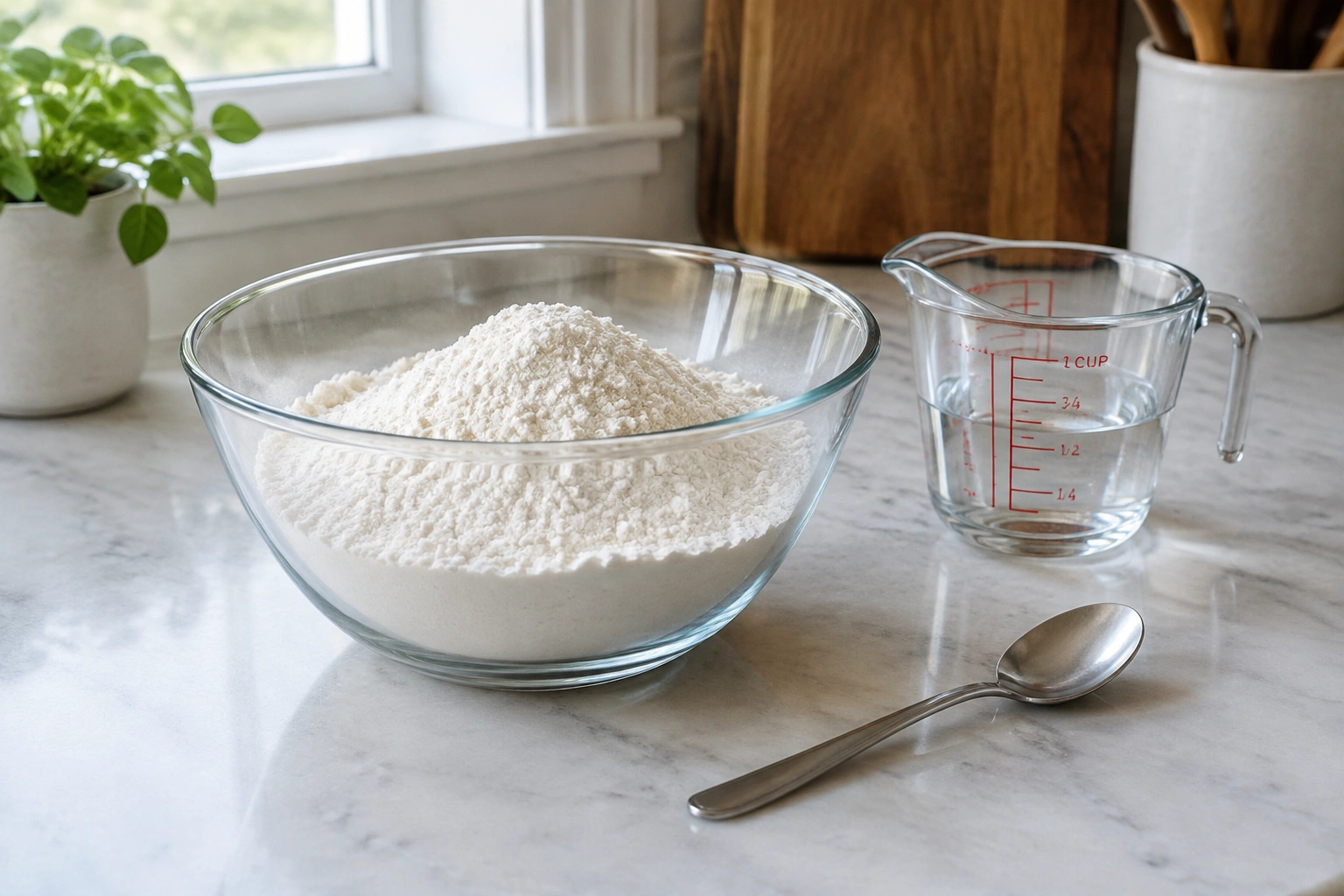
How to tell if your dough has too much flour before baking
The best time to catch a flour problem is before the cookies go into the oven. Once baked, it becomes harder to tell whether the issue came from measuring or from overbaking.
Look for these signs:
- the dough is crumbly and does not come together easily
- it feels stiff rather than soft and scoopable
- the dough cracks when you try to portion it
- it looks dry even after mixing
- it resists spreading when shaped into balls
A good cookie dough usually holds together without feeling dusty or brittle. If you pinch a small piece and it falls apart immediately, that is a clue that the flour-to-moisture balance may be off.
Keep in mind that some cookie doughs are naturally firmer than others. Chilled dough, for example, can feel stiff but still bake well. The difference is that chilled dough usually becomes workable as it warms slightly, while over-floured dough stays dry and crumbly.
How to measure flour correctly for cookies
For many home bakers, the problem starts with the measuring cup rather than the recipe itself. Flour is easy to overpack without realizing it.
The spoon-and-level method
If your recipe uses cups, the most reliable approach is the spoon-and-level method:
- Fluff the flour in the container if it has settled.
- Spoon flour lightly into the measuring cup.
- Level off the top with a straight edge.
This method helps avoid packing extra flour into the cup.
Why scooping directly from the bag can cause dryness
When you dip the measuring cup into the flour bag, the cup often compacts the flour. That can add more flour than the recipe intended, even if the cup looks full in the same way every time. Over several batches, that small difference can be enough to change your cookies from tender to dry.
Why leveling matters
A heaping cup is not the same as a level cup. Even a modest mound on top can add enough extra dry ingredient to affect spread and texture. If a recipe is written in cups, consistent leveling becomes part of the technique.
If you want a simple rule: use the same measuring method every time. Inconsistent measuring is one of the easiest ways to get inconsistent cookies.
Cups vs. grams: which measurement is more reliable?
If you bake cookies often, weighing flour in grams is usually the more consistent choice. Cups are convenient, but they leave more room for variation.
Cups
Pros:
– familiar for many home bakers
– no special equipment required
Trade-off:
– flour can be packed differently from batch to batch
– results may vary depending on how you scoop
Grams
Pros:
– more repeatable
– less affected by how flour settles in the container
– easier to match a recipe exactly
Trade-off:
– requires a kitchen scale
If your cookies keep turning out dry and you are using cups, switching to grams can make a noticeable difference in consistency. It does not guarantee perfect cookies every time, but it removes one of the biggest sources of error.
For bakers who want the same soft or chewy result from batch to batch, grams are usually the more dependable choice.
How flour balance works with butter, sugar, and eggs
Cookie texture is built on balance. Flour is only one part of the equation.
Butter and other fats
Fat helps create tenderness by coating flour and limiting how much structure develops. If flour is too high relative to butter, the dough can feel dry and the baked cookie can taste less rich.
Sugar
Sugar does more than sweeten. It also helps cookies retain moisture and affects spread. A dough with too much flour and not enough sugar can bake up especially dry and firm.
Eggs
Eggs add liquid and structure. If the flour amount is too high, the eggs may not be enough to hydrate the dough properly. The result can be a dough that looks mixed but still feels rough or dry.
This is why “just add more flour until it feels right” is risky. Cookie dough should not be judged only by how easy it is to handle. A dough that is easy to roll but too dry will usually bake into a worse cookie than one that feels slightly soft and cohesive.
How to fix cookie dough that feels too dry
If the dough is clearly too dry before baking, small adjustments can help. The key is to make them gradually.
If the problem is minor
If the dough is only slightly dry or just a little too crumbly, add a small amount of moisture or fat already in the recipe base. Start with one teaspoon at a time of:
- milk or cream
- softened butter
- a little extra beaten egg, if the recipe already uses egg and the dough seems under-hydrated
Mix gently after each addition, then test the dough again. You want it to hold together when pressed without turning sticky or loose.
If the problem is obvious
If the dough is very crumbly, dusty, or refuses to hold together after a small adjustment, the batch is probably too far off to rescue cleanly. That is especially true if the flour was heavily packed or you know the cup measurement was oversized. In that case, remaking the batch is usually the better option.
A practical test
Press a small handful of dough together in your palm:
- If it clumps and holds shape, it may only need a small adjustment.
- If it falls apart like damp sand, the flour balance is likely too far off.
Resist the urge to keep adding flour to “fix” a sticky-looking dough. Sticky and dry are not the same problem, and adding more flour to the wrong dough can make the texture worse.
Can dry baked cookies be improved after baking?
Only a little. If cookies are already baked and dry, you usually cannot fully reverse the texture. You can, however, make them more pleasant to eat.
A few practical options:
- Store them with a slice of bread in an airtight container for a short time to help them soften slightly.
- Serve them warm so the texture feels less dry.
- Use them in another dessert, such as cookie crumbs for a crust or topping.
If the cookies are badly overbaked or very dry, these fixes will only help at the edges. They can improve the experience, but they will not restore the original soft texture.
How to tell whether dry cookies came from flour or overbaking
Dry cookies are not always caused by too much flour. Sometimes the dough was fine, but the cookies stayed in the oven too long.
Here is a useful comparison:
| Problem | Dough clue before baking | Cookie clue after baking | Likely fix |
|---|---|---|---|
| Too much flour | crumbly, stiff, dusty, hard to bind | thick, dense, dry, sometimes sandy; edges may look pale and the crumb can be tight or chalky | measure more accurately next time |
| Overbaking | dough seemed normal | edges or whole cookie feel dry and hard; browning is often deeper, and the crumb can seem dry rather than sandy | shorten bake time slightly |
| Too little flour | very soft, loose, overly spreadable | thin, fragile, may spread too much | recipe may need more structure |
A flour problem usually shows up early, in the dough itself. An overbaking problem usually shows up in the final texture even if the dough looked normal.
If your cookies were dry but the dough seemed smooth and balanced, the oven time is worth checking. If the dough was already crumbly, flour is the more likely culprit.
How much flour is too much in a cookie recipe?
There is no single universal cutoff, because cookie styles vary. A crisp butter cookie, for example, will behave differently from a soft chocolate chip cookie. But there are useful decision rules.
Minor imbalance
If the dough is only slightly stiff and still holds together, a small adjustment may be enough. That is often the case when the flour was only a little overmeasured.
Large imbalance
If the dough is dry, crumbly, and hard to shape, the issue is usually big enough that small corrections will not fully restore the intended texture. In that case, restarting the dough is often the cleaner choice.
Recipe style matters
A chewy cookie usually needs a careful balance of flour, fat, and sugar. A crisp cookie can tolerate a drier dough more easily. That does not mean extra flour is harmless; it just means the texture goal changes how noticeable the mistake will be.
As a rough rule of thumb, even a small overfill in a measuring cup can matter in cookies, because flour is dense enough that a slightly heaped cup can shift the dough noticeably. If you are unsure, compare the dough to the recipe’s intended texture. A dough for soft cookies should not feel like pie crust.
How to prevent dry cookies in future batches
The simplest prevention habits are also the most effective.
- Weigh flour when possible. This is the most repeatable method.
- Use spoon-and-level if you measure in cups. Do not scoop directly from the bag.
- Check the dough, not just the recipe. If it seems dry before baking, pause and assess.
- Avoid adding flour just to make dough easier to handle. Chilling often helps without changing the formula.
- Keep notes on your method. If one batch works and the next does not, compare how you measured the flour.
If you want more control over texture, it can also help to learn how sugar affects chewiness. For a related look at texture, see our guide on why brown sugar makes cookies chewy.
For bakers who like to plan ahead, chilling or storing dough properly can also affect handling and texture. Our guide on how to make cookie dough ahead of time explains how to keep dough workable without losing quality.
Common flour-related cookie mistakes
These are the mistakes I see most often when cookies turn out dry:
Scooping straight from the bag
This is one of the fastest ways to overmeasure flour. It is convenient, but it is not very precise.
Packing the cup
Pressing flour into the measuring cup gives you more flour than you may realize. The cup looks full, but the measurement is heavier than intended.
Adding flour to fix sticky dough too quickly
Warm dough can feel sticky without actually needing more flour. If you add flour too soon, you may solve a handling issue and create a texture problem.
Ignoring the dough’s appearance
A dough that looks dusty, cracked, or rough before baking is already giving you a warning.
Assuming dryness always means overbaking
Sometimes the oven is the issue, but not always. Checking the dough first helps you avoid fixing the wrong problem.
When to consult a pastry chef
If you bake the same recipe several times and keep getting dry cookies even after measuring carefully, the recipe itself may need adjustment. In that case, an experienced baking instructor or pastry chef can be helpful for a second opinion on the flour balance, fat level, sugar ratio, and mixing method.
That is especially useful if you are developing a recipe for a specific texture, such as very soft, very chewy, or crisp-edged cookies. Small formula changes can make a big difference, and it helps to make them deliberately rather than by guesswork.
Final takeaway
Too much flour makes cookies dry because it shifts the dough out of balance. The dough loses moisture, spreads less, and bakes into a thicker, denser cookie with a drier crumb. The best fix is usually not more flour, but better measurement.
If you want more consistent cookies, weigh flour when you can, use the spoon-and-level method when you cannot, and pay attention to the dough before it goes into the oven. That simple habit will solve a surprising number of dry-cookie problems.

