
Wooden Spoons vs Silicone Spoons: Which One Fits Your Kitchen Best?

If you cook most nights, prep lunches on weekends, or try to keep kitchen spending under control, the choice between wooden spoons and silicone spoons matters more than it first appears. The better utensil depends on how hot you cook, what pans you use, and how much cleanup you want to do after dinner.
Here’s the short version: wooden spoons tend to feel sturdier and more traditional for stirring and mixing, while silicone spoons are usually easier to clean and more convenient around nonstick cookware and hot, sticky foods. If you want one utensil that can handle a lot of everyday tasks with less fuss, silicone often has the edge. If you prefer a firm, comfortable tool with a classic feel, wood still earns its place.
A practical kitchen usually benefits from knowing when each material shines instead of forcing one spoon to do everything.
Wooden Spoons vs Silicone Spoons at a Glance
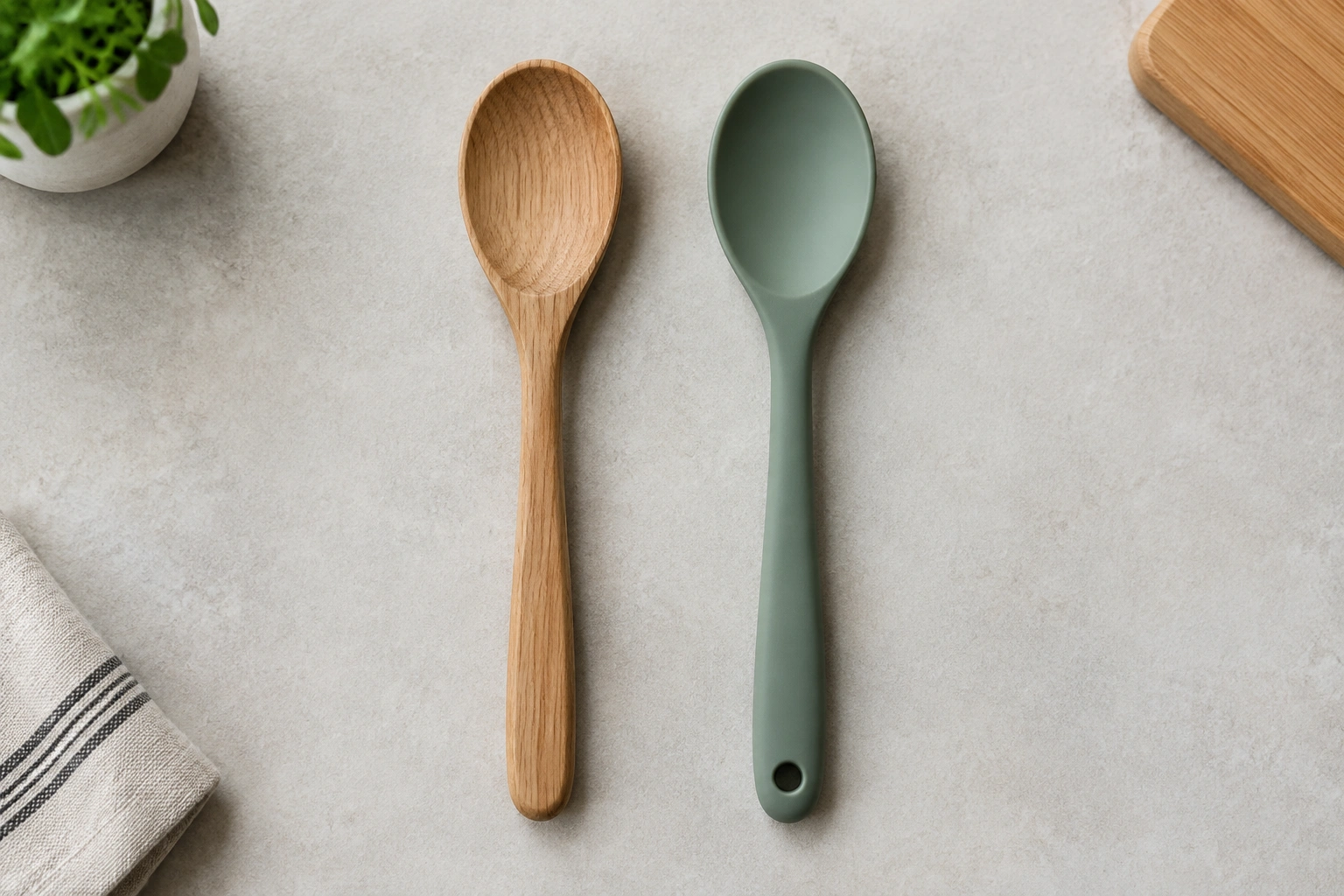
| Decision factor | Wooden spoons | Silicone spoons |
|---|---|---|
| Heat handling | Good for everyday stovetop use, but can scorch or crack if abused | Usually better for hot pans and high-heat stirring if the spoon is truly food-safe and heat-rated |
| Durability | Can last a long time with proper care, but may split or warp | Often resists moisture and cracking well, but lower-quality versions can tear or soften |
| Cleaning | Usually hand-washed; needs thorough drying | Often easier to clean and many are dishwasher-safe |
| Nonstick cookware | Generally safe if smooth and well maintained | Also safe for nonstick and often gentler at scraping |
| Comfort | Firm, familiar, comfortable in the hand | Can be softer, more flexible, and easier to scrape with |
| Odor and stain resistance | More likely to retain smells or stains over time | Usually less prone to absorbing odors and colors |
| Budget | Often inexpensive upfront | Can cost a little more upfront, depending on quality |
| Best for | Stirring, thicker mixtures, classic everyday cooking | Scraping bowls, sauces, hot foods, and low-fuss cleanup |
Heat Resistance: Which Spoon Handles Hot Pans and Sauces Better?
Heat is where the biggest real-world difference shows up.
Wood does not melt, which is one reason many home cooks trust it for stirring soups, sauces, and simmering pots. That said, wood can still darken, dry out, crack, or scorch if it sits against a hot pan for too long or gets left on the edge of a burner. A wooden spoon is fine for normal stovetop cooking, but it is not a “set it and forget it” tool near direct flame or a scorching-hot surface.
Silicone is often the more heat-tolerant choice for everyday cooking, especially if you stir sauces, caramel, or thick mixtures that spend time in a hot pan. Still, not every silicone utensil is the same. Use food-safe silicone made for kitchen use, and follow the manufacturer’s heat guidance rather than assuming all silicone performs identically. Some products are better suited to brief contact with heat than prolonged contact in very hot cookware, and lower-quality utensils can soften, discolor, or degrade sooner than expected.
A useful rule:
– Choose wood if you want a sturdy stirring spoon for moderate stovetop use and you keep an eye on the pan.
– Choose silicone if you regularly cook at higher heat or tend to leave utensils resting in the pot while you multitask.
For a busy household, that difference matters.
Durability and Lifespan: Which Lasts Longer With Daily Use?
Durability is less about the material alone and more about how you use and care for it.
A well-made wooden spoon can last for years. Hardwood is generally stronger and less porous than softer woods, which is why it tends to hold up better in a working kitchen. But wood has weak points: repeated soaking, rough scrubbing, and leaving it wet in a sink can shorten its life fast. Cracks and splintering are your cue to replace it.
Silicone usually handles moisture better and does not split the way wood can. That makes it attractive for daily meal prep, especially in homes where utensils get washed often and used quickly. But silicone spoons can still wear out. The head may tear, the handle may loosen, or the utensil may feel flimsy if the construction is poor.
If you want the longest practical lifespan, the better choice is not just “wood” or “silicone” but a well-made version of either material used correctly. In budget terms, a cheap spoon that needs replacing every few months is more expensive than a better one that lasts through regular cooking.
Cleaning and Maintenance: Which Spoon Is Easier to Keep Hygienic?
If cleanup is the part you dread, silicone is usually the easier material to live with.
Many silicone spoons are dishwasher-safe, which is a major advantage for busy households. They also dry quickly and generally do not need special care after every use. That convenience adds up when you are packing lunches, batch-cooking grains, or making sauces several nights a week.
Wood asks more of you. It should usually be washed by hand, dried promptly, and stored only when fully dry. Letting a wooden spoon sit in water is one of the fastest ways to shorten its life. If you want a deeper care guide, this article on how to clean wooden cooking utensils without damaging the wood covers the basics of washing, drying, and oiling.
A practical maintenance test is simple:
– If you want a utensil you can toss in the dishwasher after dinner, silicone is the easier fit.
– If you don’t mind hand-washing and want a tool with a traditional feel, wood is still workable.
Food Safety, Odors, and Stains: What Busy Cooks Need to Know
This is where habits matter more than kitchen myths.
Wood can absorb moisture, odors, and color from strongly seasoned foods over time. Garlic, tomato sauce, turmeric, and curry are common culprits. That does not mean a wooden spoon is unsafe by default; it means you need to keep it clean, dry, and in good condition. A cracked or heavily worn spoon is not worth keeping around.
Silicone is usually less likely to hold onto flavors or stains, which is one reason many meal preppers like it for repetitive cooking. If you make chili one night and oatmeal the next, a silicone spoon often feels easier to bring back to neutral.
I would avoid two common mistakes:
1. Using a spoon that is already damaged. Cracks, deep grooves, or splintering create hard-to-clean surfaces.
2. Assuming “natural” means maintenance-free. Wood still needs routine care.
If a spoon smells sour after washing or keeps holding onto stains no matter how you clean it, that is a maintenance red flag. Replace damaged, cracked, or hard-to-clean utensils rather than pushing them past their useful life.
Nonstick Cookware and Surface Protection: Which Spoon Is Safer for Your Pans?
For nonstick cookware, both materials are generally safer than hard metal utensils.
Wood is gentle and firm, which makes it a solid choice for stirring eggs, sauces, and sautéed vegetables in nonstick pans. It gives you control without scraping aggressively.
Silicone is also a good match for nonstick cookware, and it often has one advantage: the softer edge can help you scrape more cleanly without feeling harsh on the pan surface. That is especially useful when you want to get every bit of sauce from the bottom of a skillet or scrape batter from a mixing bowl.
If your kitchen leans heavily on nonstick pans, silicone usually wins on convenience. If you prefer a firmer feel and mostly stir rather than scrape, wood still works well.
The key is not to drag either utensil across damaged nonstick surfaces. Once a pan coating is worn, even a gentle spoon cannot fix that.
Comfort, Grip, and Everyday Handling
This is the part many comparison charts skip, but it affects whether you actually enjoy using the spoon.
Wooden spoons tend to feel balanced and solid. That firmness helps when you are stirring thick oatmeal, mashed vegetables, or a heavy sauce that resists movement. Many cooks like the natural grip and the way wood feels warm in the hand rather than slick.
Silicone spoons are often more flexible. That flexibility helps when you want to scrape the sides of a bowl or fold ingredients together. It can also make the utensil feel softer in use, which some people prefer for long stirring sessions.
Think of it this way:
– Wood is better when you want authority and control.
– Silicone is better when you want flexibility and scraping power.
For meal prep, that difference shows up constantly. A spoon that feels comfortable for ten minutes of stirring is more likely to become the one you reach for every day.
Best Use Cases: When Wooden Spoons Win and When Silicone Spoons Win
Best jobs for wooden spoons
Wood is a strong choice for:
– Stirring soups and sauces on the stovetop
– Mixing thick batters or dense mixtures
– Cooking in a pot when you want a firm, stable tool
– Everyday use when you like a classic, sturdy feel
Wood is especially useful when the mixture has enough body that you need leverage, not flexibility.
Best jobs for silicone spoons
Silicone is often better for:
– Scraping bowls clean during meal prep
– Stirring sticky sauces or thick mixtures
– Using with nonstick cookware
– Dishwasher cleanup and low-maintenance kitchens
– Cooking tasks where flexibility helps you reach corners and edges
If you bake as well as cook, silicone can be especially handy for batter, frosting, and scraping every bit from the bowl. Wood is still useful, but silicone tends to handle the “get it all out” jobs better.
A simple kitchen strategy is to assign jobs:
– Wood for stirring
– Silicone for scraping
That division keeps both tools useful instead of making one do the work of two.
Cost and Long-Term Value: Which Is More Budget-Friendly Over Time?
Upfront price is only part of the story.
Wooden spoons are often inexpensive to buy, especially in basic sets. That makes them appealing for families building a kitchen on a tight budget. But if they dry out, crack, or warp because they are poorly cared for, replacement costs creep in.
Silicone spoons may cost more at purchase, especially if you choose a sturdier, food-safe version from a reputable brand. In return, they often reduce hassle: less hand-washing, less worry about moisture damage, and better performance with nonstick pans.
For budget-conscious households, the best value usually comes from this question: Which spoon will you actually keep using without frustration? If hand-washing wood feels unrealistic in your routine, a slightly pricier silicone spoon may be the cheaper choice over time because it lasts longer in real life.
Which Spoon Should You Buy? A Simple Decision Guide
Use this quick filter:
Choose wooden spoons if:
– You prefer a firm, traditional cooking tool
– You stir a lot and scrape less
– You do not mind hand-washing
– You want a simple, inexpensive utensil for everyday stovetop use
Choose silicone spoons if:
– You cook with nonstick pans often
– You want dishwasher convenience
– You scrape bowls, sauces, and sticky mixtures frequently
– You want a spoon that handles cleanup with less effort
If you cook a few times a week and want one reliable spoon, silicone is usually the more forgiving choice. If you enjoy the feel of a solid wooden utensil and are willing to care for it properly, wood still makes sense.
Best Choice for Most Kitchens: Should You Keep Both?
For most home kitchens, the smartest answer is yes, keep both.
That is not about collecting utensils. It is about matching the tool to the task:
– Use wooden spoons for sturdy stirring and thick mixtures.
– Use silicone spoons for scraping, nonstick cookware, and easier cleanup.
This two-spoon approach is practical for meal prep, weeknight cooking, and budget management. You do not need a drawer full of duplicates. One good wooden spoon and one good silicone spoon can cover most of what a busy kitchen needs.
If you want to spend carefully, buy fewer utensils but choose them based on how you actually cook. That is the easiest way to avoid waste and keep dinner cleanup from becoming a chore.
FAQ
Are silicone spoons safe for hot cooking?
Yes, if they are made from food-safe silicone and rated by the manufacturer for kitchen heat use. Do not assume every silicone utensil performs the same.
Do wooden spoons harbor bacteria?
A clean, dry wooden spoon used in normal home cooking is not automatically unsafe. The bigger risk is damage from soaking, rough cleaning, or storing it while still damp.
Which is better for nonstick pans?
Both are generally safer than metal. Silicone usually has the edge for scraping and gentle contact, while wood is also a solid nonstick-friendly option.
Which lasts longer?
Either can last a long time if well made and properly maintained. Wood is more vulnerable to cracking and warping; silicone is more vulnerable to poor construction and wear at the edges or joints.
Which is easier to clean?
Silicone is usually easier because many versions are dishwasher-safe. Wood usually needs hand-washing and careful drying.
Which is better for meal prep?
Silicone often wins for meal prep because it scrapes bowls well and is easier to clean between tasks. Wood is still useful for stirring and mixing thicker foods.
For readers who want to pair utensil choice with better kitchen habits, the same practical mindset that helps with measuring spoons used correctly also helps here.