
00 Flour Explained: How to Choose It, Use It, and Bake Better Dough

If you’ve ever stood in front of a bag labeled 00 flour and wondered whether it’s a magic ingredient or just a fancy name, you’re not alone. In artisan baking, this flour gets a lot of attention—and for good reason. It can produce beautifully smooth dough, especially for pizza and fresh pasta. But the label also causes confusion, because 00 does not automatically mean high protein or “best for everything.”
As a baker, I like to think of 00 flour as a tool with a very specific feel. It’s finely milled, often soft in the hand, and capable of making dough that stretches with less resistance. That can be a huge advantage when you want a supple pizza skin or silky pasta sheets. It can also be the wrong choice if your goal is a sturdy, lofty loaf with strong chew.
Here’s how to read the label, understand the trade-offs, and decide when 00 flour deserves a place in your kitchen.
What 00 Flour Means on the Label
The “00” in Italian flour classification refers to how finely the flour has been milled, not to protein content or flavor. In Italy, flour grades are commonly grouped by refinement, with 00 being the most finely ground and 2 being the coarsest. That means a 00 flour can feel almost powdery compared with many American flours.
This is the first misconception to clear up: 00 is a milling grade, not a baking performance score. A 00 flour may be low in protein, moderate in protein, or relatively strong depending on the brand and intended use. Two bags can both say 00 and behave very differently in dough.
That’s why the package matters. If the flour is meant for pizza, pasta, or bread, the manufacturer will usually say so somewhere on the label or technical sheet. The number alone does not tell you enough.
How 00 Flour Differs from All-Purpose, Bread, Semolina, and Whole Wheat Flour
Once you understand that 00 refers to fineness, the next step is comparing it with the flours most home bakers already know.
| Flour type | Milling / texture | Protein range or strength | Dough behavior | Best use |
|---|---|---|---|---|
| 00 flour | Very finely milled | Varies by brand | Smooth, extensible, often soft-feeling | Pizza, fresh pasta, tender bread styles |
| All-purpose flour | Medium refinement | Moderate | Balanced, versatile, less specialized | Everyday baking, simple bread, general use |
| Bread flour | Usually less refined than 00, depending on brand | Higher strength | Stronger gluten, more chew, more structure | Yeasted breads, sandwich loaves, bagels |
| Semolina flour | Coarse, granular from durum wheat | Strong but different from soft-wheat flour | Adds bite and a sandy texture if used alone | Pasta, some breads, dusting, specialty doughs |
| Whole wheat flour | Contains bran and germ | Can vary, but behaves differently because of bran | Heavier, thirstier, less extensible | Rustic breads, whole-grain baking |
The biggest practical difference is not just protein. It’s how the flour behaves in dough. Fine milling can make a dough feel smoother and more extensible, while bran in whole wheat can make dough feel rougher and reduce stretch. Bread flour, meanwhile, is usually chosen when you want stronger gluten and more structure.
If you want a deeper comparison between bread flour and all-purpose flour, this guide on choosing between bread flour and all-purpose flour is a useful companion read.
When to Use 00 Flour for Bread, Pizza, and Pasta
This is where the decision becomes practical.
Use 00 flour when you want extensibility
Choose 00 flour if your dough needs to stretch easily without snapping back too much. That makes it especially appealing for:
- thin pizza bases
- fresh pasta sheets
- soft, tender bread styles
- calzones and similar filled doughs
A pizza dough made with 00 flour often feels silkier during shaping. That doesn’t mean it will always be easier to work with, but it often gives you a more relaxed, extensible dough.
For example, if you’re making a Neapolitan-style pizza and want a dough that opens out with less resistance, a pizza-focused 00 flour is a smart choice. If you’re making a sandwich loaf and want height and chew, bread flour is usually the better starting point.
Use bread flour when structure matters most
If your bread needs a strong rise, a chewy crumb, or a lot of oven spring, bread flour is usually the safer bet. A rustic sandwich loaf, hearth loaf, or high-hydration sourdough often benefits from stronger gluten.
00 flour can still work for bread, but it’s not automatically the best choice. If the flour is on the weaker side, the loaf may spread more and rise less aggressively.
Use semolina for bite, not as a direct swap
Semolina is excellent when you want a firmer bite or a more granular texture, especially in pasta. It is not a direct replacement for 00 flour in most bread or pizza formulas. If you swap it in without adjusting the recipe, expect a very different dough.
Use whole wheat when flavor and nutrition are the goal
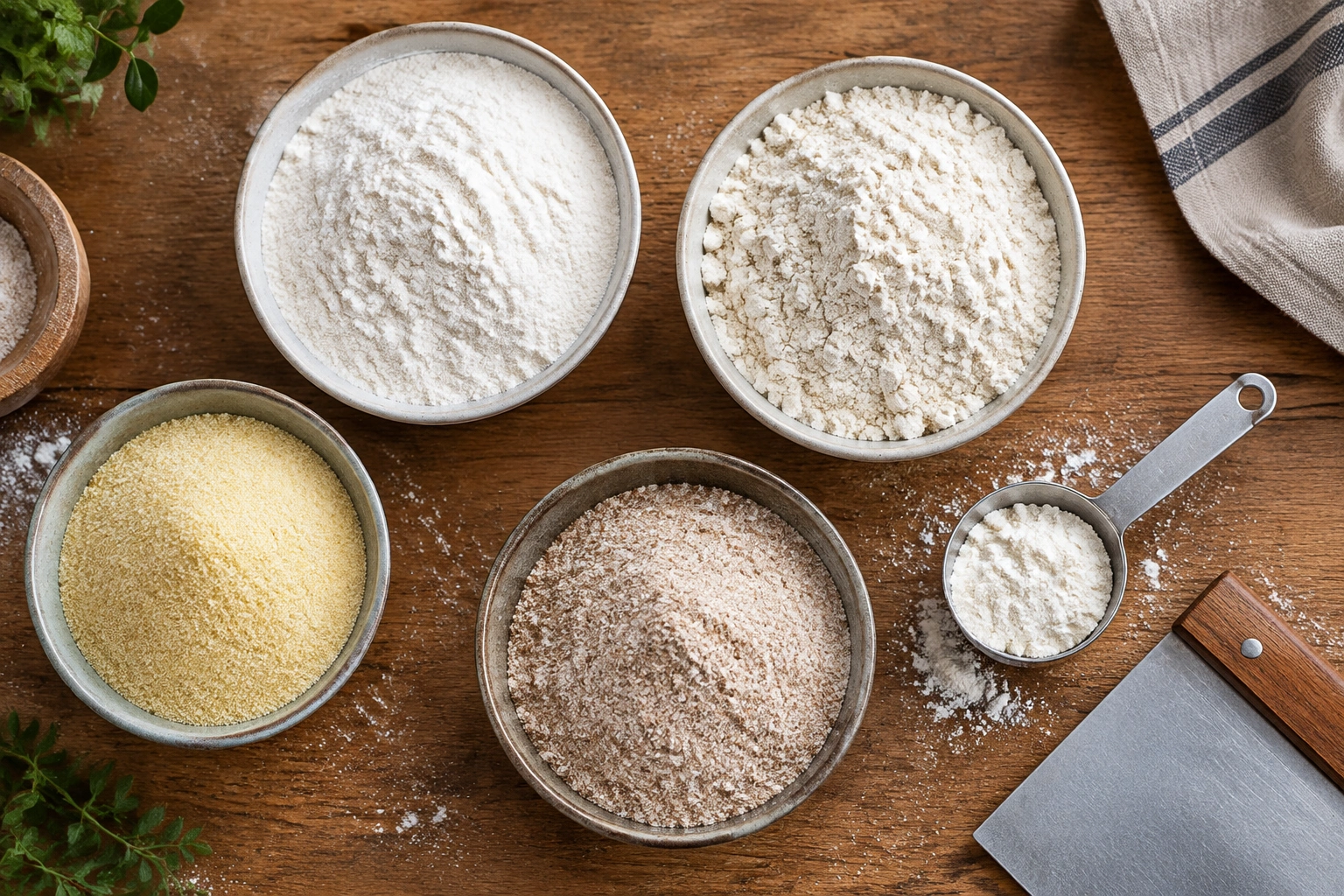
Whole wheat brings flavor, color, and character. It also changes dough handling because the bran absorbs water and can interfere with gluten development. If you want a whole-grain loaf, 00 flour is not the natural substitute. For a practical whole wheat baking approach, see this guide to baking with whole wheat flour.
What You Need Before You Start
Before you bake with 00 flour, check three things:
-
Protein percentage on the package
This matters more than the 00 label alone. For U.S. buyers, a pizza-style 00 flour is often worth considering if it lists roughly a moderate protein range and is marketed for pizza or pasta. If you want more structure for bread, look for a stronger 00 flour or one that is explicitly labeled for bread. -
Intended use
Look for words like pizza, pasta, bread, or baking. Those clues tell you how the mill expects the flour to perform. If you see wording such as “pizza flour,” “pasta flour,” or “strong flour,” that is usually more useful than the grade alone. -
Your recipe goal
Ask yourself whether you want stretch, structure, tenderness, or chew. That answer should guide the flour choice.
You’ll also want the basics on hand: a scale, mixing bowl, dough scraper, and a way to rest the dough properly. With 00 flour, rest periods matter because they give the flour time to hydrate and the gluten time to relax.
How to Use 00 Flour in Dough: Step by Step
1. Measure by weight
Use grams, not cups, if you can. Fine flour packs differently than coarser flour, so volume measurements can be inconsistent.
2. Mix until the dough just comes together
Because 00 flour is so fine, the dough can feel smooth early. Don’t confuse “smooth” with “finished.” The dough still needs enough development to hold gas and shape well.
3. Add water gradually if needed
If your dough feels dry or stiff, add water a little at a time instead of dumping in more. Fine-milled flour can behave differently from brand to brand, and a small change can make a big difference.
4. Knead to the texture you want
For pizza and pasta doughs, you often want a dough that is elastic but not tough. Overkneading can make it harder to stretch later. Underkneading can leave it weak and prone to tearing.
A simple example: for pizza dough, you may want a smooth, slightly tacky dough that can be rounded into a ball and left to relax. For fresh pasta, you usually want a firmer, smoother dough that can be rolled thin without cracking.
5. Rest the dough
Resting helps the gluten relax and the flour fully absorb moisture. This is especially useful with 00 flour because the dough may feel soft before it is fully developed.
6. Shape gently
When shaping pizza or pasta, use calm, even pressure. If the dough keeps shrinking back, let it rest longer rather than forcing it. That shrinkage is usually a sign that the gluten needs time to relax.
How to Adjust Hydration, Kneading, and Fermentation
This is where 00 flour rewards careful bakers.
Hydration: adjust in small steps
Because 00 flour is finely milled, dough often feels softer and more extensible than the same formula made with a coarser flour. That doesn’t mean it always needs less water. It means the dough can feel different at the same hydration.
For pizza dough, many bakers work in a moderate hydration range and then adjust by feel and by the flour’s protein level. A softer dough can be excellent for stretch, but if it becomes too slack, shaping gets frustrating. As a practical rule, if the dough is spreading quickly and won’t hold a ball shape after mixing, reduce hydration a little next time. If it feels tight and resists opening, increase hydration slightly or give it more rest.
Kneading: aim for strength, not toughness
A 00 flour dough should usually become smooth and elastic, but not rubbery. If you keep kneading simply because the dough feels soft, you may end up with a dough that fights you during shaping.
For bread, especially lean loaves, you may need more development than you would for a pizza dough. For pasta, the goal is usually a smooth, cohesive dough that can rest and roll thinly.
Fermentation: give the dough time
Longer fermentation can improve flavor and handling, but it also tests the flour’s strength. A weaker 00 flour may soften too much during a long proof, while a stronger 00 flour can handle extended fermentation better.
That’s why two 00 flours are not interchangeable just because they share the same grade. Protein level and dough strength still matter.
As a general guide, if your dough is meant for a same-day pizza, a moderate-strength 00 flour may be plenty. If you’re planning an overnight or longer fermentation, choose a flour with enough strength to hold up without becoming slack.
How to Substitute 00 Flour When You Don’t Have It
If you can’t find 00 flour, don’t panic. The best substitute depends on the recipe.
Best substitute for pizza
All-purpose flour is often the most practical substitute for home pizza. Bread flour is another option if you want a stronger, chewier crust. If you use bread flour, expect more resistance when stretching and a firmer bite after baking.
Best substitute for fresh pasta
All-purpose flour can work for fresh pasta, especially in a home kitchen. Bread flour may make the dough tougher than you want. If your recipe calls for a very silky dough, all-purpose is usually the more forgiving substitute.
Best substitute for bread
If the recipe depends on strong structure, bread flour is usually the closest stand-in. All-purpose can work in many bread recipes, but the loaf may be less lofty or chewy.
A practical substitution rule
If the original recipe uses 00 flour for tenderness and stretch, try all-purpose first. If it uses 00 flour for structure and strength, try bread flour.
That simple rule will save you from a lot of guesswork.
Common Mistakes When Using 00 Flour
Assuming all 00 flour is high protein
This is the most common error. The grade tells you about milling fineness, not gluten strength.
Using it blindly in rustic bread
A dough that needs major structure may not benefit from a soft, extensible flour. You may get a flatter loaf or a weaker crumb than expected.
Changing hydration too aggressively
Because 00 flour can feel different, bakers sometimes overcorrect. Make one small adjustment at a time.
Overkneading a dough meant to stay tender
If you keep developing the dough long after it has enough strength, you can lose the delicate texture that makes 00 flour appealing in the first place.
Troubleshooting Dough Problems
The dough feels weak and tears easily
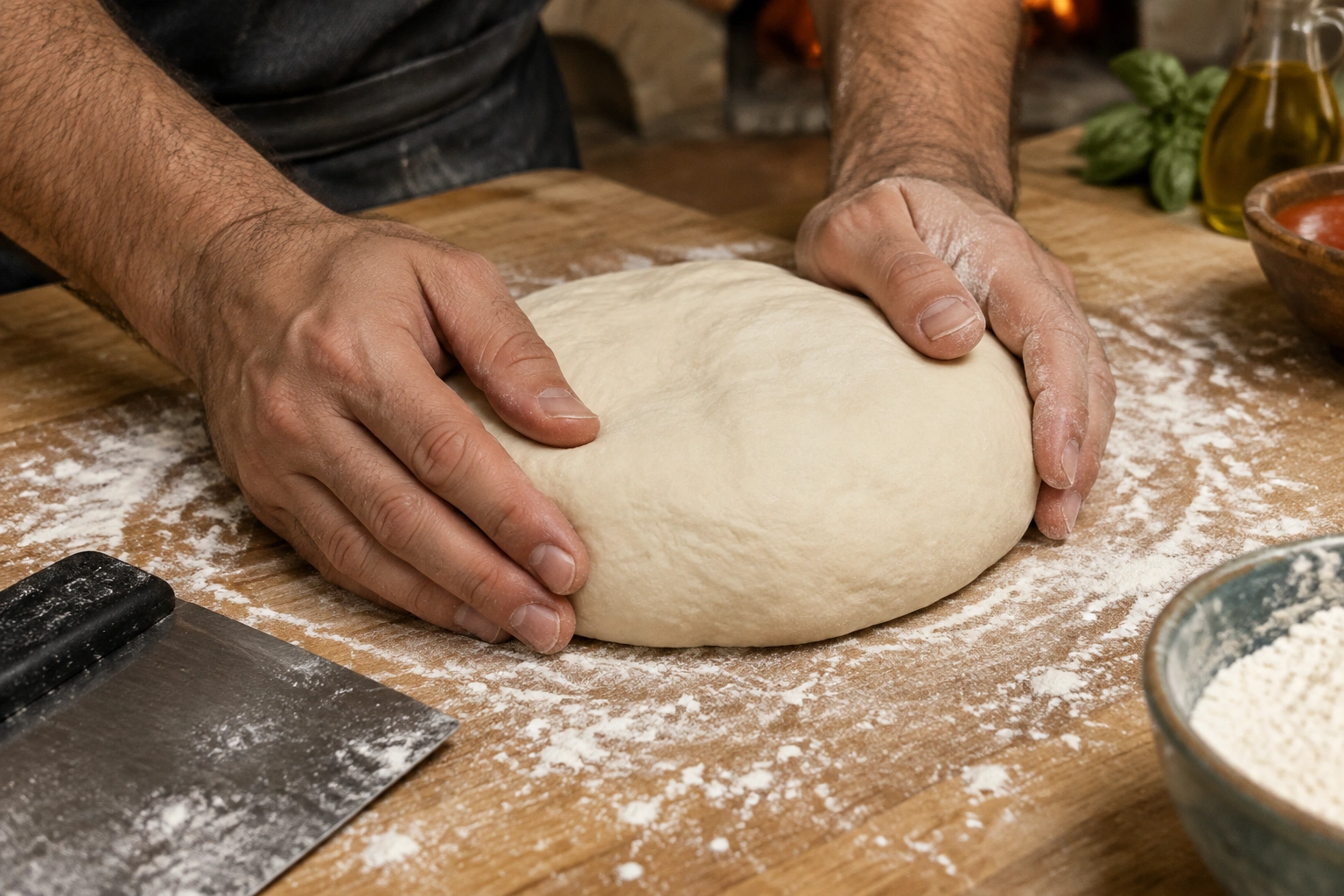
This usually means the flour is too soft for the recipe, the dough is underdeveloped, or both. Try a longer mix, a longer rest, or a stronger flour next time.
The dough is sticky and hard to manage
A sticky dough may simply need more resting time. If it still feels loose, reduce hydration slightly in the next batch rather than adding a lot of flour during shaping.
The dough won’t hold its shape
That’s often a sign that the flour doesn’t have enough strength for the formula. For bread, switch to bread flour or use a stronger 00 flour.
The final texture is too tough
You may have overmixed, overkneaded, or used a flour that was stronger than the recipe needed. For pizza or pasta, a softer 00 flour may give you a better result.
How to Read 00 Flour Labels and Choose the Right Brand
When shopping, look beyond the big “00” on the front.
Check for:
– protein percentage
– intended use
– any mention of pizza, pasta, or bread
– technical specs if available, such as strength or ash content
For U.S. buyers, the most useful label clues are usually the protein percentage and the product wording. If you’re making pizza, look for a 00 flour that is clearly labeled for pizza and falls in a moderate protein range. If you’re making bread, prioritize a stronger flour that is labeled for bread or described as strong, high-gluten, or suitable for long fermentation. If the bag only says 00 but gives no protein or use case, it is harder to judge, so check the brand’s product page before buying.
If two bags both say 00, the one with the right protein and intended use for your recipe is usually the better choice. A pizza dough flour and a pasta flour may both be finely milled, but they are not always meant to perform the same way.
If you’re comparing flours for bread, it helps to think in terms of function first and branding second. A flour that is excellent for Neapolitan-style pizza may not be the best for a tall sandwich loaf.
Practical Examples: Choosing the Right Flour for Real Recipes
Neapolitan-style pizza
If your goal is a soft, extensible dough that stretches easily, a pizza-focused 00 flour is a strong choice. If you only have bread flour, you can still make excellent pizza, but expect a more elastic dough that may need more resting.
Sandwich bread
For a classic loaf with height and structure, bread flour is usually the better starting point. A softer 00 flour may produce a more delicate loaf, which can be lovely, but it may not give you the same rise or chew.
Fresh pasta
For smooth sheets and a refined bite, 00 flour is often a natural fit. If you don’t have it, all-purpose flour can still produce good results, especially if you pay attention to resting and rolling.
When to Consult a Master Baker
If you’re working on a production formula, a long-fermented dough, or a bread that keeps failing for the same reason, it may be time to step back and evaluate the flour choice with a more experienced baker. The issue is not always technique. Sometimes the flour simply doesn’t match the dough’s needs.
A master baker can help you judge whether the problem is hydration, gluten development, fermentation, or flour strength—and that distinction matters more than chasing the next bag with a better label.
Final Thoughts
00 flour is worth understanding because it teaches a bigger lesson about baking: the label on the bag is only part of the story. The number tells you how finely the flour was milled, but the protein level and intended use tell you how the dough will actually behave.
If you choose 00 flour for the right job, it can give you a dough that feels silky, stretches well, and bakes beautifully. If you choose it for the wrong job, you may end up fighting weak structure or chasing a texture the flour was never meant to deliver. Once you learn to read the package and match the flour to the formula, the guesswork drops away—and your dough gets better.
FAQ
Is 00 flour the same as bread flour?
No. 00 refers to how finely the flour is milled, while bread flour is defined more by strength and protein level. Some 00 flours are strong enough for bread, but many are better suited to pizza or pasta.
Can I use 00 flour for pizza at home?
Yes. In fact, pizza is one of the most common uses for 00 flour. Look for a package labeled for pizza and check the protein percentage if you want a better match for your recipe.
What protein percentage should I look for in 00 flour?
There is no single perfect number, but a moderate protein range is often a good place to start for pizza and pasta, while bread formulas usually benefit from a stronger flour. The product label and intended use matter as much as the number itself.
Can I replace all-purpose flour with 00 flour?
Often, yes, but the dough may behave differently. 00 flour can feel softer and more extensible, so you may need to adjust hydration and mixing time slightly.
Why does my 00 flour dough keep shrinking back?
That usually means the gluten is tight and needs more rest. Let the dough relax before shaping again instead of forcing it.
Is 00 flour good for bread?
It can be, but only if the flour has enough strength for the recipe. For many loaves, bread flour is still the better choice.
How do I know which 00 flour brand to buy in the U.S.?
Prioritize packages that clearly say pizza, pasta, or bread, and check the protein percentage when it’s listed. If the bag includes a strength rating or ash content, that can also help you compare brands.
Why is 00 flour so finely milled?
The fine milling is part of the Italian grading system. It affects texture and dough handling, but not necessarily protein content.