
Baking with Whole Wheat Flour: A Practical Guide for Better Rise, Better Texture, and Better Flavor

Whole wheat flour can make bread, muffins, cookies, and pancakes taste deeper and more satisfying—but it also changes how dough and batter behave. If you have ever ended up with a loaf that felt heavy, a muffin that seemed dry by the next day, or a dough that looked thirsty from the moment it came together, you were not imagining things. Whole wheat flour really does ask for a different approach.
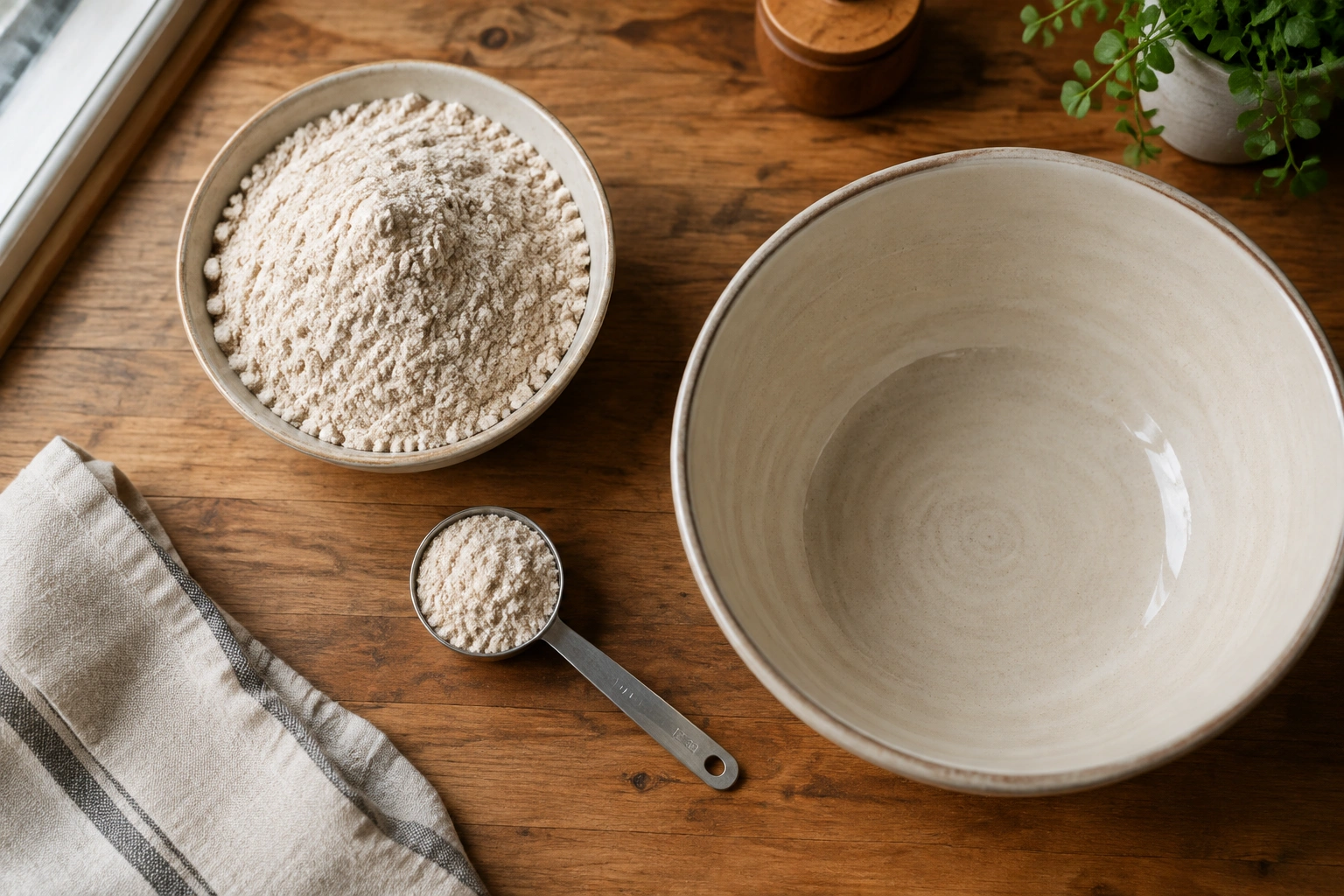
The good news: once you understand what is happening in the bowl, you can make smart adjustments instead of guessing. I’m Ethan Baker, and in this guide I’ll walk you through the practical side of baking with whole wheat flour—what changes, which flour to choose, how much to substitute, and how to keep your bakes soft, structured, and flavorful.
What Whole Wheat Flour Changes in Baking
Whole wheat flour includes the bran, germ, and endosperm. That matters because bran and germ change the way dough hydrates and develops. Compared with all-purpose flour, whole wheat tends to absorb more liquid, and the bran can interfere with gluten formation. In plain terms, that means the dough may feel tighter, the crumb may bake up denser, and the finished loaf may seem less airy if you use the same formula you would use for white flour.
That does not mean whole wheat is “bad” for baking. It means the flour is more demanding. The bran particles cut into the gluten network, which can reduce gas retention and make a dough feel less extensible. At the same time, the flour’s thirst means it often needs more hydration and a little more time to fully soften.
A useful mental model is this: white flour gives you a more forgiving dough; whole wheat gives you more flavor and heartiness, but it asks for better technique.
Choose the Right Whole Wheat Flour for the Recipe
Not all whole wheat flours behave the same way.
Regular whole wheat flour
This is the standard choice for everyday bread baking. It has a stronger, more assertive flavor and a darker color. It works well in sandwich loaves, rustic boules, and hearty muffins.
White whole wheat flour
White whole wheat flour is still whole grain flour. It is milled from white wheat rather than red wheat, so it keeps the bran, germ, and endosperm intact while tasting milder and looking lighter. That makes it a strong choice when you want whole grain character without a very dark crumb or bitter edge. The Whole Grains Council notes that it is not bleached or refined; it is simply whole grain flour milled from white wheat, and it has a lighter color and milder flavor while still being whole grain.
Whole wheat pastry flour
This is also 100% whole wheat, but it is milled from soft wheat rather than hard wheat berries. It is better suited to cookies, pie crust, pastry, and quick breads than to yeast breads because it produces a tender, softer result rather than a chewy one. King Arthur Baking specifically recommends it for cookies, pie crust, pastry, and quick breads.
Stone-ground whole wheat flour
Stone-ground flour can bring a fuller, more rustic flavor, but it may also feel coarser. That can be lovely in a country loaf and less ideal in a delicate cake. If you are baking something that depends on a fine crumb, a more finely milled flour is usually easier to work with.
When to blend whole wheat with white flour
Blending whole wheat with white flour is often the easiest way to get better volume and a lighter texture while still adding whole grain flavor. It is also the most forgiving path for bakers who are new to whole wheat. A blend is often the right choice when you want a sandwich loaf that still slices neatly, or a cookie that stays tender rather than sandy.
Quick decision guide
- Choose 100% whole wheat when you want a hearty loaf and are willing to adjust hydration and handling.
- Choose 50/50 whole wheat and white flour when you want a balance of structure and flavor.
- Choose white whole wheat when you want a milder taste and lighter color.
- Choose whole wheat pastry flour for tender quick breads, cookies, and pastry.
- Choose bread flour plus whole wheat when you want more gluten strength in yeast doughs.
Tools, Ingredients, and What Helps Most
You do not need special equipment, but a few basics make whole wheat baking easier:
- Kitchen scale: Highly useful for consistent results, especially with whole grain flours that can vary in density.
- Large mixing bowl
- Bench scraper
- Loaf pan or baking sheet
- Thermometer for checking dough or finished bread if you like precision
- Timer
Ingredient-wise, whole wheat formulas often benefit from:
– Water or milk for hydration
– Yeast for bread
– Fat such as butter or oil for softness
– A little sweetener like honey or sugar in some breads and muffins, which can soften texture and round out flavor
– Salt for structure and taste
If you are new to whole wheat baking, the easiest starting points are:
– Sandwich bread with a partial whole wheat blend
– Muffins
– Pancakes
– Quick breads
Those recipes are more forgiving than lean artisan loaves because fat, sugar, eggs, or chemical leaveners help cushion the heavier feel of whole wheat.
How to Substitute Whole Wheat Flour for All-Purpose Flour
This is where many bakers run into trouble. A direct 1:1 swap can work sometimes, but not always.
Best starting point: partial substitution
A practical entry point is 25% whole wheat flour and 75% white flour. That is a common transition level because it changes the flavor and crumb without making the recipe feel dramatically different. As a starting guideline, some bakers and brands suggest a 25% to 50% whole-wheat blend, but that range can vary by recipe, flour brand, and the other ingredients in the formula. If you increase the whole wheat share, expect to adjust liquid and handling gradually rather than following a fixed rule.
When 1:1 can work
A full swap is more likely to succeed when:
– The recipe already has enough liquid
– The dough or batter includes fat, eggs, or sugar
– The formula is designed for whole grain flour
– You are making a rustic bread, hearty muffin, or pancake batter that can handle a denser crumb
When 1:1 needs more care
A straight replacement is more likely to disappoint in:
– Delicate cakes
– Tender sandwich breads
– Pie crusts
– Cookies where spread and tenderness matter
In those cases, a partial blend or a softer whole wheat flour is usually the better move.
A practical substitution ladder
If you want to build confidence:
1. Try 25% whole wheat in a familiar recipe.
2. If the result is pleasant, move to 50%.
3. If you want a stronger whole grain profile, increase further only after you have adjusted hydration and resting time.
That gradual approach teaches you how your flour behaves in your kitchen rather than asking you to guess all at once.
Step-by-Step: Baking with Whole Wheat Flour
1. Measure accurately
Whole wheat flour can be easy to overpack if you scoop heavily. That alone can make dough feel dry. A scale removes a lot of uncertainty. If you use cups, fluff the flour first and avoid compressing it.
2. Mix the flour with the liquid and let it rest
This is one of the simplest improvements you can make. A rest gives the bran time to hydrate, which softens the texture and reduces the dry, rough feeling that whole wheat dough can have early on. For bread dough, a short autolyse or a simple 15- to 20-minute rest can make the dough easier to handle.
3. Add the remaining ingredients
Once the flour has had a chance to hydrate, add salt, yeast, fat, and any sweetener. This sequencing helps the dough come together more smoothly.
4. Knead with the goal of development, not punishment
Whole wheat dough often needs a bit more mixing than white dough, but that does not mean endless kneading is the answer. You want enough development for structure, not so much that the dough becomes overheated or tight. If the dough feels stiff, check hydration before blaming kneading.
5. Watch the dough, not the clock
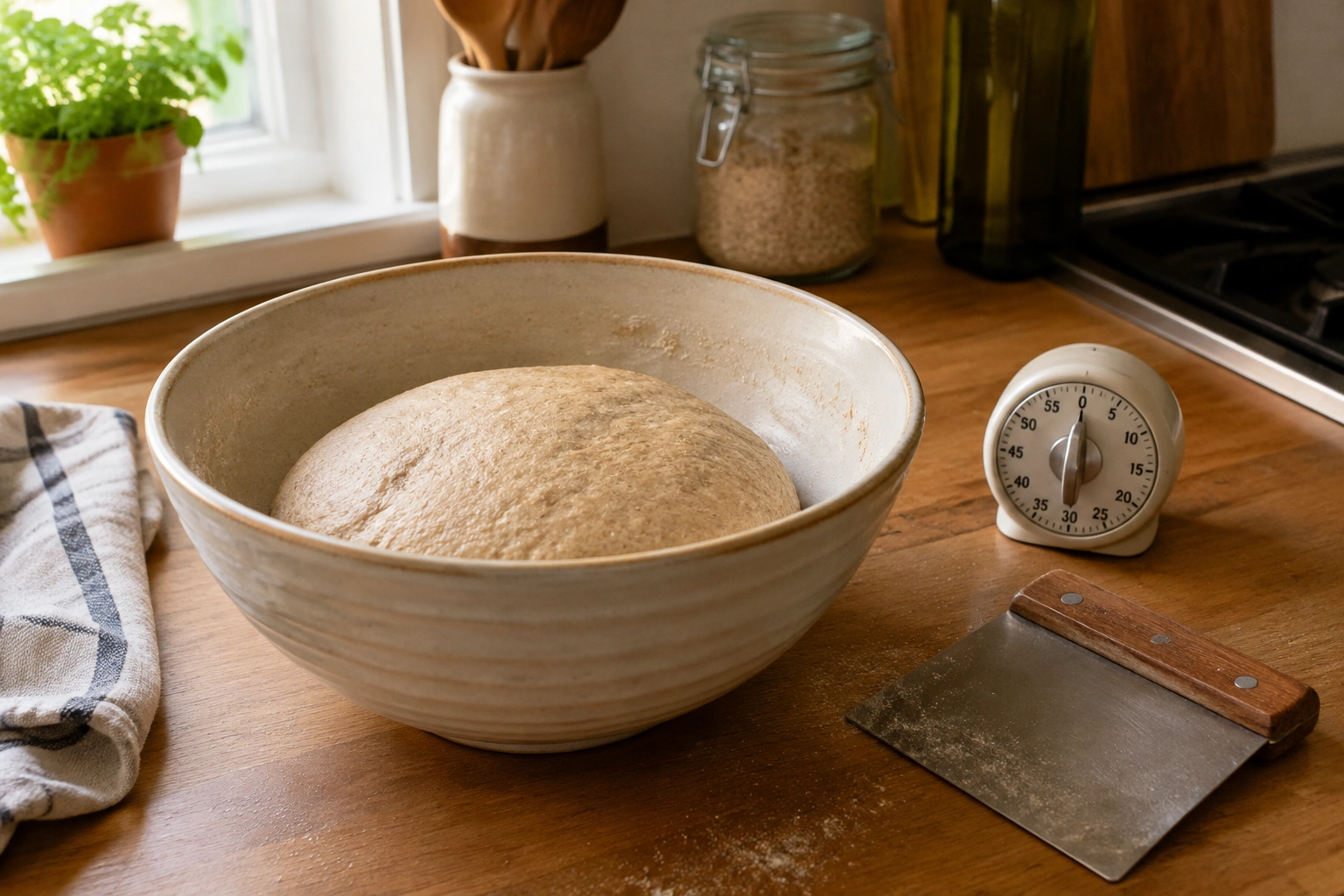
Whole wheat dough can proof a little differently from white dough, but the change is often more about dough feel than a dramatic time shift. Look for visible expansion, a smoother surface, and a dough that springs back slowly when pressed.
6. Bake to the recipe’s cue, then check doneness
Because whole wheat can brown faster, color alone is not always the best sign. A loaf may look done before the center is fully baked. Use the recipe’s target time as a guide, then confirm with the loaf’s feel, internal temperature if you use one, or a hollow-sounding bottom for bread.
How to Adjust Hydration, Mixing, and Resting
Whole wheat flour often needs more liquid than all-purpose flour because the bran and germ absorb water. The exact amount depends on the flour and recipe, but the important part is this: whole wheat dough should not be forced to feel exactly like white dough.
Hydration
If the dough feels stiff, dry, or cracks during shaping, add water in small increments. A tablespoon or two can make a noticeable difference in a home-scale dough. In practice, bread dough should feel soft and slightly tacky, not crumbly or stiff; it should come together into a cohesive ball that can be stretched without immediately tearing. Muffin batter should look thick but spoonable, not pourable like pancake batter and not so dry that it mounds in the bowl. Cookie dough should hold together when pressed and feel pliable, not sandy or crumbly. Pancake batter should flow off the spoon in a thick ribbon, while quick bread batter should drop from a spoon in heavy dollops rather than sit as a dry mass.
Mixing
Whole wheat flour usually benefits from enough mixing to fully hydrate and build structure, but more mixing is not always better. The goal is to help the flour absorb liquid and develop the dough, not to overwork it.
Resting
Resting is one of the best tools for whole wheat baking. It gives bran time to soften and improves the dough’s handling properties. If you are baking bread, a short rest before kneading is often more useful than adding more flour.
Autolyse or soak?
- Autolyse works well for bread doughs when you want better extensibility and less dryness.
- Soaking is especially helpful in batters and some enriched doughs when you want the flour to fully hydrate before baking.
If your dough feels gritty, the flour may simply need more time.
Recipe-Specific Guidance: Bread, Muffins, Cookies, Pancakes, and Quick Breads
Bread
Bread is where whole wheat demands the most respect. A 50/50 blend of whole wheat and bread flour is often a smart middle ground for many home bakers because it balances structure and flavor. If you want 100% whole wheat bread, plan for more hydration and a softer handling dough. A good target is a dough that feels supple and slightly tacky, not stiff or dry, and that relaxes after a short rest. If it tears easily when shaped, it usually needs more hydration or more time to rest.
Muffins
Muffins are one of the easiest places to use whole wheat flour because they already tolerate a little extra heft. A 25% to 50% substitution is often a good starting point. The batter should be thick and scoopable, with no dry pockets of flour. Letting the batter rest briefly before baking helps the flour hydrate and reduces the grainy feel.
Cookies
Cookies do well with white whole wheat flour when you want a milder flavor and lighter color. A 25% to 50% swap is a practical starting range for many cookie recipes, especially if you want to preserve spread and tenderness. If you use regular whole wheat flour, expect a nuttier, more rustic result. That can be wonderful in oatmeal or spice cookies, but it may be too assertive for a delicate sugar cookie.
Pancakes
Pancake batter benefits from a short rest. Whole wheat flour thickens as it hydrates, so a batter that looks slightly thin at first may become just right after 10 to 15 minutes. If it turns too thick, loosen it with a splash of milk. For most pancake recipes, a partial substitution is the easiest way to keep the texture light while adding whole grain flavor.
Quick breads
Banana bread, zucchini bread, and similar quick breads are natural partners for whole wheat flour. A 25% to 50% substitution usually works well as a starting point, and many recipes can go higher if they already include fruit, yogurt, oil, or other moisture-rich ingredients. The batter should be thick but not dry, and it should spread slowly when poured into the pan. The fruit, moisture, and fat help soften the crumb. This is one reason whole wheat often feels easier in quick breads than in lean doughs.
Common Mistakes to Avoid
Adding too much flour too soon
Whole wheat dough often looks sticky before it is fully hydrated. If you keep dusting in flour, you can end up with a dry loaf. Give the dough time first.
Skipping the rest
If you rush straight from mixing to kneading, the bran has not had time to soften. The dough may feel rough and the finished crumb may seem coarse.
Expecting white-flour behavior
Whole wheat is not a drop-in copy of all-purpose flour. It has a different structure, different absorption, and a different flavor profile. Adjust the recipe with that in mind.
Using the wrong flour for the job
Whole wheat pastry flour is a better fit for tender baked goods than yeast bread. Regular whole wheat flour is more suitable for bread. Matching the flour to the recipe saves frustration.
Overmixing in search of lightness
More mixing cannot fully erase the effect of bran. Once the dough has enough development, focus on hydration, rest, and proper proofing instead.
Troubleshooting Dense, Dry, or Weakly Risen Bakes
Problem: The loaf is dense
Likely causes:
– Too much whole wheat too soon
– Under-hydration
– Not enough rest
– Weak gluten structure
What to do next time:
– Blend in white flour
– Increase hydration slightly
– Rest the dough before shaping
– Use bread flour in part of the formula
Problem: The crumb is dry
Likely causes:
– Too much flour measured into the dough
– Not enough liquid
– Overbaking
– Very coarse flour without enough hydration time
What to do next time:
– Weigh the flour
– Add a little more liquid
– Check the bread earlier
– Let the dough rest longer before shaping
Problem: The dough feels gritty
Likely causes:
– Bran not fully hydrated
– Coarse stone-ground flour
– Insufficient rest
What to do next time:
– Extend the autolyse or soak
– Choose a finer-milled flour
– Give the dough more time before shaping
Problem: The bread doesn’t rise well
Likely causes:
– Dough too stiff
– Gluten weakened by excessive bran
– Underproofing or overproofing
– Yeast handling issues
What to do next time:
– Increase hydration
– Use a partial blend with bread flour
– Watch the dough rather than the clock
– Check yeast freshness
Practical Examples of Successful Whole Wheat Baking
A sandwich loaf made with half whole wheat and half bread flour is often a smart middle ground. You get a nuttier flavor and a more substantial crumb, but the loaf still slices cleanly for toast or sandwiches.
A 100% whole wheat bread can work well when you use a rest, enough hydration, and a patient proof. The texture will usually be heartier than a white loaf, but it does not have to be heavy.
A cookie recipe made with white whole wheat flour can keep a softer, lighter appearance while still bringing whole grain character.
A muffin recipe that swaps in part whole wheat flour often feels more satisfying without changing the method much, especially if you let the batter rest briefly before baking.
FAQ: Baking with Whole Wheat Flour
Can I replace all-purpose flour with whole wheat flour 1:1?
Sometimes, yes—but not always with the same texture. A 1:1 swap works better in hearty breads, muffins, pancakes, and quick breads than in delicate cakes or tender cookies. For a safer starting point, use a partial substitution first.
How much extra liquid does whole wheat flour need?
There is no universal number, but whole wheat usually needs more hydration than all-purpose flour. For partial substitution, a modest liquid increase is often enough, but the best guide is how the dough or batter looks and feels: bread dough should be soft and slightly tacky, muffin batter thick and scoopable, and pancake batter pourable but still substantial.
Why does whole wheat bread turn out dense?
The most common reasons are under-hydration, too much flour, not enough rest, or bran interfering with gluten development. A blend of whole wheat and white flour often improves volume and handling.
Is white whole wheat flour still whole grain?
Yes. White whole wheat flour still contains the bran, germ, and endosperm. It is simply milled from white wheat, which gives it a milder flavor and lighter color.
What is the best whole wheat flour for cookies?
Whole wheat pastry flour is usually the best choice for tender cookies, pie crust, and quick breads. White whole wheat flour is also useful when you want a milder whole grain flavor.
Should I rest whole wheat dough before kneading?
Yes, that is often helpful. A short rest gives the flour time to hydrate, which can improve dough feel and reduce dryness.
Does whole wheat need longer proofing?
Sometimes only slightly longer, and in many cases the difference is modest. The more reliable approach is to watch the dough’s expansion and feel rather than relying only on the clock.
What is the easiest way to get started with whole wheat baking?
Begin with a 25% whole wheat substitution in a recipe you already trust. That gives you a clear baseline and makes it easier to see how the flour changes the dough.
Baking with whole wheat flour gets much easier once you stop treating it like a plain substitute and start treating it like its own ingredient. Give it enough liquid, enough rest, and the right recipe structure, and it can become one of the most rewarding flours in your kitchen.