Vinegar and baking soda do not have one shared formula; they react as acetic acid and sodium bicarbonate to make carbon dioxide, water, and sodium acetate. In baking, that reaction can help with lift, but only when the recipe is balanced and the gas reaches the oven in time.
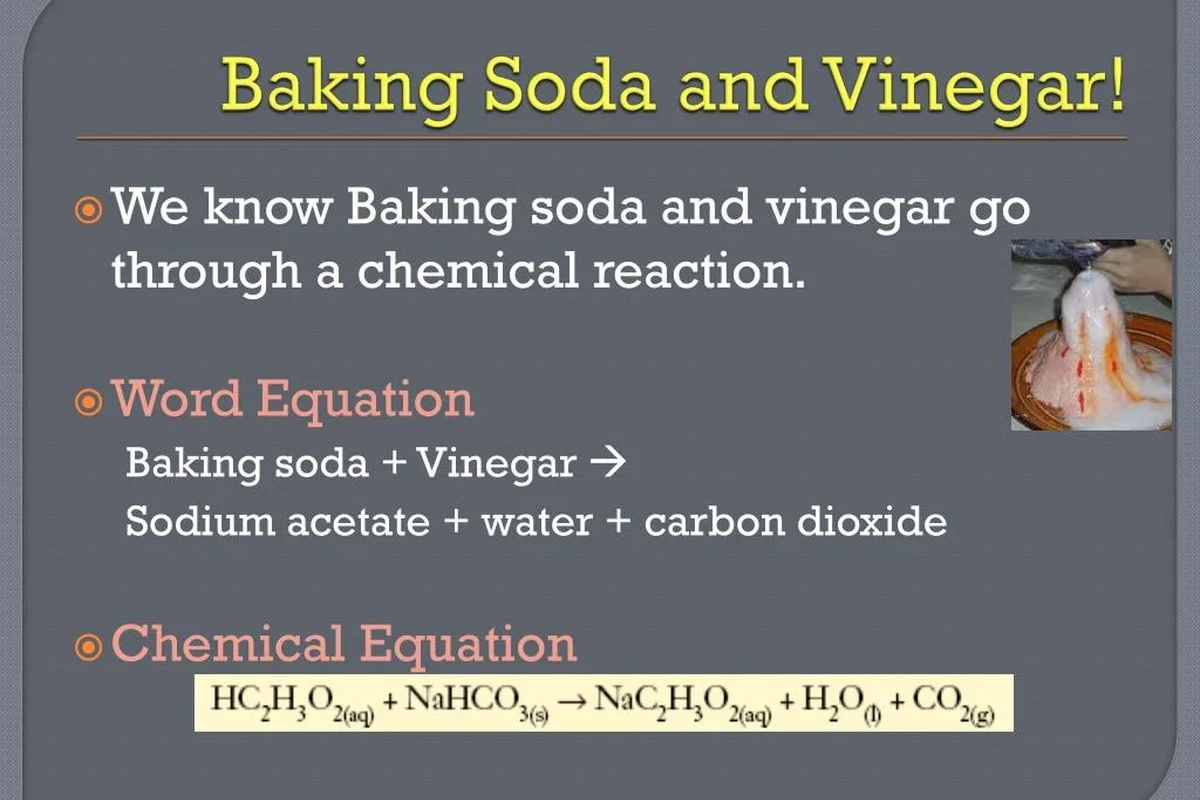
- Formula basics: Vinegar is acetic acid in water; baking soda is sodium bicarbonate.
- Main reaction: The mix releases carbon dioxide, which creates the fizz.
- Baking limit: The reaction is fast, so timing matters more than in yeast doughs.
- Common risk: Too much baking soda can leave a bitter or soapy taste.
- Safety note: Never seal the mixture in a closed container or mix it with bleach.
Frequently Asked Questions
Vinegar is mainly acetic acid in water, and baking soda is sodium bicarbonate. When they react, they form carbon dioxide, water, and sodium acetate.
Not fully. The reaction makes gas quickly, but yeast also develops flavor and structure over time, so the two are not interchangeable in most recipes.
The reaction starts as soon as the acid and base touch in the presence of moisture. Carbon dioxide gas forms right away, which is why the foam appears so quickly.
Too much baking soda can leave a bitter or soapy taste. It can also affect browning and make the final texture less balanced.
No. The reaction produces gas, so pressure can build quickly in a sealed container and cause it to pop open or break.
It may help loosen light residue, but it is not a substitute for proper food-safety cleaning and sanitation steps. Follow recognized guidance from official food-safety sources for surfaces that contact food.
