
Powdery Mildew Baking Soda Spray for Healthy Plants

A powdery mildew baking soda spray can help slow early mildew on garden plants when mixed lightly and applied evenly. It works best alongside pruning, airflow, and careful watering, not as a stand-alone cure.
Powdery mildew can make healthy leaves look dusted with flour, but a simple powdery mildew baking soda spray may help slow it down when used correctly. The key is using the right mix, spraying evenly, and understanding where this home-garden method has real limits.
- Best use: Light to moderate powdery mildew on plants that tolerate foliar spraying.
- Mixing matters: Too much baking soda or soap can burn leaves or leave residue.
- Coverage matters: Spray both sides of leaves and target early infection.
- Prevention matters: Airflow, spacing, and watering habits reduce repeat outbreaks.
What Powdery Mildew Looks Like on Common Garden Plants in 2026
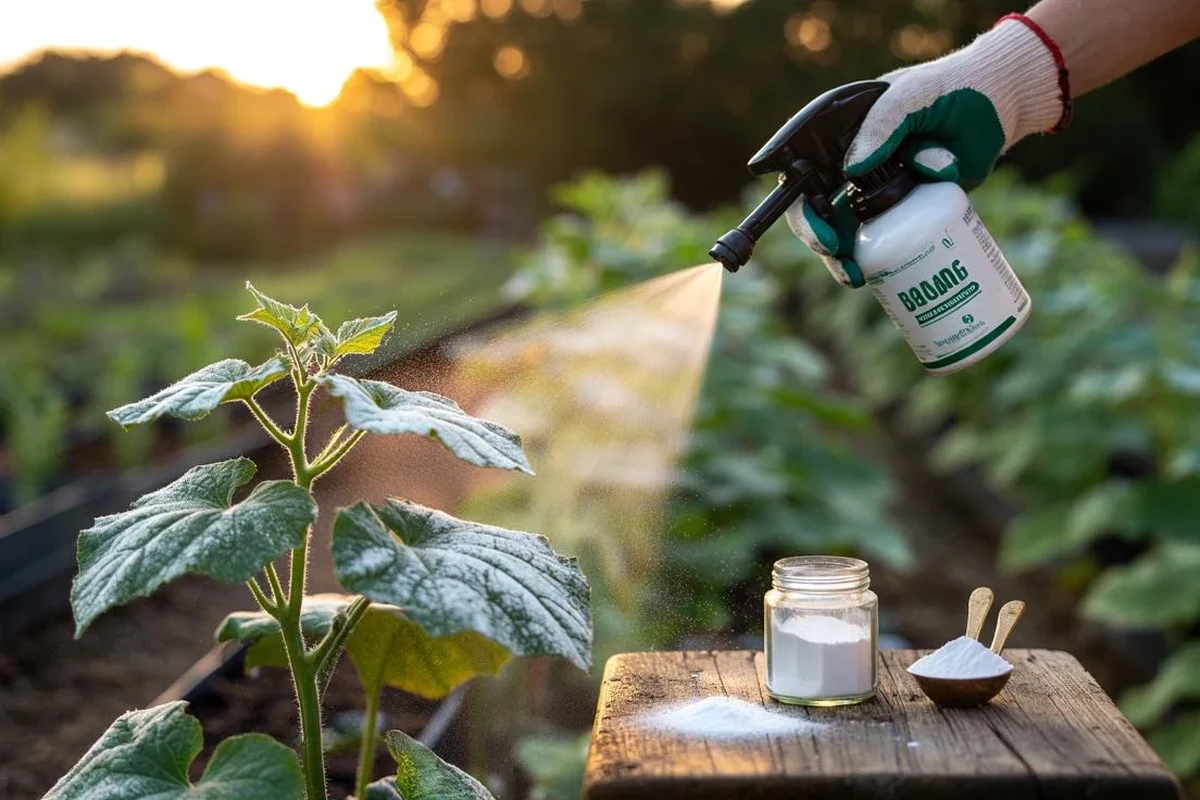
Powdery mildew usually shows up as white, gray-white, or sometimes pale tan patches on leaf surfaces, stems, and tender growth. It often looks like someone brushed on dry powder, and it can spread quickly in warm, humid, crowded garden conditions.
On some plants, the coating starts in small circles and then merges into larger fuzzy or dusty areas. Leaves may curl, yellow, distort, or dry out as the infection progresses, especially if the plant is already stressed by heat, drought, or poor airflow.
How to tell powdery mildew apart from dust, residue, and nutrient issues
Dust usually wipes off more evenly and does not keep returning in the same pattern on new growth. Spray residue or hard-water spots may look chalky too, but they often appear after watering or foliar feeding and do not have the same fuzzy, spreading texture.
Nutrient issues are different because they usually change the whole leaf color or pattern rather than creating a powdery film. If you are unsure, gently rub a small spot with a damp cloth; mildew often smears slightly, while dust and residue may lift more cleanly.
Powdery mildew can grow on the leaf surface instead of inside the tissue, which is why early treatment often focuses on changing the surface environment rather than “curing” the plant from within.
Which plants are most likely to need a baking soda spray treatment
Gardeners most often use a baking soda spray on roses, cucumbers, squash, zucchini, melons, beans, peas, phlox, zinnias, and many herbs and ornamentals. These plants can be especially vulnerable when foliage is dense and air movement is limited.
Young, fast-growing plants and container plants in shaded corners can also be frequent candidates. If you already know a plant tends to get mildew every season, it helps to watch the first few leaves closely and act early.
How a Powdery Mildew Baking Soda Spray Works on Leaf Surfaces
A powdery mildew baking soda spray is a contact treatment, not a systemic cure. It works best by changing the surface conditions on the leaf so the fungus has a harder time spreading.
The role of sodium bicarbonate in changing the leaf environment
Baking soda is sodium bicarbonate. When mixed with water and sprayed on leaves, it can raise the pH on the surface enough to make conditions less favorable for powdery mildew growth.
This is one reason the spray is often used early, before the disease has covered too much of the plant. It is more of a suppressive tool than a complete fix, so regular inspection still matters.
Why surfactants like mild soap help the spray cling and spread
A tiny amount of mild soap can act as a surfactant, which helps the liquid spread across the leaf instead of beading up and rolling off. Better coverage matters because mildew often hides on the upper surface, lower surface, and in tight inner growth.
Soap also helps the spray cling long enough to do its job, but too much can irritate leaves. That is why “a little” is the rule here, not “more for extra strength.”
Not every soap is a good choice. Use a mild, plain product without heavy degreasers, bleach, or added fragrances, and always check plant response before treating the whole plant.
When baking soda helps and when it is not strong enough alone
This spray can help with light to moderate mildew pressure, especially when the disease is caught early. It is less effective once leaves are heavily coated, distorted, or already dropping.
If the plant keeps getting reinfected, the problem is usually not just the fungus. Poor airflow, shade, overcrowding, and overhead watering often keep the disease cycle going even after spraying.
Ingredients and Mixing Ratios for a Safe Baking Soda Spray
Mixing matters more than people expect. A spray that is too weak may do little, while a spray that is too concentrated can leave salt residue or burn tender foliage.
Standard home-garden measurement ranges and why concentration matters
For many home gardens, a common starting range is about 1 teaspoon of baking soda per quart of water, or roughly 1 tablespoon per gallon, with a very small amount of mild soap added if desired. Some gardeners prefer to stay on the lower end first, especially for herbs, young plants, or thin-leaved ornamentals.
Because plant sensitivity varies, there is no single perfect formula for every garden. Ingredient brand, water quality, temperature, and leaf texture all affect how the spray performs.
Choosing water, baking soda, and optional soap without harming plants
Use clean water and measure carefully rather than guessing. If your water is already very hard, you may see more residue on leaves, so test on a small area first.
Choose plain baking soda, not a scented or cleaning blend. If you add soap, use only a small amount and avoid products that contain harsh detergents or additives that could stress the plant.
Common mixing mistakes that cause leaf burn or poor coverage
The most common mistake is overmixing the solution until it becomes too strong. Another is using too much soap, which can damage the leaf cuticle and cause spotting or scorch.
Poor coverage is another frequent problem. If the spray is not reaching the upper and lower leaf surfaces, mildew can keep growing in missed spots and make the treatment seem ineffective.
Do not assume stronger is better. A concentrated baking soda spray can leave white residue, stress tender foliage, and create more damage than the mildew itself on sensitive plants.
Step-by-Step Application Method for Best Coverage and Results
Good spraying is about even coverage, not soaking the plant. The goal is a light film on the leaf surface, especially where mildew is visible or likely to spread.
How to test a small plant area before full spraying
Before treating the whole plant, spray one small section and wait 24 hours if possible. Watch for leaf spotting, curl, dulling, or scorch, especially on tender new growth.
This test is especially useful for herbs, seedlings, and ornamentals with soft foliage. If the test area looks fine, you can move forward more confidently.
Best time of day, leaf coverage, and spray technique
Spray in the early morning or late evening when direct sun is lower and leaves are less likely to burn. Aim for thorough coverage of both the top and underside of leaves, plus stems and inner growth where mildew often hides.
Use a fine, even mist rather than heavy drips. If the spray runs off immediately, you are using too much at once or standing too close to the plant.
Spray a small area and wait to see whether the plant tolerates the mixture well.
Combine the ingredients in clean water and shake only enough to blend them.
Cover visible mildew and nearby healthy tissue without soaking the leaves.
Look for residue, spotting, or continued mildew spread over the next day or two.
How often to reapply during active mildew pressure
Reapply only as needed and based on plant response, not on a fixed habit of daily spraying. Many gardeners use it every few days during active pressure, but exact timing depends on weather, plant type, and how fast the mildew returns.
If rain washes it off or new growth appears quickly, you may need to re-treat the new growth. Still, if the plant starts showing stress, stop and reassess instead of increasing frequency.
Plant Safety, Limitations, and Troubleshooting After Spraying
Like many home remedies, this one is useful in specific situations and disappointing in others. The plant’s condition after spraying tells you a lot about whether the method is helping or harming.
Signs the spray is too strong or being used too frequently
Watch for leaf edge burn, yellowing, spotting, dull patches, or a papery feel on the foliage. If new growth looks twisted or weak after treatment, the mix may be too strong or the plant may be too sensitive for repeated use.
White crust on the leaf surface can also mean too much baking soda was used or the spray dried too heavily. In that case, rinse gently with plain water if appropriate and reduce the concentration next time.
Leaves look scorched, spotted, or stressed after spraying.
Lower the baking soda amount, reduce soap, spray less often, and test on a smaller area before repeating.
Plants and conditions where baking soda spray may be a poor fit
Very tender plants, heavily waxy leaves, or plants already suffering from drought, transplant shock, or heat stress may react poorly. Some species simply do not tolerate repeated foliar sprays well.
It is also a poor fit when mildew is severe, when leaves are crowded and impossible to coat well, or when weather conditions keep washing the spray away. In those cases, pruning, removal of infected leaves, or a different disease-management method may be more effective.
- Low-cost and easy to mix at home
- Useful for early or light mildew pressure
- Can be part of a broader garden routine
- Can burn leaves if too strong
- Often needs repeat application
- Not enough for severe infections on its own
What to do if mildew keeps returning despite treatment
If the mildew keeps coming back, look beyond the spray bottle. Remove badly infected leaves, thin crowded growth, and improve airflow around the plant so moisture does not linger on the foliage.
For edible crops, follow recognized plant disease guidance and label directions for any additional products you consider. If a plant is repeatedly overwhelmed, replacing it with a more resistant variety may be the smarter long-term move.
Preventing Powdery Mildew Beyond the Spray Bottle
The best mildew control is usually prevention. A spray can help, but garden habits often decide whether the disease becomes a recurring problem.
Airflow, spacing, pruning, and watering habits that reduce outbreaks
Give plants enough space so air can move through the canopy. Prune dense growth when appropriate, remove infected leaves promptly, and water the soil rather than the foliage whenever possible.
These habits reduce the damp, stagnant conditions mildew likes. They also help plants dry faster after rain or morning dew, which lowers disease pressure over time.
How humidity, shade, and crowded containers affect disease pressure
Humidity and shade can be a tough combination, especially in patios, balconies, and packed garden beds. Containers placed too close together trap moisture and make it harder for leaves to dry.
If your garden stays humid, focus on spacing, sun exposure, and airflow before relying on repeated sprays. A healthy plant in a better location often needs far less intervention.
If you are also learning how baking soda behaves in other home uses, our guide to baking soda vinegar cleaning ovens explains why contact time and surface coverage matter so much.
Practical examples for roses, cucurbits, herbs, and ornamentals
Roses often benefit from early monitoring because mildew can spread on crowded canes and inner leaves. Cucurbits like squash and cucumbers need especially good airflow, since their broad leaves can trap moisture and hide early infection.
Herbs and ornamentals may need gentler treatment because their foliage can be more delicate. For garden plants that are especially sensitive, start with the mildest mix and the smallest test area, much like you would when checking whether a baking ingredient swap will work in a recipe.
For readers who like to understand ingredient behavior, our article on how baking soda and baking powder differ is a useful reminder that similar-looking ingredients can behave very differently depending on the setting.
Storage, Handling, and Garden-Safe Use in the Current Season
Safe handling matters even with simple ingredients. A garden spray may be mild, but it still deserves clean tools, careful storage, and attention to nearby plants, pets, and people.
How to store mixed spray, dry baking soda, and tools safely
Mix only what you expect to use soon, because spray solutions can separate or lose consistency over time. Store dry baking soda in a sealed container in a cool, dry place so it stays free-flowing and ready to measure.
Rinse the spray bottle, measuring spoon, and any mixing tools after use. Clean tools help prevent residue buildup and reduce the chance of confusing old mixture with a fresh batch.
Protecting pollinators, pets, and edible crops during application
Try not to spray open flowers where pollinators are actively visiting. If you are treating edible crops, follow the product and crop guidance carefully and wash produce as you normally would before eating.
Keep spray bottles labeled and stored away from food-prep items, children, and pets. Even simple garden mixtures should never be mistaken for household drinks or cooking ingredients.
When to stop using the spray and switch to another control method
Stop using the spray if the plant shows repeated leaf damage, if mildew is spreading faster than you can manage, or if weather keeps making the treatment ineffective. At that point, the better move is usually pruning, removing infected material, improving conditions, or using another disease-control method suited to the plant.
If you are dealing with an edible crop and want a broader home-care approach, it can help to read practical cleaning guidance like our piece on baking soda in laundry benefits to see how the ingredient behaves across different surfaces and moisture levels.
Final Recap: When Powdery Mildew Baking Soda Spray Is Worth Using
A powdery mildew baking soda spray is worth trying when mildew is caught early, the plant tolerates foliar spraying, and you can also improve airflow and watering habits. It is a useful low-cost tool, but it works best as part of a larger plan rather than as a stand-alone cure.
The smartest next step is to mix lightly, test first, spray evenly, and watch the plant closely for both improvement and stress. If the mildew keeps returning, focus on the growing conditions first, then decide whether a different control method is the better fit.
- Start with a mild mix and test one leaf section first.
- Spray early in the day or late in the evening.
- Improve airflow, spacing, and watering habits at the same time.
- Do not use a stronger mix to “make it work faster.”
- Do not spray stressed or heat-burned plants without caution.
- Do not rely on the spray alone if mildew is severe.
Frequently Asked Questions
A common home-garden starting point is about 1 teaspoon per quart of water or 1 tablespoon per gallon, with a small amount of mild soap if desired. Always test a small area first because plant sensitivity can vary.
Many gardeners use it on edible crops, but you should spray carefully, avoid open flowers when possible, and follow crop-specific guidance. Wash produce as usual before eating.
Reapply only as needed during active mildew pressure, often every few days if the plant tolerates it. Stop or reduce use if you see leaf burn, spotting, or other stress.
It can help suppress early or light mildew, but it usually does not eliminate severe infections on its own. Improving airflow, spacing, and watering habits is just as important.
Tender seedlings, stressed plants, and some soft-leaved ornamentals may react poorly. Always test a small section before spraying the whole plant.
It is better to mix only what you plan to use soon, because homemade spray can separate or become inconsistent over time. Store dry baking soda in a sealed container instead.