
Is Aluminum Foil Safe in an Air Fryer? A Practical Guide for Home Cooks
If you want the short answer: yes, aluminum foil can be safe in an air fryer in some situations, but only when it does not block airflow, touch the heating element, or interfere with your model’s instructions.
That “yes, but” matters. Air fryers cook by moving hot air quickly around food. Foil can help with cleanup or keep food from drying out, but it can also reduce crisping and, if used carelessly, create a safety problem.
I use foil in my own kitchen when I want a little less mess, but I do it sparingly. In an air fryer, less foil is usually better than more.
Why Air Fryers Need Open Airflow
Air fryers are not miniature ovens with a fan as an afterthought. The fan and heating element are the whole point. Hot air needs room to circulate around the food so the surface dries and browns.
When foil covers too much of the basket or tray, it can interrupt that circulation. The result is usually uneven cooking, soggy spots, or food that never crisps properly.
A simple way to think about it: if the air can’t move freely around the food, the air fryer loses the main advantage that makes it worth using.
That is why a small piece of foil under food is very different from lining the entire basket walls and bottom. One may be workable. The other can defeat the appliance.
When Aluminum Foil Is Safe to Use
Foil is usually acceptable in an air fryer when it is used in a limited, controlled way. A few practical rules help keep it safe:
- Use only a small amount. Cover just the area that needs cleanup or moisture control; do not line the full basket or tray unless your manual specifically says that is okay.
- Keep it weighted down by food. Foil should never be loose, should not rise toward the heating element, and should only be used when fully held in place by food.
- Leave space for airflow. Do not seal off the basket, tray, or food completely.
- Keep it away from the heating element. Foil should stay well below the top heating area in most models.
- Check the manual first. Some manufacturers allow foil in limited use, while others do not.
A useful example is cooking salmon. A small foil sheet under the fish can catch drips and make cleanup easier, while the open sides still let hot air circulate. That is a very different setup from wrapping the whole fillet tightly and expecting the same crisp edges.
Foil also makes more sense when crisping is not your top priority. If you are reheating something messy or cooking something that benefits from a bit more moisture, foil can be practical.
When You Should Avoid Aluminum Foil
There are a few situations where foil is the wrong choice.
Do not block the airflow path
If foil covers most of the basket bottom or extends up the sides in a way that seals off the food, it can restrict circulation. That is one of the most common reasons air fryer results turn out disappointing.
Do not let foil touch the heating element
This is especially important in oven-style air fryers, where the heating element is often close to the top rack area and there may be less clearance above the food. Foil that lifts or curls upward can become a problem faster in those models.
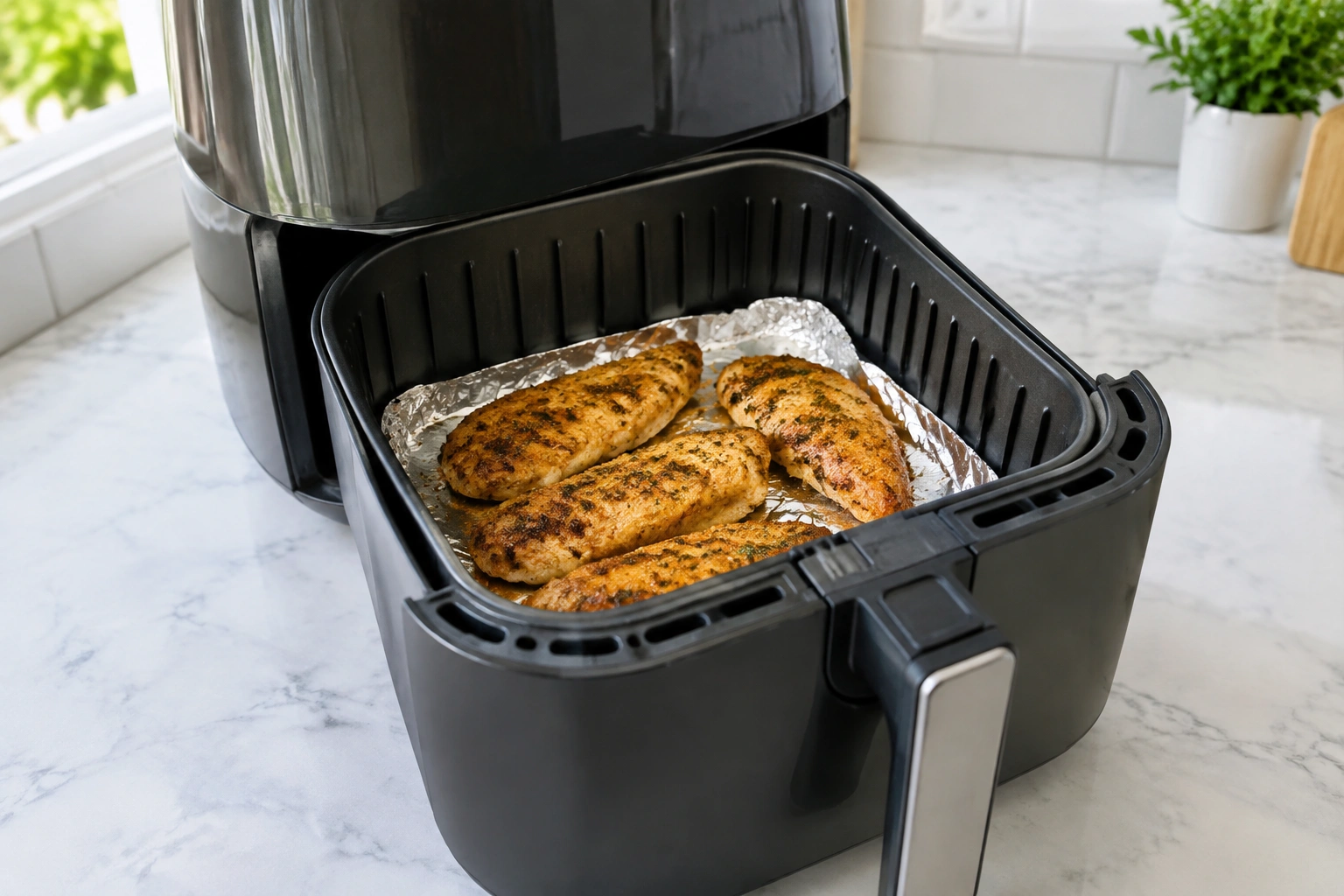
Avoid loose foil
Light foil can move around when the fan starts. If it blows upward, it may contact hot components. That is why foil should always be secured by food or placed so it cannot shift.
Skip foil with acidic foods
Tomatoes, citrus, vinegar-heavy marinades, and similar ingredients can react with aluminum. The reaction is not usually dangerous in the way people sometimes imagine, but it can affect flavor and appearance. If the food is strongly acidic, I usually choose parchment or no liner instead.
For general food safety basics, the USDA’s food safety guidance is a good place to check when you are unsure how a food should be handled or cooked.
How to Use Foil Safely in a Basket-Style Air Fryer
Basket-style air fryers are the most common home models, and they are also the ones where foil needs the most care.
Here is the safest approach I use:
-
Use a piece that fits the food, not the whole basket.
Think under the food, not across the entire base. -
Keep the edges low.
Foil should not curl up into the path of the fan or heating element. -
Weigh it down completely.
Place food on top so the foil cannot move once cooking starts. -
Do not cover the basket holes if your model depends on them for airflow.
Some baskets are designed with open perforations. Covering those holes can affect performance. -
Avoid using foil for very light foods.
Small loose items can shift, and so can the foil under them.
A good example is chicken thighs with a sticky marinade. A small foil sheet under the meat can catch drips and make cleanup easier, but you still want the sides open so the skin can brown.
If you want a liner that is specifically designed to handle this type of setup, my separate guide on whether parchment paper is safe in an air fryer is worth a look.
How Foil Use Differs in an Oven-Style Air Fryer
Oven-style air fryers are a little more forgiving in some setups because they usually have racks and more vertical space. That can make it easier to place a tray or pan without crowding the cooking area.
The safety tradeoff is different, though. In a basket-style unit, the food is usually deeper inside the basket and farther from the top heat source. In an oven-style model, the food may sit closer to the upper heating element, so foil that lifts, curls, or sits too high can be riskier even if the unit feels more spacious overall.
Still, the same rules apply:
- Do not let foil touch the heating element.
- Do not block vents or fan paths.
- Do not assume the whole rack area can be covered.
- Follow the manufacturer’s instructions for that specific model.
Some air fryer models also recommend no foil at all because of their airflow design, so general foil advice is not enough on its own.
KitchenAid, for example, says you can’t use aluminum foil in its countertop oven with air fry. That is a good reminder that model-specific guidance matters more than general advice. If your manual says no foil, that instruction wins.
Foods That Work Well With Foil in an Air Fryer
Foil is most useful when you want easier cleanup or a little moisture retention.
Good candidates include:
- Salmon or other fish fillets, especially when you want to catch drips
- Chicken pieces with marinades or sauces, if you are not relying on maximum crisping
- Baked potatoes, when you want a softer skin rather than a crisp one
- Vegetables in a small foil packet, especially with oil and seasoning
- Messy reheated leftovers, where cleanup matters more than browning
A foil packet can work well for vegetables, but I would keep it small and loosely sealed rather than tightly wrapped. A tightly closed packet behaves more like steaming than air frying, which changes the texture.
If you want crisp edges on vegetables or wings, foil usually works against that goal.
Foods That Should Not Be Cooked With Foil
Some foods are poor matches for foil in an air fryer.
Avoid foil with:
- Highly acidic foods like tomatoes, citrus, or vinegar-heavy dishes
- Foods where crisping is the goal, such as wings, breaded chicken, fries, or roasted Brussels sprouts
- Very light foods that can shift around and expose loose foil
- Foods that need maximum browning, since foil reduces direct airflow and surface drying
If you are cooking breaded items, foil often softens the coating. That is one of the easiest ways to ruin an otherwise good batch of chicken tenders or mozzarella sticks.
For food safety around specific ingredients and storage, the FDA’s food safety pages are a reliable reference.
Foil vs Parchment Paper vs Silicone Liners

Here is a quick comparison to help you choose the best option.
| Option | Best For | Main Advantage | Main Drawback |
|---|---|---|---|
| Aluminum foil | Catching drips, wrapping some foods, quick cleanup | Strong, easy to shape | Can block airflow and reduce crisping |
| Parchment paper | Breaded foods, sticky foods, cleaner basket bottoms | Less reactive, often better for airflow when used correctly | Still needs proper sizing and placement |
| Silicone liner | Reusable cleanup help for messier foods | Stable and reusable | May change airflow and browning depending on the model and food |
My practical rule is simple:
- Choose foil when cleanup or moisture retention matters most.
- Choose parchment when you want a cleaner basket but still care about airflow.
- Choose silicone when reusability and stability matter more than maximum browning.
- Use nothing when crisping is the top goal.
If you want a deeper comparison, I also have a guide on whether silicone is safe in an air fryer.
Common Mistakes That Make Foil Unsafe
Most foil problems come from a few avoidable habits.
Covering the entire basket
This is the biggest mistake. It can restrict airflow and make the air fryer behave more like a covered pan than a hot-air cooker.
Letting foil float loose
Loose foil can shift when the fan runs. If it rises toward the heating element, that is a real problem.
Wrapping food too tightly
A tight wrap traps moisture and prevents browning. That may be fine for a soft texture, but it is not the same as air frying.
Using foil for every food
Foil is a tool, not a default setting. If you want crispy skin or a crunchy coating, skip it.
Ignoring the manual
Manufacturer instructions matter more than general internet advice. Some models allow foil in limited use. Others do not.
Does Foil Damage the Air Fryer or Void the Warranty?
Foil does not automatically damage an air fryer. Used carefully, it is usually harmless. Used carelessly, it can scratch coatings, interfere with airflow, or violate the appliance’s instructions.
The basket coating is one area to watch. Rough foil placement, crumpled edges, or dragging foil in and out of the basket can wear on nonstick surfaces over time. That is not unique to foil, but foil can make it more likely if you are not careful.
Can foil touch the basket coating or nonstick surface? Brief contact is unlikely to cause immediate damage on its own, but it should be placed gently and not dragged across the coating, especially if the foil is crumpled or the basket has a delicate nonstick finish.
Warranty concerns are simpler: if the manual says not to use foil and you do anyway, you may be outside the manufacturer’s guidance. That does not mean the appliance will fail immediately, but it does mean you should not expect the company to support that use.
FAQ
Can aluminum foil touch the heating element?
No. Foil should not touch the heating element in any air fryer. If it can lift, curl, or blow upward, it is too risky to use that way.
Can foil touch the basket coating or nonstick surface?
It can sit on the basket surface if it is placed carefully, but avoid dragging it across the coating or using crumpled foil that could scratch the finish over time.
Is parchment paper safer than foil?
Often, yes. Parchment is usually the easier choice when you want to keep airflow open and avoid metal contact, but it still needs to be cut to size and kept from blocking the basket.
A Simple Decision Rule for Everyday Cooking
When I am deciding whether to use foil in an air fryer, I ask three questions:
- Will it block airflow?
- Will it touch the heating element or move around?
- Does the food actually benefit from foil?
If the answer to any of those is yes, I usually choose parchment, a silicone liner, or no liner at all.
If you are cooking something messy, non-acidic, and not dependent on crisping, a small amount of foil can be a practical choice. If you are chasing browning, keep the basket open.
When to Consult a Professional
If your air fryer has unusual damage, a loose heating element, repeated overheating, or a manual that is unclear about liner use, contact the manufacturer or a qualified appliance service provider before experimenting. That is especially worth doing if the unit is under warranty and you want to avoid accidental misuse.
Bottom Line
Yes, aluminum foil can be safe in an air fryer, but only when it is used carefully and in moderation. Keep it away from the heating element, do not block airflow, and avoid using it with acidic foods or in ways that prevent crisping. If your model’s manual forbids foil, follow that instruction.
For many everyday jobs, foil is useful. For the crispiest results, though, less is usually better.

