
How to Bring Eggs to Room Temperature Quickly for Better Baking
When a recipe calls for room-temperature eggs and you only have cold ones, the fix is simple: use a warm water bath. For whole eggs in the shell, it is the fastest common home method. Use it when the recipe is sensitive to temperature, skip it when the recipe is forgiving, and do not bother warming eggs if the extra step will not change the result much.
If you are baking a cake, muffins, or a butter-based batter, this small step can make mixing smoother and more even. If you are making a quick cookie dough or a forgiving loaf, cold eggs may still work fine. The trick is knowing when the shortcut is worth using and when it is not.
The Fastest Safe Way to Warm Eggs
For whole eggs in the shell, the quickest reliable method is a bowl of warm water. Bon Appétit recommends water that feels like a warm bath and a soak of about 5 to 10 minutes, which is a practical target when you need eggs ready during recipe prep. That timing is usually long enough to take the chill off without overdoing it. Bon Appétit’s room-temperature guide is a useful reference here.
A simple rule helps: if the water feels hot to your hand, it is too hot for the eggs. Warm is enough.
Quick comparison of common methods
| Method | Approximate time | Best for | Trade-off |
|---|---|---|---|
| Warm water bath | 5 to 10 minutes | Whole eggs needed soon | Requires a bowl and a little attention |
| Counter warming | About 30 minutes or more | When you have time before mixing | Too slow if you are in a hurry |
| Using eggs cold | Immediate | Recipes that are forgiving | May mix less smoothly in some batters |
If you only have a few minutes, the warm water bath is the practical choice. If you have half an hour and do not want to monitor anything, leaving eggs out can be easier. If the recipe is casual and not especially delicate, cold eggs may be acceptable.
Step-by-Step: Warm Water Bath Method
The process is straightforward, but a few details matter.
- Put the eggs in a small or medium bowl.
- Cover them with warm tap water. The water should feel comfortably warm, not hot.
- Let the eggs sit for 5 to 10 minutes.
- Lift one egg out and feel it. If it still feels cool, give it another minute or two.
- Dry the eggs before cracking them if your recipe benefits from a dry shell.
A cup works for one or two eggs. A bowl is better for a full batch. Keep the shells intact; cracked eggs are more vulnerable to contamination and are not ideal for this method.
There is no need to stir the water or keep refilling it unless it cools down noticeably. A single warm soak is usually enough.
Why warm, not hot, matters
The goal is to remove the refrigerator chill, not to heat the egg. If the water feels like something you would happily wash your hands in, that is the right range.
How Long It Takes and What Affects the Timing
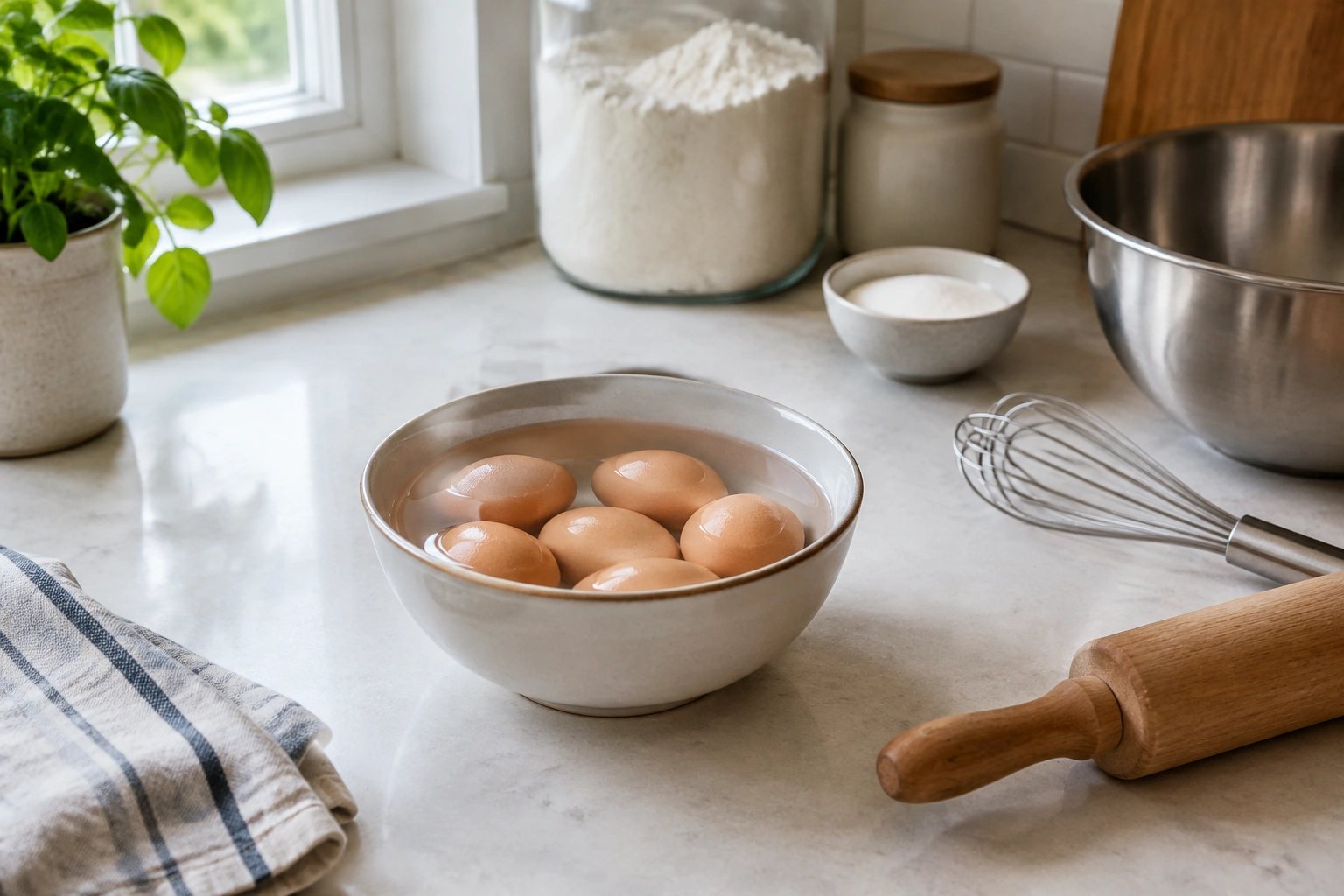
Most whole eggs will be close to room temperature after about 5 to 10 minutes in warm water. That said, a few factors can change the timing:
- Egg size: Large eggs may take a little longer than medium eggs.
- How cold they were: Eggs straight from the back of a cold refrigerator can need the full soaking time.
- Water temperature: Slightly warmer water shortens the wait, but only within the “warm, not hot” range.
- How many eggs you are warming: A crowded bowl can slow things down a bit.
Food52 notes that one fast target for eggs is around 68 to 70°F, which is a helpful benchmark for baking. Food52’s egg temperature note supports the idea that you do not need to overheat them; you just need to get them out of fridge-cold territory.
If you are in the middle of measuring flour, greasing pans, or mixing dry ingredients, put the eggs in the water at the beginning. By the time the rest of the setup is done, they are usually ready.
A practical timing example
If you realize you need room-temperature eggs for cake batter and you have 10 minutes before mixing, use the water bath immediately. If you have 30 minutes, counter warming is fine. If you have only 2 or 3 minutes, the eggs may not fully warm, but the bath still helps more than doing nothing.
How to Tell When Eggs Are Ready
There is no need for a thermometer in most home kitchens. The simplest check is touch.
A warmed egg should no longer feel cold when you hold it in your hand. It does not need to feel warm. It just should not feel like it came straight from the refrigerator.
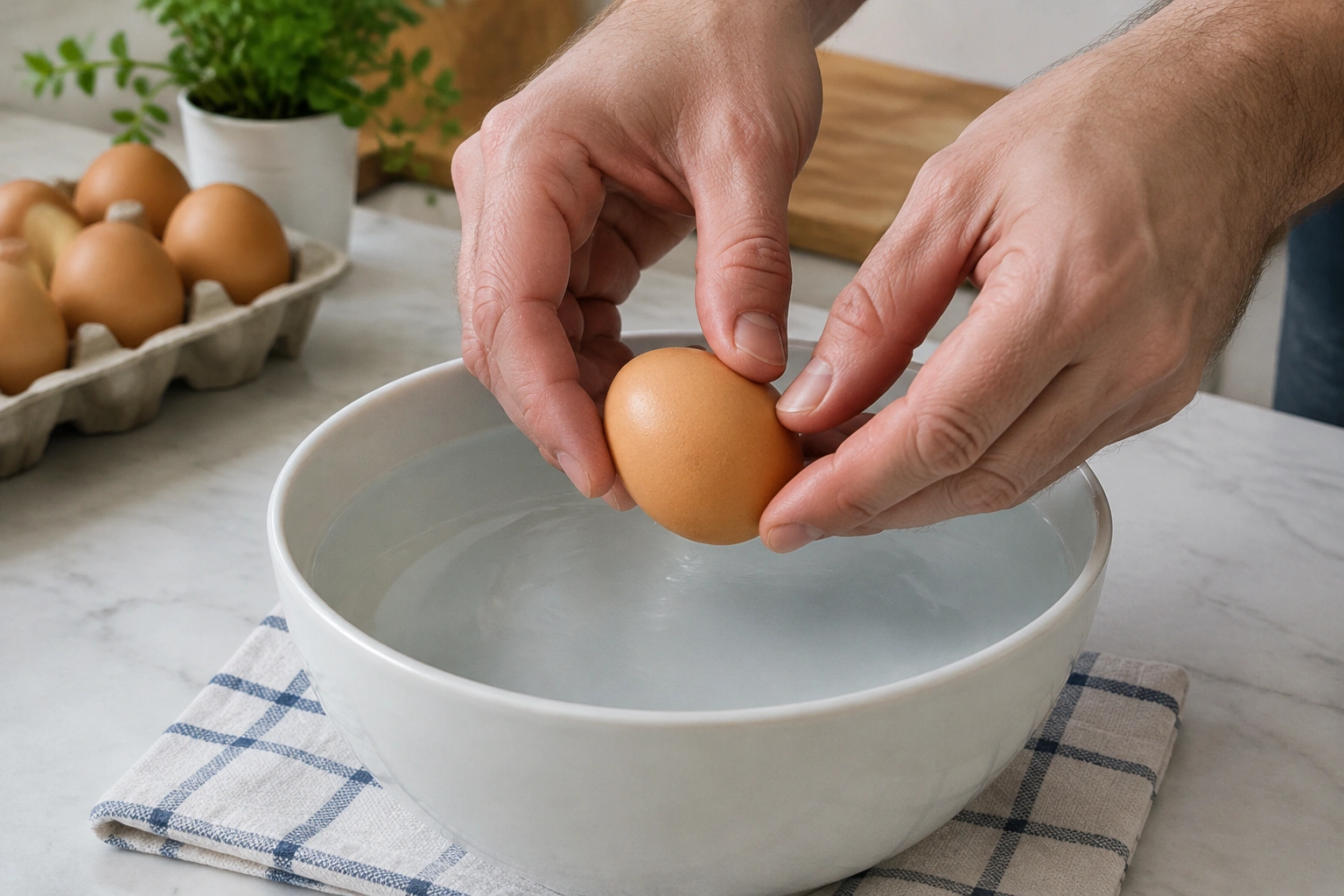
Other useful signs:
- The shell feels closer to neutral than chilly.
- The egg no longer makes the batter feel cold when cracked in.
- If you are warming several eggs, they should all feel similar in temperature.
If one egg still feels cool, return it to the bath for another minute or two. That is better than guessing.
Do Room-Temperature Eggs Really Matter for Baking?
Sometimes yes, sometimes not much.
Room-temperature eggs tend to blend more smoothly into butter, sugar, and other ingredients. That matters most in cakes, sponge-style batters, and recipes that depend on a smooth emulsion. Cold eggs can make butter seize slightly or cause a batter to look curdled before it comes together.
In practical terms, room-temperature eggs can help with:
- smoother mixing
- a more even batter texture
- better incorporation into creamed butter mixtures
If you are making drop cookies, brownies, or a sturdy quick bread, cold eggs are often less of a problem. Those recipes usually tolerate a little chill without much drama.
A useful decision rule: if the recipe asks you to cream butter and sugar first, or if the final texture is meant to be light and even, warm the eggs. If the batter is thick, rustic, or mixed briefly, cold eggs may be perfectly workable.
If You Forgot to Take Eggs Out Ahead of Time
This is the situation most bakers face. The answer depends on how much time you have.
If you have 5 to 10 minutes
Use the warm water bath.
If you have 20 to 30 minutes
Let the eggs sit on the counter, especially if you are already occupied with the rest of the recipe.
If you have no extra time
Check whether the recipe is forgiving enough to use cold eggs. Many are.
That simple decision saves a lot of unnecessary fuss. You do not need to force every recipe into the same method.
There is one more option people sometimes mention: cracking eggs into a warm bowl and beating them briefly. That may help raw eggs lose some of their chill, but it is less useful for whole eggs in shell when your goal is fast, even warming. For most home bakers, the warm water bath is the cleaner and more reliable shortcut.
Safety Tips and Common Mistakes to Avoid
The biggest mistake is using hot water because it seems faster. Hot water can start to warm the outside of the egg too quickly, which is not what you want.
Other mistakes to avoid:
- Leaving eggs in very hot water
- Using cracked eggs for the bath
- Forgetting to dry the shells before handling them
- Assuming every recipe needs room-temperature eggs
- Leaving eggs out much longer than necessary
A practical rule for counter warming is simple: if eggs are out for about 30 minutes while you prep, that is usually enough for many recipes and is a reasonable limit for this quick-use purpose. If they still feel cold after that, use the warm water bath instead of waiting much longer.
For the warm water method, 5 to 10 minutes is the usual target. If the eggs are still cool, add another minute or two and check again. There is no benefit to letting them sit in warm water far beyond the point where they no longer feel cold.
A final practical note: if your kitchen is already warm, eggs may come up to temperature faster on the counter than you expect. If the room is cool, the warm water bath is usually the more dependable choice.
A Simple Baker’s Rule for Last-Minute Eggs
If the recipe is delicate and you have less than 10 minutes, use warm water.
If the recipe is forgiving and you have 20 minutes or more, counter warming may be enough.
If the recipe does not depend on a light, smooth batter, cold eggs may be fine.
That is usually all you need to decide.
When to Consult a Pastry Chef
If you are working on a highly structured cake, a mousse-heavy dessert, or a recipe that has already failed once because of temperature issues, it can help to follow the recipe author’s exact method rather than improvising. In pastry work, small temperature differences can matter more than they do in everyday baking.
For most home bakers, though, the warm water bath is the best answer to how to bring eggs to room temperature quickly. It is fast, simple, and easy to repeat.
FAQs
Can I use hot water to warm eggs faster?
Avoid hot water. Warm water is enough and lowers the risk of partially cooking the eggs.
How do I know if the eggs are warm enough?
They should no longer feel cold to the touch. That is the easiest practical test.
Can I leave eggs out on the counter instead?
Yes, if you have enough time. For a quick prep window, about 30 minutes is a reasonable limit; it is slower than a warm water bath, but simple.
Is it safe to warm eggs in the shell?
Yes, as long as the water is warm, not hot, and the shells are intact.
Do all baking recipes need room-temperature eggs?
No. Some recipes benefit noticeably, while others are fine with cold eggs.
What if my eggs still feel cool after 10 minutes?
Leave them in the warm water for another minute or two, then check again.
Can I warm more than one egg at a time?
Yes. Just make sure the eggs are fully covered and not packed too tightly in the bowl.
Should I crack eggs before warming them?
For most baking, no. Whole eggs in the shell are the simplest and safest to warm quickly.

