
Why Cookies Spread More with Melted Butter: A Practical Guide to Better Shape, Texture, and Control
If your cookies keep baking into wide, flat rounds, melted butter is one of the first ingredients to examine. It is not the only cause of spread, but it often makes the problem worse when the recipe was built for softened or creamed butter.
The short version is simple: melted butter makes dough looser. That looser dough gives the cookies less structure at the start of baking, so they spread before the edges have a chance to set. Once you understand that basic shift, it becomes much easier to troubleshoot flat cookies without guessing.
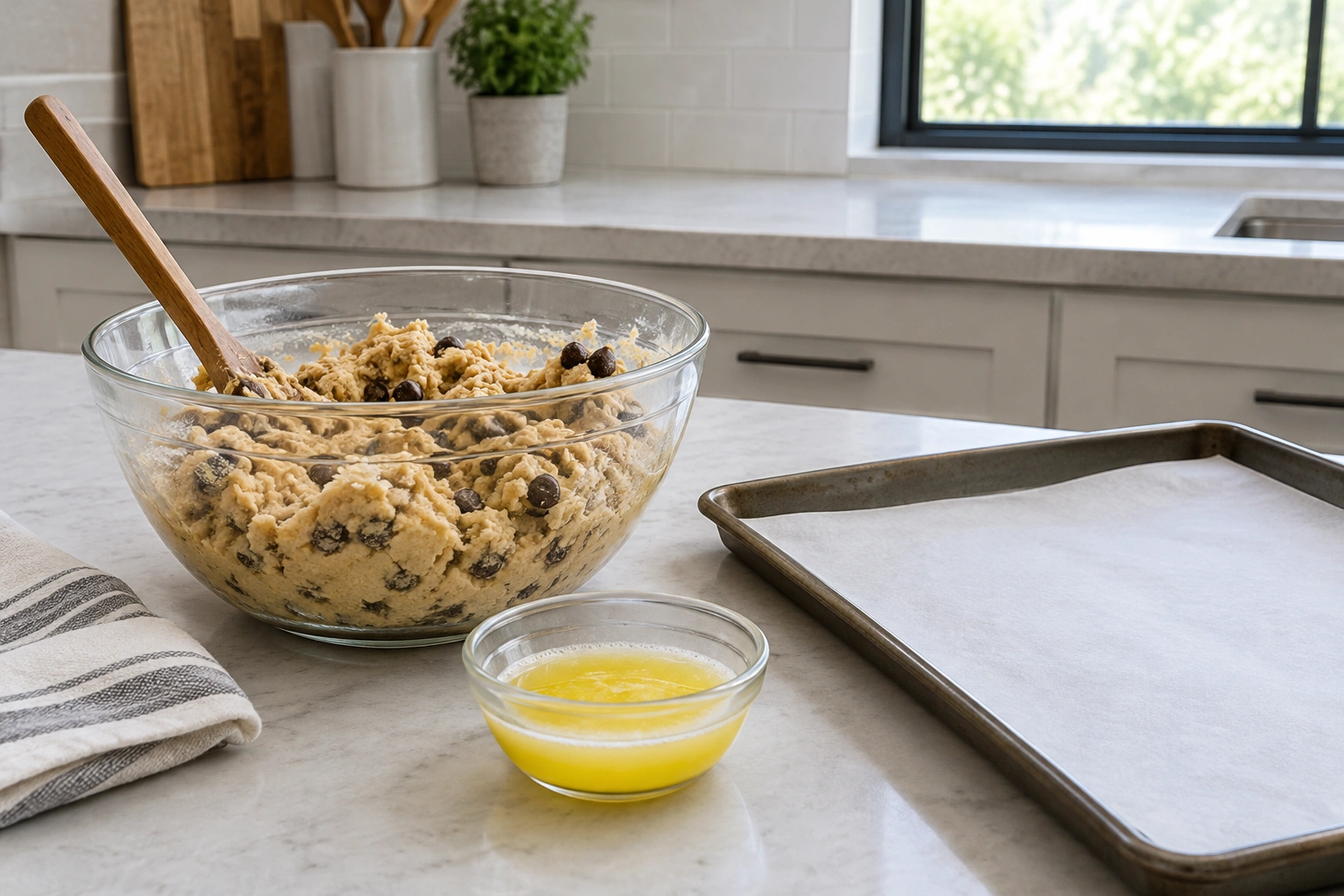
Why melted butter makes cookies spread more
Butter affects cookies in two big ways: it contributes fat, and it helps shape the dough before baking. When butter is melted, it behaves very differently than softened or cold butter.
With softened butter, you can cream air into the mixture if the recipe calls for it. Those tiny air pockets help create a little lift and structure. Melted butter cannot trap air the same way, so the dough usually starts out denser and looser.
Melted butter also mixes into the flour more completely and immediately. That can make the dough feel smooth, but it can also make it softer and less stable. In the oven, the fat warms quickly, the dough relaxes, and the cookies begin to spread before the flour and eggs have finished setting.
That is why a batch made with melted butter often looks thinner and wider than the same recipe made with softened butter.
A useful way to think about it: cookies need enough structure to hold their shape for the first few minutes in the oven. Melted butter removes some of that early support.
Melted butter vs. softened butter vs. cold butter
Different butter states create different cookie results. The best choice depends on the texture and shape you want, and on how the recipe was written.
| Butter state | What it does in dough | Spread tendency | Texture result | Best use case |
|---|---|---|---|---|
| Melted butter | Makes dough softer and more fluid | Higher | Often denser, chewier, thinner | Cookies designed for a chewy, flatter style |
| Softened butter | Can hold air when creamed; gives dough more body | Moderate | Balanced, tender, often more lift | Most standard cookie recipes |
| Cold butter | Keeps dough firm longer; slows early spread | Lower | Thicker, firmer, sometimes more rustic | Recipes that need shape retention |
Softened butter is the middle ground for many classic cookies because it gives the baker more control. Cold butter is even better when a recipe needs a thicker finish, but it can change mixing behavior and may not suit every dough.
Melted butter is not automatically wrong. It just pushes the cookie in a different direction.
How flour, sugar, and eggs change the outcome
Butter does not work alone. The rest of the dough can either resist spread or make it worse.
Flour gives the dough structure
Flour is one of the main reasons cookies hold their shape. If a dough has too little flour for the amount of butter and sugar, it will usually spread more. That is why two recipes can handle melted butter differently: one may have enough structure to manage it, while another may turn thin and greasy.
If your dough looks very soft or glossy after mixing, that is often a sign that the balance is off. In practice, the first ingredient adjustment to try is usually a small chill, not a big flour dump. If the dough still seems loose after chilling, add flour in small increments so you do not overshoot and end up with dry cookies.
Sugar encourages spread
Sugar affects both texture and spread. Higher sugar doughs usually bake wider because sugar dissolves and softens the structure as the cookies heat. Brown sugar and white sugar also behave differently in practice: brown sugar tends to bring more moisture and chew, while white sugar often promotes a crisper, more spread-prone cookie.
That means a recipe with melted butter and a high sugar ratio is especially likely to spread. If the cookies are already flat, reducing sugar is not usually the first fix; chilling and dough handling are better places to start.
Eggs add moisture and structure
Eggs help bind the dough, but they also add liquid. A recipe with more egg can behave differently from one with less, even if the butter is the same. Too much moisture can make dough softer and encourage spread, while the proteins in eggs help set the cookie as it bakes.
This is why a recipe is best judged as a whole. Butter state matters, but so do the flour, sugar, and egg ratios around it.
Why chilling dough helps cookies hold their shape
Chilling is one of the most reliable ways to reduce spread, especially when a dough was made with melted butter.
When dough chills, the fat firms up again. That gives the cookies more resistance in the oven, so they hold their shape longer before spreading. Chilling also gives the flour time to absorb some of the liquid in the dough, which can make the mixture feel less loose.
For a dough that seems soft, sticky, or greasy after mixing, chilling is often the first correction to try. If the dough is only slightly soft, even a short chill can make a noticeable difference.
A practical rule: if the dough looks slack when scooped, chill it before baking. If it is still spreading too much after that, the recipe may need more structural support from flour, a cooler pan, or a different butter method.
Other factors that make cookies spread too much
Butter gets a lot of attention, but it is only part of the picture. Several outside factors can make a cookie spread even when the recipe is solid.
Oven temperature matters
If the oven is too cool, cookies have more time to spread before the edges set. A properly heated oven helps the outside of the cookie firm up sooner, which supports a thicker shape.
That does not mean hotter is always better. If the temperature is too high, the edges may brown too fast while the center is still underbaked. The goal is a stable bake, not just more heat.
If your cookies are flat in every batch, check whether your oven is actually reaching the temperature you set. A reliable oven thermometer can help. For a deeper look at this issue, see how oven temperature changes cookie results.
Baking sheet choice can change spread
Different pans can lead to different results, especially when you are baking multiple batches. Light-colored aluminum baking sheets usually give a more moderate bake, while dark nonstick sheets often brown the bottoms faster and can make cookies set a little sooner. Heavy-duty sheets and insulated cookie sheets can also change how quickly heat reaches the dough.
Parchment paper and silicone liners matter too. Parchment usually promotes easy release and can slightly limit direct contact with the pan, while silicone liners tend to insulate more and may reduce browning on the bottom. None of these effects are absolute rules, but they are useful practical clues when cookies spread differently from one setup to another.
Even the temperature of the pan matters. If you place new dough on a sheet that just came out of the oven, the butter starts softening sooner. That often leads to extra spread.
Let the pan cool between batches if the cookies on the second tray always come out wider than the first.
Mixing method affects structure
If a recipe is designed for creamed butter, swapping in melted butter changes more than just temperature. Creaming creates a different dough structure from the start. You can learn more about that step in how to cream butter and sugar by hand.
That does not mean you can never use melted butter. It means the recipe may no longer behave the way it was intended.
How to fix cookies that are spreading too flat
When cookies come out too wide, work through the problem in this order.
1. Chill the dough first
This is the simplest and least disruptive fix. If the dough was made with melted butter, chilling often gives it enough firmness to bake more evenly.
If the dough still feels loose after chilling, let it rest a bit longer before adding more flour.
2. Check the baking sheet
If one batch spreads more than another, the pan may be warm. Use a fully cooled sheet for each round, especially with dough that already leans soft.
3. Recheck the flour balance
If the dough looks shiny, greasy, or almost batter-like, it may need a small increase in flour. Add a little at a time so you do not overshoot and end up with dry cookies.
4. Confirm your oven temperature
An oven that runs cool can make even a good dough spread too much. If your cookies are consistently flat, this is worth checking before you keep changing the recipe.
5. Adjust only one variable at a time
This is where many home bakers get stuck. They add more flour, chill longer, and raise the temperature all at once, then cannot tell what actually helped. Changing multiple variables at once can mask whether the real issue was butter temperature, pan heat, or dough balance. Make one change, bake a test batch, and judge the result.
When melted butter is actually the right choice
Melted butter is useful when you want a cookie that is chewier, denser, and a little more relaxed in shape. It can work well in recipes that are specifically developed for that style.
For example, a chocolate chip cookie made with melted butter may bake up thinner and wider, but still taste excellent if that is the intended texture. Some bakers prefer that result because it gives a softer center and a more even chew.
The key is not to treat melted butter as a mistake by default. Treat it as a design choice. If the recipe was built around it, or if you want a flatter, chewier cookie, it may be the right move. If you want more height and cleaner edges, softened or cold butter is usually the better starting point.
A quick guide to choosing melted, softened, or cold butter
The butter choice matters a little differently depending on the cookie style:
- Drop cookies like chocolate chip, oatmeal, or peanut butter cookies often work well with softened butter, and some recipes intentionally use melted butter for a chewier, thinner result.
- Cutout cookies usually do better with cold butter or a firmly chilled dough, because shape retention matters more than softness.
- Thick bakery-style cookies often benefit from softened butter for creaming, or cold butter if the goal is extra height and less spread.
If you want a specific outcome at home, use the butter temperature that matches it: melted for a looser, chewier cookie; softened for a balanced classic cookie; and cold when you want the dough to hold its shape more firmly.
A quick decision guide for your next batch
Use this simple approach when you are choosing butter for cookies:
- Choose melted butter when the recipe is designed for it or you want a thinner, chewier cookie.
- Choose softened butter when you want a balanced cookie with better lift and a familiar classic texture.
- Choose cold butter when shape retention matters more than ease of mixing.
If your cookies already spread too much, do not jump straight to a major recipe rewrite. Chill the dough, cool the pan, and verify the oven first. Those three checks solve a surprising number of flat-cookie problems.
FAQ: why cookies spread more with melted butter
Does melted butter always make cookies flat?
No. It usually increases spread, but the final result depends on the rest of the recipe, especially flour, sugar, eggs, chilling, and oven temperature.
Can I use melted butter in any cookie recipe?
Not safely. Recipes developed for creamed or softened butter may behave very differently if you switch to melted butter. Some will still work, but the texture and shape can change a lot.
Why did my dough seem fine but the cookies spread in the oven?
Dough can look normal before baking and still be too soft to hold its shape. That often happens when the butter is too warm, the pan is hot, or the oven is not setting the edges quickly enough.
Should I just add more flour to fix flat cookies?
Only in small amounts, and only if the dough is clearly too loose. Too much extra flour can make the cookies dry, heavy, or cakier than intended.
Is chilling always necessary with melted butter?
Not always, but it is one of the most effective ways to control spread. If the dough is soft, sticky, or glossy, chilling is usually worth it.
Why do some recipes call for melted butter on purpose?
Because melted butter can support a denser, chewier cookie style. In those recipes, spread is part of the intended result rather than a problem to fix.
Final thought
If your cookies are spreading too much, melted butter is often part of the explanation, but it is rarely the whole story. The real outcome comes from the balance of butter state, dough structure, chilling, pan temperature, and oven heat. Once you look at those pieces together, flat cookies become much easier to correct.

