
How to Use Parchment Paper Safely in an Air Fryer
Parchment paper can be safe in an air fryer, but only when it is used correctly. The key rule is simple: parchment must be held down by food and kept away from the heating element. Used that way, it can help with cleanup and sticking. Used loosely, it can curl, block airflow, or even lift into the hot zone.
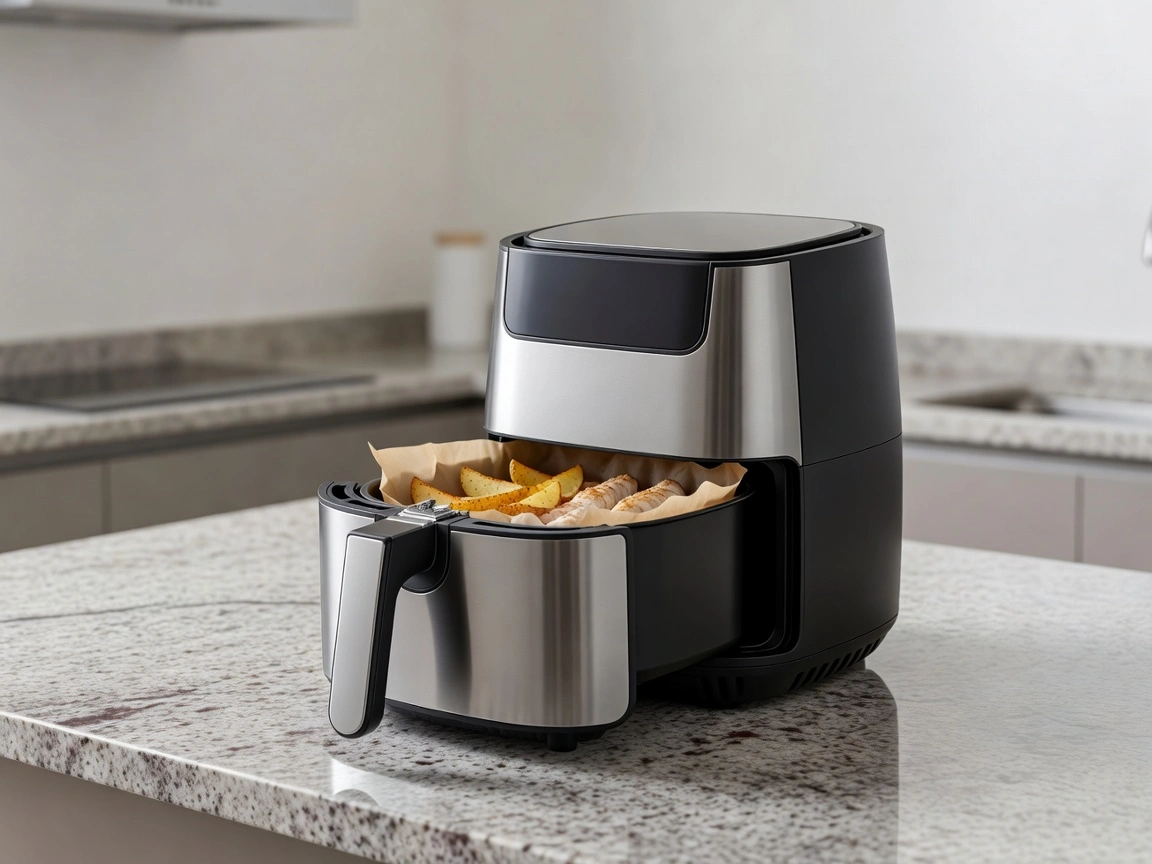
For beginners, the safest approach is to treat parchment as a helper, not a liner you can drop in and forget. Air fryers cook by moving hot air around the food. If the paper is too large, too light, or placed in the basket before food goes in, it can shift and cause trouble.
Quick Answer: Is Parchment Paper Safe in an Air Fryer?
Yes, parchment paper is generally safe in an air fryer when three conditions are met:
- It is rated for heat use.
- It stays flat under food.
- It does not interfere with airflow or touch the heating element.
That means parchment is best used for foods that cover most of the basket or tray, such as salmon fillets, dumplings, chicken tenders, or small baked items arranged in a single layer. It is a poor choice for very light foods or for an empty preheated basket.
If you want a broader overview of safe liner choices, this guide on when parchment paper is safe in an air fryer is a useful companion read.
Why Airflow Matters in an Air Fryer
Air fryers do not work like a regular oven tray. They rely on fast-moving hot air to cook food evenly and help it brown. Anything that blocks that airflow can affect both safety and texture.
A solid sheet of parchment paper can act like a partial barrier. If it covers too much of the basket, air cannot move freely through the food from underneath. The result may be softer bottoms, slower browning, or uneven cooking.
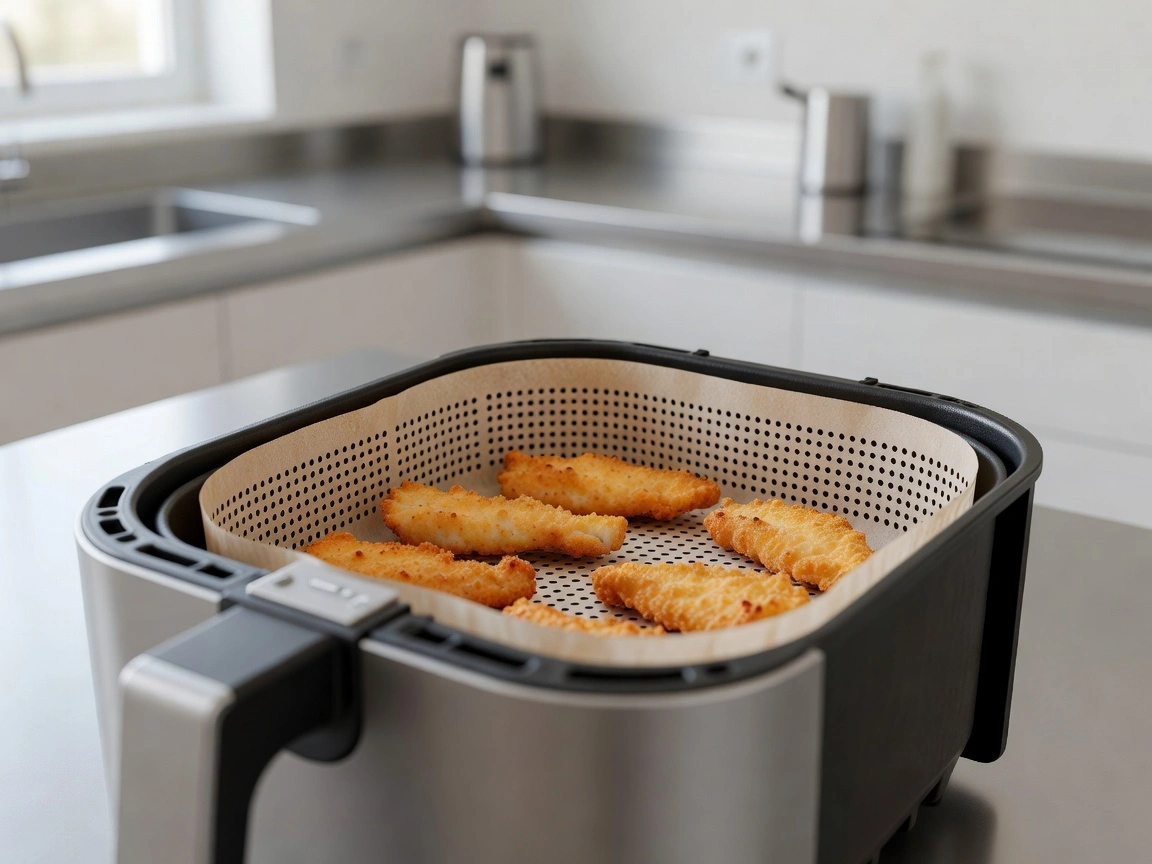
That is why perforated parchment liners are often a better choice than a full solid sheet. The holes allow more air to pass through while still giving you the cleanup benefit of a liner. If you are cooking something delicate or sticky, those holes matter more than most people expect.
The same airflow issue explains why parchment should never go into the fryer by itself. Without food on top, the sheet can flutter upward and get pulled toward the heating element. That is the main safety risk to avoid.
What Kind of Parchment Paper Is Safe to Use
Not all parchment options behave the same in an air fryer. The safest choice depends on fit, airflow, and the type of food you are cooking.
Regular parchment paper
Regular parchment can work if you cut it to fit the basket or tray and place food on top immediately. It is best for small batches and for cooks who already know how their air fryer handles airflow.
The trade-off is that regular parchment usually has no holes. If the sheet is too large, it can reduce crisping.
Perforated parchment liners
Perforated liners are the most air-fryer-friendly option. The holes support airflow while still reducing sticking and cleanup. Pre-cut perforated liners also save time because they are designed to match common basket shapes.
For most beginners, perforated, pre-cut liners are the best default choice. They are usually the easiest and safest practical option because they fit more predictably and are less likely to block airflow than a solid sheet.
Pre-cut liners
Pre-cut liners are convenient, but only if they fit your basket or tray properly. A liner that is too large can curl at the edges. A liner that is too small may slide around or leave too much exposed basket surface.
Temperature-rated parchment
Always check the packaging. Parchment paper should have a heat rating from the manufacturer, and that rating matters more than brand name or color. Unbleached parchment is common, but “unbleached” does not automatically mean better for high heat. The packaging is the source to trust.
If you are unsure, do not assume all parchment is made for the same conditions. Different products can behave differently, especially in compact appliances.
How to Use Parchment Paper in an Air Fryer Step by Step
The safest method is straightforward.
1. Cut or choose the right size
The liner should fit the cooking surface without sticking out too far. It should cover the bottom area you need, but not extend so far that it can catch air and lift.
For basket-style air fryers, the parchment should sit flat in the bottom of the basket. For tray-style models, it should sit flat on the tray and stay within the edges.
2. Do not preheat with loose parchment in the basket
Do not put parchment into an empty air fryer basket and then preheat it. That is one of the most common mistakes. The paper can move before food is added.
If your recipe or model calls for preheating, preheat without parchment, then add the parchment only after the food is in place and able to anchor it. If you are not preheating, you can place the liner and food together before starting the cook.
3. Make sure the food fully weighs it down
The liner should be covered enough that it cannot lift. A few small pieces in the corners are not enough. If the air can get under the sheet, it can flutter upward.
This is especially important with lightweight foods like a few shrimp or a small amount of chopped vegetables. If the food does not anchor the paper well, skip the liner or use a different option.
4. Keep the liner away from exposed heating areas
In basket-style units, the heating element is usually above the basket. In oven-style units, there may be more open space around the tray. Either way, the paper should never be able to rise into a hot element or fan area.
5. Watch the first use closely
The first time you use parchment in a new air fryer, stay nearby. If the paper starts to curl, darken, or smoke, stop and adjust your setup.
Basket-Style vs Oven-Style Air Fryers: What Changes
Basket-style and oven-style air fryers both use circulating hot air, but their shape changes how parchment behaves.
Basket-style air fryers
These usually have a deeper cooking chamber and a basket with holes or slots. Parchment works best when it lies flat in the basket and is fully covered by food. A pre-cut round or square liner can be convenient here.
Because the basket is enclosed, loose parchment can still lift if it is not weighted down. Never assume the basket walls will keep it in place.
Oven-style air fryers
These often use trays or racks, which can leave more exposed edges around the liner. That makes fit more important. A sheet that overhangs the tray may be more likely to curl.
In oven-style models, perforated liners are often the safer practical choice because they help preserve airflow while reducing the chance of trapping heat under a solid sheet.
When Parchment Paper Works Well — and When to Skip It
Parchment is most useful when you want easier cleanup and less sticking.
It works well for:
– salmon fillets
– chicken tenders
– dumplings
– small baked goods
– foods that release sticky sauce or glaze
It is less useful for:
– very light foods that do not anchor the paper
– very small batches
– foods where maximum crispiness matters most
– recipes that already release easily without a liner
A simple decision rule helps: if the food covers the liner and benefits from a nonstick surface, parchment makes sense. If the food is light, airy, or spread out, skip it.
For example, a single layer of salmon on parchment is usually manageable. A few loose fries on a full sheet of parchment are not a great match, because the paper can block airflow and the fries may cook less evenly.
Temperature Limits, Browning, and Smoke Warning Signs
Parchment paper is not meant for unlimited heat. Stay below the maximum temperature printed on the parchment package, since that manufacturer limit is the safest guide to follow. If the paper is browning quickly, curling at the edges, or smoking, stop the cook and reassess the setup.
Common causes include:
– using a sheet that is too large
– placing it too close to the heating element
– running the air fryer hotter than the parchment is rated for
– leaving the liner exposed instead of covered by food
If you notice browning, do not ignore it and hope for the best. Stop the cook if needed, remove the liner, and switch to a better-fitting option. A small cleanup convenience is never worth pushing the paper beyond what it can handle.
Parchment Paper vs Aluminum Foil vs Silicone Liners
Each liner has a different job. This table makes the trade-offs easier to see.
| Option | Airflow | Safety Fit | Crispiness | Cleanup | Reusability |
|---|---|---|---|---|---|
| Parchment paper | Good if perforated; weaker if solid | Safe only when weighted down | Can soften the bottom slightly | Easy | Usually single-use |
| Aluminum foil | Can restrict airflow if overused | Must be shaped carefully | Can change browning behavior | Easy | Usually single-use |
| Silicone liner | Good if designed for the model | Stable and reusable | Can reduce direct browning a bit | Easy | Reusable |
| No liner | Best airflow | No liner to move or lift | Often the crispest result | More cleanup | N/A |
Parchment paper vs aluminum foil
Parchment is usually better for sticky foods and for cleanup. Foil can be useful, but it behaves differently and can also interfere with airflow if it covers too much surface. Neither should be used in a way that blocks the basket.
Parchment paper vs silicone liners
Silicone liners are reusable and stable, which makes them appealing for frequent use. Parchment is simpler for one-off cleanup and does not need washing. If you cook in the air fryer often, silicone can be practical; if you want convenience for a single meal, parchment is easier.
Parchment paper vs cooking directly in the basket
Cooking directly in the basket gives the best airflow and often the best crisping. Parchment is mainly for convenience and sticking prevention. If the food already releases well, the liner may not be necessary.
Common Mistakes to Avoid
These are the errors that cause most parchment problems in air fryers:
- putting parchment in an empty basket
- using a sheet larger than the cooking area
- letting the paper extend into open space
- assuming every parchment product has the same heat tolerance
- using a solid sheet when airflow is already tight
- relying on parchment to solve sticking when the food is too light to anchor it
If you want to understand why some setups burn while others do not, this companion article on why air fryers burn parchment paper goes deeper into placement and airflow issues.
Cleaning, Reuse, and Disposal
Parchment paper is usually disposable. Once it has been used, softened, browned, or coated with grease, it should be discarded.
Can it be reused? Sometimes, if it is still clean, flat, and undamaged. But reuse should be limited. If the paper has curled, darkened, or absorbed a lot of oil, do not reuse it. Damaged parchment is more likely to behave unpredictably in the next cook.
For cleanup, let the basket or tray cool first, then remove any loose crumbs or grease. If you used parchment correctly, the basket should need far less scrubbing.
A Simple Rule for Safe Use
If you remember only one thing, remember this: parchment paper is safe in an air fryer only when it is fully supported by food and kept clear of the heating element. That one rule prevents most of the common problems.
When in doubt, choose perforated liners, keep the sheet small and flat, and skip parchment entirely if the food is too light to hold it down.
Best Practices by Air Fryer Type
Basket-style air fryers
Use parchment only when food will cover it well. Basket models are usually the best match for perforated, pre-cut liners because the fit is easier to control.
Oven-style air fryers
Be more careful with overhanging edges and exposed corners. Tray and rack designs can leave more space for the paper to move, so a perforated liner that stays fully within the tray is usually the safer choice.
Compact models
Small air fryers can run hotter around the edges and leave less room for error. If the basket is shallow or the heating element sits close to the food, parchment should be used only when it fits neatly and stays well anchored.
Least suitable setups
Very shallow trays, loose racks, and any model with limited clearance above the food are the least forgiving. If the liner cannot stay flat without extending into open space, it is better to skip parchment.
Frequently Asked Questions
Can parchment paper catch fire in an air fryer?
It can become a problem if it is loose, overheated, or too close to the heating element. Proper placement matters more than the paper itself.
Should I use perforated parchment paper?
Perforated liners are usually the better choice because they allow more airflow. For most beginners, perforated, pre-cut liners are the best default option.
Can I put parchment paper in before preheating?
No. Do not preheat with loose parchment in the basket. Preheat without parchment, or add it only after the food is in place and anchoring it.
Is regular parchment paper okay, or do I need air-fryer liners?
Regular parchment can work if it fits well and stays anchored. Air-fryer liners are more convenient and usually better for airflow.
Is parchment paper better than aluminum foil or silicone liners?
It depends on the job. Parchment is usually best for sticky foods and easy cleanup, foil can be useful but may affect airflow, and silicone liners are reusable and stable.
Will parchment paper make food less crispy?
It can, especially if the sheet is solid and covers too much of the basket. Perforated liners reduce that risk.
Can I reuse parchment paper in an air fryer?
Sometimes, but only if it is still flat, clean, and undamaged. For safety and consistency, single use is usually better.

