
How to Remove Sticky Grease from an Air Fryer Basket Without Damaging the Coating
A sticky air fryer basket is usually a sign that oil, heat, and food residue have built up in thin layers over time. Once that film starts to cling, a quick rinse often is not enough. The good news is that most baskets can be cleaned safely with simple kitchen supplies, as long as you protect the nonstick surface and avoid harsh scrubbing.
If your basket feels tacky, looks cloudy, or still smells greasy after washing, the goal is not to attack it harder. The goal is to loosen the residue, lift it gently, and rinse away every trace of cleaner before the basket goes back into service.
Why Air Fryer Baskets Get Sticky Grease Buildup
Grease becomes sticky when cooking oil and fat are exposed to heat again and again. Instead of washing off cleanly, a thin film can bake onto the basket, tray, and drawer. That film often traps crumbs, seasoning, and smoke residue, which makes the surface feel tacky even after a normal wash.
A few habits make the problem worse:
- Spraying oil directly onto the basket instead of onto food
- Cooking fatty foods without wiping the basket afterward
- Letting residue sit until it hardens
- Using too much oil for foods that already release fat, like bacon or wings
The basket may look clean at a glance while still holding a greasy film. That is why a basket can feel sticky even when no visible food is left behind.
What to Use and What to Avoid on a Nonstick Basket
For most air fryer baskets, the safest first choice is warm water and dish soap with a soft sponge or microfiber cloth. That combination is gentle enough for many nonstick finishes and effective enough for fresh grease.

Vinegar can be useful for light odor or film removal if the manufacturer allows it, but it is not the best first step for sticky grease on every basket. Avoid vinegar on nonstick baskets if your manual says not to use acidic cleaners, and do not mix it with other cleaners. A degreaser is only appropriate when the manufacturer specifically says it is safe for that model and material; otherwise, it can leave residue or damage the coating.
Safe tools and cleaners
- Mild dish soap
- Warm water
- Soft sponge
- Microfiber cloth
- Soft-bristle brush for corners and vents
- Baking soda paste for stubborn spots, used gently
- Vinegar, only if the manufacturer says it is safe and the residue is light
- Degreaser, only if the manufacturer specifically approves it for the basket material
What to avoid
- Steel wool
- Abrasive scouring pads
- Metal utensils or scrapers
- Harsh oven cleaners or strong degreasers unless the manufacturer says they are safe for that model
- Very hot drying methods that may stress the finish
- High-heat drying or putting the basket back while it is still damp
If you are unsure about the coating, treat it like delicate cookware. Gentle cleaning takes a little longer, but it protects the basket from scratches that make future grease cling even more. Abrasive scrubbers can damage the nonstick coating and make buildup worse over time. If the coating is already damaged, replacement may be the safest option.
Fast Cleaning Method for Light Sticky Grease
If the basket just feels slightly tacky after a few uses, a simple wash is often enough.
Step-by-step
- Let the basket cool completely and unplug the appliance.
- Remove the basket, tray, and drawer if they separate.
- Fill the sink or a basin with warm water and a little dish soap.
- Wipe the basket with a soft sponge or microfiber cloth.
- Pay attention to the corners, edges, and perforations where oil collects.
- Rinse thoroughly so no soap film remains.
- Dry with a clean towel or let the parts air-dry fully before reassembling.
A common mistake is stopping after the basket looks clean. If soap residue stays behind, it can leave a slippery or sticky film that feels like grease. A careful rinse matters as much as the wash itself.
How to Remove Stubborn or Hardened Grease
When grease has baked on, scrubbing harder is usually the wrong move. Soaking first loosens the residue and reduces the chance of scratching the coating.
Soak, then clean
For stuck-on buildup, place the removable parts in warm soapy water and let them sit long enough to soften the grease. If the buildup is heavy, soak them for 15 to 30 minutes, then wipe and rinse. If the residue is still hanging on, repeat the soak before trying to scrub more aggressively.
After soaking, use a soft sponge or soft-bristle brush to lift the residue. If the first wash does not fully remove the grease, repeat the wash once more before moving on.
This approach works better than brute force because the water does the loosening for you. If you try to scrape hardened grease immediately, you are more likely to damage the finish and leave behind fine scratches that collect even more residue later.
For corners and textured areas
Use a soft-bristle brush to reach the edges where grease tends to hide. Keep the pressure light. The goal is to sweep residue away, not polish the basket aggressively.
If the basket still feels sticky after soaking and a repeat wash, apply a baking soda paste to the remaining spots. Let it sit briefly, then rub gently and rinse well.
Baking soda paste for persistent residue
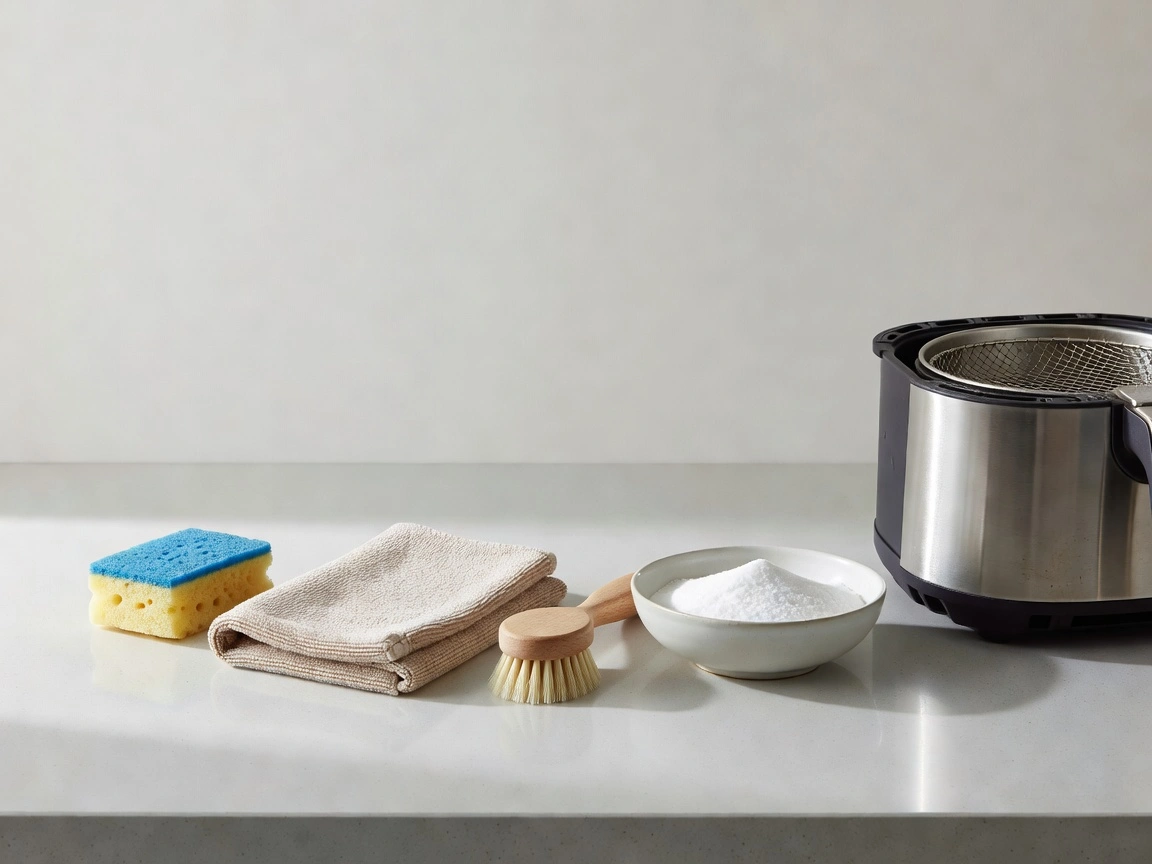
Mix baking soda with a small amount of water until it forms a spreadable paste. Apply it to the greasy areas and rub gently with a soft sponge or cloth. Baking soda can help lift residue without the harshness of an abrasive cleaner, but it still needs a light touch.
If one baking soda pass does not solve the problem, rinse the basket, let it dry, and repeat the paste on the remaining spots rather than scrubbing harder. If the coating still feels tacky after that, the issue may be worn nonstick material rather than grease alone.
Rinse thoroughly afterward. Any powdery residue left behind can dry into a film and make the basket feel dirty again.
Dish Soap vs. Baking Soda Paste vs. Stronger Cleaners
Different levels of grease call for different approaches. This comparison can help you choose the least aggressive method that still gets the job done.
| Method | Best for | Safety on nonstick surfaces | Trade-off |
|---|---|---|---|
| Dish soap and warm water | Fresh grease, light film, routine cleaning | Usually safest first choice | May not remove hardened buildup on its own |
| Baking soda paste | Sticky residue that remains after washing | Gentle when used lightly | Needs careful rinsing and a softer touch |
| Soaking before scrubbing | Hardened grease, corners, trapped residue | Very safe when water and mild soap are used | Takes longer than direct scrubbing |
| Dishwasher, only if allowed by the manual | Dishwasher-safe baskets and accessories | Depends on manufacturer guidance | Convenient, but not always gentle on coatings |
| Stronger degreaser | Heavy buildup on approved materials only | Higher risk unless specifically allowed | Can leave residue or damage the finish |
If you are deciding between dish soap and baking soda, choose dish soap first for light residue and baking soda only when the first wash leaves a sticky film behind. If you are choosing between soaking and scrubbing, soak first. It is slower, but it is usually kinder to the coating.
How to Clean the Basket, Tray, and Drawer Separately
Air fryer parts collect grease in different ways.
Basket
The basket usually gets the most direct contact with oil and food drips. Clean the interior, corners, and any perforated areas carefully. If food particles are trapped in the holes or along the rim, a soft-bristle brush works better than a sponge alone.
Tray
The tray often catches drips and crumbs. Remove it and wash it separately so grease does not get pushed back onto the basket. If the tray is flat and removable, it may clean faster than the basket itself.
Drawer
The drawer or outer pull-out section can collect a greasy film from steam and splatter. Wipe it down even if it does not look dirty. That hidden film is often what causes the air fryer to smell greasy the next time it heats up.
Cleaning the pieces separately also helps you spot where the buildup is coming from. If the basket is clean but the drawer still smells oily, the problem is likely residue on the surrounding parts rather than the basket alone.
When the Dishwasher Is Appropriate and When It Is Not
Some air fryer baskets and accessories are dishwasher-safe, but not all of them are. Check the manual for your specific model before using the dishwasher.
Use the dishwasher only when:
- The manufacturer says the part is dishwasher-safe
- The coating is in good condition
- You are cleaning light residue, not hardened grease
Hand wash instead when:
- The manual does not mention dishwasher safety
- The coating is scratched, worn, or flaking
- You need more control over stubborn buildup
- You are cleaning parts with delicate edges or a finish that seems sensitive
Even if a basket is dishwasher-safe, a pre-wash by hand may still help with stuck-on spots. The dishwasher can be useful for routine cleaning, but it is not always the best tool for heavy grease. If the dishwasher leaves a film or odor behind, re-clean the tray, drawer, seams, and any hidden edges by hand to check for trapped residue.
How to Rinse, Dry, and Reassemble the Air Fryer Properly
The final cleanup step is where many people leave residue behind without realizing it. Soap, baking soda, and loosened grease can all dry into a film if the parts are not rinsed well.
Rinse each piece until the water runs clear and the surface no longer feels slippery. Then dry all parts completely with a clean towel or leave them to air-dry fully. Moisture trapped in seams or corners can contribute to odor and may make the basket feel sticky again.
Before reassembling, check the basket and tray under good light. If the finish still looks cloudy or feels tacky, repeat the wash rather than putting the parts back while they are only half-cleaned. Do not use high heat to dry the parts, and do not reinstall them while they are still damp.
How to Prevent Sticky Grease from Coming Back
A few small habits make future cleaning much easier.
- Wipe the basket after each use, even if it looks mostly clean.
- Remove crumbs and drips before they harden.
- Avoid overusing oil when the food already contains fat.
- Clean the tray and drawer as often as the basket.
- Do a deeper wash before buildup has time to bake on.
If you use liners or parchment, make sure they fit properly and do not block airflow more than necessary. Poor airflow can encourage uneven splatter and residue. For more on that, see our guide on how to keep air fryer parchment paper from flying around.
Consistent cleanup matters more than occasional deep scrubbing. A light wipe after cooking is much easier than removing a thick greasy film later.
When the Basket Coating May Be Too Damaged to Clean Effectively
Sometimes sticky grease is not the main problem. A basket with a worn nonstick coating may keep grabbing residue no matter how carefully you clean it.
Signs the coating may be failing include:
- Visible flaking
- Deep scratches
- Areas that stay rough or discolored after washing
- Grease clinging in the same spots every time
If the finish is badly worn, repeated scrubbing may not solve the issue. At that point, replacement can be more practical than trying stronger cleaners that may only make the damage worse.
A Simple Decision Rule for the Right Cleaning Method
If the grease is fresh, use dish soap and warm water.
If it is sticky or hardened, soak first.
If residue remains after washing, try a baking soda paste gently.
If the manual says the parts are dishwasher-safe and the coating is still in good shape, the dishwasher is an option.
If the coating is flaking or badly scratched, stop scrubbing and consider replacing the basket.
That sequence keeps you from reaching for harsh cleaners before the gentler methods have had a fair chance.
When to Check the Manufacturer Guide or Replace the Basket
If you are unsure whether a cleaner, brush, or dishwasher cycle is safe for your basket, check the manufacturer’s care instructions first. For a food-contact surface, the safest choice is the one that protects both the coating and the next meal you cook in it.
If the basket still smells greasy after careful cleaning, recheck the tray, drawer, seams, and other hidden areas for trapped residue before assuming the basket itself is the problem. A methodical second wash is usually more effective than a more aggressive one.
If the nonstick coating is damaged, flaking, or still sticky after soaking, washing, and a baking soda paste, replacement may be the most practical fix.
For home cooks, the best long-term fix is simple: clean sooner, scrub less, and let soaking do the hard work.

