
How to Keep Air Fryer Parchment Paper from Flying Around
Air fryer parchment paper can be a helpful tool, but only when it stays put. If it lifts, curls, or blows toward the heating element, it stops being convenient and starts becoming a safety concern. The fix is usually simple: use the right size, place it under food that can hold it down, and avoid creating a situation where the fan can catch a loose edge.
Think of parchment in an air fryer as a support item, not a standalone liner. It works when the food anchors it. It fails when the basket is empty, the sheet is oversized, or the edges are exposed long enough for hot air to get underneath.
If you want a broader safety overview first, this related guide on whether parchment paper is safe in an air fryer is a useful companion read.
Why Air Fryer Parchment Paper Flies Around
An air fryer cooks by moving hot air quickly around the food. That circulation is useful for browning, but it also means lightweight parchment can behave like a loose sheet of paper in a strong draft. If the paper is not covered by food right away, the fan can lift a corner, curl the edges, or push the sheet upward.
The problem gets worse when the parchment is cut too large. A sheet that touches the sides of the basket or tray can buckle, and once a corner rises, hot air can slip underneath and keep lifting it. In a basket-style air fryer, that loose paper may drift toward the heating element above the food. That is the main risk to avoid.
A second issue is airflow. Even if the parchment does not fly away, a solid sheet that covers too much of the basket can block circulation. That can leave food pale on the bottom and reduce the crisping effect people want from an air fryer.
The short version: parchment moves when it has room to move. Your job is to remove that room.
The Safest Way to Use Parchment in an Air Fryer
The core rule is simple: parchment should be held down by food before the fan has a chance to catch it. In practice, that means the sheet should sit flat in the basket or tray and be covered by the food as fully as possible.
A few safety points matter here:
- Do not use parchment as a loose empty liner.
- Keep it away from the heating element.
- Follow the air fryer manual and the parchment package instructions if they differ from general advice.
- If a sheet keeps lifting, stop and adjust rather than hoping it will settle.
A useful mental check is this: if you can see a corner hanging out beyond the food, the fan can probably find it too. That exposed edge is the part most likely to curl, shift, or burn.
For sticky foods such as marinated vegetables, fish, or breaded items that might cling to the basket, parchment can be helpful. But the food still needs to cover the sheet in a stable way. A single small item sitting in the center of a large sheet is not enough to anchor it.
How to Keep Parchment Paper in Place
Trim it to the basket or tray
The easiest fix is often the most overlooked one: make the sheet smaller. Parchment should match the usable cooking surface, not the full shape of the basket wall to wall. If the sheet extends up the sides, it is easier for air to get underneath it.
For a basket-style air fryer, trim the parchment so it lies flat on the bottom without folding up the sides. For a tray-style model, cut it to the flat cooking area and avoid covering vents or perforations the appliance needs for airflow.
Use enough food to anchor it
Parchment works best with foods that naturally cover the sheet. Chicken tenders, fish fillets, salmon portions, stuffed mushrooms, or a batch of roasted vegetables usually provide enough weight to hold the paper down.
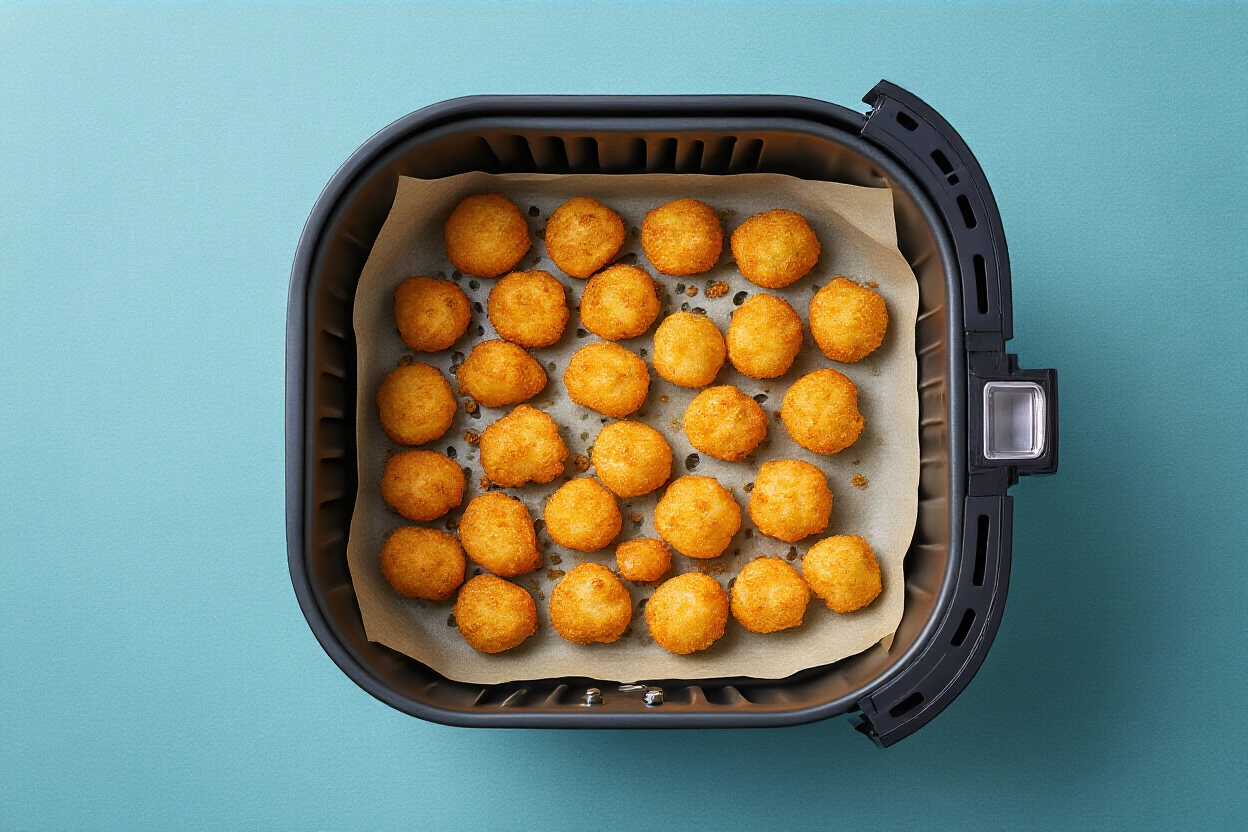
By contrast, a few fries scattered across a large sheet will not anchor it well. The same is true for lightweight items that do not sit evenly across the surface. If the food coverage is patchy, the paper is more likely to shift.
Flatten curled edges before cooking
If the parchment has been stored in a roll, the edges may want to curl upward. Flatten it before adding food. You can press it under the basket insert, place it under the food carefully, or briefly hold it flat on a counter so it relaxes a bit.
Do not rely on the food to fix a badly curled sheet after the basket is already running. Once hot air catches the edge, the paper can shift suddenly.
Add the parchment only when it will stay secured
If you are assembling a batch that takes time to arrange, place the parchment only when the food is ready to go in. The longer it sits loose in the basket, the more chance it has to move before it is anchored.
That matters especially with small or irregular foods. If you need to arrange ingredients one by one, it is often better to set up the food first and then place the parchment underneath or use a liner that stays put more reliably.
Perforated vs. Regular Parchment Paper
Perforated parchment has small holes that help air move more freely. Regular parchment is solid. Both can work in an air fryer, but they behave differently.
| Option | Airflow | Stability | Cleanup | Best Use |
|---|---|---|---|---|
| Perforated parchment | Better airflow | Often steadier because air passes through more easily | Easy | Foods that need circulation and a liner |
| Regular parchment | Less airflow | Can work if fully weighed down | Easy | Sticky foods or simple batches with full coverage |
| Silicone liner | Good, but can slightly soften crisping | Very stable | Reusable, easy to wash | Repeated use and basket protection |
| Light cooking spray or no liner | Best airflow | Stable because nothing can fly | Cleanup may be harder | Foods that release well or crisping-focused cooking |
Perforated parchment is often a good pick when you want both airflow and a liner. The holes can reduce the chance of the sheet acting like a sail. Regular parchment can still be fine if it is trimmed properly and fully covered by food, but it needs more attention.
If you want to compare parchment with other options in more depth, this related guide on why air fryer parchment can burn helps explain the airflow side of the problem.
A practical rule: choose perforated parchment when you are cooking something that needs a liner but still benefits from strong circulation. Choose regular parchment only when you can trim it tightly and cover it completely.
When to Add Parchment: Before or After Preheating
Preheating with loose parchment in the basket is risky because the fan may move the paper before food is in place. If your air fryer manual allows preheating, the safer habit is to preheat the appliance first and then add the parchment with the food already on top.
That approach reduces the time the paper spends exposed to moving air. It also means the food starts acting as the anchor immediately.
There is one caveat: some air fryer models and cooking methods work best when the liner is already in place before the food goes in. In those cases, the liner still should not be left loose and empty. It should be positioned so the food covers it right away.
If you are cooking something that needs a short preheat for crisping, the safest sequence is usually:
- Preheat the air fryer empty.
- Place the parchment in the basket or tray.
- Add the food immediately.
- Start cooking without delay.
That keeps the liner from sitting in a moving stream of hot air by itself.
What Foods Work Best with Parchment
Some foods naturally hold parchment down better than others.
Foods that usually anchor parchment well
- Chicken tenders or nuggets
- Salmon fillets
- Fish portions
- Breaded cutlets
- Roasted vegetables in a full batch
- Mozzarella sticks or other sticky breaded items
These foods spread weight across enough of the sheet to keep it flat. They also tend to benefit from a liner because they can stick to the basket.
Foods that often cause problems
- Fries in a thin layer
- Small vegetables scattered loosely
- A single piece of food in a large basket
- Very light items that move when the basket is shaken
These are the situations where parchment is most likely to shift. If the food does not cover much of the surface, the liner has too much exposed area.
A useful example: a basket of chicken tenders on a small perforated sheet is usually a good fit. A few carrot coins on a full-size sheet are not. The first batch holds the liner down; the second leaves too much paper exposed.
When to Skip Parchment Altogether
Parchment is not always necessary. In fact, there are many air fryer foods where skipping it gives better results.
Skip parchment when:
- The food already releases easily.
- Crisping is more important than cleanup.
- The batch is small or scattered.
- The basket has a nonstick surface that performs well on its own.
Fries, wings, and other foods that benefit from maximum airflow often cook better without a liner. The basket can do its job more directly, and the hot air reaches the food more evenly.
There is also a trade-off to consider. Parchment can reduce sticking, but it can also reduce direct contact with the hot basket surface. That may slightly soften the bottom crust on some foods. If you are aiming for a crisper finish, a liner-free batch is often the better choice, depending on the food, basket design, and recipe.
Better Alternatives to Air Fryer Parchment

Silicone liners
Silicone liners are more stable than parchment because they do not blow around. They are reusable and easy to wash, which makes them appealing for frequent air fryer use.
The trade-off is that they can slightly change how the bottom of the food browns. They are a good choice for repeat cooking, but not always the best choice when maximum crisping matters.
Light oiling or cooking spray
A light coating of oil on the basket or on the food can reduce sticking without adding a liner. This keeps airflow open and avoids the paper-moving problem entirely.
Use this approach when the food is not especially delicate and cleanup is manageable. It is often enough for vegetables, simple proteins, and foods that already have some fat.
No liner at all
Sometimes the cleanest solution is to use nothing. If the food is sturdy, the basket is nonstick, and the batch is meant to crisp, a bare basket may be the most reliable option.
That said, if you are cooking sticky marinades, cheese-heavy items, or breaded foods that tend to cling, a liner may save more trouble than it creates.
Quick Troubleshooting for Parchment That Still Moves
If the parchment is still shifting, check the usual weak points one by one.
The corners are curling up
Trim them shorter or flatten the sheet before cooking. Curled corners act like handles for the airflow.
The sheet is too big
Cut it down. A smaller sheet is easier to anchor and less likely to touch the sides.
The food coverage is too light
Add more food per batch, or choose a different liner. A nearly empty basket is the hardest situation for parchment to handle.
The liner is sitting loose during preheat
Move the liner step to after preheating, or place the food on it immediately if your model and recipe allow that sequence.
The basket shape is working against you
Some baskets and trays create more airflow around the edges than others. If the liner keeps moving no matter what you do, a silicone liner or no liner may be the better answer.
Safety Tip: Stop if Parchment Starts Lifting Toward the Heating Element
If you notice parchment curling upward during cooking, pause and fix it before continuing. A sheet that starts to rise can move quickly once the airflow catches it, and the safest response is to stop the cycle, remove the basket if needed, and reposition the liner so it is trimmed smaller and fully covered by food. If the paper has browned heavily or shows signs of scorching, discard it and start with a fresh sheet.
FAQ
Can I use regular parchment paper in an air fryer?
Yes, if it fits the basket or tray and is fully weighed down by food. The key is not the paper alone, but whether it stays flat during cooking.
Do I need perforated parchment paper?
Not always, but it often helps. Perforations improve airflow and can make the sheet less prone to acting like a sail.
Should I preheat the air fryer with parchment inside?
Avoid leaving parchment loose in the basket during preheat. If you preheat, add the parchment with the food immediately afterward unless your appliance instructions say otherwise.
Is it safe if parchment touches the heating element?
No. Loose parchment near the heating element can burn. Keep it secured in the basket and trimmed so it cannot lift into the top area.
What is the best food for parchment in an air fryer?
Foods that cover the sheet well, such as chicken tenders, salmon, fish portions, and breaded items, usually work best.
What can I use instead of parchment paper?
Silicone liners, light oiling, or no liner at all are the main alternatives. The best choice depends on whether you value stability, crisping, or easy cleanup more.
Why does my parchment keep curling?
It is usually too large, too dry and stiff from storage, or not covered enough by food. Trimming it smaller and flattening it before cooking usually helps.
Final Takeaway
To prevent air fryer parchment from flying around, keep the sheet small, cover it fully with food, and avoid letting it sit loose in moving hot air. If a batch does not naturally hold the paper down, switch to perforated parchment, a silicone liner, or no liner at all. The safest setup is the one that stays flat, preserves airflow, and never gives the fan a chance to lift a corner.

