How to Use a Compact Air Fryer in a Small Kitchen Without Clutter or Guesswork
A compact air fryer can be a practical tool in a small kitchen, but only if you treat it like a space-saving appliance with its own workflow, not just a smaller version of a full-size oven. In a studio apartment, dorm-style setup, or one-cook kitchen, the real challenge is not whether the machine works. It is whether it fits your counter, your storage, and your cooking habits without creating friction every time you use it.

Used well, a compact air fryer can crisp frozen foods, roast vegetables, reheat leftovers, and handle small portions with less heat buildup than a conventional oven. Used carelessly, it can take over a tiny counter, crowd the airflow, and become one more appliance you avoid because it is annoying to pull out and clean. The goal here is simple: make the air fryer easy to use, safe to place, and efficient enough that it earns its space.
What a compact air fryer can realistically do in a small kitchen
A compact air fryer often makes the most sense for one or two people, side dishes, and small batches of proteins or vegetables. Think of it as a fast circulation oven with a limited basket, not a replacement for every cooking task. That distinction matters in a small kitchen, where every appliance has to justify its footprint.
For example, a compact basket may handle a single serving of fries, a few chicken tenders, a couple of salmon fillets, or a small pile of broccoli, but exact amounts depend on the model’s capacity and how full the basket is. It is also useful for reheating foods that benefit from a crisp exterior, such as pizza slices, wings, or roasted vegetables. What it does not do well is cook large, crowded portions evenly. If the basket is packed wall to wall, hot air cannot move around the food, and the result is usually pale spots, soft edges, and longer cooking times.
If you want a broader overview of safe setup and appliance placement, this guide pairs well with our article on air fryer safety in small kitchens.
Compact air fryer vs larger air fryer or toaster oven
A compact air fryer has one major advantage: it is easier to fit into a tight kitchen and faster to pull out for everyday use. A larger air fryer gives you more batch capacity, but it also demands more storage and more counter space. A toaster oven may be more versatile for toast, open-faced melts, or baking in small pans, and in some kitchens that makes it the better space tradeoff even if it is not the most compact option.
A simple decision rule helps here:
- Choose a compact air fryer if you cook mostly for one or two people and want quick cleanup.
- Choose a toaster oven if you need a second oven-like appliance more than you need crisping.
- Choose a larger air fryer only if the extra basket space will actually get used most days.
Choose the right compact air fryer size and style
The best compact air fryer is the one that fits both your food and your kitchen layout. Size is not just about capacity; it is also about whether the appliance can live on your counter or must be stored between uses.
A useful starting point is capacity. Many compact models are built for roughly one to two servings at a time, which is often enough for a solo cook or a couple making a side dish. If you regularly cook for three or more people, or you want to make full meals without multiple rounds, a compact unit may start to feel too small. In a narrow galley kitchen, a smaller footprint can matter more than raw basket size. In a wider kitchen with a little more counter depth, a slightly larger compact model may still fit without crowding prep space.
Basket-style vs toaster-oven-style
A basket-style air fryer is a common space-efficient choice for a small kitchen, especially if your main goal is crisping and quick cleanup. It tends to be narrower, simpler to clean, and easier to stash in a cabinet. It also encourages smaller batches, which often improves crisping.
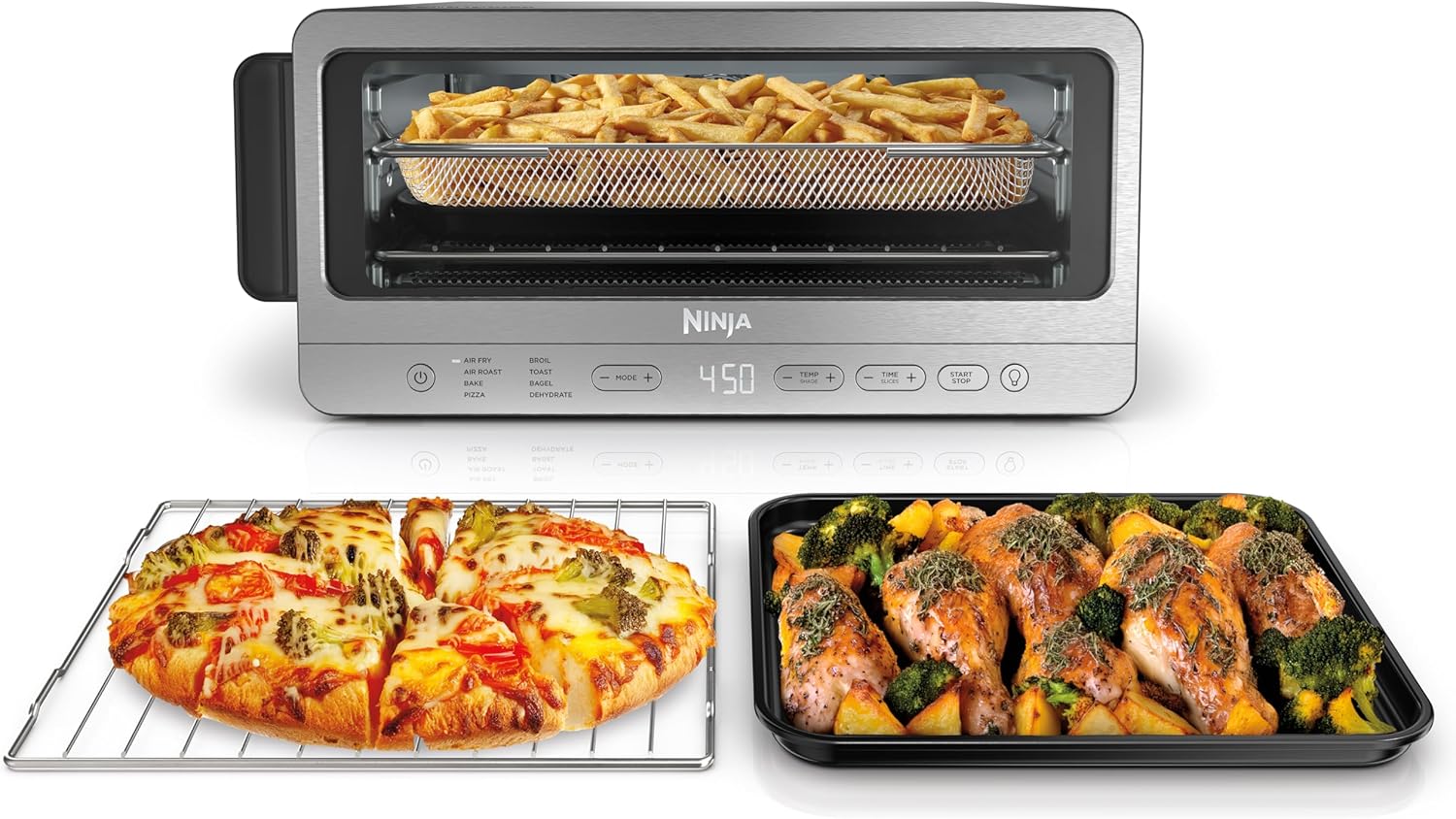
A toaster-oven-style air fryer gives you a flat interior and more flexibility with pans and trays. That can be useful if you want to toast bread, reheat open dishes, or cook items that do better on a rack. The trade-off is that it usually occupies more counter space and may be harder to store in a crowded cabinet.
Single-drawer vs dual-drawer compact models
A single-drawer compact model is usually the better fit for tight kitchens. It is simpler, takes up less room, and is easier to clean. A dual-drawer compact model can be useful if you regularly cook two foods at different temperatures, but in a small kitchen the extra width may create more problems than it solves.
If you mostly cook one item at a time, a single drawer is the cleaner choice. If you often want, say, vegetables in one side and a protein in the other, a dual-drawer model can save you from using two separate batches. Just remember that the wider body may be harder to place safely under cabinets.
Find a safe place to use it and leave enough clearance
Placement matters more in a small kitchen because the air fryer’s hot exhaust and intake need room to work. Put it on a stable, heat-resistant countertop surface and keep it away from curtains, dish towels, paper goods, and anything that can trap heat or block airflow. Do not wedge it tightly between appliances.
A practical baseline is to leave about 5 inches of space on the back and sides and about 5 to 6 inches above the unit, then check the manual for the exact clearance your model requires. If your kitchen is especially tight, prioritize the back and top first, since those are the areas most likely to trap heat or interfere with venting. If the manual calls for more space than that, follow the manual.
The best spot is usually a section of counter that is easy to reach, easy to clean, and not part of your main chopping zone. In a studio or apartment kitchen, that may mean sacrificing a little convenience to preserve safety and airflow. If the unit sits too close to a wall or cabinet, the surrounding surfaces can get uncomfortably warm, and the machine may not perform as designed.
A good habit is to leave the appliance where you can open the basket fully without bumping a wall, backsplash, or nearby utensil holder. If the manual gives specific clearance instructions, follow those instead of guessing. Models vary, and the manufacturer’s guidance should win.
Electrical safety in a tight layout
Keep the cord tidy and away from the counter edge. Avoid letting it drape where it can be snagged or pulled. If the manual warns against extension cords, treat that warning seriously. Small kitchens often tempt people to solve outlet problems with a power strip or extension cord, but that is not a good shortcut unless the manufacturer explicitly allows it.
Set up a small-kitchen workflow around the air fryer
A cramped kitchen gets messy fast if the prep area, cooking area, and serving area overlap too much. The easiest way to keep the air fryer from taking over is to assign it a small, repeatable workflow.
Try this layout:
- Prep food on one clear cutting board zone.
- Season or coat food beside the sink or near the trash bowl.
- Move the food directly into the air fryer basket.
- Use the nearby counter space for a heat-safe plate or tray.
- Return the basket to its spot for cooling and cleaning.
That sequence keeps raw food, cooked food, and dirty tools from spreading across the counter. It also makes batch cooking less chaotic. If you are cooking in a very small space, keep only the tools you need for that meal within reach: tongs, a spatula, a small bowl, and a plate.
How to use the controls: preheat, temperature, timer, and presets
Most compact air fryers are simple to operate, but the controls can still be misleading if you treat presets like guarantees. Presets are starting points, not final answers. A chicken preset on one model may behave very differently from another model with a different wattage, basket shape, or load size.
Preheat only when it helps
Some foods benefit from a brief preheat, especially when you want quick browning or a more consistent start. Other foods can go in from the beginning without much difference. If your recipe or the food itself is delicate, preheating may not be necessary. If you are cooking frozen foods or want a crisper finish, preheating can help the surface set faster.
Set time and temperature with the basket size in mind
A compact basket may cook differently from a larger basket, but the result depends on wattage, basket shape, and how much food you put in it. That does not mean every recipe should be shortened automatically, but it does mean you should check earlier than you would in a conventional oven.
When you use a new recipe, treat the first run as a calibration round. Check the food partway through, then adjust the next batch based on what you saw. If the edges brown too quickly while the center lags, lower the temperature slightly and give the basket more shaking or turning time. For compact baskets, it is often better to start with a little less time and add more if needed than to overcook the first batch.
When to shake, turn, or rotate
- Shake once about halfway through for fries, vegetables, nuggets, and other loose items.
- Turn or flip food that sits in larger pieces, such as salmon fillets or chicken cutlets.
- Rotate the basket or swap positions only if your model has hot spots or uneven browning.
If you are cooking a very small batch, the food can shift more easily, so a gentle shake may be enough. If the basket is fuller, you may need more frequent checking to keep the top layer from browning faster than the rest.
Cook in smaller batches without overcrowding the basket
This is the most important habit for getting good results from a compact air fryer. Air fryers crisp by moving hot air around the food. If the basket is full enough to block that movement, the machine loses the very advantage you bought it for.
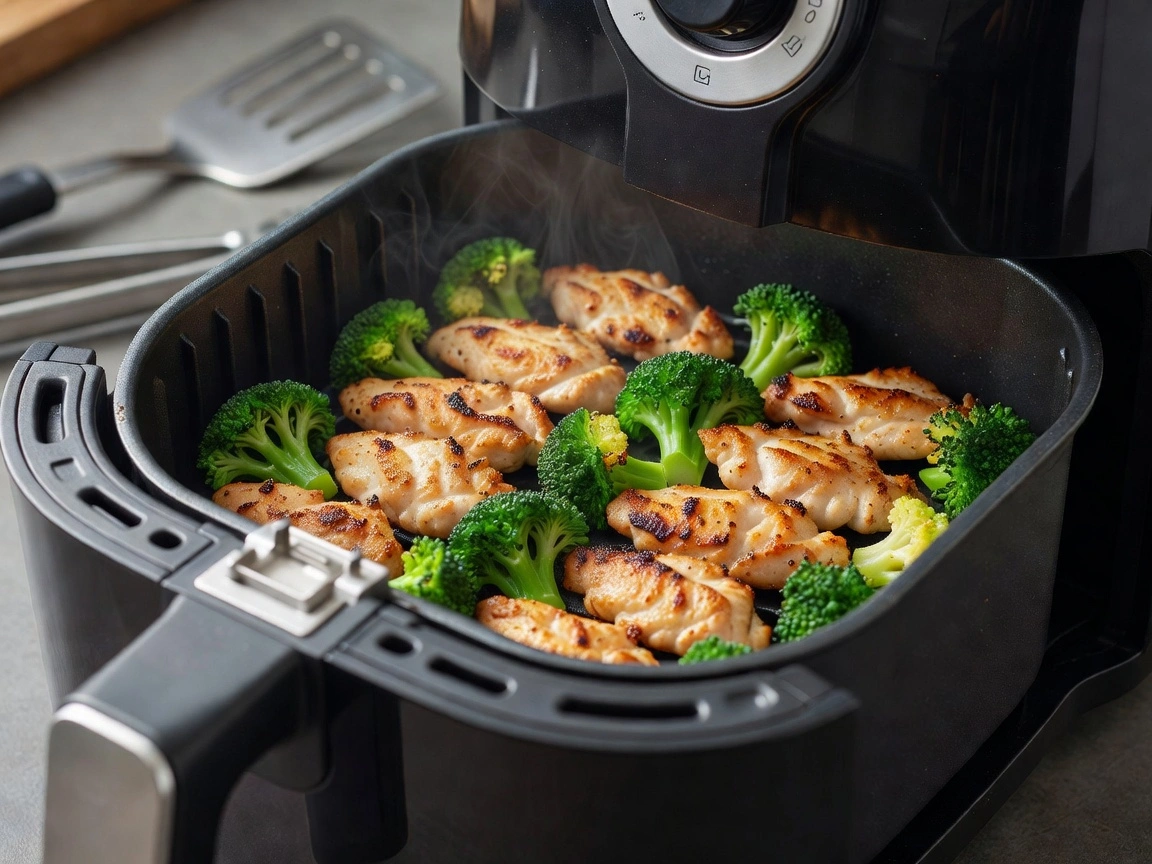
A practical rule: arrange food in a loose layer with space between pieces whenever possible. If the food is stacked or touching heavily, plan on extra shaking, turning, or a second batch. That is especially true for breaded foods, vegetables, and anything you want evenly browned.
Batch cooking examples that work well
- Frozen fries for one person: cook a modest portion, shake once or twice, and plate immediately.
- Chicken tenders for a student meal: cook a small batch first, then a second if needed.
- Two salmon fillets for a couple: cook in separate rounds if the basket is too tight for both with space around them.
- Broccoli or Brussels sprouts: use a smaller amount so the edges roast instead of steam.
The trade-off is time versus texture. Two smaller batches take longer overall, but the food usually comes out better. In a small kitchen, that is often the smarter choice.
Best foods for a compact air fryer, and foods that are less ideal
Compact air fryers are strongest with foods that benefit from dry heat and quick browning.
Foods that work especially well
- Frozen snacks and sides
- Small cuts of chicken, fish, or tofu
- Vegetables cut into even pieces
- Leftovers that should regain crispness
- Breaded items that need a crunchy exterior
Foods that are less ideal
Large casseroles, very wet batters, and oversized items that fill the basket too tightly are usually better handled elsewhere. A compact air fryer can still cook them in some cases, but the results are often less even, and cleanup gets harder. If you regularly cook full-size meals for more than two people, another appliance may fit your routine better.
If you are interested in baking specifically, our guide to making a small cake in an air fryer shows how pan size and timing change in this type of appliance.
Use parchment paper or foil safely
Liners can make cleanup easier, but they can also interfere with airflow if used carelessly. In a compact basket, that matters even more because there is less room for air to circulate.
Use parchment paper or foil only when there is enough food weight to hold it flat, and never let a liner drift up where it can contact the heating element. Perforated parchment is often more practical than a solid sheet because it allows more circulation. If a liner covers too much of the basket bottom, the food may steam instead of crisp.
A good cleanup shortcut is to use the liner only under foods that are likely to drip or leave sticky residue. For dry foods like fries or roasted vegetables, skipping the liner often gives better browning and less fuss. Accessories like a small rack or silicone liner can help in some cases, but only if they do not block airflow or crowd the basket. In a compact unit, simpler is often better.
Clean the basket and parts in a limited-space kitchen
Cleaning is easier when you do it promptly. In a small kitchen, that matters because greasy parts left in the sink tend to crowd the rest of your dishes.
Let the unit cool before handling it. Remove the basket and any removable tray or insert, then wash those parts according to the manual. Many removable pieces are dishwasher-safe on some models, but not all, so check the instructions rather than assuming. If your sink is tiny or already full, wash the basket right after use before other dishes pile up. A small drying rack or dish mat can keep parts off the counter while they air-dry. Wipe the main appliance base with a damp cloth only if the manual allows that approach, and never submerge the base in water.
A practical small-space cleaning routine:
- Empty crumbs right after cooking.
- Wash removable parts before they dry with grease on them.
- Dry everything fully before reassembling, or air-dry it as the manual directs.
- Wipe the counter beneath the unit so residue does not build up.
- Put the rack or drying mat away once the parts are dry to avoid clutter.
That routine prevents odors, sticky buildup, and the kind of cleanup job that makes you avoid using the appliance again.
Store a compact air fryer when it is not in use
Storage is where compact air fryers either earn their keep or become clutter. If you use it several times a week, keeping it on the counter may be the most realistic option. If you use it only occasionally, storing it in a lower cabinet or on a shelf can free up valuable prep space.
A simple decision rule helps: keep it on the counter if you use it most days or if cabinet access is awkward; store it after each use if you only cook with it occasionally and you can put it away without a hassle. The best storage spot is one you can reach without moving three other appliances first. In a small household, convenience matters more than “perfect” organization. If the air fryer is buried in a deep cabinet, it will get used less often.
Countertop storage vs cabinet storage
- Countertop storage: best for frequent use, but only if you can keep the area clear and safe.
- Cabinet storage: best when counter space is scarce, but only if lifting it in and out is manageable.
- Open shelf storage: useful if the unit is light enough and the area stays dry and dust-free.
If you store it away after each use, make sure the basket and interior are dry according to the manual before putting it away. Some models need more air-drying time than others, so do not rush that step if moisture lingers.
Common mistakes that make compact air fryers perform poorly
Most air fryer problems in small kitchens come from setup and habits, not from the machine itself.
Mistake 1: putting it too close to walls or cabinets
This limits airflow and can make the surrounding area hot.
Mistake 2: filling the basket too full
Overcrowding blocks circulation and gives you uneven browning.
Mistake 3: trusting presets without checking the food
Presets are useful, but they are not universal.
Mistake 4: skipping the halfway shake or turn
Small baskets still need attention if you want consistent color.
Mistake 5: using too much liner material
A liner that covers too much area can trap steam and reduce crispness.
Mistake 6: buying a model that does not match your space
A compact appliance that cannot fit your counter or cabinet is not really compact for your kitchen.
A simple way to decide if a compact air fryer fits your kitchen
If you have one clear counter zone, cook for one or two people, and value quick cleanup, a compact air fryer is usually a sensible addition. If your counter is already crowded, your storage is tight, and you rarely cook small batches, the machine may become another object you have to work around.
The best setup is the one you can use without rearranging your kitchen every time. In a small home, that is the real test.
When to Consult a Pastry Chef
If you are trying to use a compact air fryer for baked goods, delicate pastries, or pan-based recipes and the results keep coming out uneven, it may help to consult a pastry chef or a baking instructor. Small changes in pan size, batter depth, and airflow can make a noticeable difference, especially in a compact appliance.
For food safety questions about doneness, storage, or reheating, follow official guidance from sources such as the USDA and the FDA, along with your appliance manual.
FAQ
Can I use a compact air fryer on a cabinet shelf?
Only if the shelf is stable, heat-safe, and the unit has enough clearance for airflow. Most people find a countertop or open shelf easier and safer than a fully enclosed cabinet space.
Do I need to preheat every time?
No. Some foods benefit from preheating, while others do not. Use the manual or the recipe as a guide, and treat preheating as a tool rather than a default rule.
Is a dual-drawer compact air fryer worth it in a small kitchen?
Sometimes, but only if you regularly cook two foods at different settings. If storage and counter space are tight, a single-drawer model is often the better fit.
Can I put foil in the basket?
Only if your manual allows it and the foil will not block airflow or lift into the heating element. In a compact basket, less coverage is usually safer and more effective.
What should I cook first in a new compact air fryer?
Frozen fries, vegetables, or a simple protein are practical first tests because they show how your model handles browning and airflow without requiring a complicated recipe.