
Are Air Fryers Safe for Small Kitchens? What to Know Before You Buy or Use One
If you’re short on counter space, the short answer is yes—air fryers can be safe in small kitchens, but only when you give them the room, airflow, and electrical setup they need. The appliance itself is not the problem. The risk usually comes from where it’s placed, how crowded the counter is, and whether the kitchen can handle the heat and power draw.
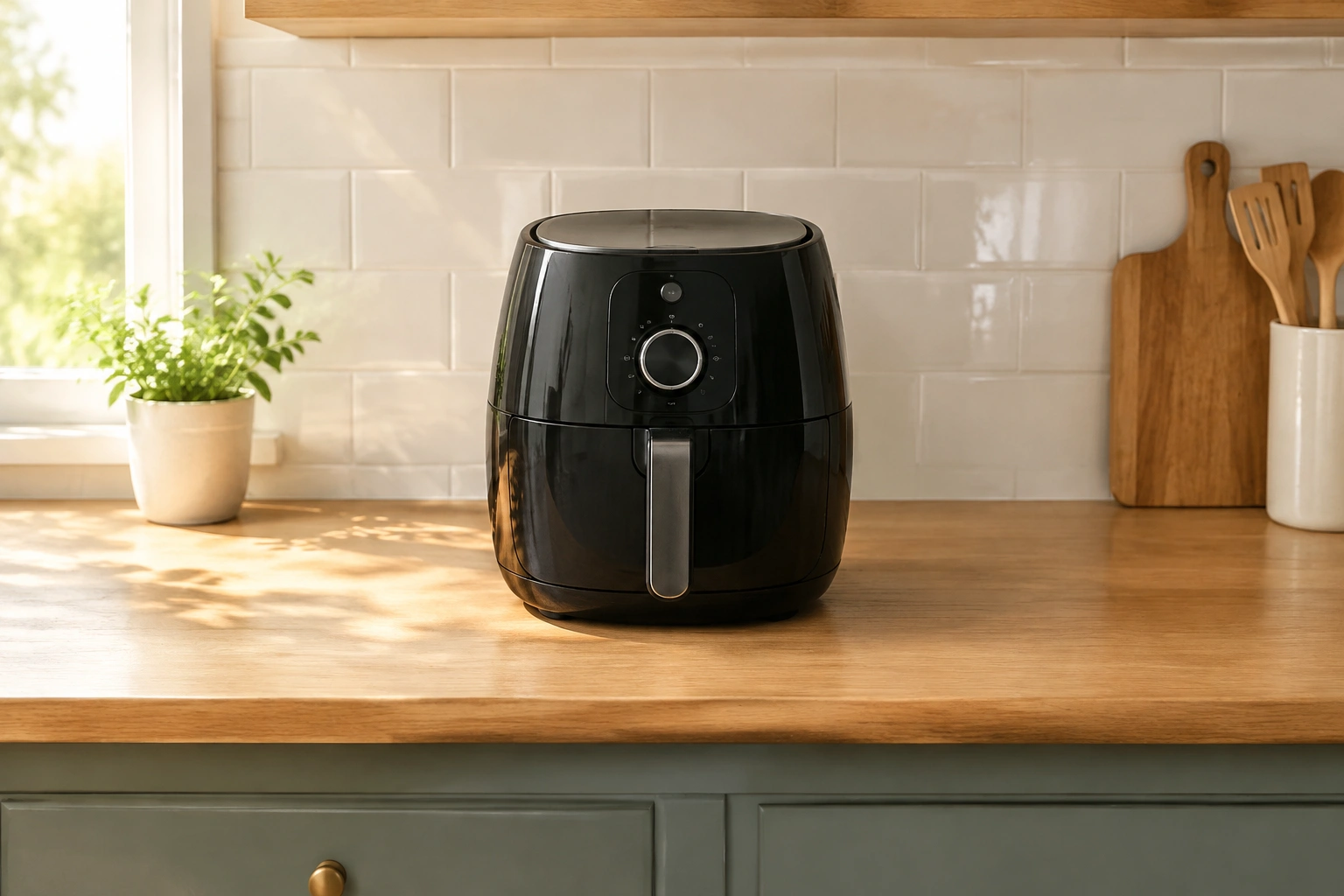
In a studio apartment, dorm kitchenette, or compact galley kitchen, an air fryer can be a practical choice because it usually takes less space than a full oven and can help avoid heating up the whole room. That makes them appealing in tight kitchens—but compact does not mean “safe anywhere.” Placement still matters.
Short Answer: Are Air Fryers Safe in Small Kitchens?
Yes, air fryers are generally safe for small kitchens when used correctly. The main concerns are not “small kitchen” by itself, but rather:
- placing the appliance too close to cabinets or walls
- blocking vents and airflow
- overloading an outlet or circuit
- letting grease and crumbs build up
- crowding the counter with flammable or heat-sensitive items
If your kitchen has a stable counter, enough open space around the appliance, and a suitable outlet, an air fryer can be a reasonable fit. If the only available spot is wedged under low cabinets or next to a pile of paper towels, that setup is not safe enough.
A useful rule of thumb: if you cannot leave the appliance with open space around it and still move around it comfortably, the counter is probably too cramped for safe daily use.
What Makes an Air Fryer Safe or Unsafe in a Tight Space
In a small kitchen, the safety question comes down to four things: heat, airflow, power, and clutter.
Heat
Air fryers get hot on the outside and exhaust hot air during cooking. That heat can become a problem if the appliance is pushed against a wall, placed under cabinets, or surrounded by other appliances. Small kitchens often have less “buffer space,” so the heat has fewer places to go.
Airflow
Air fryers need space for air to circulate. If the vents are blocked, the appliance may run hotter than intended. That can affect performance and create a safety concern. A small footprint is helpful, but only if the design still allows air to move freely.
Power
Many air fryers draw enough wattage that they should be treated like a serious countertop appliance, not a light gadget. In older apartments or dorms, the outlet situation matters just as much as the counter space. A crowded power strip is a bad place to add another high-draw appliance.
Clutter
A small kitchen often means everything lives close together. That makes it easier for dish towels, paper packaging, utensils, or cords to end up too near the appliance. In practice, clutter is one of the most common ways a small kitchen becomes unsafe.
How Much Clearance an Air Fryer Needs Around Walls and Cabinets
There is no one universal clearance number that fits every model, because manufacturers set their own instructions. That is the first thing to check in the manual. If the manual gives a spacing requirement, follow it.
If you do not have the manual handy, use this practical placement guide:
- leave at least several inches of open space on the sides and back
- keep the top clear so hot air can rise without hitting a cabinet
- do not place it directly under low cabinets unless the manual allows it
- avoid corners where heat and steam can get trapped
A simple example: a clear stretch of counter with open air to the sides and above is safer than a tight nook between the backsplash and a toaster. A spot that looks neat but leaves the fryer boxed in is not a good choice.
In a cramped kitchen, a safe setup is usually a flat section of counter near an outlet, with the fryer pulled forward enough that heat is not blowing straight into a wall or cabinet. Unsafe spots include the space inside a cabinet, an enclosed shelf, a storage nook, or any area where the appliance cannot vent freely.
Ventilation Needs: What Small Kitchens Must Have
Air fryers do not usually require special ventilation like a range hood system, but they do need normal airflow around the appliance. In a tiny kitchen, that distinction matters.
Good airflow means:
- the vents are not blocked
- the appliance is not enclosed by cabinets or walls
- hot exhaust can disperse instead of bouncing back toward the unit
- nearby items are not trapping heat
If your kitchen is very small, you may notice the room warming up during longer cooking sessions. That is not unusual. It does mean you should avoid using the air fryer in a closed-off corner with poor circulation.
For apartments and dorms, a practical habit is to run the appliance only when the immediate area is clear. Keep the counter around the unit uncluttered so the heat has somewhere to go.
Electrical Safety: Wattage, Outlets, and Cord Management
This is the part people overlook most often.
An air fryer may fit physically on a small counter, but still be unsafe if the outlet setup is weak. Check the wattage on the appliance label or product page before buying. Then think about what else is already on that circuit.
What to check
- Is the outlet in good condition?
- Is the air fryer sharing that outlet with another high-draw appliance?
- Is the cord long enough to reach without stretching across the counter?
- Does the cord stay clear of the hot body of the appliance?
When sharing an outlet becomes unsafe
Avoid sharing an outlet or circuit if the other appliance is also high-draw, such as a microwave, toaster oven, toaster, coffee maker, or electric kettle. If the kitchen already trips breakers, the outlet feels warm, or you need multiple adapters just to plug things in, treat that setup as unsafe and use a different outlet or have the wiring checked.
What to avoid
- extension cords unless the manufacturer specifically allows them
- power strips packed with multiple heating appliances
- cords draped over the edge of the counter
- plugging the fryer into the same overloaded outlet as a microwave, toaster, or coffee maker
In a small kitchen, people often rely on one or two outlets for everything. That makes cord management more than a neatness issue. It is a safety issue.
If your kitchen already struggles with outlet access, a compact air fryer with moderate wattage may be a better fit than a larger, higher-draw unit.
Choosing the Right Air Fryer Size for a Small Kitchen
A smaller air fryer is often the better choice for a small kitchen, but not always for the reason people assume. The goal is not simply “smallest possible.” The goal is the best balance of footprint, capacity, and safe placement.
Compact air fryer
A compact model works well if you usually cook for one or two people, reheat leftovers, or make small batches. These models are easier to store and usually leave more usable counter space.
Best for:
– studio apartments
– dorm kitchens
– one- or two-person households
– people who want to keep the appliance on the counter
Trade-off:
– smaller baskets may require cooking in batches
Full-size air fryer
A larger model can be useful if you cook for several people or want more room for food. But in a small kitchen, the larger footprint can crowd the workspace and make safe placement harder.
Best for:
– families
– frequent batch cooking
– kitchens with a dedicated appliance zone
Trade-off:
– it may take over the counter and be harder to store
Compact air fryers are often the easier fit for tight kitchens because they take up less room and are simpler to place safely. That is exactly why they make sense in many small kitchens: they solve the space problem without forcing you to give up the appliance entirely.
Basket-Style vs Oven-Style Air Fryers for Limited Counter Space
Both styles can work in small kitchens, but they fit different layouts.
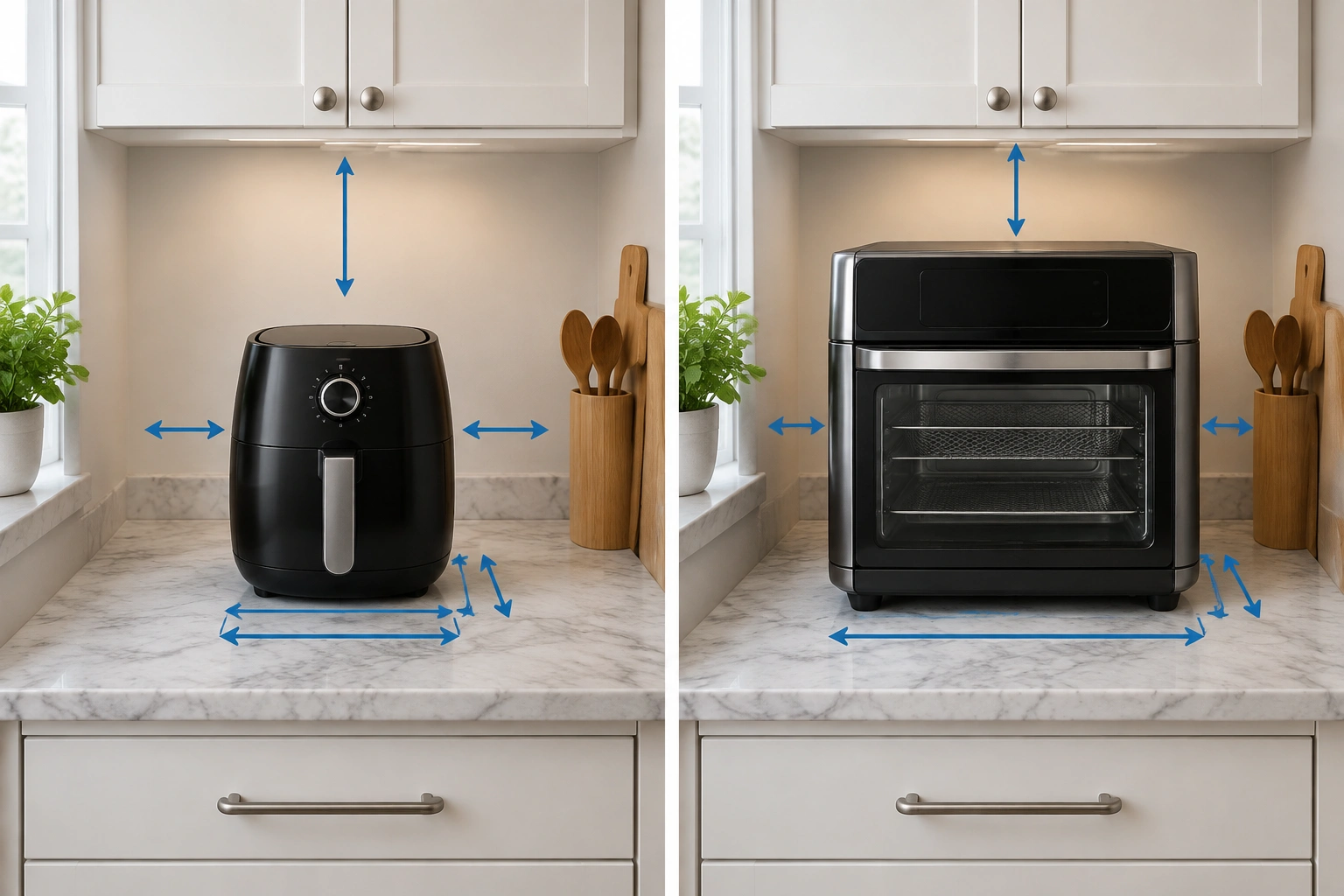
| Feature | Basket-Style Air Fryer | Oven-Style Air Fryer |
|---|---|---|
| Footprint | Usually smaller and easier to tuck into a narrow counter section | Often wider and taller |
| Clearance needs | Typically simpler to place if the design is compact | May need more vertical and front-facing space |
| Capacity | Often better for smaller batches | Can handle more varied foods and accessories |
| Small-kitchen fit | Strong choice for tight counters | Better if you have more open space |
Basket-style
A basket-style air fryer is usually the easier choice for a very small kitchen. It tends to have a simpler footprint and is easier to move, clean, and store.
Oven-style
An oven-style air fryer can be useful if you want more cooking flexibility. But in a small kitchen, its larger shape can make placement more difficult, especially under cabinets.
If your counter is narrow, basket-style usually wins on practicality. If you have a bit more room and want a multi-use appliance, oven-style may still make sense.
Air Fryer vs Toaster Oven: Which Works Better in a Small Kitchen?
This comparison matters because these appliances often compete for the same counter space.
Air fryer
- usually faster for small batches
- often easier to store
- may create less room heat than turning on a full oven
- can be more compact in basket form
Toaster oven
- more versatile for toast, baking, and broiling
- often takes up more counter space
- can be a better all-purpose appliance if you do not want separate gadgets
If your kitchen is extremely small and you mainly want quick reheating or crisping, a compact air fryer usually makes more sense. If you want one appliance to do several jobs and can spare the footprint, a toaster oven may be more practical.
Safe Placement Tips for Apartments, Studios, and Dorm Rooms
Different small kitchens have different risks, so placement should match the setting.
Apartments
In a compact apartment kitchen, place the air fryer on a stable counter with clear space around it. Keep it away from curtains, dish towels, and paper goods. If the counter sits below upper cabinets, check the manual before placing it there.
Studios
Studio kitchens often double as living space, so heat and smell can spread quickly. Give the appliance a little extra breathing room and avoid placing it near soft furnishings or stacked storage bins.
Dorm rooms
Dorm kitchens or shared kitchenettes can be tight and unpredictable. Make sure the outlet is not overloaded, and avoid using the fryer in a crowded area where other people may bump into it or block the vents.
In every case, the safest spot is a level, stable counter with open access around the appliance and no flammable items nearby.
Counter Material and Enclosed Storage: What Small Kitchens Should Know
Most standard counters can handle an air fryer, but heat-sensitive surfaces need extra caution. Laminate, wood, and similar materials can be fine if the appliance is used according to the manual and set on a stable, heat-resistant surface. If the counter already feels hot after other appliances run, or if the surface is damaged, warped, or soft, choose a different spot or place a manufacturer-approved heat-safe mat underneath if the manual allows it.
Do not use an air fryer inside a cabinet, enclosed shelf, or tight storage nook. These spaces can trap heat and block airflow, which raises the risk of overheating. The appliance should sit out in the open while it is running, not tucked away to save space.
Common Small-Kitchen Mistakes That Increase Fire or Overheating Risk
These are the habits that cause trouble most often:
- pushing the fryer flush against a wall
- using it under low cabinets without checking clearance
- placing it beside a toaster, kettle, or coffee maker with no space between
- running it on a crowded power strip
- letting the cord hang where it can be pulled or pinched
- storing paper towels, packaging, or oven mitts right next to it
- forgetting to clear crumbs and grease after repeated use
The biggest issue is usually not one dramatic mistake. It is a series of small ones that add up in a cramped kitchen.
Maintenance and Cleaning: Keeping Grease and Crumbs from Becoming a Safety Issue
A clean air fryer is a safer air fryer, especially in a small kitchen where mess builds up faster.
Grease and crumbs can collect in the basket, drawer, and around the heating area. If that buildup is ignored, it can affect performance and create unwanted smells or residue. It also makes the appliance harder to inspect for damage.
A practical routine:
- empty crumbs after each use
- wash removable parts as directed by the manual
- wipe the exterior so grease does not collect on vents or handles
- check that the basket and drawer are fully dry before reassembly
If you are not sure whether your basket or parts are dishwasher safe, check the manual first. You can also read our guide on whether air fryer baskets are dishwasher safe for a closer look at what to check before washing.
For other material concerns, these guides may help too:
– Is Teflon in Air Fryers Safe? A Practical Guide for Everyday Use
– Is Plastic in Air Fryers Safe? What to Check Before You Use It Again
Quick Checklist: Is an Air Fryer a Good Fit for Your Small Kitchen?
Before you buy or set one up, check these points:
- You have a stable, level counter.
- The appliance can sit with open space around it.
- It will not be boxed in under low cabinets.
- The outlet can handle the appliance without overload.
- The cord can reach without stretching across the counter.
- You can keep paper goods, towels, and other clutter away from it.
- You are willing to clean crumbs and grease regularly.
- The size matches how many people you usually cook for.
If you can answer yes to most of those, an air fryer is usually a workable choice for a small kitchen. If several of them are no, the issue is probably not the appliance itself—it is the layout.
When to Consult a Professional
If your apartment or dorm has questionable wiring, frequently trips breakers, or uses older outlets that feel loose or damaged, have the electrical system checked by a qualified electrician or building maintenance staff before using a high-draw appliance. That is especially worth doing if you already know the kitchen will be sharing power with other major appliances.
FAQ
Can I put an air fryer under kitchen cabinets?
Only if the manufacturer’s manual allows it and you still have enough clearance above and around the unit. If the cabinets are low or the fryer is trapped in a tight nook, choose a different spot.
Do air fryers need a dedicated outlet?
A dedicated outlet is the safest choice when possible, especially for higher-wattage models. If you must share an outlet, avoid pairing the air fryer with another high-draw appliance.
Is it safe to use an extension cord with an air fryer?
Usually no, unless the manufacturer specifically says it is allowed. Extension cords can overheat or create a poor connection, especially with appliances that draw a lot of power.
Can I use an air fryer on a laminate or wood counter?
Often yes, if the counter is stable and the appliance is used with proper clearance and according to the manual. For heat-sensitive or damaged surfaces, add extra caution and avoid enclosing the appliance.
Is a basket-style air fryer better for a small kitchen?
Usually yes. Basket-style models are often easier to place safely on a small counter because they tend to have a smaller footprint than oven-style units.
Final Take
Air fryers can be safe in small kitchens, but the safety depends on placement, airflow, outlet capacity, and cleaning habits—not just on the size of the appliance. A compact model with a sensible footprint is usually the easiest fit, especially in apartments, studios, and dorms. The best setup is simple: enough space, enough power, and enough room for heat to move away from the unit.

