
How to Store Fruit in the Fridge for Maximum Freshness and Less Waste

If you want fruit to last longer, stay safe, and be ready for snacks or meal prep, the fridge can help a lot — but only if you store each type the right way. The short version is this: keep ripe fruit cold, keep it dry, and keep cut fruit covered. Leave fruit on the counter only when it still needs to ripen.
The biggest mistakes are simple: washing fruit and storing it wet, packing delicate fruit too tightly, and mixing fruit that speeds up ripening with fruit that spoils quickly. Once you understand those three problems, fridge storage becomes much easier to manage.
Quick Answer: The Best Way to Store Fruit in the Fridge
For most fruit, the best approach is:
- Refrigerate fruit that is ripe and ready to eat.
- Keep fruit dry before it goes into the fridge.
- Use a container or bag that matches the fruit: breathable for moisture-prone whole fruit, sealed for cut fruit.
- Line containers with a paper towel when excess moisture is the main problem.
- Store cut fruit promptly and keep it covered.
- Keep ethylene-producing fruit away from fruit that bruises or ripens faster.
If you only remember one rule, make it this: cold slows spoilage, but moisture speeds mold. Your job is to reduce moisture without crushing the fruit.
What You’ll Need Before You Start
You do not need special equipment. A few simple tools make the job easier:
- Clean paper towels
- Airtight containers for cut fruit
- Breathable produce bags or vented containers for whole fruit
- A clean crisper drawer or fridge shelf
- Labels or masking tape for prep dates
- A colander for rinsing fruit before drying
Which Fruits Should Go in the Fridge and Which Should Stay on the Counter
A useful way to decide is to ask one question: Is the fruit already ripe?
Fruit that should go in the fridge immediately
These are usually best refrigerated right away if they are already ripe or if you are trying to slow spoilage:
- Berries
- Grapes
- Apples
- Citrus
- Cherries
- Cut melon
- Cut stone fruit
- Cut tropical fruit for meal prep
Fruit that should stay out until ripe
These usually need room temperature first:
- Bananas
- Avocados
- Peaches
- Nectarines
- Plums
- Pears
- Mangoes
- Melons, if whole and not yet ripe
Fruit that should move to the fridge after ripening
Once these fruits are ripe, refrigerate them if you are not eating them right away:
- Bananas, once they reach the ripeness you want
- Avocados, once they soften
- Pears, once they are fragrant and give slightly to pressure
- Peaches, nectarines, and plums, once they are ripe
- Mangoes, once ripe
- Whole melons, once ripe and you are not planning to eat them soon
A practical rule for pears, bananas, avocados, peaches, nectarines, and plums: keep them on the counter until they finish ripening, then move them to the fridge to stretch their eating window.
A practical decision rule
If the fruit is still hard, pale, or clearly underripe, leave it out. If it smells fragrant, gives slightly to pressure, or is already at the texture you want, refrigerate it.
How to Prepare Fruit for Fridge Storage
Preparation affects shelf life more than fancy containers do.
Wash only when it makes sense
For most whole fruit, it is usually better to wait to wash until just before eating. Extra water left on the surface can encourage mold and soft spots.
If washing before storage is unavoidable, rinse the fruit, then dry it thoroughly with a clean towel or let it air-dry completely before refrigerating. This matters most for berries, grapes, peaches, and similar delicate fruit.
For cut fruit, wash the whole fruit before cutting so the knife does not carry surface dirt into the flesh.
Dry thoroughly
If you rinse fruit, dry it well before refrigerating. Any leftover moisture can shorten storage time, especially for berries and grapes.
Sort and remove damaged pieces
One soft, leaking, or moldy piece can affect the rest of the container. Check fruit before it goes into the fridge and remove anything bruised, split, or leaking.
Fruit-by-Fruit Fridge Storage Guide
Here is a practical overview you can use at a glance.
| Fruit | Fridge or Counter? | Best Storage Method | Wash Before Storing? | Typical Use-First Guidance |
|---|---|---|---|---|
| Berries | Fridge when ripe and dry | Shallow container lined with paper towel | Usually no, until just before eating | Use within about 3 to 7 days |
| Grapes | Fridge | Breathable bag or container, dry and unwashed | Usually no | Often keep about 1 to 2 weeks |
| Apples | Fridge after picking or once ready to eat | Crisper drawer or shelf, away from ethylene-sensitive produce | Usually no | Commonly last about 3 to 6 weeks |
| Citrus | Fridge for longer freshness | Crisper drawer or shelf in a loose bag | Usually no | Often keep about 2 to 4 weeks, sometimes longer if very fresh |
| Cherries | Fridge | Shallow container, dry and unwashed | Usually no | Best within about 3 to 7 days |
| Stone fruit | Counter until ripe, then fridge | Shallow container once ripe | Usually no | Usually use within about 3 to 5 days after chilling |
| Melons | Counter until ripe if whole; fridge once cut | Whole melon on counter, cut melon in sealed container | Wash rind before cutting | Cut melon should be used within about 3 to 4 days |
That table is a starting point, not a rigid rule. Ripeness, moisture, and how soon you plan to eat the fruit all matter.
Step-by-Step: How to Store Whole Fruit in the Fridge
1. Sort by ripeness
Put fruit in three groups:
- Ready now
- Needs to ripen first
- Damaged or overripe and should be used soon
This keeps you from chilling fruit too early or forgetting about fruit that needs immediate attention.
2. Keep moisture under control
For berries and grapes, moisture is the enemy. Use a clean, dry container and add a paper towel if the fruit tends to sweat. The towel catches condensation before it turns into mold.
3. Use a container that fits the fruit
Aim for a snug fit without pressure. Fruit that shifts around too much can bruise; fruit packed too tightly can get crushed.
4. Store delicate fruit in a single layer when possible
Berries and soft stone fruit last better when they are not piled high. A heavy stack can bruise the lower pieces and shorten storage time.
5. Put fruit where you can actually see it
The crisper drawer can work well for whole fruit, especially if you want a more controlled environment. A shelf can be better if you need to see the fruit often or if it is already in a sealed container. The best spot is the one that helps you use the fruit before it spoils.
How to Store Cut Fruit Safely for Snacks and Meal Prep
Cut fruit should be treated as ready-to-eat food. That means clean hands, clean tools, prompt refrigeration, and a covered container.
Best practice for cut fruit
- Wash the fruit first.
- Dry it before cutting if possible.
- Slice with a clean knife and cutting board.
- Pack it into a sealed container.
- Refrigerate it promptly.
- Label the container with the prep date if you are meal prepping several items at once.
Why airtight matters more for cut fruit
Once fruit is cut, the exposed surfaces dry out and absorb odors more easily. A sealed container helps protect texture and flavor, and it keeps the fruit from picking up onion, garlic, or leftover smells from the fridge.
Meal prep tip
If you are packing fruit for lunches, use containers sized to the portion you will actually eat. Smaller portions are easier to grab and help you avoid repeatedly opening a larger container.
Best Containers and Packaging for Different Types of Fruit
Breathable storage
Breathable bags or vented containers work well for whole fruit that still needs a little airflow, especially fruit that can trap moisture. Grapes and some berries do better when they are not sealed into a humid environment.
Paper towel lining
Paper towels are useful when the problem is surface moisture. They are especially helpful for berries. Replace the towel if it becomes damp.
Airtight containers
Airtight containers are the best choice for cut fruit and for any fruit that you want to keep from drying out after slicing. They are also useful for keeping odors out.
Choosing between breathable and airtight storage
Use breathable storage when moisture buildup is the main risk. Use airtight storage when drying out, contamination, or odor transfer is the bigger issue.
Where to Put Fruit in the Fridge: Crisper Drawer vs Shelf
The crisper drawer is often a good place for whole fruit because it helps buffer humidity changes and keeps produce separate from stronger-smelling foods.
A shelf can work better when:
- You need to see the fruit often
- The fruit is already packed in a sealed container
- You are storing cut fruit for quick access
The trade-off is simple: the crisper drawer may protect fruit better, but the shelf may help you remember to eat it. If your family forgets what is hidden in drawers, visibility may save more fruit than ideal humidity control.
How to Keep Fruit Fresh Longer and Prevent Spoilage
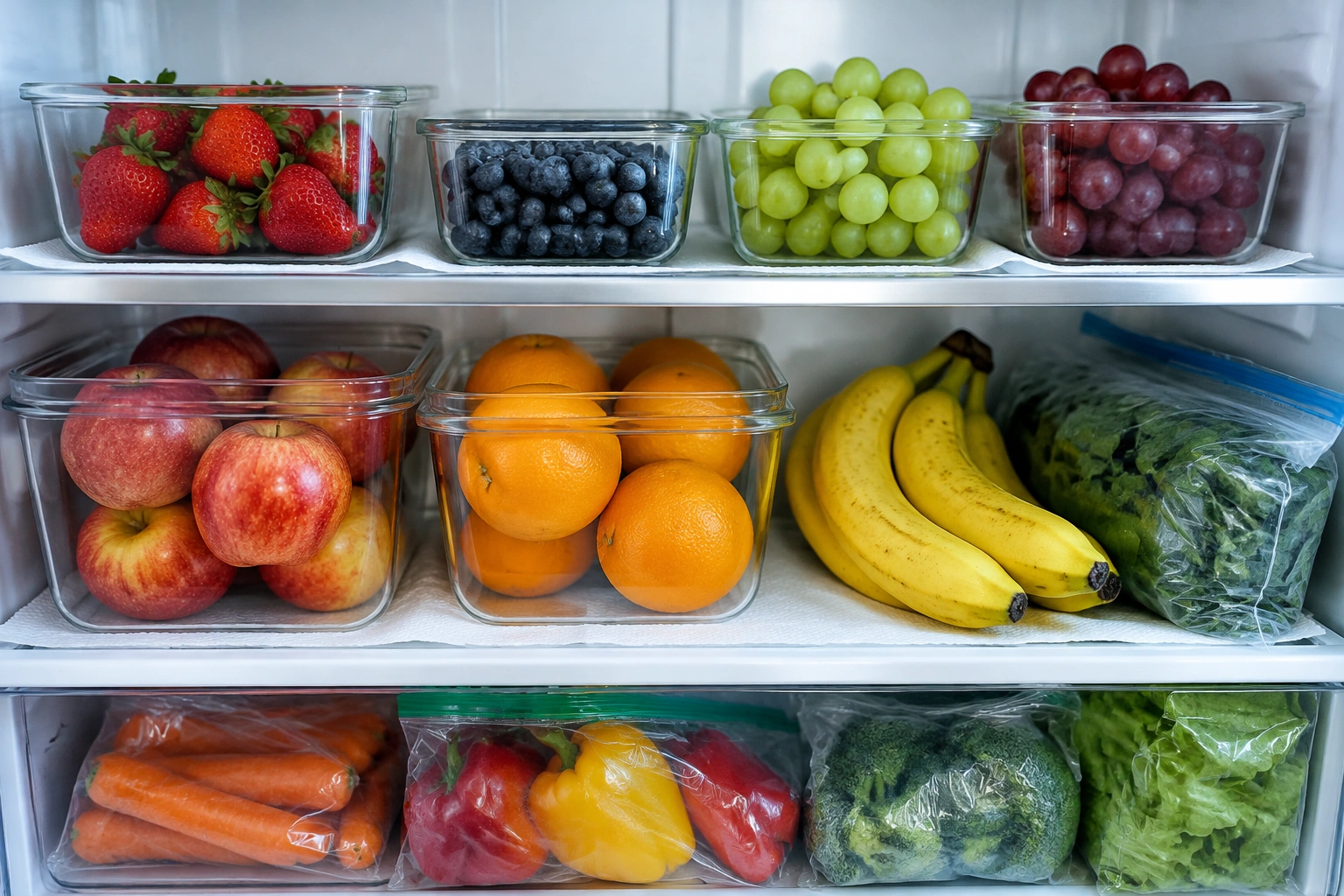
A few habits make a noticeable difference.
Use the fruit in the right order
Eat the softest, ripest, or most delicate fruit first. Save firmer fruit for later in the week.
Keep wet fruit separate from dry fruit
A damp strawberry can speed up spoilage in the rest of the container. If one piece looks soft or leaks juice, move it out right away.
Store fruit away from strong odors
Fruit can pick up smells from onions, garlic, and leftovers. Keep fruit in a separate area or sealed container whenever possible.
Ethylene: Which Fruits Should Be Kept Apart
Ethylene is a natural gas that some fruits produce as they ripen. It can speed up ripening in nearby produce.
Fruits that often produce more ethylene
Common ethylene producers include apples, bananas, avocados, pears, peaches, nectarines, plums, and melons as they ripen.
Fruits that are more sensitive
Berries, grapes, cherries, and citrus are more likely to suffer if they sit too close to fruit that is actively ripening.
Practical home-fridge combinations to avoid
Try not to store these together for long periods:
- Apples with berries
- Bananas with berries or grapes
- Ripe avocados with cherries or grapes
- Ripening peaches, nectarines, or plums with berries
- Pears with berries or citrus
If you are packing mixed fruit for meal prep, keep ripe bananas, pears, or stone fruit in a separate container from berries and grapes. That simple split helps the delicate fruit last longer.
Practical rule
Keep fruit that is actively ripening separate from fruit you want to hold longer. If you have a bowl of ripe peaches, do not tuck it next to berries you hope will last several more days.
How Long Common Fruits Last in the Fridge
Exact storage time depends on ripeness, handling, and the condition of the fruit when you buy it. Instead of chasing a perfect number, use these practical guidelines:
- Berries: about 3 to 7 days
- Grapes: about 1 to 2 weeks
- Apples: about 3 to 6 weeks
- Citrus: about 2 to 4 weeks
- Cherries: about 3 to 7 days
- Peaches, nectarines, and plums after ripening: about 3 to 5 days
- Cut fruit: about 3 to 4 days for best quality
The safest habit is to inspect fruit regularly and move the most delicate items to the front so they get used first.
Common Mistakes That Make Fruit Spoil Faster
Storing fruit while it is still wet
This is one of the fastest ways to create mold.
Refrigerating fruit before it is ripe
Some fruit loses flavor or texture if chilled too early.
Using the wrong container
Airtight storage can trap moisture around whole berries, while open storage can dry out cut fruit.
Ignoring one bad piece
One moldy berry can spread problems through the rest of the container.
Mixing incompatible fruit
Ripening fruit can shorten the life of more delicate fruit nearby.
Troubleshooting: What to Do If Fruit Is Moldy, Mushy, or Drying Out
If fruit is moldy
Discard it. Do not assume you can simply trim around mold on soft fruit.
If fruit is mushy
Use it soon if it still smells normal and shows no mold or leakage. Mushy fruit is usually a sign that it is nearing the end of its useful life.
If fruit is drying out
Move it into a better-fitting sealed container if it is cut fruit, or reduce airflow if it is whole fruit that is losing moisture too fast.
If the container keeps getting wet
Dry the fruit more thoroughly before storing and switch to a paper towel-lined container if needed.
Practical Storage Examples for Everyday Use
A pint of strawberries
Check the berries, remove any soft ones, and store the rest in a shallow container lined with a paper towel. Keep them dry and unwashed until you are ready to eat them.
A bunch of grapes
Leave them dry, do not pack them tightly, and store them in the crisper drawer. If you rinse them for meal prep, dry them completely first.
Apples for the week
Keep apples in the fridge away from fruit you want to hold longer. If one apple bruises, move it out and use it first.
Cut melon for lunches
Wash the rind before cutting, then refrigerate the cut melon in a sealed container. This is one of the easiest ways to turn fruit into grab-and-go food.
Signs Fruit Is No Longer Good to Eat
Use your senses and trust them.
Throw fruit away if you notice:
- Visible mold
- Slimy texture
- Sour or fermented smell
- Leaking juice from damaged pieces
- Strong off odor
- Widespread softness with spoilage signs
When in doubt, do not keep fruit that looks or smells wrong. Safe storage is about reducing waste, but it is not worth keeping food that has clearly turned.
If you want a broader food safety reference for home storage, FoodSafety.gov’s cold food guidance is a useful place to check general refrigeration practices.
FAQ
Should you refrigerate fruit in a crisper drawer or on a shelf?
Either can work. Use the crisper drawer for whole fruit when you want a more controlled environment, and use a shelf for cut fruit or fruit you need to see often.
Should you wash fruit before putting it in the fridge?
Usually no for whole fruit. Wait until just before eating. If you must wash it first, dry it completely before storing. Cut fruit should be washed before cutting.
Can you refrigerate whole washed fruit?
Yes, but only if it is dried thoroughly first. Whole fruit stored wet is more likely to mold or soften faster.
What fruits should not be stored together?
Keep ethylene-producing fruit like apples, bananas, pears, peaches, nectarines, and plums away from more sensitive fruit like berries, grapes, cherries, and citrus when you want the sensitive fruit to last longer.
How long does fruit last in the fridge?
It depends on the fruit, but a useful rule of thumb is: berries and cherries about 3 to 7 days, grapes about 1 to 2 weeks, apples about 3 to 6 weeks, citrus about 2 to 4 weeks, and cut fruit about 3 to 4 days.
When to Ask a Food Safety Expert
If you are storing fruit for someone who is medically vulnerable, if your refrigerator is not holding a steady cold temperature, or if you are unsure whether a fruit has spoiled versus simply softened, it is worth asking a local food safety educator or extension office for guidance. A small amount of caution can prevent a bigger problem later.
For more storage help on this site, see how to store buttercream frosting in the fridge without ruining the texture if you also want to keep other chilled foods organized for meal prep.