
Can You Freeze Glass Containers With Plastic Lids Safely?

Yes — you can freeze glass containers with plastic lids if the container is explicitly rated for freezer use and the lid is designed to handle freezing temperatures. The glass matters, but the lid matters too. A freezer-safe glass base with a weak, warped, or brittle lid can still lead to leaks, freezer burn, or a cracked container if food expands.
The safest rule is simple: check the manufacturer’s freezer-safe guidance for both parts before you rely on the container for meal prep or leftovers. If the container or lid is not clearly labeled, treat it as not freezer-safe until you confirm otherwise.
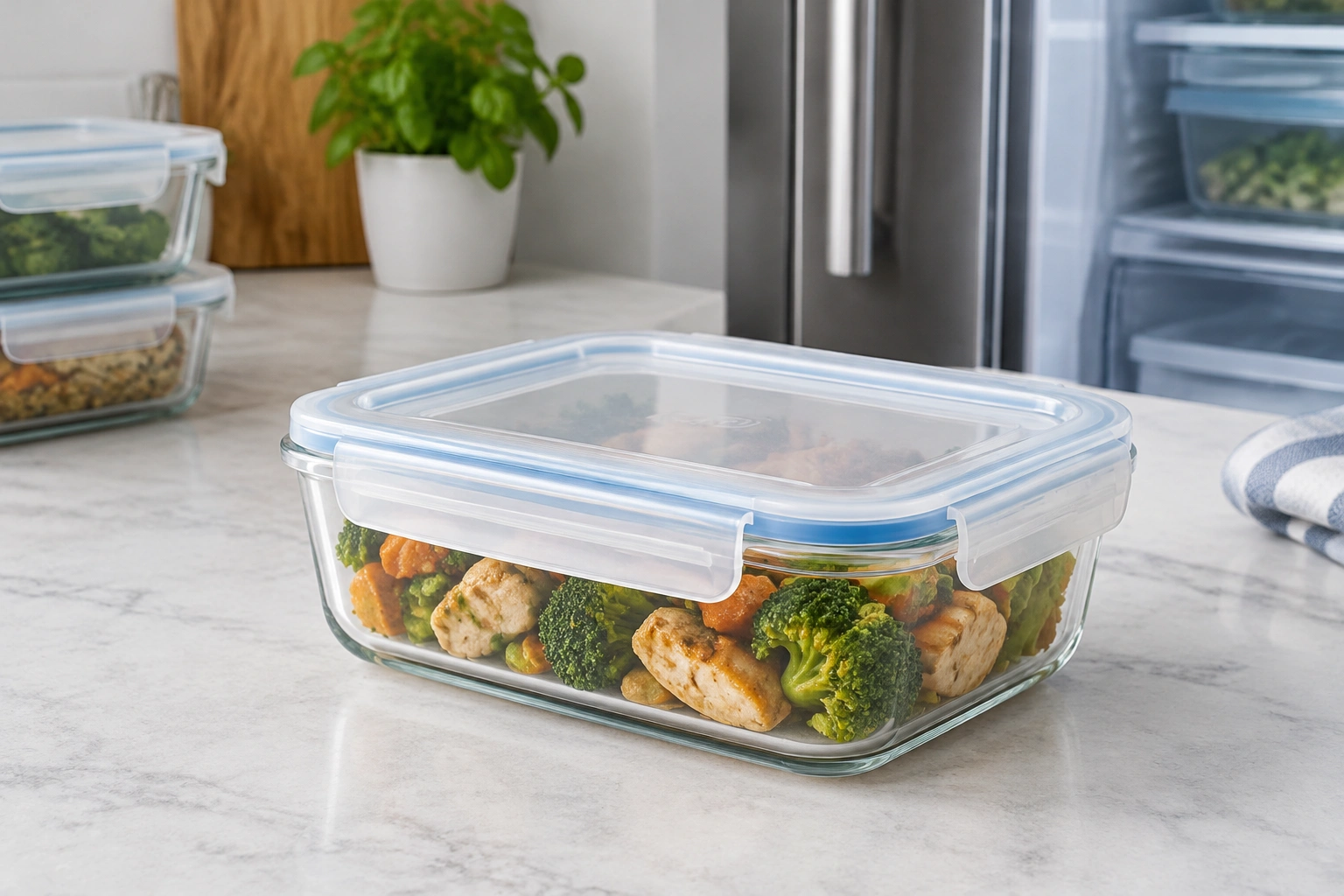
Quick checklist before freezing:
– Look for “freezer-safe” wording on the container, lid, packaging, or product page.
– Check for a freezer symbol or temperature-use instructions from the manufacturer.
– Confirm the lid is also freezer-rated; the glass and lid are not always equally safe.
– If instructions are unclear, do not assume a plastic lid makes the container freezer-safe.
For busy households, glass can be a smart freezer choice because it lets you see what you stored, resists stains, and moves well from fridge to freezer when used correctly. But glass is less forgiving than plastic when you make a mistake with temperature changes or overfilling.
Quick Answer: What Makes This Safe or Unsafe?
A glass container with a plastic lid is usually safe to freeze when all of these are true:
- The glass base is labeled freezer-safe
- The lid is intended for freezer use
- The food has cooled before freezing
- You leave space for expansion, especially with soups, sauces, and other wet foods
- You avoid sudden temperature changes that can cause thermal shock
If any one of those pieces is missing, the setup becomes less reliable. The glass may survive while the lid cracks, warps, or stops sealing tightly. Or the food may expand enough to push against the lid and damage the container.
[IMAGE_1: A freezer-safe glass container with a plastic lid]
What You Need Before Freezing Food in Glass
Before you portion leftovers into glass, gather the few things that make freezing easier and safer:
- Freezer-safe glass container
- Plastic lid or gasket lid that fits properly
- Cooked food that has cooled
- Labels or masking tape and a marker
- Flat freezer space so the container sits level
If you freeze soups, stews, or sauces often, choose containers with straight sides or wide openings. Those shapes are easier to fill, easier to thaw, and less likely to trap food at the rim. A container that stacks neatly also saves space in a crowded freezer.
If you want a broader buying guide for kitchen storage, this article on how to choose storage containers for everyday kitchen use can help you compare materials and lid styles before you buy.
How to Tell If Your Glass Container Is Freezer-Safe
Do not guess based on looks alone. Oven-safe, microwave-safe, and freezer-safe are not the same thing.
Check for these clues:
Look for freezer-safe labeling
The container itself, the packaging, or the manufacturer’s product page should say it is freezer-safe. If the brand gives temperature limits or use instructions, follow those instead of assuming. Some products also use a snowflake or freezer icon, but the wording from the manufacturer is the clearest signal.
Check the lid, not just the glass
This is where many people get tripped up. The glass may handle freezing, but the plastic lid may not keep its shape well in the cold. A lid that seals beautifully in the fridge can still become stiff, loose, or less reliable in the freezer. Look for lid-specific wording such as “freezer-safe lid” or use instructions that mention cold storage.
Inspect the container before use
Do not freeze food in glass that is chipped, cracked, or heavily scratched. Small flaws can become weak points when food expands or when the container is moved from cold to warm.
Use the manufacturer’s fill line if one is marked
If the container has a fill line, follow it. That guidance matters most for soups, broths, sauces, and other liquid-heavy foods.
For a reliable source on safe freezing habits, the USDA’s food storage guidance is a good reference point for keeping food handled properly in the freezer: USDA food safety and storage guidance.
Why the Lid Matters: Plastic Lid vs Silicone Gasket vs Snap-On Seal
A container is only as dependable as its seal. That matters for both safety and food quality.
Plastic lids
Plastic lids are lightweight and common on meal prep containers. They are convenient, but they can become brittle, warp slightly, or stop fitting as tightly after repeated freeze-thaw cycles. If the fit loosens, air gets in more easily and freezer burn becomes more likely.
Silicone gasket lids
A gasket seal usually gives you a more secure closure. That can help with soups, sauces, and leftovers you want to keep from drying out. The trade-off is that these lids are often bulkier and sometimes more expensive.
Snap-on lids
Snap-on lids are easy to use and stack well, but the seal quality varies a lot by brand. Some are fine for dry or thicker foods; others are not tight enough for liquid-heavy meals.
The practical takeaway: if the food can leak, choose the best seal you have, not the most convenient lid you have. For a dry casserole or cooked rice, a simple snap lid may be enough. For broth or chili, a gasket-style lid is the safer bet.
Step-by-Step: How to Freeze Food in Glass Containers Safely
Here is the method I recommend for most home kitchens.
1. Cool the food first
Do not put steaming hot food straight into glass and then into the freezer. Rapid temperature change can stress the glass and increase the chance of cracking.
A practical approach is to let the food cool on the counter briefly, then refrigerate it until it is fully chilled.
2. Choose the right amount of food for the container
Leave room at the top. Liquids expand as they freeze, and that expansion can push against the lid or crack the glass. For soups, stews, beans, and sauces, do not fill to the brim.
3. Seal the lid correctly
Follow the container’s instructions here, because lid handling can differ by product. If the manufacturer says the lid should be fully closed for freezing, do that. If the instructions say to leave the lid loose, set it on without fully locking or screwing it down. If the food expands a lot or the manufacturer advises it, you may need to freeze the food uncovered or without the lid until it is solid, then close it afterward.
4. Label before you freeze
Write the food name and date on the lid or a label. This sounds basic, but it keeps food from becoming mystery leftovers later. It also helps you use older items first.
5. Set the container flat in the freezer
Place the container on a stable, level surface until it is fully frozen. Once the food is solid, you can stack if the container shape allows it.
6. Avoid forcing cold glass against warm surfaces
Do not set a frozen glass container directly into hot water, on a hot pan, or into a preheated oven unless the manufacturer specifically says it is safe. Sudden temperature swings are the enemy of glass.
Best Foods to Freeze in Glass Containers
Glass works best for foods that are moist enough to benefit from an airtight seal, but not so liquid-heavy that they need a lot of expansion space.
Good candidates include:
- Soups and stews
- Chili
- Cooked beans
- Tomato sauce
- Casseroles that have cooled fully
- Cooked grains like rice or quinoa
- Braised meats with some sauce
- Cooked vegetables that will be reheated later
These foods freeze well because they are usually portioned into manageable amounts and do not require the container to flex. Glass jars or freezer-safe glass containers are often suitable for soups, stews, and similar foods when the product is rated for freezing.
If your freezer meals are mostly dry or thick, glass is often a comfortable choice. If they are very watery, choose a container with a dependable seal and enough headspace.
Foods and Situations to Avoid
Some foods are simply poor candidates for glass containers with plastic lids.
Avoid very hot food
Hot food plus cold glass is a bad combination. That shock can crack the container.
Avoid filling liquid-heavy foods to the top
Broth, soup, gravy, and sauces need room to expand. If you do not leave space, the lid may pop or the glass may fail.
Avoid damaged lids
A lid that is already warped or brittle may not seal well after freezing. If it no longer fits snugly at room temperature, do not trust it in the freezer.
Avoid containers that are not clearly freezer-safe
If the label only mentions microwave use, oven use, or general food storage, that is not enough. Freezer use should be explicit.
Avoid freezing in a container you plan to use for roasting
Some home cooks reserve their glass bakeware for the oven and use other containers for freezing. That can be a smart trade-off if your kitchen has limited storage and you do not want to risk tying up your best baking dish in the freezer.
Common Mistakes That Cause Cracks, Leaks, or Warped Lids
A few errors show up again and again:
- Freezing food before it has cooled
- Using a lid that is not freezer-rated
- Filling the container too full
- Forgetting that liquids expand
- Stacking heavy items on top of a fragile container
- Assuming all glass is freezer-safe because it is “good quality”
The biggest mistake is usually not the glass itself. It is the assumption that one safe feature means the whole setup is safe. A freezer-safe base with the wrong lid can still fail.
Troubleshooting: What to Do If the Lid Warps, the Seal Fails, or the Glass Cracks
If the lid comes out warped but the glass is intact, stop using that lid for freezer storage unless the manufacturer says it is still safe and functional. Once a lid loses its shape, it often loses its seal too.
If the seal fails and you notice frost, dry edges, or freezer burn, the food may still be usable depending on how it looks, smells, and was handled, but the storage method was not ideal. Repackage future batches into a better-fitting container.
If the glass cracks or chips, discard it. Do not freeze food in damaged glass. Cracks can worsen under pressure and during thawing.
If you are often losing lids before the glass wears out, that is a sign to switch to a container system with replaceable lids or a better gasket design.
How to Thaw Frozen Glass Containers Without Breaking Them
Thawing matters almost as much as freezing.
The safest approach is to move the container from freezer to refrigerator and let it thaw gradually. That reduces stress on the glass and keeps the food at a safer temperature during thawing.
Do not place a frozen glass container directly into hot water or a hot oven unless the manufacturer specifically says it is safe for that use. Even if the container is freezer-safe, it may not be rated for sudden heat.
If you plan to reheat the food afterward, confirm that the container is also safe for the reheating method you want to use. Freezer-safe does not automatically mean oven-safe or microwave-safe.
The USDA’s food storage resources are a helpful place to review broader thawing and storage safety principles: USDA food safety and storage guidance.
Glass vs Plastic or Silicone for Freezing: Which Is Better?
There is no single best material for every freezer job.
Glass
Best for: leftovers, meal prep portions, soups, stews, and foods you want to see at a glance
Trade-off: heavier, breakable, less forgiving with temperature swings
Plastic
Best for: lightweight storage, fast turnover, and foods you move often
Trade-off: can stain, absorb odors, and sometimes wear out faster
Silicone
Best for: flexible storage and space-saving portions
Trade-off: can be less rigid for stacking and may not suit every meal prep style
For budget-conscious families, glass can save money over time if you already own freezer-safe pieces and use them consistently. But if your kitchen routine involves lots of quick freezing, hauling, and stacking, plastic or silicone may be easier to live with.
When to Ask a Food Safety Expert
Ask for help from the manufacturer or a food safety professional if:
- The container has no freezer-safe marking
- The lid is a replacement part and you are unsure if it fits freezer use
- The glass has been damaged
- You are freezing food for someone with a higher-risk medical condition and want to be extra careful
- You are unsure whether the food can be safely cooled, frozen, and reheated in the same container
When the label is unclear, do not improvise. A quick check now is cheaper than replacing broken glass later.
FAQ
Can any glass container with a plastic lid go in the freezer?
No. Only use containers that are explicitly freezer-safe, and check that the lid is also meant for freezing.
Should I leave the lid loose when freezing?
Only if the manufacturer’s instructions say to. Some containers should be fully closed, some should be left loose, and some foods may need to be frozen uncovered first because they expand so much.
Can I put hot food directly into glass before freezing?
No. Cool the food first to reduce thermal shock and lower the risk of cracking.
What foods are safest to freeze in glass?
Soups, stews, chili, sauces, cooked beans, and other freezer-friendly leftovers that can be portioned with headspace.
Is a gasket lid better than a basic plastic lid?
Usually yes for leak resistance and sealing, especially for liquid-heavy foods. The trade-off is cost and bulk.
Final Takeaway
Freezing food in glass containers with plastic lids can work very well, but only when the glass is freezer-safe, the lid is compatible, and the food is cooled and portioned correctly. If you respect headspace, avoid thermal shock, and check the seal before each use, glass becomes a practical freezer tool instead of a fragile gamble.
For a busy kitchen, that is the real goal: fewer spills, less waste, and containers you can trust when dinner needs to come from the freezer.