
How to Choose Storage Containers for Everyday Kitchen Use

Choosing food storage containers is less about buying a matching set and more about matching the container to the job. A container that works beautifully for dry pantry staples may be a poor choice for soup, and a lightweight lunch container may not hold up well in a freezer. If you want to buy once and use the containers often, focus on material, lid quality, size, and how you actually store food at home.
Quick Answer: How to Choose the Right Storage Containers
Use this simple rule: pick the container based on the food, the way you store it, and whether it needs to travel.
- For leftovers and reheating: glass or microwave-safe plastic with a secure lid
- For soups, sauces, and transport: leakproof containers
- For pantry staples: airtight containers with good visibility and stackability
- For freezer storage: freezer-safe containers with room for expansion
- For lunches and meal prep: rectangular containers that portion food cleanly and fit in bags or lunch boxes
If you are replacing old containers, the best upgrade is usually not a bigger set. It is a better lid seal, a more useful size mix, and a material that fits your routine.
Start with the Main Use Case
Before comparing brands or materials, decide what you will store most often. That one choice narrows the field fast.
A home cook who mostly stores rice, chopped vegetables, and leftovers has different needs from someone packing lunches five days a week. Pantry containers need clarity and stackability. Meal prep containers need portion control. Freezer containers need durability and enough headspace. If you store wet foods or carry containers in a bag, leak resistance matters more than almost anything else.
A practical way to shop is to name your top three uses:
- Leftovers
- Meal prep
- Pantry storage
- Freezer meals
- Lunches on the go
Then choose containers that do those jobs well instead of buying a set with sizes you will rarely use.
Compare the Main Container Materials
Different materials solve different problems. No single option is best for every kitchen.
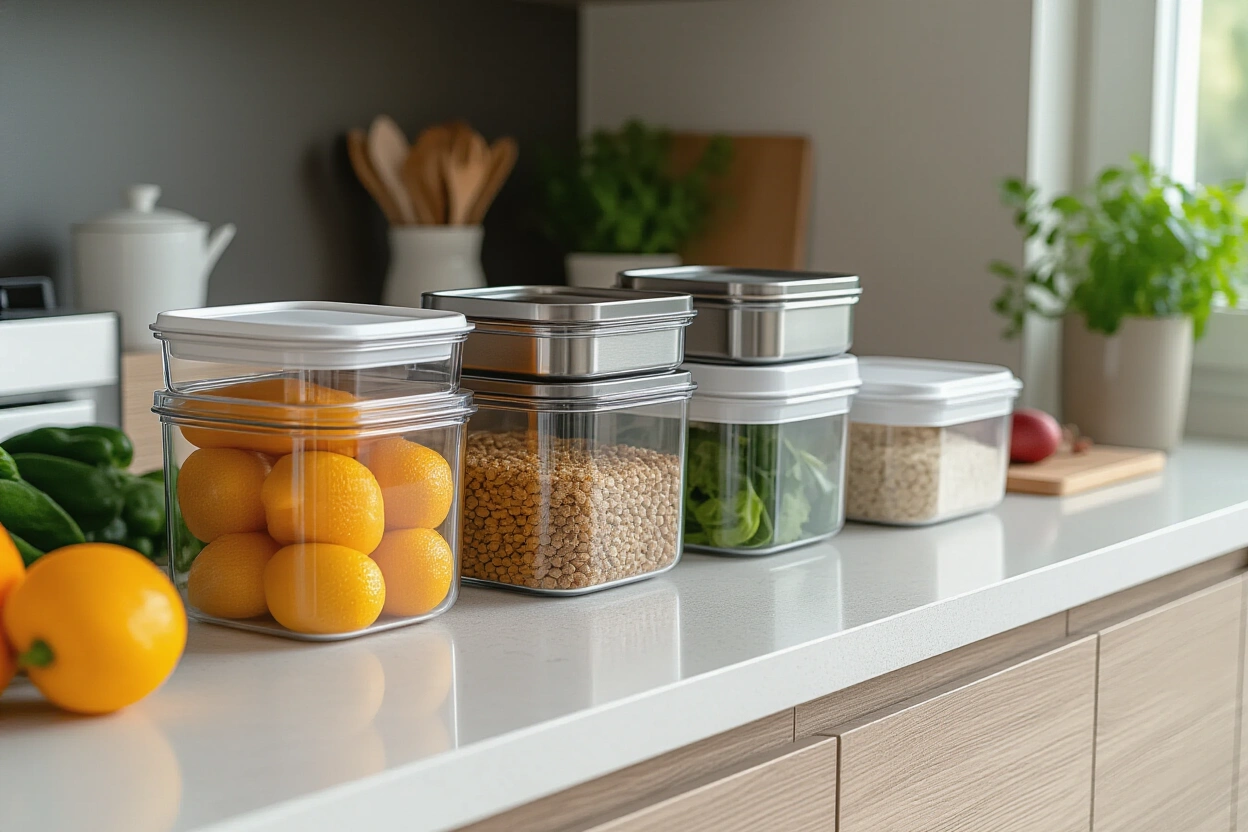
| Material | Strengths | Trade-offs | Best for |
|---|---|---|---|
| Glass | Resists stains and odors, easy to see contents, good for reheating | Heavier, breakable, takes more care in a packed bag | Leftovers, meal prep, freezer-to-fridge storage |
| Plastic | Lightweight, usually affordable, easy to carry | Can scratch, stain, or hold odors over time | Lunches, everyday leftovers, kids’ snacks |
| Stainless steel | Durable, lightweight for its strength, does not stain easily | Not microwave-safe in most cases, contents are not visible | Dry snacks, lunches, transport, durable packing |
| Silicone | Flexible, collapsible, often space-saving | May feel less rigid, shape can be less tidy for stacking | Space-conscious kitchens, freezer storage, travel |
Glass: Best for visibility and repeat use
Glass is a strong choice if you reheat leftovers often or dislike stained containers. It handles tomato sauce and curry better than most plastic containers because it does not absorb color the same way. It also lets you see what is inside at a glance, which helps when you are trying to use food before it gets forgotten.
The trade-off is weight and breakability. A glass container is not the best pick for a backpack lunch or a crowded cabinet where items get knocked around.
Plastic: Best for light weight and convenience
Plastic is useful when portability matters. It is lighter than glass, easier for kids to handle, and often less expensive. That makes it a practical choice for school lunches, office meals, and everyday fridge storage.
The downside is wear. Over time, plastic can scratch, cloud, stain, or pick up odors, especially with oily or strongly seasoned foods. If you choose plastic, look for sturdy construction and replace containers when lids stop sealing well or the base becomes warped.
Stainless steel: Best for durability and dry transport
Stainless steel works well when you want something tough and long-lasting. It is a good option for dry snacks, sandwiches, and packed lunches that do not need reheating in the container.
Its main limitation is flexibility. You usually cannot microwave it, and you cannot see the contents without opening it. That makes it less convenient for leftovers or fridge organization.
Silicone: Best for flexible storage and space-saving
Silicone containers can be helpful when cabinet space is tight or when you want containers that collapse or nest easily. They are often useful for freezer storage and travel because they can be lighter and less rigid than glass.
The trade-off is structure. Some silicone containers do not feel as stable as glass or rigid plastic when filled with liquid or stacked in a fridge. They are best when flexibility matters more than a perfectly solid shape.
Choose the Right Lid Type: Airtight vs Leakproof
Lid quality matters as much as the container body. In many kitchens, the lid is what determines whether a container is useful or frustrating.
Airtight lids
An airtight lid helps limit air exposure. That is useful for dry foods, leftovers, and ingredients you want to keep fresher in the fridge or pantry. Airtight is usually enough for foods that sit still on a shelf or in a refrigerator.
Leakproof lids
Leakproof matters when food moves. Soups, sauces, dressings, and marinades need a stronger seal than dry leftovers. If a container will go into a lunch bag, car, or freezer drawer, leakproof performance becomes much more important.
A simple rule helps here:
- Dry foods and most fridge storage: airtight is usually enough
- Liquids and transport: choose leakproof
Do not assume those words mean the same thing. A container can be airtight without being safe to tip sideways in a bag.
How to judge lid quality before buying
A few practical checks can help you compare lids in the store or online:
- Look for a gasket or seal ring if the container is meant to be leakproof. A lid with a full gasket usually gives a more reliable seal than a plain snap-on top.
- Check the latch or clips. They should close firmly without feeling flimsy or overly stiff.
- Make sure the lid sits evenly. If the lid looks crooked or uneven on the base, that can be a sign of a weak seal.
- Read whether the seal is meant to last through repeated use. Some lids feel secure at first but loosen after a few wash cycles or weeks of daily opening and closing.
- Inspect the closure design. A lid that is easy to open is convenient, but it should still stay closed when the container is moved or stacked.
If possible, choose lids that feel consistent and substantial rather than thin or overly flexible.
Pick the Best Sizes and Shapes for Everyday Use
A useful container set includes more than one size. Most kitchens need a few small containers, several medium ones, and at least a couple of larger options.
Sizes that tend to get used often
Here are practical size ranges for common tasks:
- Small containers, about 1/2 to 1 cup: sauces, dips, chopped herbs, nuts, salad dressing, snack portions
- Medium containers, about 2 to 4 cups: single servings, lunch portions, rice, chopped produce, leftovers for one or two people
- Large containers, about 4 to 8 cups or more: soup, pasta, family-size leftovers, bulk pantry items, salad greens
- Extra-large containers: batch cooking, large salads, baked goods, or storing dry staples like flour and cereal
If you cook for one or two people, a set made entirely of large containers often wastes space. If you feed a family, too many tiny containers become annoying fast.
Round vs rectangular containers
Round containers are often easier to clean and can work well for soups, sauces, and foods that need stirring or reheating.
Rectangular containers usually pack more efficiently in the fridge, freezer, or lunch bag.
For most home kitchens, rectangular containers are the better all-purpose choice. Round containers are useful as a specialty shape for liquids or foods that do not fit neatly into corners.
Headspace matters
When freezing soups or stews, leave room for expansion. A container filled to the top can crack or push the lid open. A little extra space prevents that problem and makes the container easier to close securely.
Check Safety and Compatibility Labels
The label on the container should match how you plan to use it. A container that is great for dry pantry storage may not be suited to heat, cold, or repeated washing.
Look for labels such as:
- Microwave-safe
- Dishwasher-safe
- Freezer-safe
- Oven-safe if you plan to use it that way
These terms are only useful if they apply to the whole container system, including the lid and any seals. Some containers are safe for the base but not the lid, or safe only with the lid removed. In other cases, the base may be dishwasher-safe while the lid needs hand washing.
BPA-free is helpful information, but it is not the whole story. It does not automatically tell you whether a container is microwave-safe, freezer-safe, or durable enough for daily use. Check the full care instructions before buying.
Also replace containers that are warped, cracked, deeply scratched, or no longer sealing properly. Damage can affect both safety and performance, especially with plastic lids and bases that have been exposed to heat or repeated washing.
If you want a general food-safety reference for home storage and handling, the FDA’s food contact guidance is a useful place to start.
Evaluate Durability, Stain Resistance, and Odor Control
A container that looks good in the store may not hold up after months of tomato sauce, curry, and freezer use. That is where material choice becomes practical, not just theoretical.
Glass usually performs well against stains and odors. Plastic is lighter, but it is more likely to show wear. Stainless steel is durable, though not as versatile for reheating. Silicone can be useful, but its performance depends heavily on design and thickness.
A few signs a container may not last:
- The lid feels loose after a short time
- The base warps after washing
- The seal no longer closes evenly
- The container holds odors after regular use
- The surface scratches easily
If you often store strongly colored foods, glass is usually the most forgiving choice. If you need something for rough daily transport, choose a sturdier plastic or stainless steel option and be realistic about microwave use.
Consider Storage Efficiency: Stackability, Nesting, and Visibility
Good containers should make your kitchen easier to use, not harder to organize.
Stackability
Stackable containers save space in the fridge and pantry. This is especially helpful if you prep several meals at once or store leftovers frequently. Flat lids and uniform shapes usually stack better than mixed, rounded designs.
Nesting
Nesting containers fit inside one another when empty. That is valuable in small kitchens where cabinet space is limited. If you buy a set, check whether the containers nest neatly without forcing the lids into a separate pile.
Visibility
Clear containers are easier when you want to see what is inside without opening anything. That matters in the fridge and pantry, where forgotten food is often the result of poor visibility rather than poor planning.
For dry pantry staples, visibility and stackability often matter more than microwave use. For fridge storage, a clear rectangular container usually gives the best balance of order and convenience.
Best Container Types for Common Scenarios
Here is how to match the container to the job.
Meal prep lunches
Choose rectangular glass or sturdy plastic containers with secure lids. They portion well, stack neatly, and fit into bags more easily than round containers. If the food includes dressing or sauce, make sure the lid is leakproof.
Pantry storage
Choose airtight containers with clear sides if possible. Flour, rice, pasta, oats, and cereal benefit from a container that seals well and lets you see inventory at a glance. Uniform shapes help the pantry look tidy and make better use of shelf space.
Freezing soups and stews
Use freezer-safe containers with room at the top for expansion. Wide-mouth containers are often easier to fill and clean. Do not overfill them, especially if the food has a lot of liquid.
Packing lunches
Look for leakproof containers that are light enough to carry comfortably. Stainless steel can be a good choice for dry lunches, while plastic or glass may work better if reheating is part of the routine.
Storing leftovers
Glass is often the most practical option here because it handles repeated use well and does not hold onto strong smells as easily. If you want to reheat directly in the container, make sure both the base and lid are compatible with your method.
For more storage guidance tied to baked goods, see how to store muffins without getting soggy.
How Many Containers to Buy and Which Set Size Works Best
It is easy to overbuy a set and still not have the sizes you use most. A better approach is to match the number of containers to the size of your household and the way you cook.
For singles
A small starter set is often enough:
- 2 to 4 small containers for sauces, snacks, and toppings
- 4 to 6 medium containers for leftovers and single portions
- 1 to 2 larger containers for soups, batch cooking, or pantry staples
Singles usually get the most value from a few versatile medium containers rather than a huge assortment of large pieces.
For couples
A medium set is often the sweet spot:
- Several small containers for condiments and prep ingredients
- 6 to 8 medium containers for leftovers and lunches
- 2 to 4 large containers for batch meals, salads, or pantry storage
Couples often benefit from a mix that supports both leftovers and occasional meal prep without taking over the cabinet.
For families
Families usually need more medium and large containers than small ones:
- A handful of small containers for dips, snacks, and chopped ingredients
- 8 or more medium containers for lunch portions and leftovers
- Several large containers for family meals, freezer portions, and pantry staples
If you cook in batches or pack multiple lunches at once, prioritize repeat-use sizes over novelty shapes.
What set configuration is usually most useful
For most households, the most practical set is a mixed bundle with:
- a few small containers,
- several medium containers,
- a couple of large containers,
- and lids that are easy to match and store.
A set with too many one-off shapes can be frustrating, even if it looks complete in the box.
Reusable vs Disposable Containers
Reusable containers usually make more sense for everyday kitchen use because they are designed for repeated washing, storage, and transport. They are the better fit for leftovers, pantry staples, and meal prep.
Disposable containers can be useful for temporary needs, such as sending food home with guests or storing something you do not expect to keep long-term. But they are usually less durable, less secure, and less efficient over time if you use them regularly.
A simple rule: if you will use it more than once or twice, a reusable container is usually the better buy.
Common Mistakes to Avoid When Buying Storage Containers
A few buying errors show up again and again.
Buying the wrong sizes
Large sets look convenient, but many of the pieces may go unused. If you mostly store leftovers for one or two people, prioritize medium containers over oversized ones.
Treating airtight and leakproof as the same thing
They are not interchangeable. A container that seals out air may still leak when tipped.
Assuming all plastic is equally suitable
Plastic varies a lot. Some containers are better for cold storage than reheating, and some wear out quickly if used daily.
Ignoring the lid
A strong base with a weak lid is still a weak container. Check how the lid closes, whether it feels secure, and whether the seal seems consistent.
Forgetting how you actually cook
If you rarely microwave food, microwave-safe may not be a priority. If you freeze soups often, freezer performance matters more than a fancy lid design.
Simple Buying Checklist Before You Purchase
Before you buy, compare each option against this short checklist:
- Does it match my main use: leftovers, meal prep, pantry, freezer, or lunch?
- Is the material appropriate for how I store and reheat food?
- Do I need airtight, leakproof, or both?
- Are the sizes useful for the portions I actually make?
- Will the shape fit my fridge, freezer, or cabinet space?
- Is it safe for the microwave, dishwasher, or freezer if I need those uses?
- Will it resist stains, odors, warping, or cracking well enough for daily use?
- Can I stack or nest it without wasting space?
If a container fails two or more of those questions, keep looking.
Final Thoughts
The best storage container is the one that fits your food, your space, and your habits. Glass is often the strongest all-purpose choice for leftovers and reheating. Plastic is useful when light weight and convenience matter. Stainless steel and silicone each solve narrower problems well. Once you know whether you need airtight, leakproof, freezer-safe, or stackable storage, choosing becomes much easier.