
How to Organize an Upright Freezer for Faster Meal Prep and Less Waste

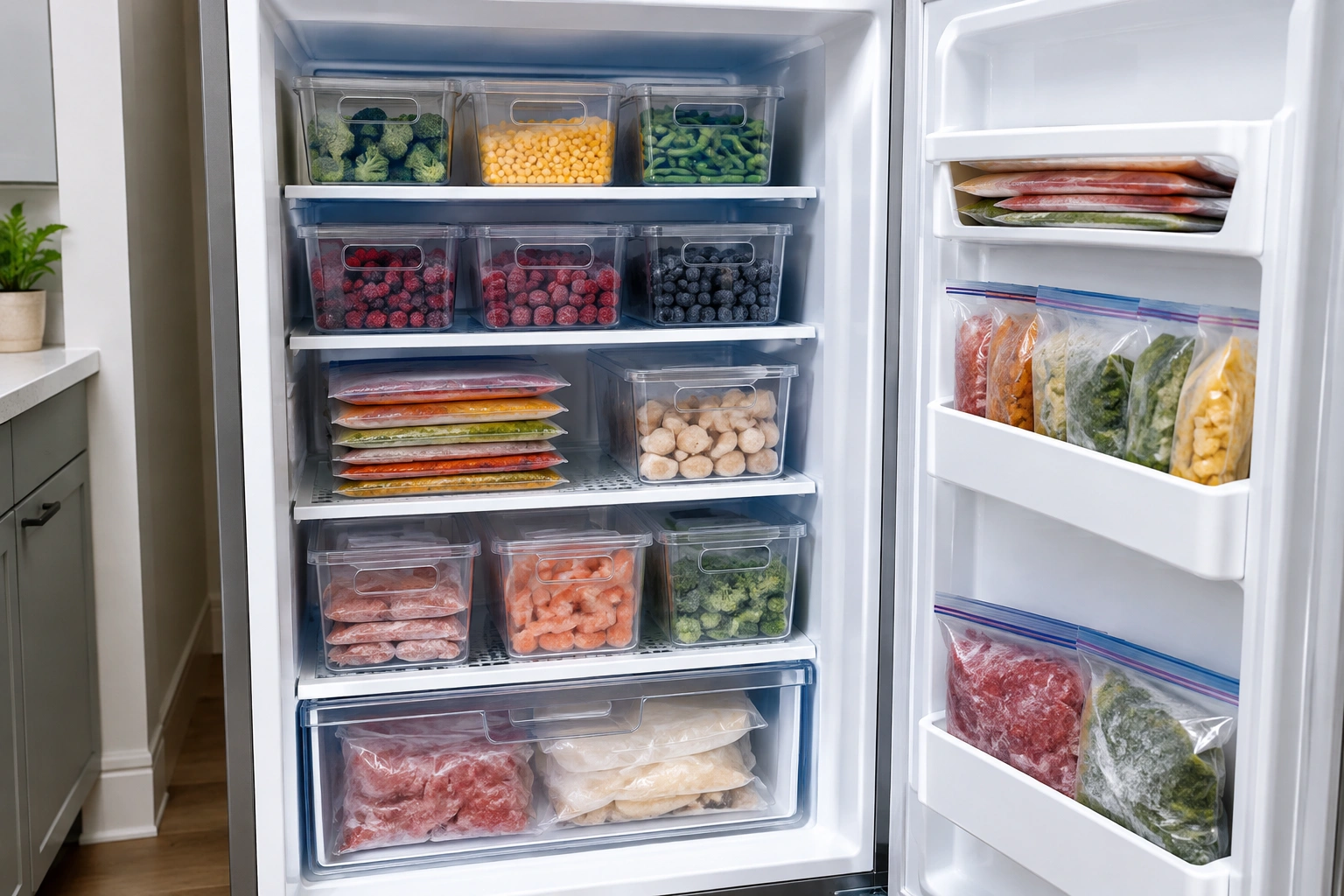
An upright freezer works best when it behaves like a set of small, labeled zones instead of one deep cold cave. The goal is simple: you should be able to open the door, scan what you have, and pull out dinner without digging past a stack of mystery bags. That means building the system around how your household shops, cooks, and reaches for food most often.
Whirlpool’s freezer organization guidance matches that approach: use the shelves as zones, then break those zones down further with freezer-safe bins and containers. If your freezer has no shelves, create layers and sections with freezer-safe organizers such as bins, magazine holders, file sorters, or milk crates. Whirlpool’s freezer organization guide is a useful reference for that shelf-and-zone method.
Map the Freezer Before You Move a Single Bag
Before you reorganize, open the freezer and look at what it actually gives you: shelves, drawers, door space, narrow side gaps, or one open cavity. A system that works in a freezer with wide shelves may fail in a model with wire racks and awkward corners. The layout decides the storage plan, not the other way around.
If you plan to buy bins, measure the shelf width and depth first so you choose organizers that actually fit without blocking the door or wasting space.
A quick way to assess capacity is to ask three questions:
- What foods do we reach for weekly?
- What foods stay frozen for longer stretches?
- What items are small enough to disappear if they are not contained?
That answer tells you where the easiest-to-grab shelves should go. In most homes, the most-used foods belong at eye level or on the most accessible shelf. Less-frequent items can live lower down or farther back, as long as they are still labeled and grouped.
If your freezer is already crowded, resist the urge to organize by “whatever fits.” That usually creates buried food and duplicate purchases. Instead, empty one shelf at a time, sort the contents, and put only the items you want to keep back into the freezer.
Sort Food Into Clear Categories
A freezer becomes manageable when similar foods stay together. The categories do not need to be complicated. In most busy households, a few broad groups are enough:
- raw meats and fish
- prepared meals
- leftovers
- vegetables and fruit
- breakfast items
- bread and baked goods
- bulk staples or backup ingredients
This is where the system becomes practical. If you mix raw meat with ready-to-eat foods, you increase the chance of cross-contamination and make it harder to find what you need quickly. Keep raw items sealed and separated from foods that will not be cooked again.
For meal prep households, category zones are especially helpful because they mirror the way food is used. For example, one shelf can hold breakfast items and lunch portions, while another holds dinner proteins and vegetables. That keeps like items together and makes restocking simpler after a grocery run.
Shelf-Based Zones vs. Category Bins
| Method | Best for | Trade-off |
|---|---|---|
| Shelf-based zones | Freezers with good shelf spacing and a small number of food types | Easy to see, but smaller items can still slide around |
| Category bins | Mixed groceries, meal prep portions, and small packaged items | Better containment, but bins must be the right depth or they become hard to reach |
If your freezer is already divided by shelves, use the shelves first and bins second. If your freezer is one open space or has awkward wire shelving, bins become much more important.
Decide What Goes on Each Shelf or in Each Bin
Think in terms of access, not just category. The foods you use most should be the easiest to reach. The foods you use least can sit lower or farther back, as long as they are still visible enough to be tracked.
A practical shelf plan might look like this:
- top shelf: breakfast foods, bread, and quick grab items
- middle shelf: vegetables, fruit, and ready-to-cook meals
- lower shelf: bulk meats, larger packages, or long-term storage items
- bottom area: heavier items that are less likely to be moved often
If you use bins, assign each bin one job. A bin for chicken should not also hold frozen berries and leftover soup. That kind of mixing is what turns a freezer into a search project.
For households that cook in batches, a “meal prep bin” can work well if it stays narrow in purpose. For example, one bin for lunch portions and another for dinner proteins is easier to manage than one catch-all bin labeled “miscellaneous.”
Choose Bins, Baskets, and Containers That Fit the Freezer
Whirlpool recommends freezer-safe bins and containers for upright freezer organization, and that advice is sound because containment is what keeps a shelf from turning into a pile. The real question is which organizer style matches your habits.
Bins vs. Baskets
Bins are better when you want items to stay upright and grouped tightly. They are useful for flat bags, boxed items, and packages that tend to tip over. Baskets can be easier to pull out and scan, especially if you need to grab the whole category at once.
The trade-off is simple:
- Bins: better containment and stacking
- Baskets: easier lifting and visibility
If your freezer is deep and you often forget what is in the back, a basket or pull-out bin may be worth the extra cost. If you are trying to maximize every inch, a snug bin usually wastes less space.
Clear vs. Opaque Containers
Clear containers help you see what is inside without opening them. That is useful for foods you rotate often, such as meal prep portions or frozen fruit. Opaque containers look tidier and can hide visual clutter, but they make it easier to forget what is inside unless labels are excellent.
Use clear containers for high-turnover foods. Use opaque bins for long-term bulk items if you already know the category and do not need to inspect it often.
Vacuum Sealing vs. Standard Freezer Bags
Vacuum sealing can reduce bulk and help packages stack more neatly, which is useful in a tight upright freezer. Standard freezer bags are cheaper and simpler, and they work well when you flatten them before freezing.
A useful rule: vacuum seal the foods that are expensive, bulky, or likely to sit longer; use standard freezer bags for everyday portions that move through the freezer quickly.
Use Vertical Space Without Creating a Mess
An upright freezer rewards flat, stackable storage. Bags that are laid flat and frozen into thin sheets are easier to stack than bulky rounded packages. That is one reason meal preppers often freeze soups, sauces, and portions in flat containers before transferring them to a bin.
The key is not to overpack the freezer. If you cram every inch full, you lose airflow, visibility, and access. You also make it harder to move older food forward when you restock.
A better approach is to leave a small buffer zone in each category. That buffer gives you room for new groceries without forcing you to reshuffle the whole freezer every time you return from the store.
If your freezer has wire shelves, use flat containers or bins that sit securely on the shelf surface. If the shelves are uneven, group like items in one container so they do not slide into the back corner.
Label and Date Everything the Fast Way
A good label does not need to be fancy. It needs to answer two questions at a glance: what is it, and when did it go in the freezer?
A simple format works well:
- item name
- quantity, if helpful
- freeze date
For example: “Chicken thighs, 6 pieces, 10/17.” That is enough for most home kitchens. If you like a cleaner look, use a freezer label and a marker that writes clearly on cold-safe surfaces.
Labeling matters because frozen food often looks similar once it is packed away. Without labels, you end up opening bags to identify them, which slows everything down and increases the chance that food gets forgotten.
If you use reusable containers, put the label on the lid and the front edge if possible. That way you can identify the item whether it is stacked or pulled forward.
Set Up FIFO So Older Food Gets Used First
FIFO means first in, first out. In plain terms, older food should be the easiest to reach, and newer food should go behind it or underneath it.
This is one of the simplest ways to reduce waste in a freezer. If a new grocery haul goes in front of older food, the older items disappear from view and are more likely to be forgotten. That is how duplicate purchases happen.
The easiest FIFO habit is this: whenever you restock, move older items forward before putting the new items away. Do it shelf by shelf. It takes a minute or two, but it keeps the freezer honest.
For mixed households, FIFO works best when you combine it with category zones. A “vegetables” shelf with older bags in front is far easier to manage than vegetables scattered across three shelves.
Keep Track With a Light Inventory System
A freezer inventory does not have to be elaborate. Track only the items you forget easily or buy in bulk often.
Two simple options work well:
- paper list on the freezer door
- phone app or notes list
Paper List vs. Phone App
| Method | Best for | Trade-off |
|---|---|---|
| Paper list | Quick family reference and visible reminders | Must be updated by hand |
| Phone app | Searchable and easy to carry while shopping | Easy to forget unless you check it consistently |
If your household shares food with multiple people, a paper list on the freezer door is often more practical. If you shop alone and like digital tools, a phone note may be enough.
A freezer map can also help. Write the shelves down and note what belongs where. That is especially useful if more than one person puts away groceries.
Keep the System Working After Every Grocery Trip
The best freezer setup is the one that survives a normal Tuesday. That means building a short reset routine into your grocery or meal prep habit.
After each trip or prep session:
- empty the shelf or zone you are resetting
- sort items by category and decide what stays
- clean the shelf, bin, or drawer before putting food back
- assign or confirm the zone for each category
- relabel anything that is unclear and date new items
- restock with older items in front and newer items behind
That simple workflow prevents the freezer from slowly drifting back into chaos.
If your freezer is used for meal prep, keep one empty spot or one open bin for the next batch. That small bit of space makes restocking much easier than trying to wedge food into a fully packed shelf.
How to Reorganize a Small or Overcrowded Upright Freezer
When space is tight, the goal is not to fit more and more into the freezer. The goal is to fit the right foods in a way that stays usable.
For a small upright freezer:
- narrow categories help more than detailed ones
- flat packages beat bulky containers
- bins should be shallow enough to reach into easily
- duplicate items should be grouped together, not scattered
If you have too many similar items, combine partial packages when it is safe to do so and the food can be transferred into appropriate freezer-safe packaging, or move the oldest items to the front and decide what needs to be used first. The freezer is not a storage attic. If it is full of forgotten extras, it stops helping your budget.
A crowded freezer also needs a stricter “one in, one out” mindset for certain categories. That is especially useful for frozen bread, vegetables, and backup proteins.
Common Mistakes That Make Upright Freezers Hard to Use
The biggest mistakes are usually simple:
- mixing too many food types on one shelf
- skipping labels and dates
- overfilling the freezer
- putting new groceries in front of old ones
- using bins that are too deep to reach into
- letting small items scatter loose on shelves
Each one makes the freezer harder to scan. Together, they turn a useful appliance into a hidden-food problem.
If you only fix one thing, fix visibility. Once you can see what you own, you are less likely to overbuy and more likely to use what you already have.
When to Clean Out and Reset
A freezer does not need constant deep cleaning, but it does need regular attention. A good reset point is after a big grocery haul, after a batch-cooking day, or whenever you notice food starting to disappear into the back.
During the reset, check for:
- unlabeled packages
- damaged packaging
- items you no longer recognize
- categories that have drifted out of place
If you are unsure whether a food is still usable, and the storage history is unclear, it is safer to discard it than to guess. For general frozen food storage and handling guidance, the USDA and FoodSafety.gov are reliable references.
A seasonal cleanout is also useful. You do not need to empty the freezer every week, but a regular review keeps the system honest and prevents old food from lingering unnoticed.
A Simple Upright Freezer System That Lasts
The most dependable upright freezer setup is the one that fits your real life. Keep the categories broad, the labels readable, and the most-used foods easiest to reach. Use bins where they prevent clutter, and leave enough room for restocking without a full rearrange.
If you want a related step-by-step system for the rest of the kitchen, see our guide to organizing a freezer with clear zones and labels and our broader post on setting up a kitchen for faster cooking and easier cleanup. A freezer that works with the kitchen, not against it, saves time every week.
Frequently Asked Questions
What is the best way to organize an upright freezer?
The best method is to create zones by food type, then use bins or containers to keep each zone contained. Put the most-used foods where they are easiest to reach.
Should I use bins or baskets in an upright freezer?
Bins are usually better for containment and stacking. Baskets are helpful when you want to pull out a whole category and see everything at once.
How do I keep food from getting lost in the back?
Use labeled zones, keep older items in front, and leave enough space to see what is behind the front row. A freezer inventory list helps too.
What should go on each shelf?
A practical setup is breakfast and quick items on one shelf, vegetables and ready-to-cook foods on another, and bulk proteins on a lower shelf. Adjust it to match what your family uses most.
How often should I reorganize the freezer?
Do a quick reset after big grocery trips and meal prep sessions. A more thorough cleanout makes sense whenever items become hard to identify or categories stop working.
Do I need a freezer inventory?
Not for every item. Track the foods you forget easily, buy in bulk, or tend to overbuy. That keeps the system useful without making it tedious.
How do I reduce freezer burn and waste?
Use freezer-safe packaging, remove excess air when possible, label items clearly, and rotate older food first. Good organization helps food get used before it is forgotten.