
What Size Container Holds 10 lb of Flour? A Practical Pantry Guide

If you are asking what size container for 10 lb flour, the practical answer is usually an 8-quart to 12-quart food-safe container, with 12 quarts being the best practical choice for most home kitchens if you want easier scooping and a little headspace. If you want a very tight fit and know the flour is all-purpose, an 8-quart container can work, but it may feel snug in many common containers. If you prefer less mess and more room for a scoop, go larger.
That said, flour is not perfectly uniform. The exact space it takes up changes with flour type, how loosely it was packed, and the shape of the container. A practical estimate for 10 lb of flour is about 8 to 10 quarts, or roughly 7.6 to 9.5 liters, though the exact amount varies by flour type and packing. So the best choice is not just “Will it fit?” but “Will it fit comfortably enough to use every week without frustration?”
Quick Answer: The Best Container Size for 10 lb of Flour
For most home kitchens, I would steer you toward a 12-quart airtight container for 10 lb of flour.
Why 12 quarts? Because it gives you a practical buffer. You are not packing flour to the brim, which makes sealing easier, reduces spills, and leaves room for a measuring cup or scoop. That extra space matters more than people expect when a container lives on a pantry shelf and gets opened often.
A smaller container can still work, but only if you are comfortable with a tighter fill line. If your flour is a little fluffier, or if you want to scoop without dusting the counter every time, the extra room is worth it.
How Much Space 10 lb of Flour Actually Takes Up
A 10-pound bag of flour is not measured by volume on the package, so you have to translate weight into space. In real kitchens, that usually lands somewhere in the 8- to 12-quart range, depending on the flour and how it settles.
Here is the practical way to think about it:
- 8 quarts = can work for 10 lb of flour, but may be too tight for many common containers and flour brands
- 10 quarts = usually workable, though still fairly snug
- 12 quarts = the most comfortable “buy once, use easily” size
- 16 quarts = more than you need for 10 lb, but useful if you want extra space or plan to store other dry goods too
Flour type matters. Whole wheat flour can behave differently from all-purpose flour because it contains more of the grain and may pack a little differently. Bread flour can also vary by brand and milling. That is why a container sold as “holds 10 lb of flour” is really a practical claim, not a universal measurement for every flour on earth.
The safest takeaway: 10 lb of flour usually needs a container in the low-teens quart range if you want easy handling, not just a bare fit.
Will a 10-Quart, 12-Quart, or 16-Quart Container Work?
This is the comparison most shoppers need, because the labels sound close but behave differently in real use.
| Container size | Will it hold 10 lb flour? | Headspace | Best use case |
|---|---|---|---|
| 10-quart | Usually yes, but may feel snug | Limited | Tight pantry space, careful scooping, minimal extra room |
| 12-quart | Yes, comfortably | Moderate | Best all-around choice for most home kitchens |
| 16-quart | Yes, with lots of room | Generous | Bulk storage, easier pouring, or mixed dry-goods storage |
10-quart containers
A 10-quart container can be acceptable if you want a compact footprint and do not mind a snug fill line. The trade-off is usability. Once flour is in the bin, a tighter container can be harder to scoop from, especially if you use a measuring cup with a wide handle or if the bin narrows at the top.
If your pantry shelf is shallow or your cabinet height is limited, 10 quarts may be the right compromise. Just do not expect much extra room.
12-quart containers
This is the sweet spot for most households. It usually gives enough room for 10 lb of flour with space left for a scoop and a cleaner seal. It also reduces the risk of flour touching the lid or spilling when you move the container.
If you buy flour in bulk and want one container that feels easy rather than exact, this is the size I would choose first.
16-quart containers
A 16-quart container is more than enough for 10 lb of flour. That can be useful if you want to pour without tapping flour down into the corners, or if you plan to store flour plus another dry ingredient in the same style of bin.
The downside is wasted space. More air in the container is not automatically harmful, but it can be inefficient if you are trying to keep your pantry compact and organized.
One Large Container or Two Smaller Containers?
This is where convenience and freshness pull in different directions.
One large container
One container is simpler. You open one lid, scoop from one place, and keep your pantry tidy. That works especially well if you bake often and go through flour quickly.
The downside is handling. A full 10-pound flour bin can be awkward if it is tall, heavy, or stored high on a shelf. If the container is not easy to lift, you may end up leaving it out on the counter just to avoid moving it.
Two smaller containers
Splitting the flour into two containers can make daily use easier. For example, you might keep one container in the pantry and one in the fridge or freezer, or keep one “working” container and one backup container sealed until needed.
This approach is useful if:
– you have limited shelf height,
– you want easier lifting,
– you buy flour in bulk but use it slowly,
– or you want to separate all-purpose flour from bread flour.
The trade-off is more lids, more labels, and more space taken up by container walls. Still, for many families, two smaller bins are easier to live with than one oversized one.
Best Container Type for Flour Storage
The best flour container is food-safe, closes securely, and is easy to clean. Material matters, but function matters more. In real kitchens, that often means a cereal bin, a Cambro-style tub, or a wide-mouth canister rather than a decorative jar.
Food-grade plastic
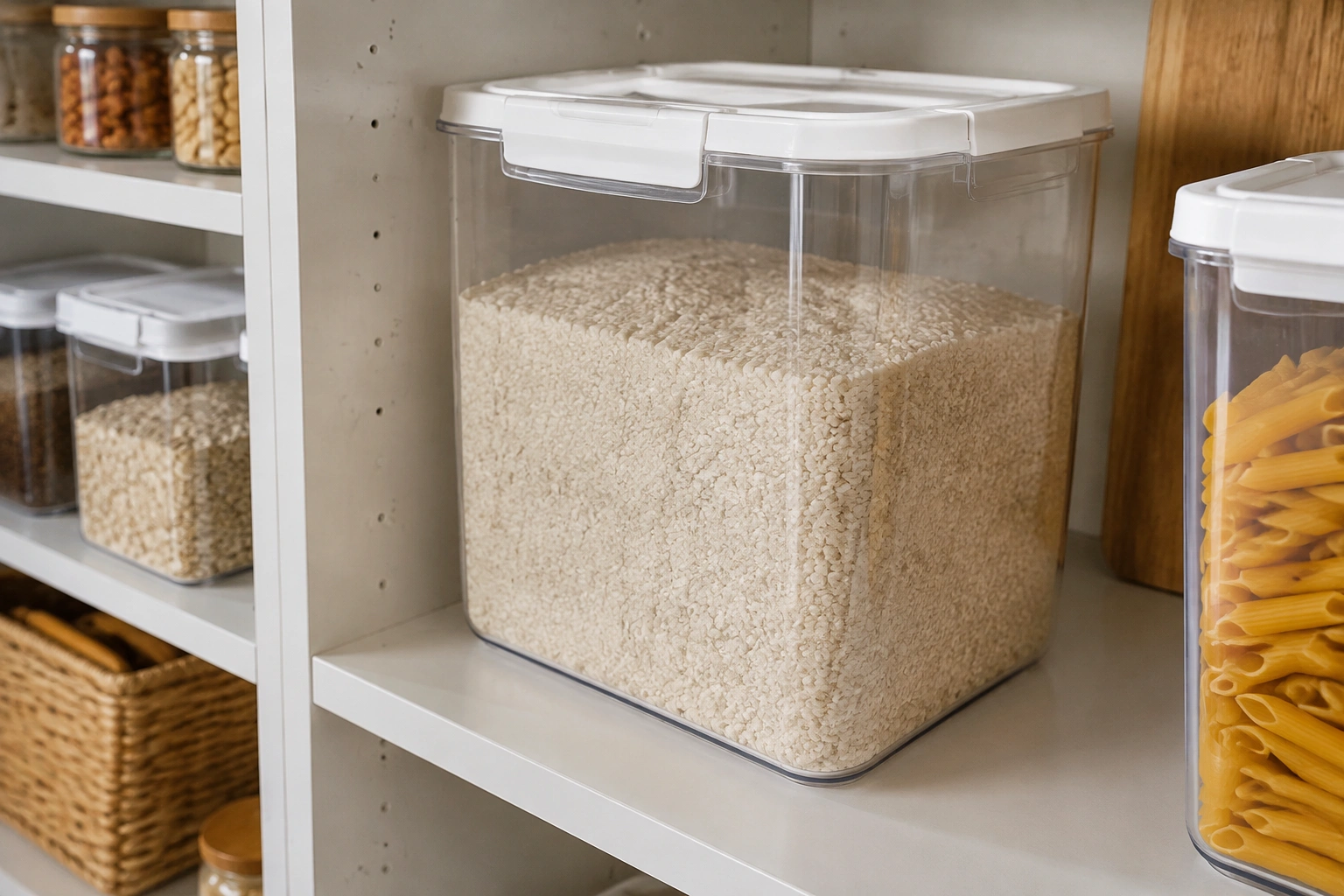
This is the most practical choice for most homes. It is lightweight, usually stackable, and less likely to break if it slips from a shelf. Many bakers prefer clear or translucent plastic because it lets you see how much flour is left at a glance.
Look for a container that is explicitly food-safe. If it also has a tight gasket lid, that is helpful for keeping moisture and pantry pests out.
Glass
Glass looks nice and does not absorb odors, but it is heavier and breakable. That makes it less forgiving for a bulky ingredient like flour, especially if you move it often.
Glass can work well if the container stays on a counter or low shelf and you value visibility and a heavier, more stable feel. For a 10-pound flour supply, though, it is usually less practical than plastic.
Metal
Metal containers can be durable and attractive, but they are less common for bulk flour because you cannot see the contents without opening them. That makes inventory checks more annoying, especially in a busy kitchen.
Metal can be fine if you like the look and the lid seals well. Just make sure you can identify the contents clearly with a label.
Airtight lids vs. simple canisters
For flour, an airtight lid is worth it. Flour absorbs moisture from the air, and a tighter seal also helps reduce pest access. A simple decorative canister may look nice, but if it does not close securely, it is not the best long-term choice for bulk storage.
The goal is not fancy storage. The goal is dry, sealed, easy-to-use storage.
How Much Headspace to Leave
A useful rule is to leave enough space for easy scooping and a clean seal, not to fill the container to the top.
In practical terms, that usually means leaving a few inches of headspace rather than packing flour all the way to the lid. The exact amount depends on the shape of the container, but the reason is simple: usable capacity is always less than the label on the bin.
If the container is filled too tightly:
– the lid can be harder to close,
– flour can dust the rim and interfere with the seal,
– and scooping becomes messy.
A little empty space is not wasted space if it makes the container easier to use every week.
Does the Flour Type Change the Container Size?
Yes, slightly.
All-purpose flour, bread flour, and whole wheat flour can differ in how they settle and how much air they hold between particles. That means two 10-pound bags may not occupy exactly the same amount of space in the same container.
The practical lesson is not to obsess over tiny differences. It is to avoid choosing a container that fits one brand perfectly and leaves no margin at all. If you buy different flours over time, or if you transfer flour after it has been opened and fluffed up, a little extra room protects you from a too-tight fit.
If your household uses several types of flour, a labeling system helps more than trying to find a mathematically perfect bin.
Storage Tips for Freshness, Moisture, and Pest Protection
Once flour is transferred out of the original bag, storage habits matter as much as the container size.
Keep it dry
Store flour away from sinks, dishwashers, and damp corners. Moisture causes clumping and can shorten the useful life of the flour.
Use a secure lid
A tight lid helps keep out pantry pests and reduces exposure to humid kitchen air. If your container has a gasket, make sure it sits cleanly all the way around the rim.
Label the container
Write down:
– flour type,
– purchase or transfer date,
– and, if helpful, the original bag brand.
That simple label prevents confusion when you have more than one flour on hand.
Rotate stock
Use older flour first. If you buy in bulk, this is one of the easiest ways to cut waste. Keep the newer bag behind or below the older one, and refill from the backup only when needed.
For general food safety guidance on dry storage and avoiding contamination, the FDA’s food storage guidance is a useful reference point.
Best Fit for Common Pantry Setups
The right container size also depends on where you plan to keep it.
Narrow pantry shelf
If shelf depth is limited, a square or rectangular 10- to 12-quart container usually makes better use of the footprint than a round tub. Square sides waste less space and stack more cleanly.
Countertop storage
If the flour lives on the counter, pick a container that looks neat and is easy to lift with one hand. An 8- or 12-quart bin is usually easier to live with than a very tall container.
Fridge or freezer storage
If you store flour cold, a smaller container can be easier to fit around other items. In that case, splitting 10 lb into two sealed containers may be more practical than trying to move one large bin in and out every time you bake.
Busy family kitchen
For a household that bakes often, the best setup is usually a container that is easy to open, easy to scoop from, and easy to label. That often points back to a 12-quart food-safe container for the main supply, with a second smaller container if you want backup storage.
If you want a broader pantry strategy for flour, this guide on how to store all-purpose flour so it stays fresh longer goes deeper into pantry, fridge, and freezer options.
A Practical Buying Rule
If you want the shortest decision rule possible, use this:
- Choose 8 quarts if you want a compact fit and know the flour will be all-purpose.
- Choose 12 quarts if you want the best practical choice for most home kitchens.
- Choose 16 quarts if you want extra room, easier scooping, or space for future bulk storage.
That is the real-world answer most home cooks need. Not the smallest possible bin, but the one you can actually use well every week.
For a side-by-side look at smaller flour storage options, this related guide on what size container fits 5 pounds of flour is a useful comparison point when you are deciding whether to split your bulk flour into two containers.
FAQs
Will a 12-quart container hold 10 lb of flour?
Yes, in most cases a 12-quart container is a comfortable choice for 10 lb of flour. It usually leaves enough room for scooping and sealing without crowding the lid.
Is a 10-quart container enough for 10 lb of flour?
Often yes, but it can feel tight depending on the flour type and the container shape. If you want easier handling, 12 quarts is the better practical choice.
Is 16 quarts too big for 10 lb of flour?
Not too big, just roomy. It works well if you want extra headspace or if you plan to store other dry goods in similar containers.
What is the best material for flour storage?
Food-safe plastic is usually the most practical because it is light, durable, and easy to stack. Glass is fine if you do not mind the weight, and metal can work if it seals well and is clearly labeled.
Should flour be stored in an airtight container?
Yes. A secure lid helps protect flour from moisture and pantry pests, and it makes bulk storage much more manageable.
Can all-purpose and whole wheat flour use the same container size?
Usually yes, but whole wheat flour can behave a little differently in storage. If you want a cushion for variation, choose the larger size rather than the tightest fit.
Bottom Line
If you are buying one container for 10 lb of flour, 12 quarts is the best practical choice for most homes. It gives you enough room for real use, not just storage on paper. If you are tight on space, an 8- to 10-quart container can still work, but it may be snug. If you want the easiest scooping and the least mess, go larger.
The best container is the one that fits your pantry, seals well, and makes flour easy to use before it goes stale or gets forgotten.