
What Vegetables Can Be Stored at Room Temperature? A Practical Guide for Busy Kitchens

If you want the short answer: some vegetables do belong on the counter or in the pantry, but not all of them. The most common room-temperature vegetables are tomatoes, onions, garlic, potatoes, and winter squash. Those are the ones most home cooks reach for first when they want better flavor, easier access, or a little extra shelf life without crowding the refrigerator.
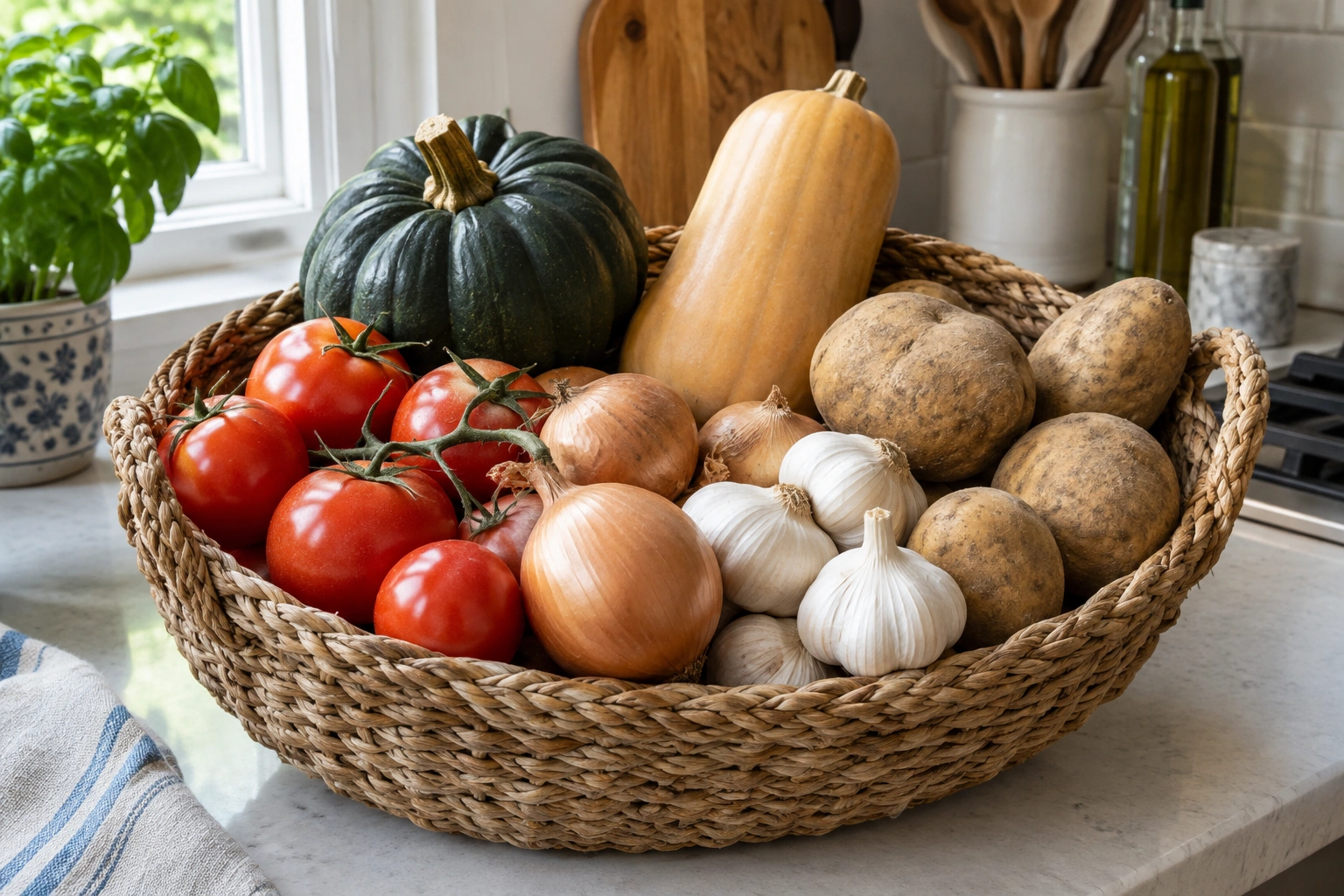
This guide focuses on the most common vegetables that can be stored outside the fridge, not every vegetable that may tolerate room-temperature storage. If you are deciding where to put a specific vegetable, the general rule is simple: whole, dry, and sturdy vegetables may be okay outside the refrigerator; cut, peeled, cooked, or leafy vegetables usually belong in the fridge.
The important detail is that “room temperature” is not a one-size-fits-all storage method. A sunny countertop, a warm kitchen, and a cool pantry behave very differently. The best storage spot depends on whether the vegetable is whole or cut, whether it needs airflow, and whether it is sensitive to moisture, light, or ethylene gas.
A simple rule helps: if the vegetable is whole, dry, and naturally sturdy, it may do well outside the fridge. If it is cut, peeled, cooked, or leafy, refrigeration is usually the safer choice.
Vegetables That Usually Belong on the Counter, in the Pantry, or in the Refrigerator
Here is a quick master list to make the counter-versus-pantry-versus-fridge choice easier.
| Vegetable | Best storage spot | Typical storage time | Notes |
|---|---|---|---|
| Tomatoes | Counter until ripe; fridge if needed after ripening | 1–5 days to ripen, depending on stage | Keep away from ethylene-sensitive produce |
| Onions | Cool, dry, ventilated pantry or basket | Several days to weeks, depending on condition | Store whole and uncut |
| Garlic | Dry, ventilated pantry | Several weeks in good conditions | Keep bulbs whole and dry |
| Potatoes | Cool, dark, dry pantry or cabinet | Often a couple of weeks or more if conditions are right | Keep in a paper bag or breathable container |
| Winter squash | Counter or pantry | Often weeks if uncut and sound | Keep dry and inspect regularly |
| Bell peppers | Refrigerator | About 1–2 weeks | Best kept crisp and dry |
| Cucumbers | Refrigerator | Several days to about 1 week | Cold storage helps prevent softening |
| Eggplant | Refrigerator | A few days | Sensitive to warmth and chilling damage if held too long in warm rooms |
| Carrots | Refrigerator | 1–2 weeks or longer if very fresh | Best stored cold for crispness |
| Broccoli | Refrigerator | A few days | Keeps best cold and humid |
| Leafy greens | Refrigerator | A few days | Store cold and dry enough to prevent sliming |
A few of these are better described as pantry vegetables than countertop vegetables. That distinction matters. A pantry or cabinet protects them from heat and sunlight better than an open counter, which can slow spoilage and reduce sprouting or softening.
Which Vegetables Should Stay Out of the Refrigerator
The main decision rule is simple: some vegetables lose quality in the refrigerator, while others are better kept cold. Tomatoes are the clearest example. Underripe tomatoes can stay at room temperature and continue ripening. Once ripe, they are best eaten at room temperature for flavor, though refrigeration can extend their shelf life if you need more time.
Potatoes are another common exception. Whole potatoes usually keep better in a cool, dark, dry place than in the refrigerator. Cold storage can change their texture and flavor, so a pantry or cabinet is usually the better choice for long-term holding.
Onions and garlic also do better in dry, ventilated storage than in a cold, moist refrigerator. Cold air is not the issue by itself; moisture is. If the fridge adds condensation or softening, shelf life usually gets worse, not better.
Winter squash is another vegetable that often does well outside the fridge when it is whole and uncut. A dry pantry shelf or shaded counter can work well for short-term storage.
By contrast, vegetables such as peppers, cucumbers, eggplant, carrots, broccoli, and leafy greens usually belong in the refrigerator. They stay fresher, crisper, and safer for longer when kept cold.
Best Storage Conditions for Counter-Stable Vegetables
Room-temperature storage works best when you control four things: light, airflow, humidity, and heat.
Light
Direct sunlight speeds warming and can shorten shelf life. A sunny windowsill is a poor place for tomatoes, potatoes, onions, or garlic. A shaded counter, a cabinet away from the stove, or a pantry shelf is better.
Airflow
Airflow helps moisture escape. That matters for onions, garlic, and potatoes, which can soften or sprout more quickly when trapped in a sealed bag or plastic container. A basket, mesh bag, or paper bag is usually more practical than airtight storage.
Humidity
Too much humidity encourages mold and soft spots. Too little can dry out produce. For most counter-stable vegetables, the goal is dry but not desiccated. If your kitchen is humid, move these items from the counter into a pantry or cabinet with better ventilation.
Heat
A warm kitchen shortens the useful life of almost everything on this list. If your stove, dishwasher, or oven heats the room, treat the counter as temporary storage only. In that case, pantry storage is usually the safer choice.
Vegetable-by-Vegetable Storage Guide
Tomatoes
Store whole tomatoes at room temperature until they are ripe. If they are underripe, the counter helps them finish ripening. Once ripe, keep them where you plan to use them soon. If you need to hold them longer, refrigeration is acceptable, but expect some texture and flavor loss compared with counter storage.
Onions
Whole onions belong in a dry, ventilated place. A basket in the pantry or a mesh bag in a cabinet works well. Keep them away from potatoes. That separation matters because both release moisture and can encourage faster spoilage when stored together. If an onion is cut, move it to the refrigerator immediately in a sealed container.
Garlic
Garlic bulbs do best whole, dry, and unpeeled. A cool pantry with airflow is ideal. Once cloves are peeled or chopped, room-temperature storage is no longer appropriate. At that point, refrigerate them and use them promptly.
Potatoes
Store potatoes in a paper bag or similar breathable container in a dark, cool place. Light can cause greening, and warmth encourages sprouting. The key trade-off here is convenience versus quality: keeping them near the stove may be easy, but heat and light shorten their usable life. A cabinet or pantry is the better everyday solution.
Winter squash
Uncut winter squash can usually stay at room temperature if the area is dry and not too warm. A pantry shelf or counter away from sunlight is fine for short-term storage. Once cut, move the squash to the refrigerator.
Bell peppers
Bell peppers are usually best in the refrigerator, where they stay crisp longer. If they are left on the counter, they tend to soften faster. Whole peppers can handle a short time at room temperature if you plan to use them soon, but the fridge is the better default.
Cucumbers
Cucumbers are another vegetable that usually belongs in the refrigerator. Cold storage helps them stay firm and reduces shriveling. If they are left on the counter, they often soften quickly.
Eggplant
Eggplant is best stored in the refrigerator and used fairly soon. A warm counter can make it deteriorate faster. Keep it dry and avoid storing it for long periods at room temperature.
Carrots
Carrots usually keep better in the refrigerator, where they stay crisp. If they are left out at room temperature, they can lose firmness more quickly. Trimmed or peeled carrots should go straight into cold storage.
Broccoli
Broccoli belongs in the refrigerator. It is sensitive to warmth and can yellow or soften quickly if left out. Store it cold and use it promptly for the best texture.
Leafy greens
Leafy greens should stay in the refrigerator. They wilt fast at room temperature and are much more likely to spoil if they sit out for long. Keep them cold and use them soon after buying.
Room Temperature vs. Refrigerator Storage
Room temperature can improve flavor and texture for certain vegetables, especially tomatoes. It also keeps potatoes from developing the gritty texture that can happen with refrigeration. For busy households, that can mean less waste because the vegetables are easier to see and use.
Refrigeration wins when your goal is maximum holding time after prep. It is the better choice for cut, peeled, or cooked vegetables, and for any produce that is already fully ripe and not likely to be used soon. The trade-off is simple: you often gain shelf life but lose some texture or flavor.
A practical way to decide is this:
– Use the counter or pantry for whole, sturdy vegetables that are meant to ripen or stay dry.
– Use the fridge for anything cut, peeled, cooked, or moisture-prone.
– If a vegetable is already ripe and you will not use it soon, refrigeration can be a useful backup, even if it is not the best flavor choice.
How to Store Cut, Peeled, or Cooked Vegetables
Once a vegetable is cut, peeled, or cooked, the storage rules change. The protective skin or shell is gone, and the food is more exposed to air, moisture, and contamination. That means room-temperature storage is no longer the right default.
For meal prep, this is the line I recommend remembering: whole vegetables may belong on the counter; prepared vegetables belong in the refrigerator.
Use shallow containers when possible so the food cools quickly if it is warm from cooking. Keep lids on to reduce drying, but do not trap steam from hot food. Let cooked vegetables cool briefly before refrigerating, then store them promptly.
If you are prepping lunches or dinner components, portion cut vegetables into containers right away. That reduces the chance they sit out “just for a minute” and end up forgotten on the counter.
Signs a Room-Temperature Vegetable Has Gone Bad
Do not taste questionable produce to test it. Look for clear spoilage signs instead.
Discard vegetables that show:
– Mold
– Slime
– Soft, collapsing spots
– Strong off odors
– Deep discoloration
– Visible rot or leaking liquid
For tomatoes, a little softening may simply mean they are ripe. If they are only slightly soft, smell normal, and have no mold or leaking, they are usually still usable right away. But if the skin breaks down, the flesh smells sour, or mold appears, throw them out. For onions and garlic, softness and mold are the big warning signs. For potatoes, greening, sprouting, or a mushy texture means they are past their best quality and may need to be discarded depending on the extent of the damage.
If a vegetable looks questionable and you are unsure, the safest choice is to discard it.
Common Mistakes That Shorten Shelf Life
A few small habits cause a lot of waste.
The first is washing produce too early. Extra moisture speeds spoilage for most vegetables. Wash only when you are ready to use them.
The second mistake is storing onions and potatoes together. They are both pantry staples, but they do not make good roommates. Keep them in separate containers or separate shelves.
The third mistake is using a hot, sunny countertop as if it were a pantry. That can turn “room temperature storage” into warm storage, which shortens shelf life fast.
The fourth mistake is packing produce too tightly. Vegetables need breathing room. A crowded bowl traps moisture and makes it easier for one bad item to spoil the rest.
Simple Kitchen Organization Tips to Reduce Food Waste
If your kitchen is busy, make the storage system easy enough to maintain on a tired weeknight.
Keep a designated bowl or basket for tomatoes that need to ripen. Use a separate bin or basket for onions and garlic in a dry cabinet or pantry. Store potatoes in a paper bag or breathable container in a dark spot, not in a decorative bowl on the counter if that bowl sits in sunlight.
For meal prep, place the vegetables you plan to use first at the front of the shelf or basket. Older produce should be the easiest to see. That small habit does more to reduce waste than most “perfect” storage setups.
If you buy in bulk to save money, match the purchase to your storage conditions. Bulk potatoes only make sense if you have a cool, dark place for them. Bulk tomatoes only make sense if you will use or process them before they over-ripen.
For a related storage question, our guide on whether potatoes and onions should be stored together explains why separating them helps both last longer.
When to Ask a Food Safety Expert
If you are dealing with produce that has been left out in a very warm kitchen, has visible mold over a wide area, or has been cut and forgotten for an extended period, do not guess. When in doubt, discard it. If you need help with a specific situation involving spoiled food, a local extension office or food safety specialist can give guidance that matches your exact conditions.
Quick Takeaway for Busy Kitchens
If you want the shortest possible answer, keep tomatoes, onions, garlic, potatoes, and some winter squash at room temperature only when they are whole, dry, and stored in the right spot. Use the fridge for peppers, cucumbers, eggplant, carrots, broccoli, leafy greens, and anything cut, peeled, or cooked. Keep produce out of direct sunlight, give it airflow, and check it often enough to use the oldest items first.