
Where Should Meat Be Stored in the Fridge? A Practical Food Safety Guide

If you want the safest short answer, raw meat should usually go on the bottom shelf of the fridge in a leak-proof container, tray, or tightly sealed package. That placement helps keep juices from dripping onto ready-to-eat foods, produce, or leftovers.
For busy households, this is the simplest rule to remember: raw meat low, cooked and ready-to-eat foods higher. That one habit prevents a lot of avoidable contamination.
The Safest Place to Store Raw Meat
Raw meat belongs on the bottom shelf, not above salad greens, fruit, leftovers, or anything you plan to eat without cooking. The reason is practical: if a package leaks, gravity does the rest.
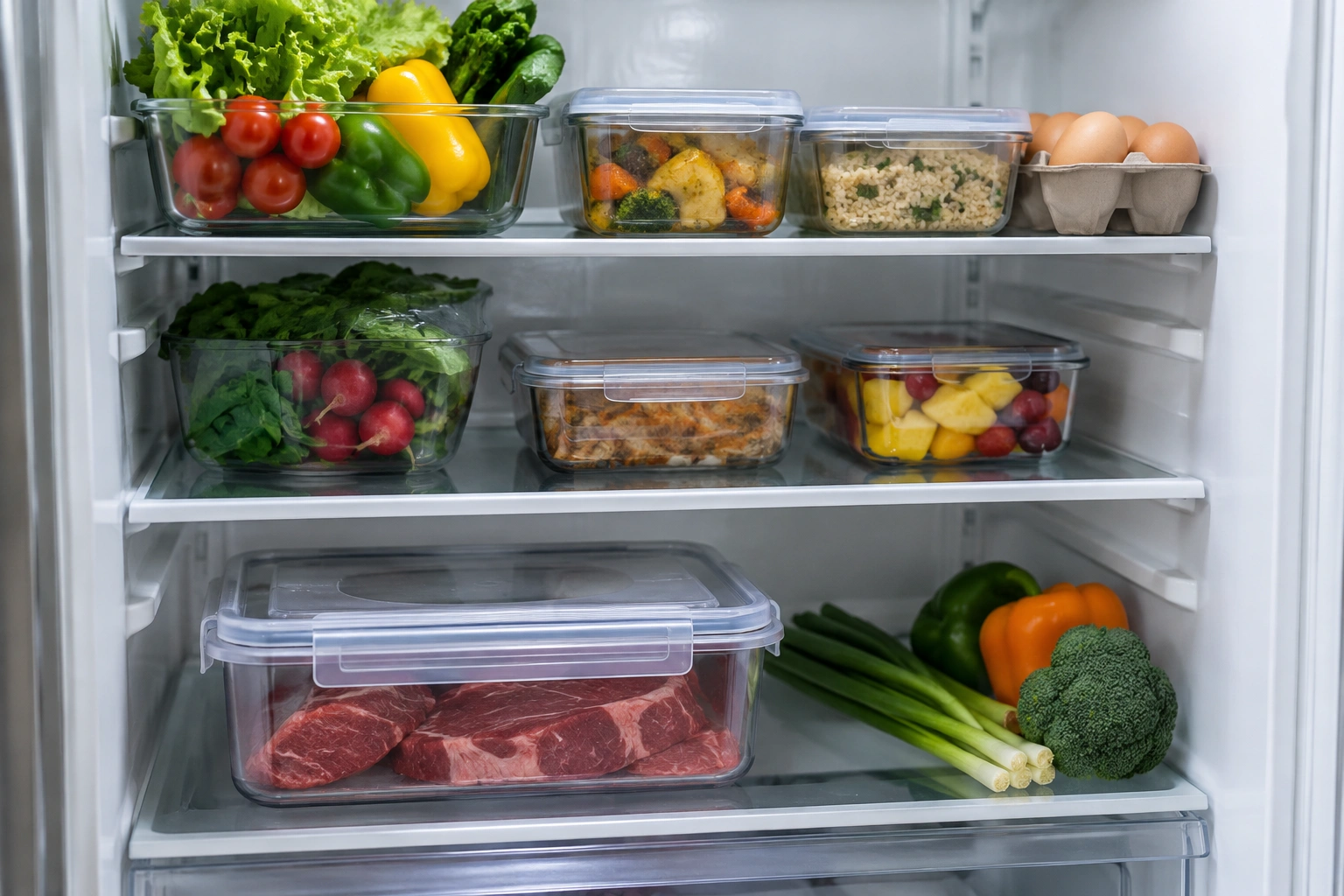
That matters because raw meat juices can carry harmful bacteria. If those juices drip onto other foods, you may contaminate something that will not be cooked before eating. The safest setup is:
- raw meat on the bottom shelf
- meat inside a sealed container or well-wrapped package
- a plate or tray underneath if the packaging is less reliable
This is the best default because it gives you the most protection from drips and keeps raw meat physically separated from foods that are ready to eat.
Why the Bottom Shelf Works Better Than Other Spots
Fridges are not all organized the same way, but the food-safety logic is consistent: keep raw meat below everything else that is ready to eat. That way, if something leaks, it falls onto an empty tray or shelf area instead of onto dinner.
A few common mistakes create unnecessary risk:
- storing chicken above berries or lettuce
- setting a package of ground beef directly over leftovers
- placing raw pork in a drawer that also holds produce
- trusting thin store packaging that already looks wet or damaged
Some fridges have cold zones that vary slightly from shelf to shelf, and refrigerator design matters. But shelf order for safety is less about chasing the “perfect” cold spot and more about preventing contamination.
What You Need Before Putting Meat in the Fridge
A safe setup does not require fancy equipment, but a few basics make the job easier:
- a fridge thermometer to confirm the appliance is at or below 40°F (4°C)
- a leak-proof container or shallow tray
- a clean area on the bottom shelf
- labels or masking tape for date tracking
- paper towels or disinfectant for cleanup if a package leaks
If you meal prep often, keep one dedicated bin for raw meat. That makes it easier to move packages in and out without juggling them near produce or leftovers.
How to Store Raw Meat Step by Step
Here is the most practical routine for home use.
1) Check the package before it goes into the fridge
If the store wrapping is intact and dry, you may be able to keep the meat in its original packaging for short-term storage. If the package has punctures, thaw leakage, a damaged seal, or any sign that it is wet, torn, bulging, or loose, repackage it immediately in a sealed container.
2) Put it on the bottom shelf
Choose the lowest shelf available. If the meat is thawing, set it on a plate or in a container so any liquid stays contained.
3) Keep it away from ready-to-eat foods
Do not place raw meat above leftovers, cut fruit, prepared salads, or anything that will be eaten without cooking. That is the main cross-contamination risk.
4) Use an extra barrier if needed
A shallow bin, rimmed tray, or covered container adds a second layer of protection. This is especially helpful for poultry and ground meat.
5) Label the date
If you are not cooking the meat right away, mark the purchase or thaw date on the package. That makes it much easier to decide whether to cook it soon or freeze it.
6) Clean up any leaks immediately
If a package leaks, remove it, sanitize the shelf, and wash any container that touched the liquid. Do not leave it “for later.” A small spill becomes a bigger problem if it sits next to other food.
Where Different Types of Meat Should Go
The shelf placement is basically the same for chicken, beef, pork, and ground meat: bottom shelf, contained, separated from ready-to-eat foods.
The difference is mostly in how quickly you should plan to use them.
- Poultry and ground meats should be used or frozen sooner.
- Whole cuts of beef, pork, or lamb usually keep a bit longer in the fridge.
That means the storage location does not change much, but your timing does. A package of chicken breasts and a package of steak may sit in the same place, yet the chicken needs a faster cooking plan.
For a household meal plan, that usually means:
– chicken and ground meat on the “cook first” side of the fridge
– steaks, roasts, and chops on the “later this week” side
That simple mental order helps reduce waste.
Original Packaging vs. a Sealed Container
Original store packaging is convenient, but it is not always the safest choice. Use it only when the wrap is intact and you trust it not to leak.
A sealed container is better when:
– the package looks wet or damaged
– the meat will thaw in the fridge
– you are stacking items in a busy refrigerator
– you want to keep juices fully contained
Original packaging is fine for short-term storage if it stays dry and secure. A container is better if you want a stronger spill barrier. That extra step is often worth it in family fridges where other foods are packed tightly together.
A useful rule: if you would not want the package sitting directly under your leftovers, put it in a container.
Meat Drawer, Crisper Drawer, or Bottom Shelf?
If your fridge has a special meat drawer, check how it is designed before using it. Some drawers are simply convenience drawers, not a true leak-proof zone. Others may be warmer than the bottom shelf or too close to produce storage.
Here is the decision framework:
Use the bottom shelf when:
- you want the safest default
- the package may leak
- the fridge is crowded
- you are storing raw poultry or ground meat
Use a meat drawer only when:
- it is clearly intended for meat storage
- it keeps raw meat fully separate from produce and ready-to-eat foods
- it still allows you to contain leaks
Avoid the crisper drawer for raw meat
Crisper drawers are usually meant for produce. Even if they seem convenient, they are not the best place for raw meat unless the drawer is specifically designed for that purpose and you can still keep everything sealed.
How Cold the Fridge Should Be for Meat
The refrigerator should be kept at 40°F (4°C) or below. That temperature target matters throughout the unit, not just in one spot.
A food thermometer is worth using because many fridges run warmer than the dial suggests, especially when they are full or opened often. If your fridge is above 40°F, raw meat is not being held as safely as it should be.
For a quick check:
– place a thermometer in the fridge
– let it sit long enough to stabilize
– confirm the reading is at or below 40°F
That one check can tell you whether your storage habits are actually working.
For more on safe cold storage, FoodSafety.gov’s cold food storage chart is a useful reference.
How Long Raw Meat Can Stay in the Fridge
This is where many people get tripped up. Safe storage is not just about location; it is also about time.
These are maximum fridge times for raw meat kept at 40°F (4°C) or below:
- Fresh poultry and ground meats: use or freeze within 1 to 2 days
- Fresh beef, veal, lamb, and pork: usually 3 to 5 days
- Thawed meat in the fridge: keep it on a plate or in a container and use it promptly; once thawed in the refrigerator, it follows the same short-window logic as other raw meat
The safest habit is to plan from the day you buy it, not from the day you remember it is there.
If you know you will not cook the meat within that time window, freeze it instead of hoping the fridge will buy you more time. The fridge is for short-term holding, not indefinite storage.
The USDA’s refrigeration guidance is a good reference point for these time limits: USDA food refrigeration basics.
Practical Fridge Layout Examples
A few real-life setups make this easier to picture.
Small apartment fridge
- bottom shelf: raw meat in a sealed bin
- middle shelf: leftovers and prepared foods
- top shelf: condiments, drinks, sealed items
- crisper drawers: produce only
This setup works well because the raw meat is physically below everything else.
Family fridge with meal prep containers
- one bottom-shelf bin for raw meat packages
- one shelf for cooked meal prep containers
- one drawer for fruit and vegetables
- one section for dairy and eggs
The key is not perfection; it is separation. Even if the fridge is crowded, keep raw meat in the lowest contained spot available.
Fridge with limited shelf space
If the bottom shelf is partly taken up by tall items, use a leak-proof bin for the meat and place it as low as possible. The point is to keep it below ready-to-eat foods and prevent drips, not to create a magazine-perfect layout.
Common Mistakes to Avoid
A few habits create most of the risk:
- putting raw meat above produce or leftovers
- leaving meat uncovered
- trusting damaged packaging
- using the crisper drawer for raw meat
- keeping meat too long in the fridge instead of freezing it
- forgetting to check the actual fridge temperature
If meat leaks, treat the shelf as contaminated until it has been cleaned and sanitized. Do not just wipe around the package and move on.
When to Refrigerate vs. Freeze Meat
Use this simple rule:
- Cook it soon? Refrigerate it on the bottom shelf.
- Not cooking it within the safe fridge window? Freeze it.
That decision saves money and reduces waste. It also prevents the common problem of “I’ll cook it tomorrow” turning into food that has sat too long in the fridge.
If the package is already close to the end of its safe refrigerated time, freezing is usually the better move. Freezing pauses the countdown; the fridge does not.
Troubleshooting Storage Problems
If the package leaks
Move the meat to a clean container, sanitize the shelf, and check nearby foods for contamination. If juices touched an uncovered item, treat that item cautiously.
If the fridge is too warm
Check the thermometer first, not just the dial. If it is above 40°F, adjust the appliance and move highly perishable meat to a colder, safer setup as soon as possible. If you cannot get the fridge back to safe temperature quickly, freeze the meat if it is still in good condition.
If space is tight
Use a shallow, stackable leak-proof bin on the bottom shelf. That gives you containment without taking over the entire fridge.
If raw meat has to sit near other foods temporarily
Use two barriers: sealed packaging plus a tray or container underneath. Then move it to the bottom shelf as soon as space opens up.
When to Ask a Food Safety Expert
If meat has been left out too long, the fridge has been warming up repeatedly, or packaging leaks have been extensive, it is worth checking official food safety guidance before deciding whether to keep or discard the food. When in doubt, safety should win over saving a few dollars.
FAQs About Storing Meat in the Fridge
Should raw meat be stored above or below other foods?
Below. Raw meat should be stored on the bottom shelf so juices cannot drip onto foods that are ready to eat.
Can I keep meat in the meat drawer?
Only if the drawer is designed for that purpose and still keeps raw meat fully separate and contained. Otherwise, the bottom shelf is safer.
Is it okay to store cooked meat near raw meat?
Not ideal. Cooked meat should be kept separate from raw meat to reduce cross-contamination risk.
Do chicken and beef need different fridge spots?
No. They should both be kept low and contained. The main difference is how quickly they should be used.
Should I refrigerate meat in the store package?
Yes, if the package is intact and not leaking. If it is damaged, punctured, or wet, move it to a sealed container right away.
Final Takeaway
If you want one rule to run your fridge by, make it this: raw meat goes on the bottom shelf in a leak-proof container or tightly sealed package, below ready-to-eat foods and produce. Pair that with a fridge temperature of 40°F (4°C) or below, and you have the foundation for safer storage, less waste, and much less worry during busy meal prep weeks.