
Gluten Development in Bread: How to Build Strong, Flexible Dough for Better Loaves

If you’ve ever watched a dough go from shaggy and sticky to smooth and elastic, you’ve seen gluten development in action. That transformation is what gives bread its structure, helps it trap gas, and shapes the final crumb.

For home bakers, the challenge is not just “develop gluten,” but knowing how much, by what method, and for which style of bread. A sandwich loaf, a ciabatta, and a brioche all want different things from the dough. Push too hard, and you can end up with a tight, tough crumb. Stop too early, and the loaf may spread, tear, or bake up dense.
Let’s break down what gluten development really means, how to control it, and how to read the dough so you can stop guessing.
What Gluten Development Means in Bread Dough
Gluten is the network that forms when flour and water meet. Two key proteins in wheat flour—gliadin and glutenin—combine with hydration and movement to create a stretchy, elastic structure. That structure is what lets dough hold shape, expand during fermentation, and rise in the oven.
Think of gluten development as building a scaffold inside the dough. The stronger and more balanced that scaffold is, the more air the dough can hold without collapsing. That’s why properly developed dough is often easier to shape and can produce better oven spring and a more open, chewy crumb in breads that are meant to have one.
Not every bread wants the same level of strength, though. A soft dinner roll and a rustic, holey loaf are not chasing identical textures. Bread style should guide how far you take gluten development.
If you want a broader foundation on how dough hydration affects this process, it helps to pair this guide with bread dough hydration basics.
Before You Start: Ingredients, Tools, and Dough Conditions
Before you focus on kneading, make sure the dough itself is set up to cooperate.
Flour type
Flour protein content matters because it influences how much gluten the dough can form. Bread flour usually gives stronger structure than all-purpose flour, while whole wheat flour behaves differently because bran and germ interfere with the gluten network. That doesn’t make whole wheat “worse”; it just means it often needs more patience, more hydration, or a different mixing approach.
Water
Water is the trigger. Once flour is hydrated, gluten formation can begin. A drier dough usually feels stiffer and may take more effort to bring together. A wetter dough often develops extensibility more easily, but it can feel slack and harder to handle.
Salt
Salt helps the dough feel tighter and more organized. If you leave it out or add it very late, the dough may feel looser and less balanced.
Tools
You can develop gluten with:
– your hands
– a stand mixer
– stretch-and-folds during bulk fermentation
– time and rest, especially in no-knead doughs
A bowl, bench scraper, and a little patience are often enough. A mixer helps with speed and consistency, but hand mixing gives you more tactile feedback.
How Gluten Develops: Mechanical Development, Rest, and Fermentation
Gluten development is not one event. It happens in stages, and those stages do different jobs.
Mixing and kneading create immediate structure
Once water hits flour, the proteins begin to hydrate and link up. Early on, the dough may look rough and uneven. That’s normal. Mixing starts the network, and kneading aligns and stretches it so the dough becomes smoother, more elastic, and easier to shape.
This is the part bakers usually mean when they talk about “developing gluten” quickly.
Rest improves extensibility and handling
Rest periods matter more than many bakers realize. Rest allows the dough to relax, which reduces resistance and makes shaping easier. Rest also gives hydration time to spread through the flour, which can improve extensibility.
This is not the same thing as adding strength instantly. It makes the dough easier to work with and helps the network behave better.
Fermentation adds strength over time
During bulk fermentation, the dough continues to change. Gas production, acidity, and time all affect dough behavior. In many doughs, especially high-hydration or no-knead styles, fermentation plus folds can build a lot of the practical strength that kneading would otherwise provide.
That’s why a dough can feel underdeveloped right after mixing but become much stronger after an hour or two of rest and folding. In readiness checks, it helps to separate two questions: has the gluten network been built enough, and has fermentation given the dough enough overall strength to hold shape?
Step-by-Step: How to Develop Gluten in Bread Dough
Here’s a practical process you can use for most wheat-based bread doughs.
1. Mix until no dry flour remains
Combine the ingredients just until the flour is hydrated. Don’t chase smoothness yet. At this stage, your goal is simply to make sure all the flour has contact with water.
2. Let the dough rest briefly
A short rest after mixing gives the flour time to hydrate. This can make the dough feel less sticky and more cooperative before you begin kneading or folding.
3. Choose the right development method for the dough
Use the dough’s hydration, flour type, and style to decide:
- Lower-hydration or medium-stiff doughs usually do well with hand kneading or a mixer.
- Wet, slack doughs usually respond better to stretch-and-folds during bulk fermentation.
- Doughs that feel rough, tight, or resistant early on often benefit from an autolyse or a longer rest before intensive mixing.
- Very long-fermented or low-effort doughs can be handled with a no-knead approach, especially when time can do more work than force.
A practical rule: if the dough needs shaping strength now, kneading is useful. If it needs hydration, relaxation, and gradual strengthening, folds or rest are usually a better fit.
4. Build strength in stages
If kneading by hand, work the dough until it becomes smoother, more elastic, and less ragged. If using folds, repeat them during bulk fermentation until the dough feels stronger and holds shape better.
5. Check the dough, not the clock
Time is only a guide. The dough is ready when it has enough elasticity to stretch without tearing immediately, enough strength to hold shape, and enough smoothness to feel cohesive.
6. Let fermentation finish the job
Once the dough has enough structure, stop mixing and let bulk fermentation do the rest. Extra mixing after that point can reduce extensibility without giving you much benefit.
How Long Should You Knead Dough by Hand or Mixer?
Use this as an approximation, not a fixed rule.
- By hand: often about 8 to 15 minutes for many standard lean doughs, though wetter or enriched doughs may need a different approach.
- By stand mixer: often about 5 to 10 minutes on low to medium speed for many bread doughs, with closer attention needed for enriched doughs.
The goal is not to hit a perfect minute mark. It’s to stop when the dough is smoother, more elastic, and less likely to tear. A mixer can get there faster, but it can also overdevelop dough if you leave it running too long.
How to Tell When Gluten Is Properly Developed
You do not need to rely on one test alone.
Visual cues
Properly developed dough often looks:
– smoother on the surface
– more unified and less shaggy
– slightly springy when pressed
– capable of holding a rounded shape better
Tactile cues
When you touch the dough, it should feel:
– elastic, meaning it springs back somewhat
– extensible, meaning it can stretch without snapping immediately
– cohesive, not crumbly or torn-looking
The windowpane test
The windowpane test is useful when you want a clearer check. Stretch a small piece of dough gently between your fingers. If it can stretch thin enough to let light through before tearing, the gluten network is usually well developed for many bread doughs.
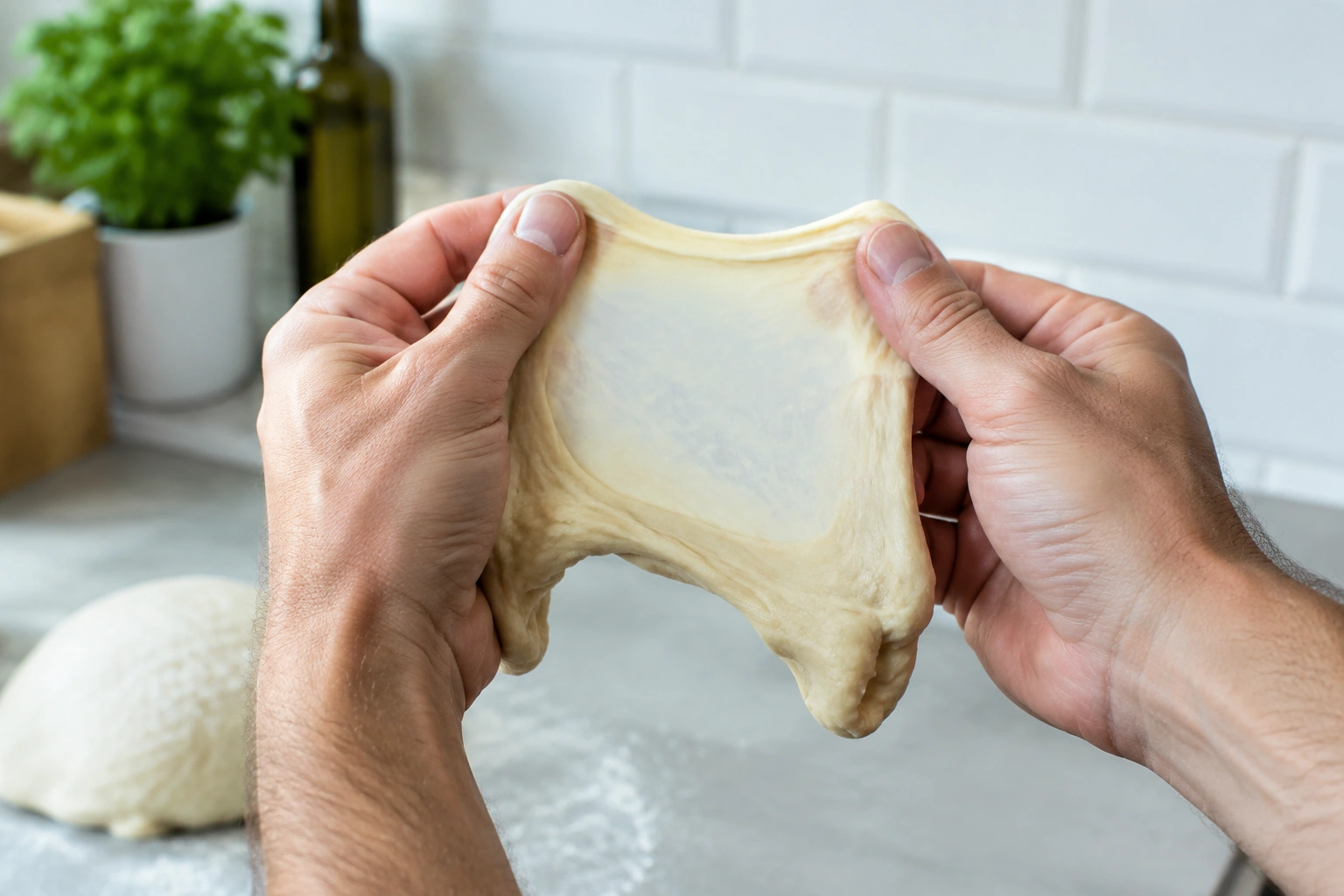
But don’t treat it like a universal pass/fail exam. Some doughs, especially very wet or enriched ones, can be trickier to judge. A dough might pass the windowpane test and still need more fermentation strength, or it may feel ready even if the film is not perfect.
A practical rule
If the dough stretches more easily than it tears, holds shape better than it did earlier, and feels smoother after resting, it is probably moving in the right direction.
Choosing the Right Method for Your Dough
Different methods create different results. Here’s a clear way to choose.
| Method | Best for | Strengths | Trade-offs |
|---|---|---|---|
| Hand kneading | Everyday loaves, beginner-friendly practice, medium-stiff doughs | Strong tactile feedback, good control | Slower, more variable |
| Stand mixer | Enriched doughs, consistent batch work, doughs that need faster mechanical development | Faster, efficient, even mixing | Easier to overmix if you walk away |
| Stretch-and-fold | Wet doughs, artisan-style breads, doughs that feel slack but not necessarily underhydrated | Gentle strength-building, less sticky handling | Takes time during bulk fermentation |
| Autolyse | Doughs that feel tight, tear early, or need easier mixing and better extensibility | Improves hydration and handling | Adds an extra rest step |
| No-knead method | Long-fermented doughs with enough time and moderate-to-high hydration | Low effort, strong flavor development | Requires planning and patience |
A useful decision rule: if the dough feels stiff and needs quicker strengthening, kneading is practical. If it feels wet and slack, folds are usually the better path. If the dough resists mixing or tears too soon, a rest can often solve more than extra flour.
How Flour Type, Hydration, and Add-Ins Change Gluten Development
Bread flour vs all-purpose flour
Bread flour usually gives you more gluten potential and better structure for loaves that need lift and chew. All-purpose flour can still make excellent bread, especially softer sandwich loaves, but it may not build the same strength as easily.
White flour vs whole wheat flour
White flour doughs usually develop gluten more readily because there is less bran to interfere. Whole wheat doughs often need more hydration and more rest because bran can cut through the network and make the dough feel less elastic.
Hydration level
Higher hydration generally makes dough more extensible and can support a more open crumb, but it also makes handling stickier and shape retention harder. Lower hydration is easier to shape and often feels more controlled, but it may produce a tighter crumb.
Fat, sugar, and eggs
Enriched doughs behave differently from lean doughs. Fat and sugar can slow or soften gluten development, which is why brioche and similar doughs often need more mixing or a more careful development strategy. The dough may seem slow to strengthen, but that does not mean it is failing.
Salt
Salt helps the dough feel tighter and more organized. If you leave it out or add it very late, the dough may feel looser and less balanced.
Common Mistakes That Prevent Good Gluten Development
Underdeveloping the dough
This is the classic cause of a loaf that spreads, tears, or bakes up dense. The dough may still feel rough, weak, or sticky in a way that does not improve with rest.
Overmixing or overkneading
Too much mixing can make dough feel overly tight and less willing to stretch. In practical terms, that can lead to a tough chew or a dough that fights shaping instead of cooperating.
Adding too much flour during kneading
A small dusting is fine. Dumping in extra flour to “fix” stickiness can dry out the dough and make gluten development harder, not easier.
Using one method for every dough
A ciabatta and a sandwich loaf should not be handled the same way. High-hydration dough often benefits more from folds than hard kneading, while a pan loaf may want more direct mechanical development.
Ignoring rest and fermentation
Some bakers keep kneading when the dough really needs a pause. Rest can do more than force can.
Troubleshooting Weak, Sticky, Tight, or Torn Dough
If the dough tears easily
Likely causes:
– not enough gluten development
– too little rest
– whole wheat flour interrupting the network
– hydration that is too low for the flour
Fix:
Let it rest 10 to 20 minutes, then test again. If it still tears quickly, continue developing it in shorter sessions.
If the dough is sticky and slack
Likely causes:
– high hydration
– underdevelopment
– warm dough
– enriched formula
Fix:
Use folds instead of aggressive kneading, and give the dough time to strengthen during bulk fermentation. Resist the urge to bury it in extra flour.
If the dough feels tight and resists stretching
Likely causes:
– overmixing
– too much flour added during kneading
– not enough rest
Fix:
Cover it and let it relax. A short rest often improves extensibility more effectively than more mixing.
If the bread is dense even after kneading
Likely causes:
– wrong flour for the style
– insufficient hydration
– weak fermentation
– dough developed mechanically but not enough during bulk
Fix:
Look beyond kneading alone. Strong gluten is only part of the picture, and dough strength also depends on fermentation and handling.
Practical Examples by Bread Style
Sandwich bread
A sandwich loaf usually benefits from solid gluten development because you want an even crumb and reliable rise. Bread flour often helps here, especially if you want a taller loaf with better slicing strength. This style usually wants enough development to hold shape in the pan and support a fine, even crumb rather than a very open one.
No-knead bread
No-knead doughs rely on hydration, rest, and time. The gluten network forms gradually, so the baker’s job is to mix well enough at the beginning and then let the dough develop through fermentation and folds. The target is usually moderate strength with enough extensibility to expand during a long bulk.
Whole wheat bread
Whole wheat dough often needs more hydration and more patience. It may never feel quite as silky as white dough, but it can still become strong enough for good rise if you respect the bran’s effect on the structure. The goal is usually workable strength, not maximum stretch.
Brioche
Brioche is enriched with fat and often sugar, so gluten development is slower and can feel less obvious. The dough may need more mixing than a lean dough before it becomes smooth and elastic. The target is a strong, supple dough that can support the added enrichment without tearing.
High-hydration artisan dough
A wet dough can build excellent structure, but it usually needs gentler handling. Stretch-and-folds are often better than heavy kneading because they strengthen the dough without turning it into a sticky mess. The aim is enough strength to hold shape while still staying extensible enough for an open crumb.
When to Stop Mixing and Let Fermentation Do the Work
This is the decision point that separates confident bakers from frustrated ones.
Stop mechanical mixing when the dough has:
– gained noticeable elasticity
– become smoother and more cohesive
– stopped tearing immediately when stretched
– enough strength to hold shape during the next stage
At that point, fermentation can continue building practical dough strength without the risk of making the dough less extensible than you want. If you keep mixing after the dough is already strong enough, you may end up with a dough that is harder to shape, even if the gluten network itself is technically well developed.
In other words: use mixing to build the foundation, then let time refine it.
FAQs
Can gluten develop without kneading?
Yes. In high-hydration or no-knead doughs, hydration and time can build gluten structure, especially when combined with folds during fermentation.
How do I know if my dough needs more mixing or more rest?
If it tears quickly and feels rough, it may need more mixing. If it feels tight and resists stretching, it likely needs rest.
Is the windowpane test enough by itself?
No. It’s helpful, but it should be paired with feel, shape, and dough behavior during handling.
Does higher-protein flour always make better bread?
Not always. Higher-protein flour usually builds more gluten, but different breads need different textures. A softer loaf may actually benefit from moderate protein.
Why does my dough feel sticky even when it’s developed?
Hydration, flour type, and fermentation stage can all affect stickiness. A sticky dough is not automatically underdeveloped.
Can whole wheat dough develop good gluten?
Yes, but it often needs more hydration, more rest, and more careful handling because bran can interfere with the network.
Final Thoughts
Gluten development is less about forcing dough into submission and more about reading what it needs. Once you understand how flour, water, mixing, rest, and fermentation work together, bread stops feeling mysterious. You begin to see why one dough wants a long knead, another wants folds, and another improves most with patience.
That’s the real skill: not just making gluten, but shaping it on purpose.