
How Long Homemade Bread Lasts: A Baker’s Guide to Storage, Freshness, and Safety

Fresh bread has a short shelf life, and that surprises a lot of home bakers. The good news is that once you understand what’s happening inside the loaf, you can choose the right storage method with confidence.
Quick Answer: How Long Homemade Bread Lasts
For most homemade bread, the practical rule of thumb is:
- Room temperature: about 2 to 4 days for many lean loaves; softer or enriched breads may stay pleasant for a little longer or shorter depending on moisture and storage conditions
- Refrigerator: usually not ideal for texture; it can make bread stale faster, but it may be a reasonable short-term option if your kitchen is very warm, very humid, or you need to slow spoilage for a day or two
- Freezer: about 3 months for best quality
That short room-temperature window is why so many bakers freeze extra loaves instead of letting them sit on the counter. A fresh loaf can still be perfectly safe after a few days, but the texture usually declines before the bread becomes unsafe.
| Storage method | Typical freshness window | Best for | Main downside |
|---|---|---|---|
| Counter / room temperature | 2–4 days | Bread you’ll eat soon | Stales faster than frozen bread |
| Refrigerator | Varies; often not recommended for texture | Very humid kitchens or special cases | Dries bread out and speeds staling |
| Freezer | About 3 months | Long-term storage | Needs thawing time |
If you want the shortest answer possible: eat homemade bread within a few days, or freeze it if you won’t finish it quickly.
What Changes Homemade Bread Shelf Life
Not all homemade bread ages the same way. Ingredient choice and loaf style matter more than many bakers expect.
Lean bread vs. enriched bread
A lean bread is made with the basics: flour, water, yeast, and salt. Think rustic country loaves, baguette-style bread, or many sourdoughs. These breads tend to dry out and stale in a fairly predictable way, and they usually fit the standard room-temperature window best.
An enriched bread contains ingredients like:
- milk
- butter
- eggs
- sugar
These additions make the crumb softer and more tender, but they also change how the bread behaves in storage. Enriched breads often feel fresher at first, yet they can spoil faster because they hold more moisture and contain more perishable ingredients. In practice, they may be best eaten within a couple of days, or frozen sooner if you want to preserve quality.
A milk bread or brioche may seem “soft” for longer than a crusty loaf, but softness is not the same thing as freshness. A loaf can still feel tender while the flavor and structure are already fading.
Sourdough and crusty artisan loaves
Sourdough often keeps well from a texture standpoint because its acidity can slow mold growth compared with some other breads. That said, it still stales. A sourdough boule left on the counter will not stay peak-fresh indefinitely just because it’s sourdough, and its best eating window is still usually measured in days rather than weeks.
Crusty artisan loaves have a different trade-off. Their crust is part of the appeal, but that crust softens once the loaf is wrapped or stored in a closed container. If you want to preserve the crackly exterior, a paper bag or bread box can be better than sealing the loaf tightly right away.
Soft sandwich bread
Soft sandwich bread usually loses its fresh, fluffy texture quickly once air reaches it, even if it still looks fine. Because it’s often sliced and enclosed in a bag, it may seem “fine” for a bit longer than a crusty loaf that’s been left exposed, but it can also go stale in a way that feels more noticeable once the slices start drying at the edges.
That’s the key distinction: freshness, texture, and safety do not always change at the same rate.
Best Way to Store Homemade Bread
Use this simple decision guide:
- Eat it within 2 to 3 days and want the best texture? Keep it at room temperature.
- Need it to last longer than a few days? Freeze it.
- Use the refrigerator only when room temperature isn’t practical—for example, in a very hot or humid kitchen, or when a moist loaf seems more likely to spoil than stale. Even then, expect a less pleasant texture, and freeze instead if you can store the bread for more than a short time.
For most bakers, the counter wins for short-term storage and the freezer wins for long-term storage. The refrigerator sits in an awkward middle ground: it may feel safer, but it often makes bread dry and stale faster.
A practical example: if you bake a sandwich loaf on Sunday and plan to use it by Wednesday, room temperature storage is usually the best fit. If you bake two loaves and know one won’t be touched until next week, freeze the extra loaf before the crumb starts to dry out.
How to Store Bread at Room Temperature
Room-temperature storage works best when the bread will be eaten soon and you want to preserve the original crumb and crust as much as possible.
1) Cool the bread completely
Do not wrap warm bread tightly. Steam trapped in the loaf creates condensation, which softens the crust and can encourage mold. Let the bread cool fully before storing it.
2) Choose the right container for the loaf type
Different breads benefit from different storage styles:
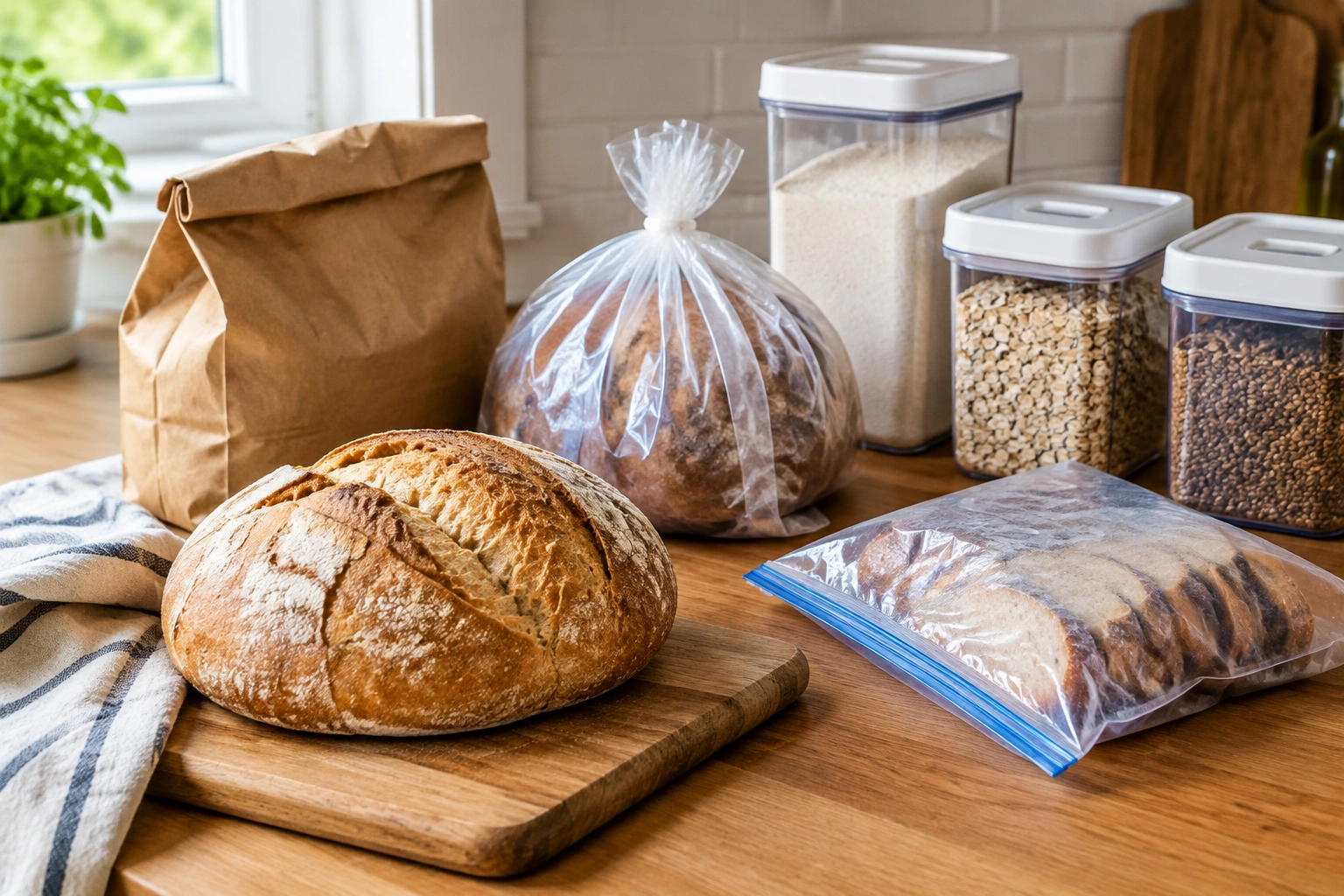
- Paper bag: good for crusty artisan loaves when you want to keep the crust from turning rubbery too quickly
- Bread box: useful for short-term storage because it balances airflow and protection
- Plastic bag: better for soft sandwich bread when you want to retain moisture
- Airtight container: works for some soft breads, but it can trap moisture and soften crusts
The trade-off is simple: more airflow protects crust, while more sealing protects softness. You can’t maximize both at once.
3) Keep the loaf unsliced if possible
An unsliced loaf loses moisture more slowly because less crumb is exposed to air. If you only need a few slices at a time, cut what you need and leave the rest whole.
4) Store it away from heat and sunlight
A loaf left near the stove, in direct sun, or on top of a warm appliance will dry out faster. A cool, dry spot on the counter is better.
5) Check it daily if your kitchen is warm
In humid weather, bread can mold faster than expected. If the loaf is very moist or enriched, inspect it sooner rather than later.
For more on why bread stales so quickly, see our guide on why homemade bread goes stale fast.
How to Freeze Homemade Bread for Longer Storage
Freezing is the best way to preserve homemade bread if you want to keep quality high beyond a few days. The goal is to reduce air exposure and prevent freezer burn.
1) Cool the bread completely
Just like room-temperature storage, freezing a warm loaf traps moisture. That moisture can turn into ice crystals and damage texture.
2) Freeze in the form you’ll use
Think ahead about how you’ll eat the bread:
- Whole loaf: best if you plan to thaw and serve the entire loaf
- Half-loaf or portions: best if you want flexibility
- Slices: ideal for toast, sandwiches, or quick single servings
Slicing before freezing is a trade-off. It speeds up freshness loss a bit because the cut surfaces are exposed, but it makes the bread far easier to use one slice at a time. For many home bakers, that convenience is worth it.
3) Wrap it well
Use a tight layer of plastic wrap, freezer paper, or a freezer-safe bag with as much air removed as possible. The less air in the package, the lower the risk of freezer burn.
4) Label and date it
Bread is easy to forget in the freezer. A simple date helps you use it while the quality is still good.
5) Thaw it gently
For a whole loaf, thaw at room temperature while still wrapped so it doesn’t dry out too quickly. For slices, you can toast them straight from frozen.
If you want to refresh a loaf after thawing, a short warm-up in the oven can help revive the crust and improve the eating experience. Just don’t expect frozen bread to taste exactly like same-day bread; freezing preserves quality well, but it does not reset time.
How to Tell If Homemade Bread Is Stale, Dry, or Moldy
This is where many bakers get tripped up. Stale bread is not the same thing as spoiled bread.
Stale bread
Stale bread is usually:
- firmer or drier than it was
- less aromatic
- chewy in an unpleasant way
- still free of visible mold
Stale bread is often still safe to eat if it has been stored properly and shows no signs of spoilage. It may be better toasted, turned into breadcrumbs, or used in recipes that benefit from a drier texture.
Dry bread
Dry bread is simply bread that has lost moisture. It may feel tough or crumbly, but dryness alone does not mean it is unsafe. In fact, many breads become dry before they become unsafe.
Moldy bread
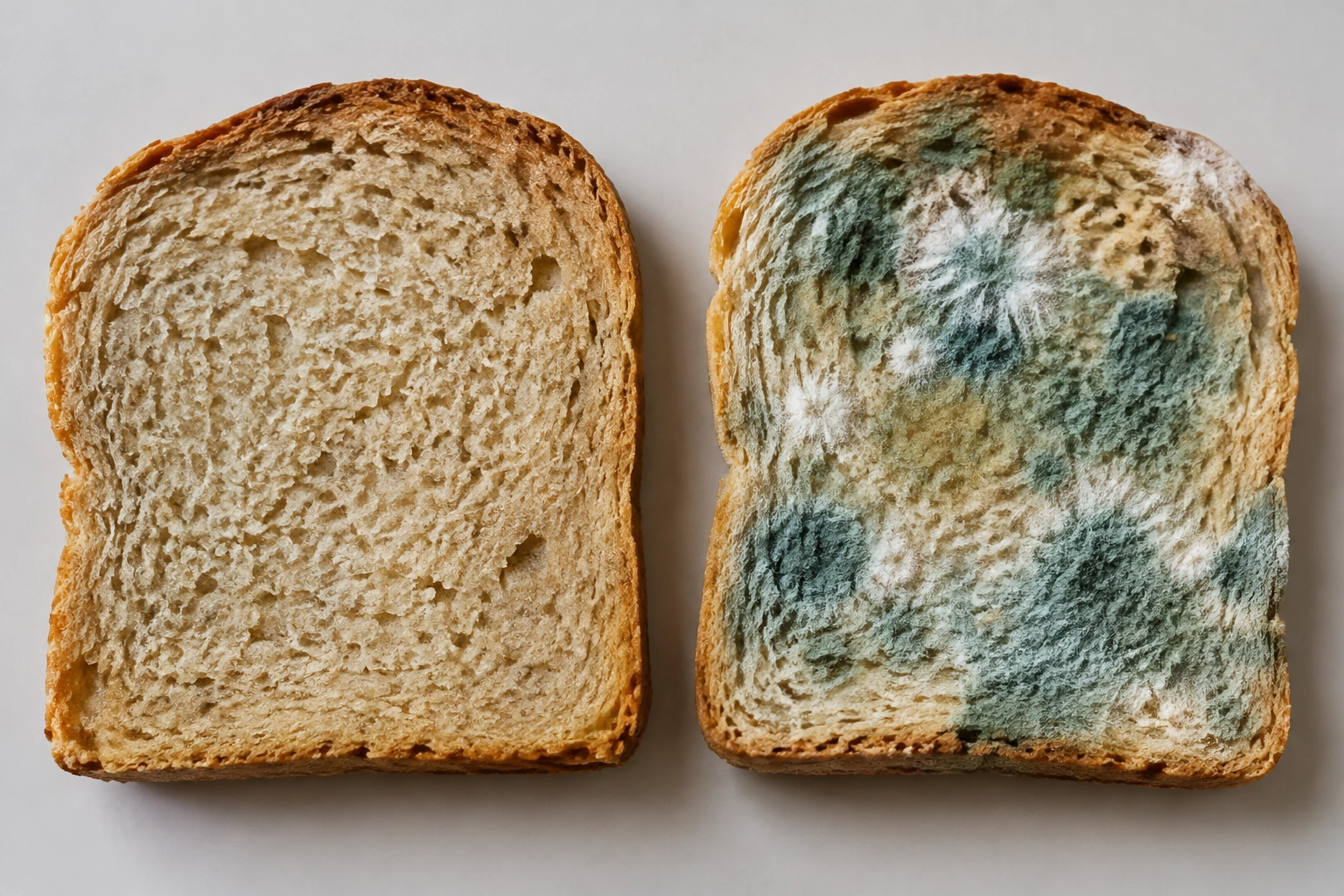
Mold is the hard stop. Throw the loaf away if you see:
- fuzzy spots
- green, white, black, or blue growth
- unusual discoloration
- a damp, slimy, or off-smelling loaf
Do not cut around mold on bread. Mold can spread beyond the visible spot, especially in soft loaves.
A loaf that smells “fine” can still be unsafe if mold is present, so don’t rely on smell alone.
Common Storage Mistakes That Shorten Freshness
A few simple mistakes can shorten the life of homemade bread more than the recipe itself.
Refrigerating bread too soon
The refrigerator is often used with good intentions, but it usually makes bread feel stale faster. Unless you have a specific moisture or spoilage concern, the fridge is not the best first choice.
Leaving the loaf exposed
A cut loaf left uncovered dries out quickly. Even a short period of open-air exposure can noticeably toughen the crumb.
Slicing the entire loaf at once
Slicing speeds up moisture loss. If you know you won’t use the whole loaf immediately, keep it whole and slice as needed.
Sealing a warm loaf
Warm bread in a sealed bag creates condensation. That trapped moisture softens crust and can invite mold.
Assuming all bread behaves the same
A lean sourdough boule, a soft milk bread, and a banana bread do not age the same way. Moisture, sugar, eggs, and dairy all change the timeline.
Troubleshooting Bread That Went Stale Too Fast
If your bread seems to age faster than expected, the fix depends on what happened.
The crust went soft
This usually means the bread was stored in a sealed environment. If you want a crisper crust next time, use a paper bag or bread box for short-term storage instead of a fully sealed container.
The loaf dried out
Too much air exposure is usually the culprit. Wrap the bread more tightly, or freeze part of the loaf sooner.
There’s condensation inside the bag
That means the bread was packed while still warm, or it was moved from cold to warm conditions too quickly. Let it cool fully before storing and avoid repeated temperature swings.
Mold appeared faster than expected
Warmth, moisture, and a high-moisture loaf all speed up mold growth. Enriched breads and very soft loaves may need to be eaten sooner or frozen earlier.
If a loaf is stale but still safe, toasting can bring it back to life enough for breakfast or sandwiches. If it shows mold, discard it.
Practical Examples: Which Storage Method to Use
Here are a few realistic scenarios.
A weekday sandwich loaf
You bake a soft sandwich loaf on Sunday for lunches through Wednesday. Keep it at room temperature in a plastic bag or bread box, and leave it unsliced except for what you need each day.
A crusty artisan loaf
You bake a rustic boule for dinner and plan to eat it over two days. Store it unsliced at room temperature in a paper bag or bread box so the crust stays closer to its original texture.
Dinner rolls for later in the week
You bake a dozen rolls but only need four tonight. Freeze the remaining rolls in a sealed bag once they’re completely cool. Thaw or rewarm them as needed.
An enriched loaf like brioche
Because enriched bread can soften beautifully but also spoil faster, freeze extra portions early if you know they won’t be eaten within a couple of days.
A loaf that’s already stale
If the bread is dry but clean and mold-free, toast it, make breadcrumbs, or use it in a recipe where texture matters less. If there’s mold, don’t salvage it.
Final Takeaway
The best storage choice depends on how soon you’ll eat the bread and what kind of loaf it is: keep most homemade bread at room temperature for a few days, refrigerate only when warmth or humidity makes that necessary, and freeze anything you won’t use soon. Lean loaves usually fit the standard 2-to-4-day window, enriched breads often need to be eaten sooner or frozen earlier, and sourdough may hold up a bit differently but still follows the same basic storage rules. Sliced bread is more convenient, but it loses freshness faster than an unsliced loaf.
Visible mold means the loaf should be discarded.