
Why Homemade Bread Goes Stale Fast — and How to Keep It Soft Longer

Fresh bread has a short, beautiful window. One day it’s warm, fragrant, and tender; the next, it can feel firm, dry, or oddly leathery. If you’ve ever wondered why homemade bread goes stale fast, the answer is usually a mix of bread science, cooling habits, and storage choices — not just “bad luck.”
The good news is that staling is predictable. Once you understand what is actually changing inside the loaf, you can make better decisions about when to wrap it, where to store it, and which recipe tweaks are worth trying.
Why Homemade Bread Goes Stale Fast
Bread doesn’t go stale for just one reason. Three different things often get lumped together:
- Staling: the crumb firms up as starches realign, a process called retrogradation
- Drying out: moisture leaves the loaf and the bread feels drier
- Spoilage or mold growth: the bread is no longer safe to eat
The first one is the most common reason a loaf seems “old” even when it still smells fine. During baking, starches absorb water and swell. As the loaf cools and sits, those starches begin to reorganize and push water around inside the bread. The crumb gets firmer, less supple, and less pleasant to chew.
That’s why a loaf can feel stale even when it hasn’t lost much moisture overall. In other words, bread can be soft but stale, or dry but not yet stale. Those are related problems, but not identical.
A second factor is moisture migration. Water moves from the moist crumb toward the drier crust and then, if the loaf is poorly wrapped, out into the air. That’s why the cut face of a loaf often feels dry first.
Stale, Dry, Overbaked, or Moldy? How to Tell the Difference
Before you change your storage method, diagnose the loaf correctly.
Stale bread
Stale bread usually feels firmer through the crumb and may seem less springy when squeezed. It often still smells like bread, but the texture has tightened up. Toasting can bring it back to life for eating, at least partially.
Dry bread
Dry bread has lost noticeable moisture. The crust and cut surfaces may feel tough, and the crumb may crumble more than usual. Dryness is often caused by exposure to air, overbaking, or both.
Overbaked bread
An overbaked loaf can seem stale almost immediately because it started out too dry. If the crust is very dark, the crumb is tight, and the loaf feels firm even the day it was baked, the issue may be baking time or oven temperature rather than storage.
Moldy bread
Mold is different from staling. If you see fuzzy spots, unusual discoloration, or a musty smell, discard the loaf. Staling alone is not a safety issue; mold is.
A useful test: if the bread feels firm but still smells clean and looks normal, you are likely dealing with staling or drying. If it smells off or shows visible growth, don’t try to rescue it.
What Makes Homemade Bread Stale Faster Than Store-Bought Bread
Homemade bread often stales faster because it’s usually made with a shorter ingredient list and without the same shelf-life helpers used in commercial baking.
That doesn’t mean homemade bread is inferior. It means it behaves more naturally.
Formula matters
A lean dough — flour, water, yeast, salt — tends to stale faster than an enriched dough. Fat, milk, eggs, and sugar all help tenderize the crumb and slow the feeling of dryness. They don’t make bread immortal, but they do extend softness.
Fermentation matters
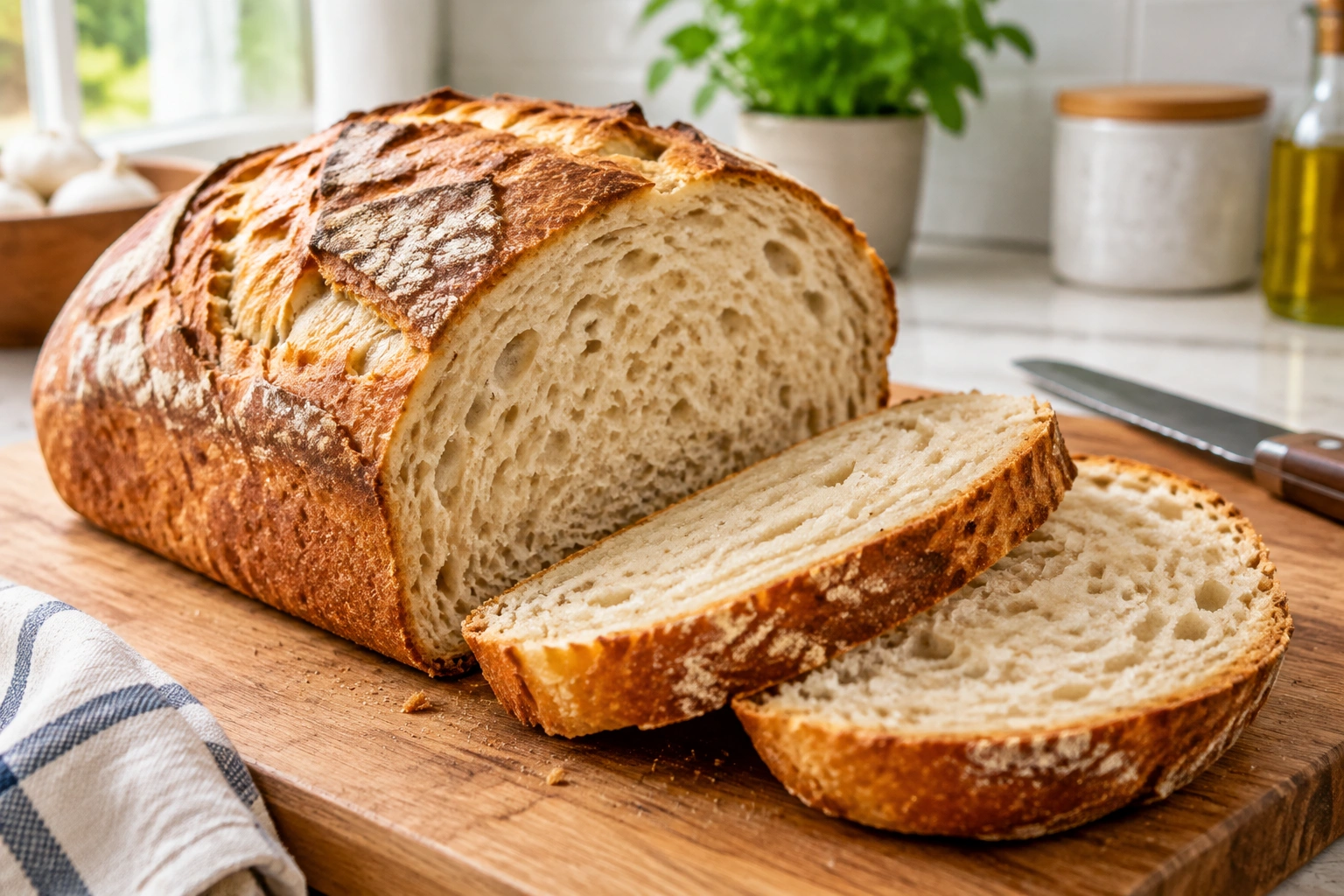
Longer fermentation can improve flavor and sometimes freshness. Sourdough, in particular, often keeps a little longer because the acids and enzymes in sourdough cultures partially break down starch during fermentation, so the loaf goes stale more slowly. That’s one reason sourdough often seems to hold up better than a simple white loaf.
Commercial bread has formulation advantages
Commercial bakeries often use dough conditioners, enzymes, emulsifiers, and added gluten to help retain moisture and slow starch alignment. Homemade loaves usually don’t include those extras, which is one reason they can stale faster than factory-made bread. Bakers Authority explains the role of sourdough acids and commercial conditioners in slowing staling.
In practical terms, lean homemade sandwich loaves usually stale fastest, while enriched breads and sourdoughs tend to hold up better. Crusty artisan loaves may seem fresh for a while because the crust stays crisp, but their crumb can dry out quickly if they’re stored too openly.
That doesn’t mean you need additives at home. It just means you should set realistic expectations. A fresh homemade loaf is often built for flavor and texture first, not maximum shelf life.
Before You Store It: How Long Bread Should Cool
This is one of the most overlooked steps in home baking.
A loaf should cool before you wrap it, at least until it is no longer warm to the touch and the interior has had time to set. If you wrap bread while it is still hot, steam gets trapped. That can soften the crust, make the crumb gummy, and create the feeling that the bread is “going stale” when the real issue is trapped moisture.
For a standard loaf, that often means waiting around 1 to 2 hours, and sometimes longer for a large or dense loaf. The exact timing depends on size, hydration, and room temperature.
Here’s the practical rule:
– Cool enough that the loaf is no longer warm before wrapping or sealing
– Do not seal warm bread in plastic or a container
If you love a crisp crust, cooling matters even more. A loaf that goes straight into a bag will lose its crackle quickly.
Best Storage Method for Your Bread Type
Not every loaf wants the same storage environment. The best method depends on whether you care more about softness or crust: airtight storage keeps bread softer, while paper and airflow help preserve crust.
- Lean bread: Best method: wrap tightly or use an airtight bag/container at room temperature for short-term storage. Why: it dries out and stales relatively quickly, so moisture retention matters most.
- Enriched bread: Best method: airtight storage at room temperature. Why: the added fat, milk, eggs, or sugar already help keep the crumb tender, and airtight storage preserves that softness.
- Sourdough: Best method: room temperature in a paper bag or lightly wrapped if you want the crust to stay pleasant for a short time. Why: sourdough often holds flavor and texture a bit longer, and a little airflow helps avoid a limp crust.
- Crusty artisan bread: Best method: paper bag or loosely wrapped storage for very short-term crust preservation. Why: it helps protect the crust, but it will not keep the crumb as soft as airtight storage.
Soft sandwich bread
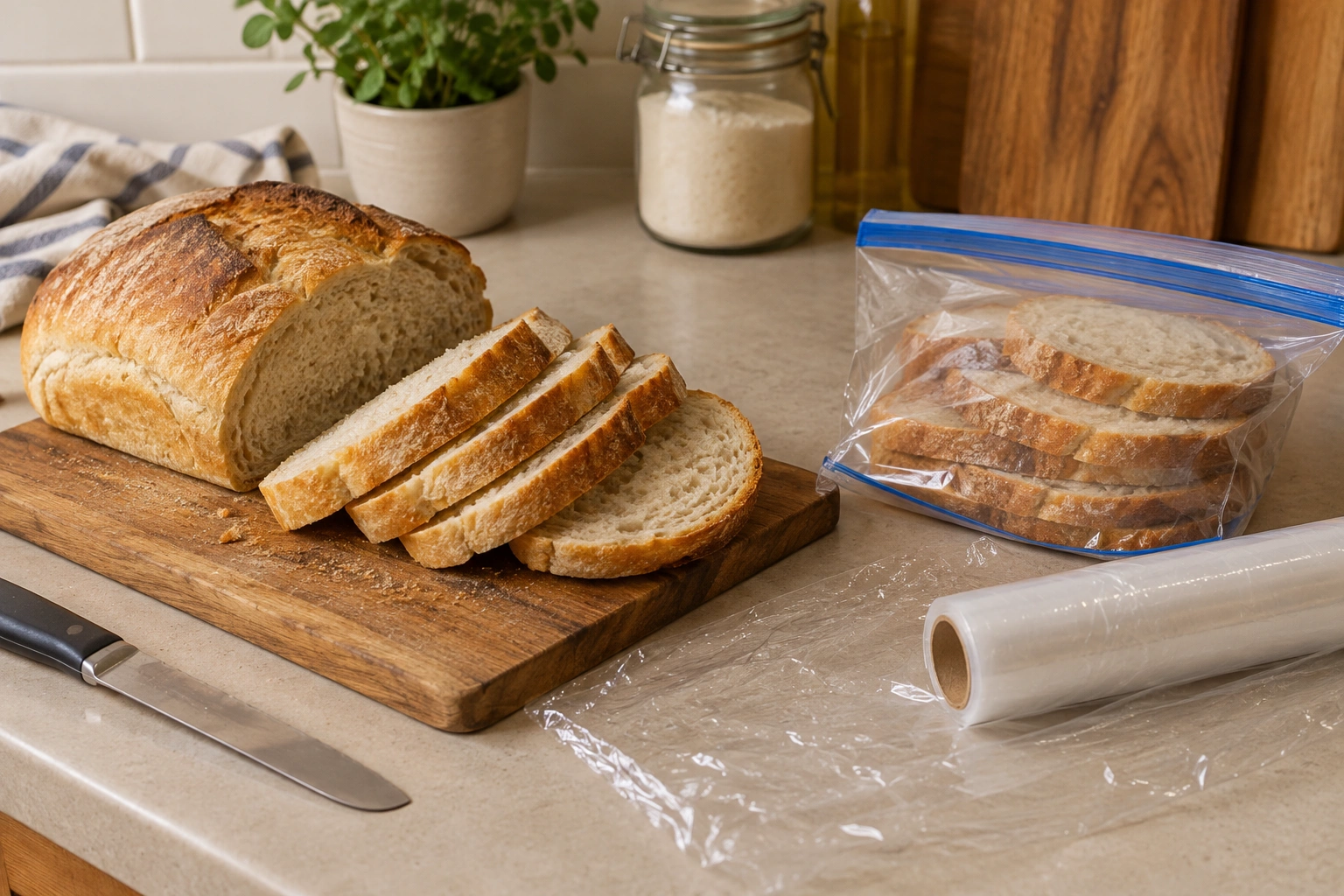
Use plastic wrap, a zip-top bag, or an airtight container. These keep moisture in and help soft breads stay tender longer. This is the best choice for sandwich loaves, milk bread, brioche, and other enriched breads.
Crusty artisan bread
Use a paper bag if you want to preserve the crust for a short time. This reduces condensation, but it also lets the loaf dry out faster than airtight storage. If softness matters more than crust, use a sealed bag instead.
Very soft enriched bread
Wrap tightly after cooling. Enriched doughs already have more built-in tenderness, so they benefit from moisture-retaining storage. If you leave them exposed, the cut surfaces dry out quickly.
Bread box
A bread box can be useful, but it is not magic. It works best when the loaf needs a little protection from air without being sealed into dampness. In a humid kitchen, though, a bread box may soften a crust too much.
Room Temperature vs Refrigerator vs Freezer
Here’s the simplest decision framework: if you’ll eat the loaf soon, keep it at room temperature. If you won’t finish it quickly, freeze it. The refrigerator is usually the least helpful option.
| Storage method | Best for | Main advantage | Main drawback |
|---|---|---|---|
| Room temperature | Bread to be eaten within a day or two | Keeps texture pleasant without extra steps | Not ideal for long storage |
| Refrigerator | Rarely the best choice for bread | May slow mold in some situations | Usually speeds staling and makes bread feel firmer |
| Freezer | Extra bread or longer storage | Preserves freshness best | Needs wrapping, thawing, or reheating |
Why the refrigerator is usually a poor choice
Cold temperatures encourage starch retrogradation, which is why bread often seems to go stale faster in the fridge. The loaf may not dry out faster in the refrigerator, but it can firm up more quickly. If your goal is softness, the fridge is usually the wrong tool.
When room temperature works
Room temperature is the right choice if the bread will be eaten soon and stored properly. A well-wrapped loaf can stay pleasant for a short period, but don’t expect it to behave like mass-produced bread with shelf-life engineering.
When freezing is the smarter option
If you know you won’t finish the loaf in the next day or two, freeze it early. Freezing slows the changes that make bread stale, which is why it’s the best long-term home method.
How to Wrap or Store Bread Without Ruining Texture
The wrapping you choose should match the loaf.
For soft bread
- Let the loaf cool completely.
- Wrap it tightly in plastic wrap or place it in a sealed bag.
- Store it at room temperature away from sunlight and heat.
This keeps moisture in, which is exactly what soft bread needs.
For crusty bread
- Cool the loaf fully.
- Place it in a paper bag or wrap it loosely.
- Store it at room temperature if you want to preserve crust texture for a short time.
This protects the crust better than plastic, but it won’t keep the crumb as soft for as long. That is the trade-off.
For a bread box
A bread box is a middle ground. It can help protect bread from direct air exposure while avoiding the sogginess that can happen in a fully sealed container. It works best for bread you plan to eat fairly soon.
One caution from Red Star Yeast: improper sealing or packaging that is too thin can speed moisture loss, while a complete lack of ventilation can make a crisp crust soften quickly. That’s the balancing act in bread storage. Red Star Yeast’s staling guide is a useful reference for that practical trade-off.
How to Freeze Homemade Bread the Right Way
Freezing is the best move when you want to preserve freshness beyond a short window.
To freeze a whole loaf
- Cool the loaf completely.
- Wrap it tightly in plastic wrap.
- Add a second layer, such as foil or a freezer bag.
- Label and freeze.
To freeze slices
This is often the most practical option for home use. Slice the loaf once it is fully cool, then freeze the slices in a sealed bag with as much air removed as possible. That way, you can take out only what you need.
To thaw
- Leave slices at room temperature for a short time, or
- Toast slices straight from frozen
For a whole loaf, thaw it wrapped so condensation forms on the outside rather than soaking the crumb. If you want to refresh crusty bread after thawing, warm it briefly in a 350°F oven for a few minutes to help the crust crisp back up.
Freezing won’t make bread taste freshly baked forever, but it does preserve the loaf much better than the fridge.
Ingredient and Recipe Tweaks That Help Bread Stay Soft Longer
You don’t need to redesign your bread formula completely. A few adjustments can improve freshness.
Increase hydration slightly
A dough with a bit more water often bakes into a softer crumb. That doesn’t mean “the wetter, the better,” because too much water can make shaping harder and affect structure. But within reason, higher hydration can help the loaf feel tender for longer.
Add enrichment
Milk, butter, oil, eggs, and sugar all help keep bread softer. Enriched doughs generally stay tender longer than lean doughs because fat and sugar interfere with firming and help the crumb feel more supple.
If you want a deeper look at how sugar affects rise, browning, and softness, see this guide on why sugar goes into bread dough.
Consider sourdough or preferments
Sourdough often keeps a little better than a plain white loaf because of its fermentation chemistry. Preferments can also improve flavor and sometimes the eating quality on day two or three.
Don’t overbake
An overbaked loaf dries out from the start. If your bread seems stale very quickly, check whether the crust is too dark or the internal bake is running long. Sometimes the “staling” problem is really a moisture problem baked in from the beginning.
Common Mistakes That Make Bread Go Stale Faster
Here are the repeat offenders I see most often:
- Wrapping hot bread: traps steam and softens the crust
- Leaving bread uncovered: speeds moisture loss
- Using the fridge for short-term storage: firms the crumb faster
- Storing all bread the same way: crusty and soft loaves need different approaches
- Slicing the whole loaf too early: exposes more crumb to air
- Overbaking: creates a dry loaf that seems stale sooner
- Waiting too long to freeze extras: the loaf ages before you preserve it
If you want a simple habit that helps immediately, freeze half the loaf the day you bake it if you know you won’t finish it quickly.
Troubleshooting: If Your Bread Still Goes Stale Too Fast
If you’ve improved storage and the loaf still firms up quickly, check these likely causes.
The loaf was overbaked
If the crumb is dry from the start, storage can only do so much. Reduce bake time slightly next round or check your oven temperature.
The bread is too lean
A very basic flour-water-yeast-salt loaf will usually stale faster than an enriched dough. If you want longer softness, add a little fat, milk, or sugar.
The loaf is being stored in the wrong container
Plastic helps soft bread, while paper helps crusty bread. If you use the wrong one, the loaf may seem worse even if the baking was fine.
The loaf was sliced too early
A sliced loaf loses freshness faster because more crumb is exposed. If possible, cut only what you need.
The recipe is fine, but expectations are too high
A homemade loaf without commercial conditioners is not supposed to behave exactly like a packaged supermarket loaf. That’s not a failure; it’s a different product.
Practical Examples for Different Homemade Breads
Soft sandwich loaf
Cool fully, wrap tightly, and store at room temperature if it will be eaten within a short window. If there’s extra, freeze slices the same day.
Crusty artisan loaf
Let the crust set, then store in a paper bag or bread box for short-term use. If you want to keep the loaf longer, freeze it rather than sealing it tightly at room temperature.
Enriched loaf, such as brioche or milk bread
These breads usually stay tender longer than lean loaves, so airtight storage works well. They also freeze beautifully, especially in slices.
When to Consult a Master Baker
If every loaf still turns dry or stale almost immediately, even after you’ve adjusted cooling, storage, and baking time, the issue may be in the formula or bake profile. That’s when it helps to review hydration, flour choice, oven calibration, and enrichment levels with a more experienced baker or instructor.
For most home bakers, though, the fix is practical rather than mysterious: cool the loaf properly, store it in the right environment, and freeze what you won’t eat soon.
Bread is at its best when the science and the timing work together. Once you learn how to read the loaf, you can keep homemade bread softer, fresher, and far more enjoyable.
FAQ
Why does homemade bread go stale faster than store-bought bread?
Homemade bread often has fewer shelf-life additives and conditioners, so it usually firms up sooner than commercial bread.
Should I store bread in plastic wrap or a paper bag?
Use plastic wrap or another airtight method if you want softness. Use a paper bag only when you want to protect a crusty loaf’s crust for a short time.
Is the refrigerator a good place to store bread?
Usually no. The fridge tends to make bread feel firmer faster, even if it slows mold a bit.
What’s the best way to keep crusty bread fresh?
For short-term storage, use a paper bag or loose wrapping. For longer storage, freeze it and reheat briefly to refresh the crust.