
How Long Pizza Dough Should Rise for the Best Crust and Flavor

If you want the short answer first: pizza dough usually needs about 1 to 1½ hours at room temperature to rise until it is visibly expanded, and 8 to 12 hours in the refrigerator for a slow, flavorful rise. Some recipes go much longer in the fridge—up to 36 hours in one King Arthur Baking formula and around 72 hours in certain cold-ferment styles—because time in the cold changes flavor and handling, not just the clock.
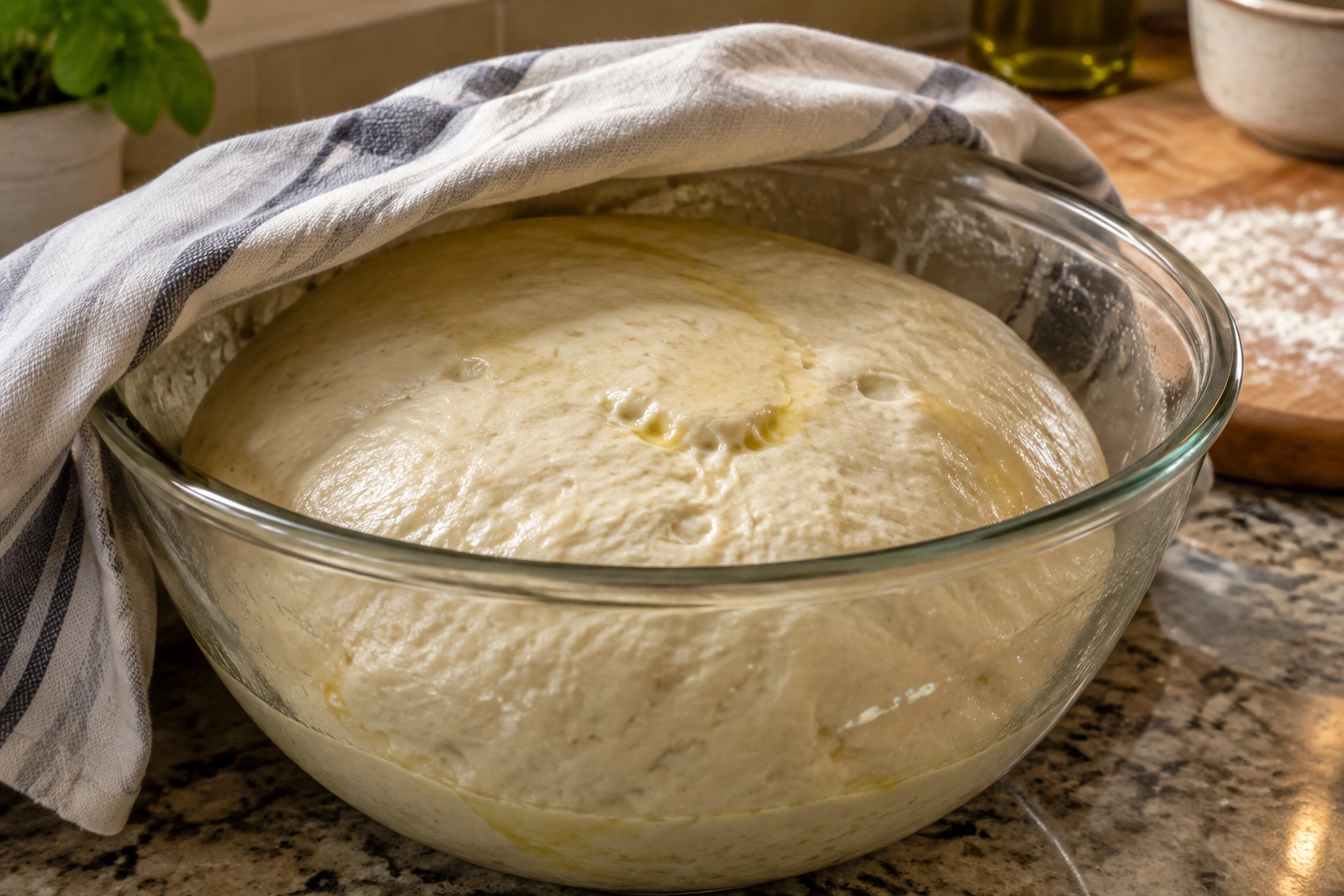
The catch is that pizza dough does not obey a single universal timer. Yeast strength, dough temperature, room temperature, flour choice, and hydration all change the pace. So instead of waiting for a magic number alone, watch the dough itself. A ready dough should look puffy, feel relaxed, and spring back slowly when pressed.
Quick Answer: How Long Should Pizza Dough Rise?
Here’s the practical version I give home bakers and culinary students:
| Method | Typical rise time | Best for | What to expect |
|---|---|---|---|
| Room temperature | 1 to 1½ hours | Same-day pizza | Faster, less flavor development than cold fermentation |
| Refrigerator | 8 to 12 hours | Overnight pizza | Slower rise, better scheduling flexibility, deeper flavor |
| Extended cold fermentation | 24 to 72 hours | More complex crust | More flavor and often easier stretchability if handled well |
If you are making dough for tonight, room temperature is the simplest route. If you can plan ahead, a refrigerator rise usually gives you a better crust with less rush. And if your recipe is designed for it, a longer cold ferment can build a more developed flavor and a dough that stretches more willingly.
One useful rule: time is a guide, not a verdict. A dough that has not fully doubled may still be ready if it is airy, smoother, and responds gently to touch.
What You Need Before You Start
You do not need fancy equipment, but a few basics make proofing much easier:
- A mixing bowl large enough for the dough to expand
- Plastic wrap, a lid, or a damp towel to cover the bowl
- A lightly oiled container or bowl for the rise
- A warm spot if you want a faster room-temperature rise
- A refrigerator if you want a cold ferment
- A kitchen scale if you want consistent results from batch to batch
Ingredient-wise, the main variables are yeast, flour, water, salt, and sometimes oil or sugar. Those details matter because they influence how quickly the dough ferments and how much structure it can hold while rising.
If you are working from a formula, read it once before mixing. Some pizza doughs are built for speed; others are built for patience. Confusing the two is one of the easiest ways to end up with dough that is either flat and tight or overgrown and fragile.
The Main Factors That Change Rise Time
Yeast type changes the pace
Instant yeast usually works a little faster and is often mixed directly into the dry ingredients. Active dry yeast can perform very well too, but it may move a bit more slowly depending on the recipe and how it is handled. In practice, the yeast type matters less than whether the recipe was written for that yeast.
If a formula uses instant yeast, do not assume the same timing will work perfectly if you swap in active dry yeast without adjustment. You may still get good dough, but the rise could lag or accelerate differently.
Temperature is the biggest lever
Warm dough rises faster. Cool dough rises slower. That sounds obvious, but the difference can be dramatic. A dough that rises in a comfortable kitchen may stall in a chilly one, while a warm spot can push it along much faster than the recipe suggests.
Here’s a simple temperature cheat sheet for room-temperature proofing:
- Cool kitchen, about 65°F to 68°F: expect the rise to take longer than the recipe’s average, often closer to the upper end of the range or beyond
- Normal room temperature, about 70°F to 75°F: this is the most typical timing range for the “1 to 1½ hours” guidance
- Warm kitchen, about 76°F to 80°F: expect a faster rise, sometimes noticeably shorter than the standard room-temperature range
Susan’s Cooking School notes that dough can take between 1 and 1½ hours to rise until double in volume, and that a warmer place can be created by setting the covered bowl over a pan of warm water. That is a useful example of how the environment can matter as much as the recipe itself.
Dough temperature matters before it even starts rising
If your water is warm, your kitchen is warm, and your flour is warm, the dough begins fermenting quickly. If everything is cool, the rise slows down. That is why two bakers using the same recipe can report very different timing.
Hydration and flour strength affect structure
A wetter dough often feels softer and can expand more readily, but it also needs enough gluten strength to hold the gas it creates. Stronger flour usually supports better structure and stretch. Weaker flour may rise, but it can spread or feel fragile sooner.
This is why a dough can be “big” but still not be ready. If the structure is weak, the dough may collapse when shaped. If the gluten is underdeveloped, it may resist stretching and snap back instead of relaxing.
Step-by-Step: How to Let Pizza Dough Rise
1) Mix the dough until it is cohesive
You want a dough that comes together into a rough mass with no dry flour left behind. It does not have to look perfect yet, but it should be uniform enough that fermentation can work evenly.
2) Develop enough gluten for the dough to hold gas
Whether you knead by hand or machine, the dough needs enough strength to trap air as it ferments. A rough test is the windowpane test: stretch a small piece gently. If it can stretch thin enough to let light through without tearing immediately, the gluten is developing well.
3) Place the dough in a lightly oiled bowl
Oil helps prevent sticking and makes it easier to judge how much the dough has expanded. Turn the dough once so the surface is lightly coated, then cover it.
4) Let it rise in the chosen environment
For a same-day dough, leave it at room temperature and monitor it closely. For a cold ferment, put it in the refrigerator after the initial rise or as directed by your recipe.
King Arthur Baking’s “Now or Later Pizza Crust” allows the dough to rise covered for 45 minutes, then refrigerates it for 4 hours or up to 36 hours to develop flavor. That is a good example of how a recipe can combine a short initial rise with a longer cold proof for better taste and scheduling flexibility.
5) Check the dough instead of trusting the clock alone
Look for expansion, softness, and visible bubbles under the surface. If it is moving slowly, give it more time. If it is racing ahead, move it sooner.
6) Shape gently after the first rise
Once the dough is ready, divide it if needed and shape it into balls with as little rough handling as possible. You want to preserve some gas while still tightening the surface enough to help it hold shape.
7) Give the shaped dough time to relax before stretching
After dividing and balling, the dough often benefits from a short rest so the gluten can relax. That final rest is not the same thing as the bulk rise, but it matters just as much for stretchability.
If your recipe includes refrigeration, follow it for shaping: shape cold from the fridge if the recipe says to work the dough cold, but let it warm first if the dough feels too stiff or the formula calls for a room-temperature rest before shaping.
How to Tell When Pizza Dough Is Ready
The clock can get you close, but dough behavior tells the truth.
Look for these signs
- The dough has expanded noticeably, often close to doubled, depending on the recipe
- The surface looks smoother and slightly domed
- The dough feels lighter and airier when lifted
- Small bubbles may appear under the surface
- The dough has a relaxed, elastic feel rather than a tight one
Use the poke test
Gently press a fingertip into the dough. If the indentation remains and slowly fills back in, the dough is usually ready or very close. If it springs back immediately, it likely needs more time. If it barely springs back and feels fragile or slack, it may have gone too far.
Use the visual cues and poke test together as the main readiness check. If the dough looks airy, feels relaxed, and leaves a slow-filling indentation, stop proofing even if it has not literally doubled.
Susan’s Cooking School describes risen dough as appearing double in volume and staying indented when pressed gently. That is a useful example, but it should be treated as a cue, not a universal rule. Some pizza doughs are ready a little before they fully double, especially if they are meant to be stretched thin.
Don’t confuse “puffy” with “overproofed”
A ready dough should feel alive and elastic. An overproofed dough often feels weak, overly gassy, and difficult to shape cleanly. If it collapses easily or tears when moved, it has likely gone too far.
Room-Temperature Rise vs. Refrigerator Rise
This is the decision that matters most for home bakers.
Room temperature: faster and simpler
A room-temperature rise is the best choice when you need pizza the same day and want a straightforward process. It is faster, but it usually gives you less flavor development than a cold ferment.
Use this method when:
– You are baking later today
– Your kitchen is not too warm
– You can keep an eye on the dough
Refrigerator rise: slower and more flavorful
Cold fermentation slows yeast activity and allows the dough to develop flavor over time. Sally’s Baking Addiction recommends 8 to 12 hours in the refrigerator for pizza dough and notes that the slow rise gives the dough wonderful flavor. King Arthur Baking also uses refrigeration to develop crust flavor, allowing a dough to rise briefly and then chill for up to 36 hours.
Use this method when:
– You want better flavor
– You want a more flexible schedule
– You prefer to mix dough ahead of time
Bulk rise vs. final proof: a simple timing example
The bulk rise is the first fermentation, before shaping. The final proof is the rest after shaping the dough into balls or rounds.
A simple same-day example: bulk rise for about 1 to 1½ hours, then a shorter final proof of 20 to 30 minutes after shaping, just until the dough relaxes again.
A simple overnight example: bulk rise for a short period, then refrigerate the dough for 8 to 12 hours, shape it the next day, and let it rest briefly before baking if needed.
Long cold fermentation: more complexity, more planning
Some doughs are designed for 24 to 72 hours in the fridge. Baking Steel says pizza dough needs at least 24 hours to develop real flavor and that 72 hours is where it gets extraordinary. That kind of schedule can produce excellent results, but it also means the dough must be formulated to survive that long without weakening.
For home bakers, the trade-off is simple: longer cold fermentation often improves flavor and handling, but it also gives the dough more time to overproof if the recipe is not balanced.
Common Mistakes to Avoid
Relying only on the clock
A recipe timing is a starting point. Your kitchen may be warmer or cooler than the recipe writer’s. Your dough may be denser, wetter, or stronger than expected.
Treating every dough like it should double exactly
“Double in size” is a useful phrase, but it is not always the best target for pizza dough. Some doughs are ready before a full doubling if they are airy and extensible. Others need more time because the room is cool or the yeast is slower.
Mixing up bulk rise and final proof
Bulk rise happens before shaping. Final proof happens after dividing and shaping. If you count both as one stage, your timing will get messy fast.
Overhandling after the first rise
Punching the dough down too aggressively can knock out too much gas. Gentle degassing is enough. You want to preserve the fermentation work you have already done.
Troubleshooting Slow or Fast-Rising Dough
If the dough is rising too slowly
First, check the temperature. A cool kitchen can easily stretch a one-hour rise into several hours. Move the bowl to a warmer spot, such as a turned-off oven with the light on or a slightly warm area of the kitchen.
If the recipe allows it, give it more time rather than forcing it. Rushing a sluggish dough often leads to poor structure later.
If the dough was mixed with very cool water and the room is cold, the slowdown may be completely normal.
If the dough is rising too quickly
A warm kitchen can push dough ahead fast. If it starts ballooning before you are ready, move it to the refrigerator to slow fermentation down.
If you know in advance that your kitchen runs warm, use cooler water in the dough next time. Sally’s Baking Addiction specifically notes that cooler water can slow the rise if the dough needs to stay refrigerated longer.
If the dough seems overactive and fragile
That can be a sign of overproofing or too much warmth. Shape it gently, reduce the final proof, and bake sooner rather than later.
What Happens If Dough Is Underproofed or Overproofed
Underproofed dough
Underproofed dough is tight, resistant, and difficult to stretch. It tends to snap back when you try to shape it and may bake into a crust that feels dense or uneven.
Overproofed dough
Overproofed dough can feel weak, sticky, and overly airy. It may collapse when moved, tear during shaping, or spread too much in the oven. The crust can come out pale, flat, or lacking structure.
Neither problem is ideal, but both are fixable in some cases. Underproofed dough usually just needs more time. Overproofed dough may still be usable if you degas it gently, reshape it, and give it a shorter final proof. If it has obvious spoilage signs such as mold or a truly off odor, discard it.
Practical Examples: Same-Day, Overnight, and Cool-Kitchen Timing
Same-day pizza in a warm kitchen
You mix the dough in the morning, let it rise at room temperature, and check it after about an hour. If it is puffy and passes the poke test and visual cues from the readiness section, you can shape and bake later the same day. In a warm kitchen, that timing may be even shorter.
Overnight refrigerator dough
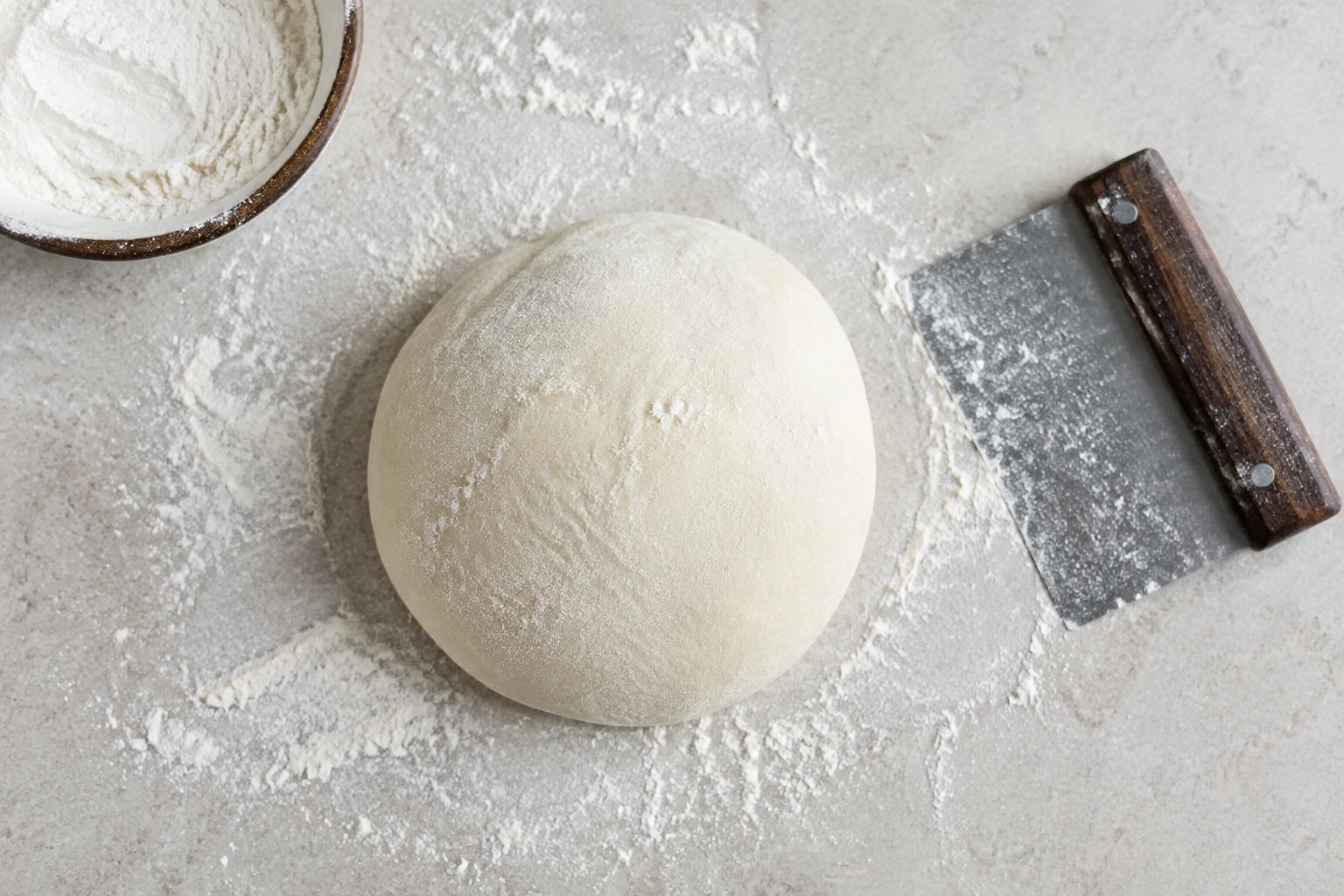
You mix the dough in the evening, let it begin fermenting, then refrigerate it overnight. The next day, whether you shape it cold or let it warm first depends on the recipe: some formulas are meant to be shaped straight from the fridge, while others work better after a short warm-up until the dough is pliable.
Cool-kitchen dough that seems stuck
If your kitchen is chilly, a dough that should be ready in 90 minutes may need much longer. Move it to a warmer area and give it time. The dough is not failing; it is just moving at a slower pace.
How Rise Time Affects Flavor, Texture, and Stretchability
Rise time is not just about getting bigger. It changes the pizza itself.
A shorter rise usually gives you a milder flavor and a more straightforward schedule. A longer rise, especially in the refrigerator, usually builds more complexity in the crust. That slow fermentation can also improve extensibility, which means the dough may stretch more easily without fighting back.
But more time is not automatically better. Too much fermentation can weaken the dough and make it harder to shape. The sweet spot is where the dough has enough gas and flavor to be lively, but not so much that it loses strength.
That is why experienced bakers watch for a balance of puffiness, elasticity, and control. When those three line up, the dough is usually ready to become pizza.
When to Consult a Master Baker
If your dough repeatedly rises too fast, too slowly, or behaves unpredictably despite using the same recipe, it may be worth reviewing the formula with a skilled baker or instructor. Persistent issues can point to flour differences, fermentation imbalance, or technique problems that are easier to diagnose with an experienced set of eyes.
FAQ
Does pizza dough always need to double in size?
Not always. Doubling is a helpful benchmark, but readiness is better judged by puffiness, elasticity, and the poke test. Some doughs are ready a little before they fully double.
Can pizza dough rise too long?
Yes. Overproofed dough can become weak, sticky, and hard to shape. It may spread too much or bake with poor structure.
Should pizza dough rise once or twice?
Many pizza doughs benefit from a first bulk rise and then a shorter rest after dividing and shaping. The exact method depends on the recipe.
How long can pizza dough stay in the refrigerator?
That depends on the formula, but some recipes work well for 8 to 12 hours, others up to 36 hours, and some cold-ferment styles can go longer. Quality often peaks around 72 hours in certain long-ferment approaches.
What if my dough didn’t rise enough?
Give it more time, especially if the kitchen is cool. If it is still tight after a reasonable extension, check whether the yeast is active and whether the dough was kept too cold.
Does yeast type change the rise time?
Yes. Instant yeast and active dry yeast can behave differently, and the recipe usually assumes one or the other. Timing may shift if you substitute without adjusting the method.
How can I make the dough rise faster?
Move it to a warmer spot and make sure it is covered so it does not dry out. If you want a deeper dive into speedier proofing methods, see our guide on how to make dough rise faster without ruining the texture.
What if I want to compare this with bread dough?
Bread and pizza dough share some proofing principles, but pizza dough is usually handled a bit differently because stretchability matters so much. For a broader fermentation reference, our guide to how long bread dough should rise is a helpful companion.
Can I refrigerate pizza dough after the first rise?
Yes. That is a common and useful approach. Refrigeration slows fermentation and can improve flavor, especially when the dough is meant to rest overnight or longer.
How long should pizza dough rise after shaping?
After shaping into balls, many doughs need another rest so the gluten can relax. The exact timing varies by recipe, but the dough should feel soft and stretchable before you open it into rounds.