
How to Make Sourdough More Sour: A Baker’s Guide to a Tangier Loaf

If you’ve ever baked a loaf that looked perfect but tasted a little too mild, you’re not alone. Sourness in sourdough is not a mystery ingredient—it’s the result of how your starter, dough, temperature, and timing work together. The good news is that you can steer those variables on purpose.
In my experience as a baker, the biggest mistake is trying to make sourdough sharper by changing everything at once. That usually makes it hard to tell what actually worked. A better approach is to focus on the highest-impact levers first: starter hydration, fermentation temperature, inoculation level, and proofing time. Those are the choices that most strongly shape whether your loaf tastes gently tangy, distinctly sour, or sharply acetic.
What Makes Sourdough Taste Sour?
Sourdough gets its flavor from the acids produced by wild yeast and lactic acid bacteria in the starter and dough. The two acids bakers talk about most are lactic acid and acetic acid.
- Lactic acid tastes smoother, rounder, and more yogurt-like.
- Acetic acid tastes sharper, more vinegary, and more “sour” to most people.
In practical terms, warmer and faster fermentation tends to lean more toward a softer, milder tang, while cooler, slower fermentation often gives the dough more time to develop a sharper edge. That said, the result depends on the whole process, not just one variable.
One useful detail from Brod & Taylor is that once the levain is mixed into the main dough, its ability to produce acid is somewhat diminished. In practical terms, that means you want to build enough flavor in the preferment and dough before fermentation gets too rushed or too warm. Brod & Taylor’s sourdough acidity guide is a useful reference if you want to go deeper into the science.
The flavor goal changes the method
If you want:
– Mild tang: favor a wetter starter and moderate fermentation.
– Noticeable sourness: use cooler fermentation and longer proofing.
– Maximum sharpness: combine a stiffer levain, lower dough temperature, and a cold retard.
That’s the big picture. Now let’s turn it into a workable plan.
Before You Start: What You’ll Need
To make sourdough more sour in a controlled way, you need tools that help you repeat your results.
Basic setup
- An active sourdough starter
- Bread flour, plus optional whole wheat or rye flour
- A digital thermometer
- A clear container for bulk fermentation
- A scale
- A fridge that holds a steady cold temperature
- A Dutch oven or baking stone, depending on your usual bake
Helpful ingredients and options
- Whole wheat flour: adds flavor complexity and tends to increase fermentation activity.
- Rye flour: often boosts aroma and fermentation intensity even in small amounts.
- Sour salt or citric acid: useful if you want a tangier flavor without relying only on fermentation. King Arthur Baking suggests adding a small amount of sour salt, identified as citric acid, to the dough for an extra-tangy loaf. Their extra-tangy sourdough formula shows one approach.
A thermometer matters more than many home bakers realize. If you don’t know your dough temperature, you’re guessing at one of the biggest factors in sour development.
The Highest-Impact Ways to Make Sourdough More Sour
If you only change a few things, change these first:
- Use a stiffer levain or starter
- Feed the starter less aggressively
- Ferment cooler
- Extend bulk fermentation and proofing carefully
- Add a cold retard
- Increase whole grain or rye slightly
Those levers matter because they affect acid production, acid balance, and the amount of time the dough spends developing flavor.
A useful decision rule:
– If your bread is well-risen but bland, start with starter maturity and inoculation.
– If it is well-risen but weak or slack, reduce the intensity of your changes and protect dough strength first.
– If it is too mild even after long fermentation, the starter and temperature are usually the first things to inspect.
Quick troubleshooting flow for a mild but well-risen loaf
- First, check starter maturity. Use the starter or levain at peak or just slightly past peak if you want more acidity.
- Next, reduce inoculation slightly. A smaller percentage of starter usually gives the dough more time to develop flavor.
- Then, slow the dough down. Ferment a bit cooler or extend proofing with a cold retard.
- Only after that, adjust flour choice. Add a small portion of whole wheat or rye if you want more depth.
- If the loaf gets weak, back off one step. More sourness is not helpful if the structure collapses.
Step 1: Use a Stiffer Starter or Levain for More Tang
A stiffer starter often gives you a more pronounced sour profile than a very liquid one. That’s why many bakers reach for a firm levain when they want a sharper result.
How to do it
- Build your levain at a lower hydration than your usual starter.
- Keep it firm enough that it holds shape instead of flowing like batter.
- Let it ripen fully before mixing it into the dough.
- Use that levain in your final dough as planned.
Why this works: a stiffer environment can lean toward a more acetic character than a wetter one, but the result is not guaranteed and depends on the full fermentation schedule. It is one of the more common ways bakers push flavor in the direction they describe as more “sour” or “tangy.”
Trade-off
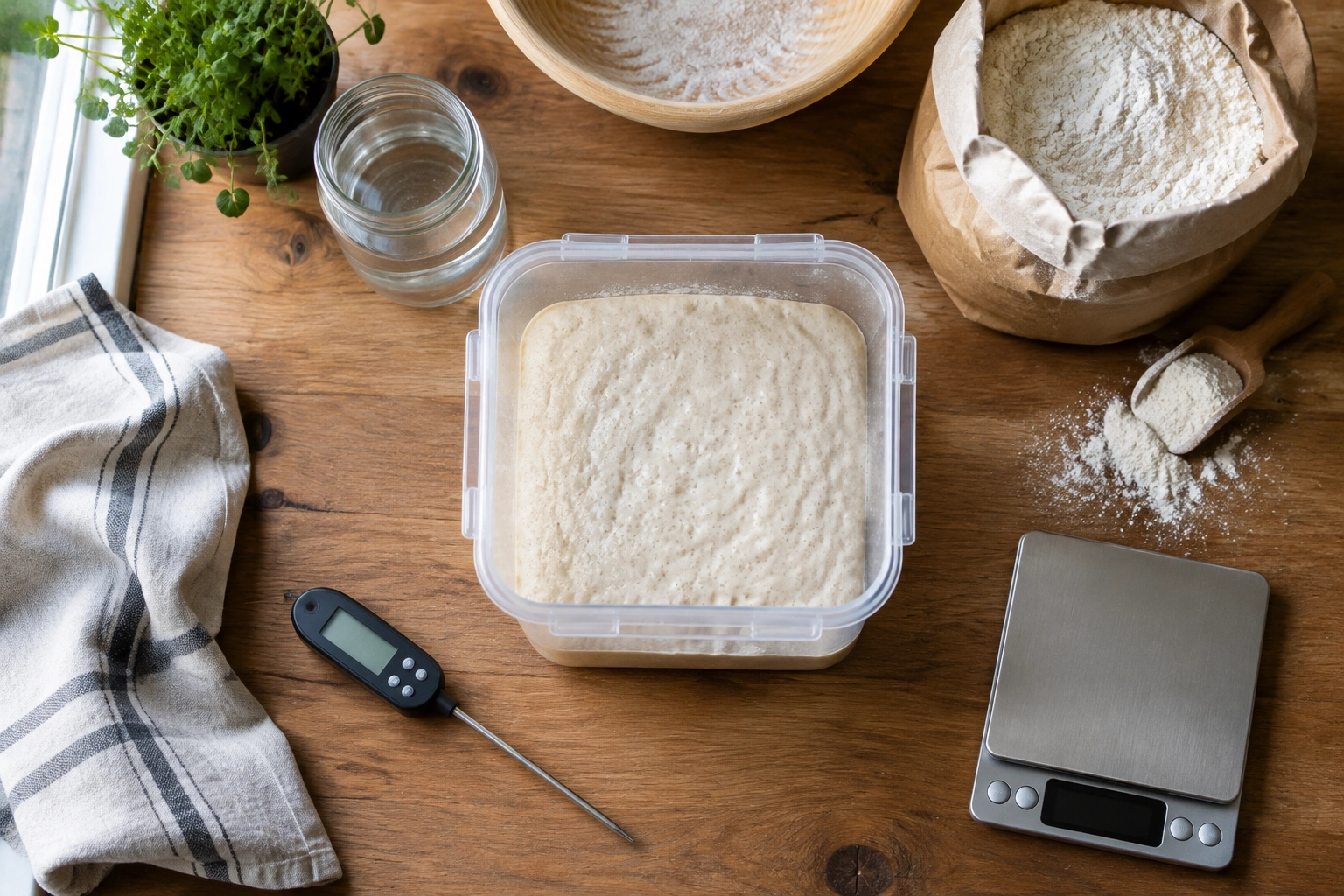
A stiff levain can be a little less forgiving. It may take more attention to judge ripeness, and if you push it too far, it can become overly acidic or sluggish. But if your goal is a sharper loaf, this is one of the most reliable places to start.
Step 2: Adjust Feeding Ratio and Starter Maturity
Starter maintenance affects flavor more than many bakers expect. The Perfect Loaf notes that a healthy, frequently fed starter is the single most effective way to reduce sourness because regular feeding dilutes accumulated acid and gives the culture fresh food to consume. If you want more sourness, the opposite logic applies: let the starter build more acidity before you use it. The Perfect Loaf’s sourness guide explains this clearly.
King Arthur Baking also points out that reducing the amount of starter you feed is one way to make sourdough more sour. In other words, a smaller feed can leave the culture more acidic between refreshments. King Arthur’s sourness article is a practical reference.
Separate levers to change
- Feeding frequency: Feed less often if your starter is very mild. A starter that goes longer between refreshments is more likely to taste and behave more acidic.
- Feed ratio: Use a lower feed ratio if you want acidity to build faster between feeds. A smaller refreshment can leave more existing acidity in the culture.
- Starter maturity: Use the starter or levain at peak or just slightly past peak if you want more tang. A very fresh starter is usually milder than one that has fully matured.
A realistic scenario
If you normally feed every 12 hours and your bread tastes soft and mild, try letting the starter go a bit longer before feeding, then use it near peak ripeness or just after peak. That often increases flavor without changing your formula dramatically.
Trade-off
A more mature starter can become less predictable if you push it too far. You may get more acidity, but you may also lose some rise power if the culture is exhausted. That’s why I prefer gradual changes rather than skipping feeds for days and hoping for the best.
Step 3: Ferment Cooler and Longer
Temperature is one of the most powerful flavor controls in sourdough. Cooler fermentation usually gives the dough more time to develop flavor before it moves quickly through bulk and proofing.
Practical range
For home baking, a dough temperature around 68–72°F (20–22°C) is a useful cooler-fermentation target for many formulas, especially if your kitchen is normally warm. If your dough is fermenting much warmer than that, it will usually move faster and may be harder to push toward a sharper flavor without overproofing.
Example schedule
A simple home-baker approach might look like this:
– Mix the dough with slightly cool water.
– Keep bulk fermentation in the 68–72°F (20–22°C) range if possible.
– Extend bulk until the dough looks aerated and elastic, not just until the clock says it should be done.
– If needed, add a longer final proof in the fridge rather than forcing a very long warm bulk.
Why it works
Slower fermentation can give flavor more time to develop relative to gas production, but the effect is not unlimited. The dough still needs enough strength to hold its shape.
Warning
Longer is not automatically better. If you keep extending bulk after the gluten starts weakening, the loaf can spread, lose oven spring, or turn gummy. Sourness is useful only if the structure survives it.
Step 4: Add a Cold Retard for Deeper Sour Flavor
Cold proofing is one of the most practical ways to deepen sour flavor at home. Once the dough is shaped, refrigerating it slows yeast activity while allowing flavor to continue developing.
When a cold retard helps most
A cold retard is especially useful when:
– your dough already has decent strength,
– you want more tang without changing the flour blend,
– and you can monitor proofing carefully.
How to use it
- Bulk ferment until the dough shows clear activity.
- Shape the loaf.
- Place it in the refrigerator for an extended proof.
- Bake directly from the fridge if that suits your method.
Practical timing range
For many home bakers, a cold retard of about 8 to 16 hours is a good starting point. If you want more sourness and your dough is strong enough to handle it, you can sometimes extend that to 18 to 24 hours. The longer the retard, the more important it is to avoid overdoing bulk first.
Trade-off
Cold proofing can increase sourness, but it can also push dough toward overproofing if the bulk was already too far along. If your loaves often spread or bake flat, shorten bulk a little before extending the cold proof.
Step 5: Use Flour Choices That Boost Flavor
Flour is not just fuel; it shapes flavor.
Whole wheat flour
Whole wheat usually adds more complexity than white flour because it brings in more of the grain. Even a modest portion can make the bread taste fuller and less one-note.
Rye flour
Rye can bring a deeper, earthier flavor and often supports stronger fermentation activity. In small amounts, it can make a loaf taste more assertive without turning it into a rye bread.
How much to add
You do not need to overhaul the formula. A small percentage is often enough to notice a difference while keeping the loaf mostly familiar. If you’re testing flavor, change one variable at a time—say, replace a small portion of white flour with whole wheat or rye, then keep everything else constant.
Trade-off
More whole grain can make dough feel stickier and can shorten the margin for error. That’s the price of more flavor. If your shaping is still shaky, keep the percentage modest.
Step 6: Balance Hydration, Strength, and Inoculation
Hydration and starter percentage change both fermentation speed and dough handling.
Higher hydration dough
Higher hydration can produce a more open crumb, but it may also ferment faster and feel less structured if pushed too far. That can make sourness harder to control because the dough may weaken before flavor fully develops.
Lower hydration dough
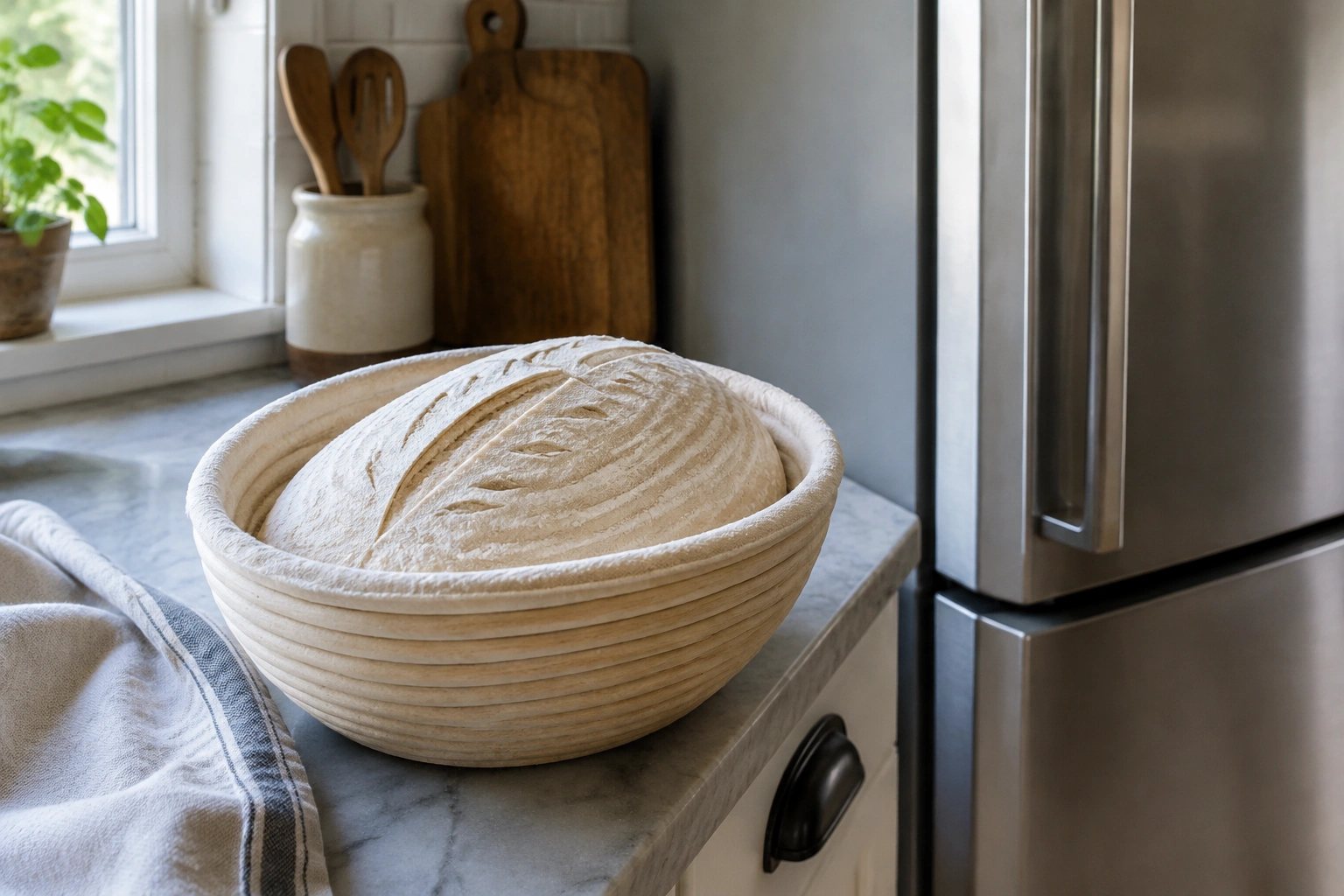
A slightly lower-hydration dough is often easier to handle and can support a firmer fermentation profile. It may also make it easier to keep the dough from overextending during long ferments.
Inoculation level
“Inoculation” is the amount of starter or levain you use in the dough. A larger inoculation speeds things up. A smaller one slows fermentation and gives you more time for flavor development.
If your goal is more sourness without making the loaf sluggish, the most useful inoculation changes are usually:
– slightly reducing the starter percentage, so the dough ferments more slowly;
– keeping the dough cool, so it does not race to full proof too fast;
– using starter at peak or just past peak, so the culture brings more acidity into the mix without being fully exhausted.
That’s the key trade-off:
– More starter = faster rise, less time for flavor.
– Less starter = slower rise, more time for flavor.
If your current loaves are mild, reducing inoculation slightly is often more effective than simply letting the dough sit longer.
Practical Example: Three Ways to Make the Same Loaf More Sour
Let’s say you already have a reliable white sourdough formula and want more tang without wrecking the loaf.
Mild tang
- Keep a wetter starter
- Use your usual inoculation
- Ferment at your normal room temperature
- Bake after a standard proof
Result: subtle sourness, balanced flavor, predictable rise.
Tangier loaf
- Build a stiffer levain
- Reduce inoculation slightly
- Let bulk ferment a bit longer in a cooler environment
- Add an overnight cold retard
Result: noticeably sharper flavor, still good structure if bulk was not overdone.
Very sour loaf
- Use a firm levain
- Keep fermentation cool
- Use a smaller inoculation
- Extend the cold retard carefully
- Consider a small portion of whole wheat or rye
Result: pronounced sourness, but this is also where the risk of overproofing rises fastest.
The best version for you depends on whether you want a clean tang, a pronounced bite, or a loaf that leans aggressively sour.
Common Mistakes That Reduce Sourness or Ruin the Loaf
Using too much starter
This speeds the dough up so much that you lose fermentation time. The bread may rise well, but the flavor can stay surprisingly mild.
Chasing sourness with endless proofing
A loaf can only take so much. Once gluten weakens, the dough stops rewarding you and starts collapsing.
Changing too many variables at once
If you switch starter hydration, flour blend, temperature, and proofing all in one bake, you won’t know what caused the result.
Ignoring starter health
A starter that is too weak, too old, or too neglected can behave unpredictably. More acidity is not the same as better fermentation.
If you need help assessing starter readiness before you make these adjustments, our guides on how to make a sourdough starter at home and the sourdough float test are useful companions.
Troubleshooting: Why Your Sourdough Still Tastes Mild
If your loaf rises well but tastes flat, here’s the likely breakdown:
The starter is too fresh
A very frequently fed starter often tastes cleaner and less acidic.
Fix: let it mature a bit more before mixing your levain.
The dough fermented too fast
Warm kitchens and high inoculation can shorten flavor development.
Fix: lower the dough temperature or reduce the starter percentage.
The proof was too short
A loaf can look ready before flavor has fully developed.
Fix: extend bulk or add a cold retard.
The flour is too plain
White flour alone can produce a clean loaf, but not always a dramatic sour note.
Fix: add a small portion of whole wheat or rye.
The dough was overhandled or overextended
If structure breaks down, flavor may seem dull because the loaf bakes flat and dense.
Fix: back off the fermentation time and protect dough strength.
How to Push Sourness Without Sacrificing Oven Spring
This is the balancing act every serious sourdough baker learns.
Use one strong lever at a time
If you want more sourness without losing volume, choose one of these first:
– stiffer levain
– slightly smaller inoculation
– cooler fermentation
– overnight cold proof
Watch the dough, not just the clock
Time is a guide, not a guarantee. If the dough is already puffy, fragile, and loose, more time is probably not helping.
Protect gluten strength
If your dough is already soft, add flavor through starter management and temperature, not by letting it sit forever.
My rule of thumb
If a loaf starts tasting more sour but loses shape, you’ve gone too far in one direction. Pull back one step and keep the rest of the process the same.
Quick Recap: Best Methods by Flavor Goal
For mild tang
- Keep a healthy, regularly fed starter
- Use moderate fermentation
- Avoid long cold proofing
For noticeable sourness
- Use a stiffer levain
- Ferment a little cooler
- Add an overnight retard
For maximum sour flavor
- Combine a firm levain, lower inoculation, cooler dough temperature, and a careful cold proof
- Add a small amount of whole wheat or rye for extra depth
If you remember only one thing, remember this: sourness is not created by time alone. It comes from the interaction of starter maturity, temperature, hydration, flour choice, and proofing. Once you learn to control those variables, you can move your sourdough from mild to tangy with intention instead of luck.
FAQ
Does a longer fermentation always make sourdough more sour?
Not always. Longer fermentation can increase sourness, but it can also mainly improve flavor while weakening structure if the dough goes too far. The key is to extend fermentation only as long as the dough still has strength.
Is warm fermentation or cool fermentation better for sour flavor?
Cool fermentation is usually the better choice if you want a stronger tang. Warm fermentation tends to move faster and can give you good rise with a milder flavor, while cooler fermentation gives the dough more time to develop acidity before it reaches full proof.
What is the easiest way to make sourdough more sour without changing the whole recipe?
Start by reducing inoculation slightly and adding a cold retard. If the bread still tastes mild, then adjust starter maturity or switch to a stiffer levain.
Why can a well-risen loaf still taste bland?
Because rise and flavor do not always move at the same pace. A loaf can look fully proofed but still have limited acid development if the starter was very fresh, the dough fermented too fast, or the proof was too short.
What should I change first if my sourdough is well-risen but mild?
First check starter maturity, then reduce inoculation a little, then slow fermentation with cooler temperatures or a longer cold proof. If needed, add a small portion of whole wheat or rye after that.